

‘Europe became real faces and real stories’: Young European Ambassadors look back on ten years of friendships and community projects
In a small Armenian village, teenagers learn how to identify disinformation online. In Azerbaijan, young people gather to discuss diplomacy, leadership and opportunities beyond their borders. In rural Georgia, students hear for the first time that studying or volunteering abroad might be within their reach. In Moldova, young people travel from school to school explaining what the European Union means beyond politics and headlines. In Ukraine, youth activists adapt their work to wartime realities while strengthening resilience in their communities.
Ten years after its launch, the Young European Ambassadors (YEA) network, funded by the European Union and implemented by the EU NEIGHBOURS east programme, has connected thousands of young people across the European Union and the Eastern Partnership countries. Yet its legacy is measured not only in projects or events, but in the people whose lives it has changed.
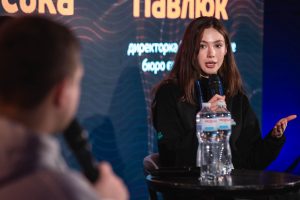
“I realised that Europe is a complex mosaic of different historical experiences, traumas and victories,” says Yelyzaveta Adamska, a Young European Ambassador from Ukraine.
From youth leadership to responsibility
For Yelyzaveta Adamska, the Young European Ambassadors network arrived at exactly the right moment. When she joined in 2019, she was already working on projects related to gender equality, inclusion and environmental issues.


“I had my own projects. I was interested in gender equality, ecology and inclusion. But despite all of that, I still felt that I wanted change,” she says.
Then she found the network: “If in 2019 the European Union was still something abstract for me, today it is real faces, real stories and a real conviction that Ukraine’s future lies in daily dialogue with these people.”
Surrounded by people who shared similar values and ambitions, Adamska quickly became one of the initiative’s most active members. She later led the YEA network in western Ukraine before taking responsibility for the initiative’s gender equality work.
But everything changed in February 2022. Like millions of Ukrainians, Young European Ambassadors suddenly found themselves operating in an entirely different reality. “Before the full-scale invasion, we talked about wanting to be heard,” Adamska says.
Educational activities increasingly focused on resilience, media literacy, combating disinformation and strengthening communities. Participants adapted quickly, organising new initiatives and responding to challenges as they emerged.
“People became more flexible and started organising a huge number of activities dedicated to combating disinformation and strengthening resilience,” she remembers.
At the same time, the network itself matured. “If earlier we talked about youth leadership, then after the war it became adult leadership,” she says. “We all grew up very quickly. You can see it in the projects. You can see it in the way we communicate. You can see it in how we engage with institutions and with our colleagues from other countries.”
Yet despite the war, Adamska believes the most important lesson she learned through the initiative remains unchanged. For her, Europe stopped being an abstract political concept and became something deeply human.
Growing together with the network
When Daniel Bizdiga joined the Young European Ambassadors initiative in 2017, the network was still in its infancy. In Moldova the community counted fewer than twenty members.
His first activity was simple but powerful: school visits across Moldova together with ambassadors from European Union countries. The experience immediately convinced him that the initiative was different.
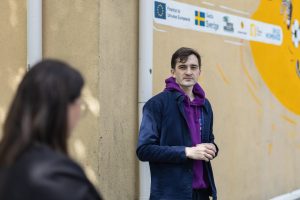

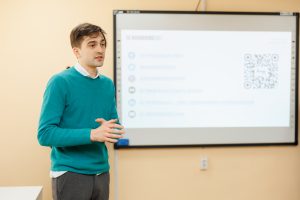
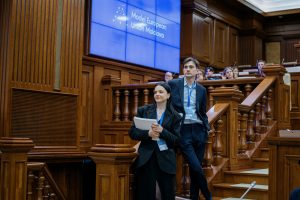
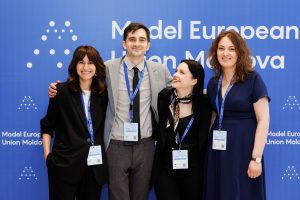

“I think from the very beginning it was an experience that made me want to remain in the initiative. Being able to spend time with peers from other EU countries and communicate with them was very valuable. At the same time, we were making an impact in Moldova by trying to increase understanding of the European Union and what it offers to Moldova,” he believes.
For Bizdiga, joining the network felt like a natural continuation of his own European journey. Before becoming a Young European Ambassador, he had already participated in Erasmus+ opportunities and experienced first-hand how international exchanges could broaden horizons and create new opportunities.
“Those experiences made me passionate about the idea of exchange between the EU and Moldova and about working together for a better future,” he notes.
As the years passed, both Moldova and the network changed dramatically.
“The network definitely grew a lot,” he says. “At that point, we were fewer than twenty young people from Moldova. Since then, hundreds of young people who have been part of the initiative have had the opportunity to participate in its activities and contribute in some way to the process of bringing Moldova and the European Union closer together.”
After three years as a Young European Ambassador, he later became the national coordinator of the network in Moldova. Like many participants across the region, Bizdiga believes that one of the network’s greatest strengths lies in its ability to bring together young people from different countries and backgrounds.
“Personally, for me, it really helped to see things from different perspectives. We are used to seeing the world through the lens of our own society and our own country. Sometimes this can lead to misunderstandings between people from different countries,” he says.
According to Bizdiga, many YEAs from EU countries arrived in Moldova with limited knowledge of the country and left with a very different understanding.
“Countries like Moldova have many young people who want a better future. They want to live in a peaceful Europe. They want to see their country develop and prosper,” he notes.
Projects like the Young European Ambassadors initiative, he argues, help transform those aspirations into action.
Small actions, real impact
Ana Dzirkvadze joined the network relatively late, at the age of 24, after hearing about it from a friend. By then, she was already studying European Studies and had a strong interest in European affairs. Yet she would only have two years as an active member before reaching the age limit for participation.
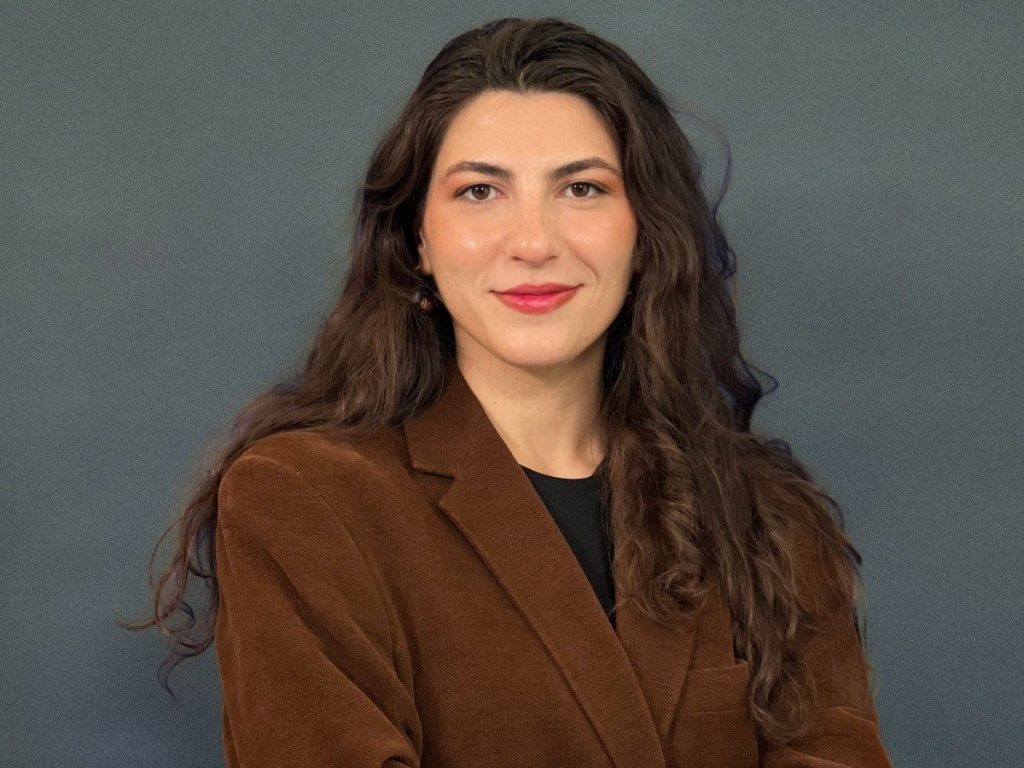
“I had very little time — only about two years — as an active member,” she says. “Still, despite having other work and other projects outside of the Young European Ambassadors Network, I think I managed to remain an active member. I am really happy that I was able to contribute to the network in some way.”
She quickly focused on an issue that felt deeply personal: access to information. Together with another Young European Ambassador, Nika Chugoshvili, she organised outreach campaigns in rural regions of Georgia, travelling to villages and schools to explain opportunities available and the Young European Ambassadors initiative itself.
“We travelled to different regions and visited schools in villages. We gave presentations about Erasmus+ and the training possibilities it offers. We also introduced the Young European Ambassadors Network and explained how students could become members themselves,” she recalls.
Although she grew up in Tbilisi, Dzirkvadze remembers how difficult it was even for an active and motivated student to learn about international exchanges.
“Even though I was in a more privileged position than many young people growing up in rural areas. It took me a lot of time and effort to discover that some programmes existed,” she says.
After one of the school visits, a teacher from Kakheti contacted the team with an idea for a new project connected to Orange the World, the international campaign against violence against women. Together with three other YEAs, they organised a full-day workshop on gender equality involving students from four villages, including an ethnic Azerbaijani village where traditional practices such as early and arranged marriage continue to remain a serious challenge to young women and girls.
What surprised her most was the engagement of the boys participating in the discussions. “They were well informed about the challenges faced by girls in their community and were trying to support them by speaking openly about stereotypes and inequalities. It was really inspiring to have those conversations,” she remembers.
The network also connected her with peers beyond Georgia. The 3rd European Forum of Young Leaders and European Economic Congress in Katowice, Poland introduced her to ambassadors from across the region, friendships that continue years later.
“Now that I live in Portugal, I still have contacts with people whom I met through the network. It feels really nice to know that almost everywhere you go in Europe, there is someone from this network,” she admits.
Even today, she says she feels a responsibility to contribute wherever she lives: “Sometimes even small initiatives can have a real impact.”
Bringing European initiatives beyond the capital
Similar thoughts about the importance of access to youth programmes are also expressed by Lilit Sofyan from Armenia. Sofyan joined the network in 2018. “First of all, I would like to mention that the Young European Ambassadors Network was the very first youth initiative that I became part of,” she recalls. “Before that, I did not even know about volunteering. I was also unaware of many youth opportunities that existed.”


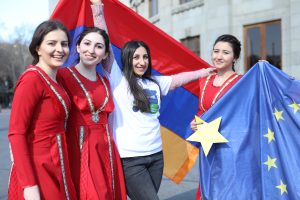
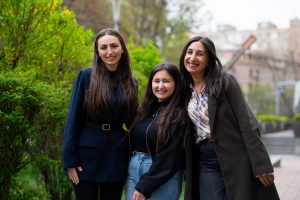
What followed was a profound period of personal growth. “This network had a direct impact on my personal development. I gained a lot of confidence, leadership skills and organisational skills. I also discovered different ways and methods through which I could improve myself and create an impact in my community,” she remembers, explaining how this experience was translated into action.
Coming from Armenia’s Lori region, Sofyan focused much of her work on reaching young people outside Yerevan. She organised school visits in villages and small communities, bringing information about European mobility schemes, youth engagement and civic participation to places where such exchanges are often less visible.
“I also believe that people living in the regions need the support of networks like this, as well as civil society organisations, even more than people living in the capital or larger cities. That is why I tried to fill that gap and bring these opportunities to my region, to local communities and small villages,” she says.
Beyond school outreach, she also organised non-formal educational activities on topics such as media literacy, helping young people to develop critical thinking and fact-checking skills. Other initiatives included community clean-up actions and a photography workshop that encouraged participants to reflect on European values through a creative lens.
Today, Sofyan serves as a mentor within the network, helping newly selected ambassadors to navigate their first months and develop their own initiatives. Yet her strongest memories remain connected to the local communities she worked with.
Over the past decade, she has also witnessed a broader change in attitudes towards the European Union among Armenian youth.
“Maybe ten years ago, many people did not know much about the European Union. There were also many stereotypes about the EU,” she says. “This is a very common perception in post-Soviet countries – the idea that the European Union is coming to eliminate our national identity, our culture and so on.”
For Sofyan, the impact of the network ultimately extends far beyond individual projects.
“It is about understanding the values that the European Union wants to share with other countries and moving beyond stereotypes. It is about understanding the true meaning of concepts such as democracy, the rule of law and human rights, and recognising the real essence of the values that we share together,” she believes.
A space for dialogue
Nubar Rahimova from Azerbaijan joined the network in late 2023 after encouragement from a colleague who was already an active member.
“While studying International Relations and Diplomacy, a friend of mine told me about the Young European Ambassadors network. She shared her experiences and spoke about the opportunities it offered,” she remembers.
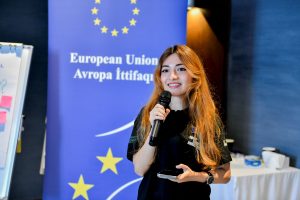
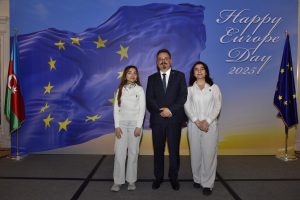
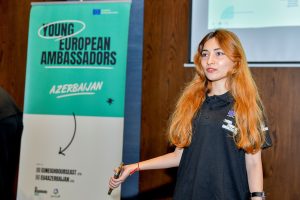
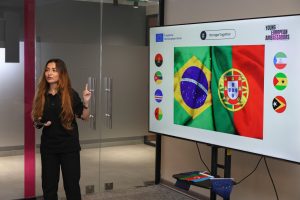
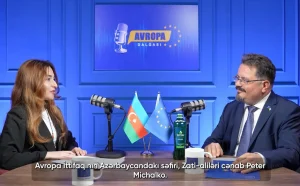
Curious about the initiative, Rahimova decided to apply. Soon after joining, she became involved in the Diplomacy Club and EuroSchool.
For Rahimova, the value of the initiative lies not only in learning about the European Union but also in learning from other people.
“Every Young European Ambassador I have met in this network has their own story, their own background and their own set of skills. Through this network, I have met many people and learned a great deal from them,” she shares.
The experience changed her professionally, but perhaps even more importantly, personally: “It helped me grow professionally, of course, but even more importantly, it helped me grow personally. It taught me how to connect with people who have different backgrounds, experiences and skills.”
She points to something many participants across the region mention: exposure to perspectives outside their usual circles.
“You can learn a great deal from each other. It helps you grow personally from many different angles because you are constantly learning from others,” she says, adding that the network fills a significant information gap.
Within the network, participants begin to discover new ideas “I want to participate in these international opportunities, bring back the knowledge and skills I gain, and share them with other Young European Ambassadors so that they can learn and grow as well,” she says.
Discovering Europe through people
For Patricia Raposo, the Young European Ambassadors network began with curiosity. Growing up in Portugal, she was geographically and culturally far removed from the Eastern Partnership countries.
In 2021, she joined the Young European Ambassadors network. What followed were four years of discussions, exchanges, projects and friendships that transformed her understanding of Europe.
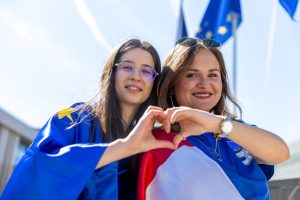
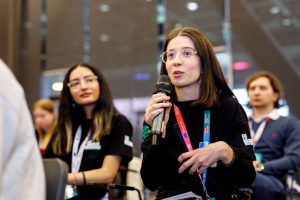
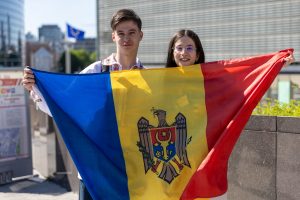
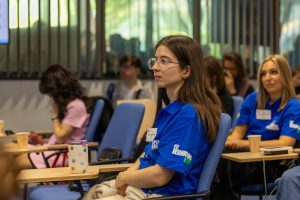
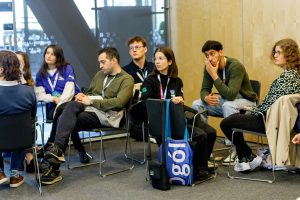
Within the network, Raposo coordinated the Dialogue Initiative with Azerbaijan, helping to organise discussions on culture, society and relations between the European Union and its eastern neighbours. Later, she became a member of the board representing the EU chapter.
Yet one experience stands out most clearly. Through the ‘More EU in Moldova’ initiative, she travelled to Moldova and visited schools in Chișinău and Cahul together with fellow ambassadors.
“We talked to students about the European Union and, for example, what the benefits for Moldova would be if it entered the European Union,” she says.
The conversations left a strong impression: “The feedback was very positive and people were quite engaged. Students would come to us afterwards and ask questions about opportunities to study in Europe.”
What surprised Raposo most was not only the enthusiasm she encountered, but also the opportunity to witness the impact of European cooperation at first hand.
“In Portugal, I was born after our accession to the European Union. I have known the euro for most of my life,” she says. “Seeing the reality of a country that is not yet in the EU but is looking forward to that step was really fascinating.”
A visit to a business incubator in Cahul made that impact tangible. The centre had received European support and was helping local entrepreneurs to develop their businesses.
“It allowed me to see how Europe actually changes people’s lives,” Raposo remembers. “Without that funding, many of them would not have had those opportunities.”
That process of discovery, she believes, lies at the heart of the Young European Ambassadors initiative. “We often have opportunities to meet colleagues from these countries and hear first-hand what life is actually like there. That allows us to build connections much faster,” she says.
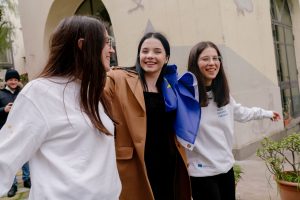
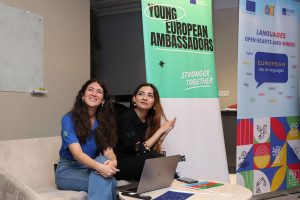
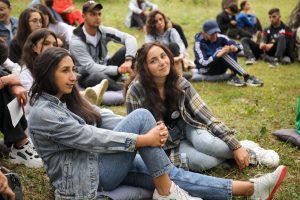

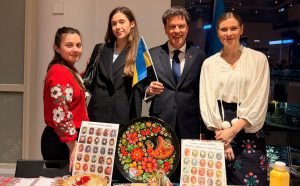
For Raposo, the network fills a gap that traditional political debates often fail to address. “Discussions about the Eastern Partnership or enlargement often remain at the level of politicians, bureaucrats or the news,” she explains. “People might hear about the protests in Georgia or the war in Ukraine, but if young people explain these topics in language that is much more accessible, it creates a stronger connection.”
Through those conversations, events that once felt geographically remote became personal.
Looking back on her years in the network, Raposo sees two parallel achievements. The first is the impact ambassadors create in their communities through events, outreach activities and public discussions. The second is what happens to the participants themselves.
“We have opportunities to develop new skills, build empathy and learn project management because we organise activities ourselves,” she says.
Many participants join while still studying or at the beginning of their professional careers. For some, it is their first experience in organising a public event, managing a project or speaking in front of an audience. Years later, many discover that the most valuable thing they gained was not a line on their CV, but a community. “The thing I value most is exactly those connections,” says Patricia Raposo.
Ten years after the initiative began, that may be its most lasting achievement: not only the projects that were organised or the opportunities that were shared, but the relationships that continue long after both have ended.
Author: Olga Konsevych
The original article published in Ukrainian by TSN.ua
MOST READ
SEE ALSO
Where the lights are always on: how a solar-powered Point of Invincibility is helping Shostka endure

EU-Georgia collaboration is a win-win for AI research and innovation
Freedom, trust and the future of science: Nobel laureates reflect on the ideas shaping tomorrow
Agricultural panic or opportunity in the EU? Ukraine’s next battle is going to be grain
‘It’s like returning to the Wild West’ – Moldova seeks to attract back its lost citizens


The information on this site is subject to a Disclaimer and Protection of personal data. © European Union,
