

Freedom, trust and the future of science: Nobel laureates reflect on the ideas shaping tomorrow
Behind every scientific discovery are years, sometimes decades, of fundamental research, failed experiments, uncertain funding, international collaboration and the freedom to pursue questions without knowing where they might lead. The Nobel laureates recently gathered at the 75th Lindau Nobel Laureate Meeting in Germany argued that scientific breakthroughs depend on far more than brilliant ideas alone.
Those conversations unfolded against the backdrop of Russia’s full-scale war against Ukraine, ongoing conflicts in the Middle East and growing geopolitical competition. The question running through the discussions was therefore broader than science itself: what conditions make discovery possible?
‘Europe is a space of freedom’
For José Manuel Barroso, former President of the European Commission, the answer begins with freedom. Returning to Lindau after accepting the 2012 Nobel Peace Prize on behalf of the European Union, he reflected on the message he had delivered in Oslo more than a decade earlier, adapting the philosopher Spinoza’s famous definition of peace: “Peace is not just the absence of war. Peace is also about freedom, tolerance and accepting the dignity of every human being.”
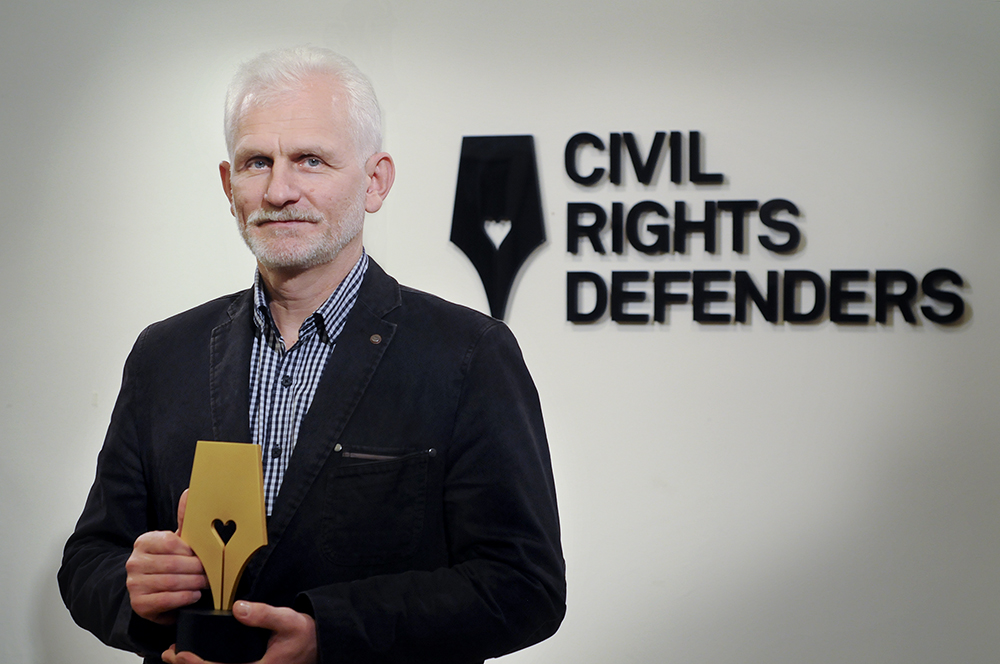
Barroso also called for a more decisive role for the European Union in defending peace, freedom and democracy. “Europe is a space of freedom, peace and shared prosperity,” he said.
Ales Bialiatski, a Belarusian human rights defender, political prisoner and 2022 Nobel Peace Prize laureate, agreed: “Only those who do not remember what Europe was like before can be so negative about the European Union,” he added.
Scientific cooperation should remain stronger than geopolitical rivalry, he argued, calling for what he described as “scientific complicity across borders” grounded in “an ethics of responsibility.” Diseases, climate change and many of the world’s greatest challenges do not recognise political boundaries, and neither, he suggested, should the pursuit of knowledge.
‘Research takes time’
Anne L’Huillier shared the 2023 Nobel Prize in Physics for pioneering experiments that generated attosecond pulses of light – bursts lasting a billionth of a billionth of a second. The breakthrough made it possible to observe the movement of electrons inside atoms and molecules in real time, opening an entirely new window into the microscopic world. Remarkably, the Nobel Prize recognised work that had begun decades earlier.
“I think it means that research takes time. And the researchers should have this opportunity, because it takes time to develop the ideas, the techniques. Sometimes the new ideas come a little bit unexpectedly. You have no control about when they come,” she said. “This is why, for me, basic research is very important, because scientists should be able to do their research without the stress of producing something.”
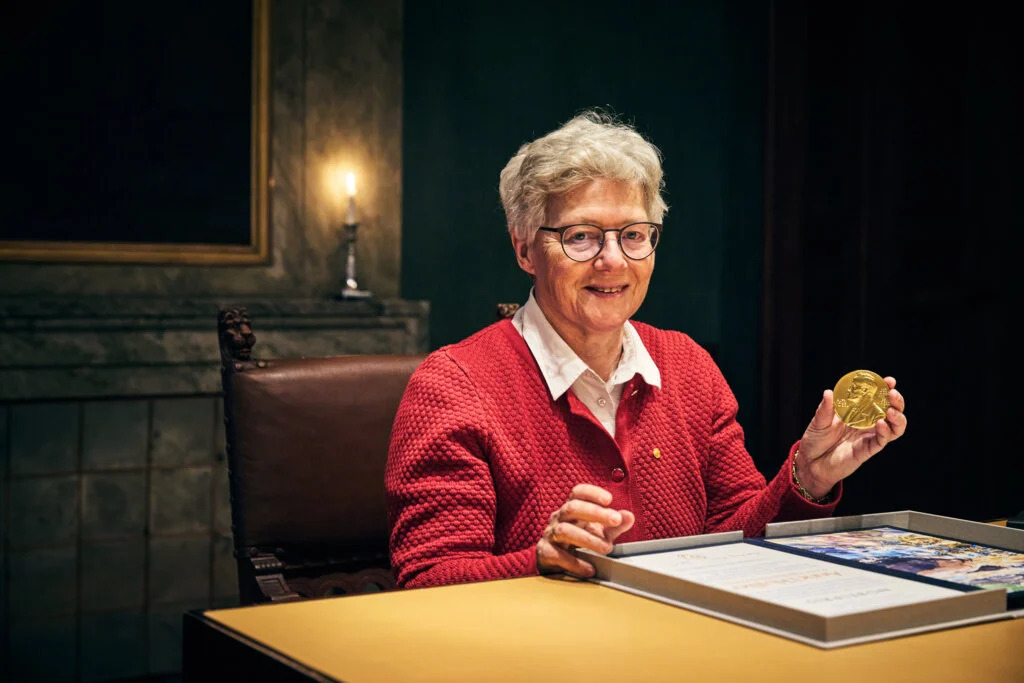
L’Huillier knows how difficult it can be to defend that kind of research. There was a time when senior colleagues encouraged her to abandon attosecond physics altogether.
“My bosses wanted me to do something else, because they thought there was nothing more to get out of this. But I was very stubborn,” she recalled with a smile.
Instead, she continued, encouraged by collaborators abroad who believed there were still unanswered questions worth pursuing.
Her words offer a timely reminder at a time when research is increasingly expected to deliver immediate economic or technological returns. Many of the breakthroughs that shape everyday life – from lasers and semiconductors to messenger RNA vaccines – originated in curiosity-driven research whose practical applications were impossible to foresee at the outset.
How to restore trust
Katalin Karikó shared the 2023 Nobel Prize in Physiology or Medicine for discoveries that enabled the development of mRNA technology, paving the way for vaccines that helped change the course of the COVID-19 pandemic.
Growing up in a Hungarian town of fewer than 10,000 people, Karikó had never met a scientist until a biology teacher convinced her that such a future was possible.
“My biology teacher told me, ‘You can be a scientist.’ You know, this small town, less than 10,000 people, I’ve never seen one, but I imagined that I would be one,” she recalled.
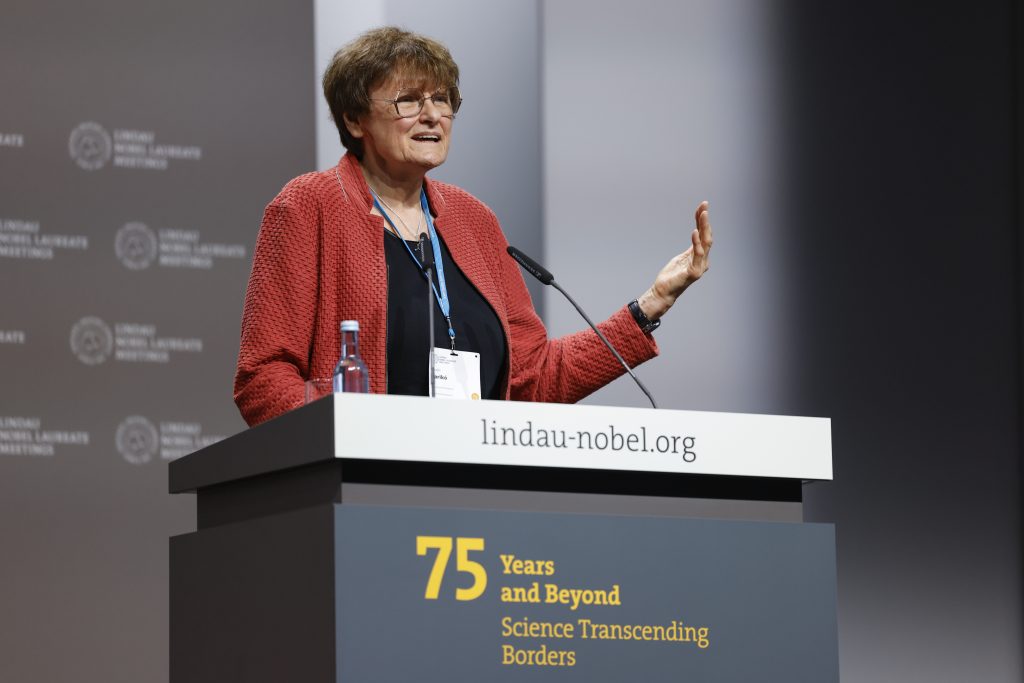
Yet the global health crisis also revealed a paradox. One of the most significant medical breakthroughs in recent history unfolded alongside unprecedented levels of public scepticism towards science.
Asked about what scientists themselves should do differently to rebuild public trust after the pandemic, Karikó did not begin by talking about vaccines or misinformation. Instead, she drew a distinction between scientific validation and public confidence: “It had to be approved by the public.”
Scientific evidence alone cannot persuade people if they no longer trust those producing or explaining it.
“People consider scientists as people who do not care about them or are very remote from them. They discover something, some therapy, that the average person cannot afford, as they hardly can pay for their groceries,” she pointed out.
Her clarification was strikingly personal: “My daughter went to public school. I go grocery shopping. On the weekend I have to cook, we have to clean. We are doing the same thing. We are privileged that we can do research, but otherwise we are ordinary people.”
She illustrated the problem with a story from a visit to a Canadian high school: “I asked the 300 high school students… they could name a hockey player, a Canadian hockey player, but nobody could name a Canadian scientist.”
Karikó believes communication has become part of scientific work itself – not an activity reserved for press offices after a paper is published: “We have to simplify the language that the average person would understand.” And she deliberately included journalists in that responsibility.
‘A good scientist will never be fooled by any AI system’
Swiss astrophysicist Didier Queloz, who shared the 2019 Nobel Prize in Physics with Michel Mayor for the discovery of the first planet orbiting a Sun-like star, reflected on the future of science beyond astronomy.
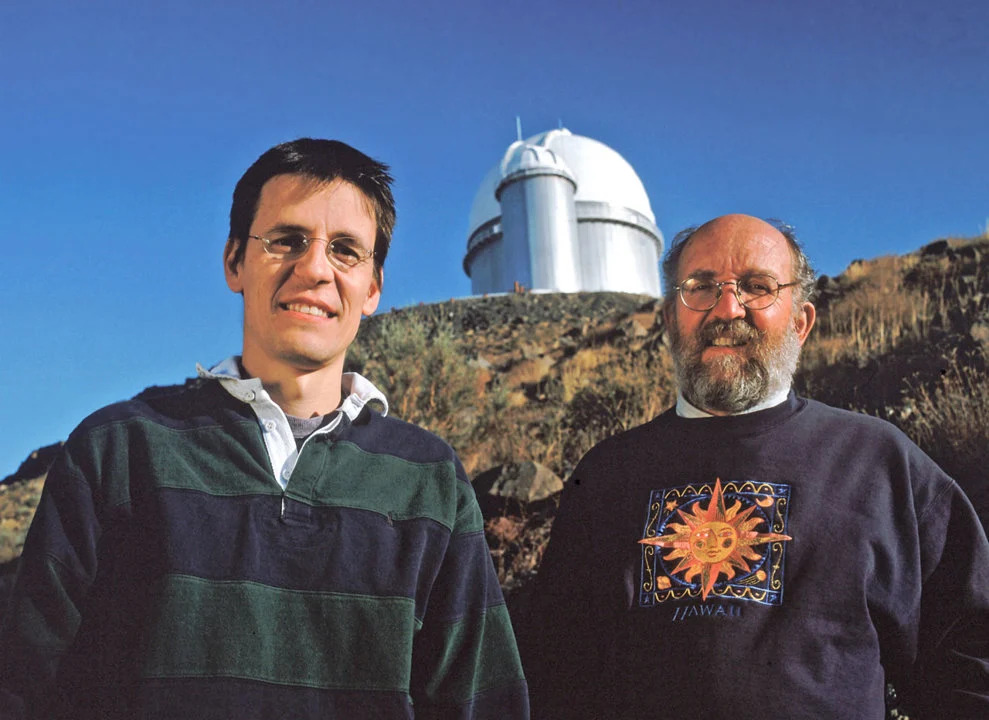
Looking beyond exoplanets, Queloz reflected on the future of science itself – from artificial intelligence to Europe’s ability to remain globally competitive.
Unlike many warnings surrounding AI, the Nobel laureate sees it primarily as a tool. “It’s a great tool,” he said. His research groups already use artificial intelligence, but he rejected the idea that it could replace scientific judgement. “A good scientist will never be fooled by any AI system. Never, ever. Because you have to react to the data and when you feel there is something that is unusual, an anomaly, you will be even more careful.”
He also reflected on one of the foundations of scientific discovery: intellectual independence. While acknowledging that researchers inevitably depend on funding, Queloz insisted that curiosity should continue to drive research.
Queloz believes the bigger challenge lies not in the technology itself but in ensuring that Europe remains capable of developing it. While praising the European Union’s support for research, he argued that excessive bureaucracy is slowing innovation. “The EU system is a great one. I think they are really helping a lot to make the Europe of science happen,” he said. “Europe would benefit a lot with more flexibility… Europe definitely has to reinvent itself because we are facing a new world.”
Although the laureates represented different disciplines they repeatedly returned to one shared idea: discovery flourishes where researchers have the freedom to ask difficult questions, collaborate across borders and pursue knowledge without knowing where it will eventually lead.
Author: Olga Konsevych
MOST READ
SEE ALSO
Agricultural panic or opportunity in the EU? Ukraine’s next battle is going to be grain
She baked bread at home and did not let her children leave the yard for three years: how a Ukrainian mother escaped occupation to prevent the Russians from taking her children
Children are not the only ones to be deported: parents are also taken hostage in occupied Ukrainian territories
Occupation through education: how Russia took over Ukrainian schools
From passion to mission: how Sofiia Nazarenko became a voice of Ukrainian journalism through EU4Youth


The information on this site is subject to a Disclaimer and Protection of personal data. © European Union,
