

Armavir citizens mobilise for safe drinking water
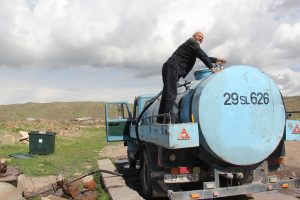
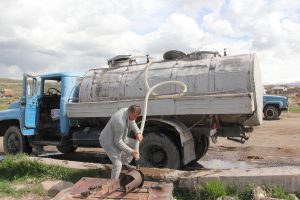
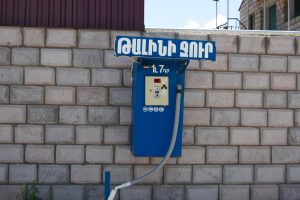
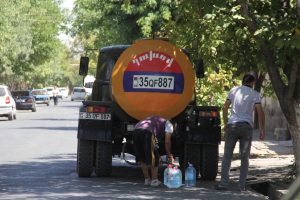
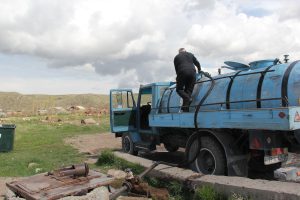
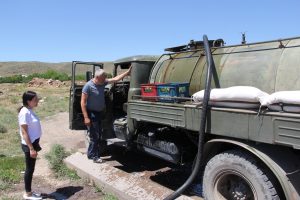
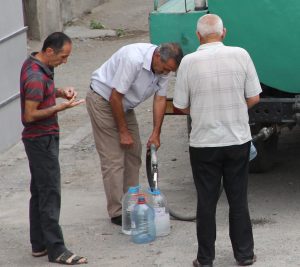
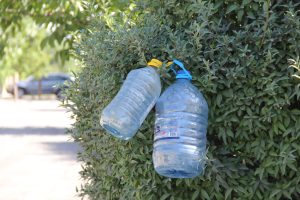
Do you trust the water flowing from your tap? In Armenia’s Armavir Province this simple question is a daily concern for thousands of villagers. Across Armavir, as well as Ararat and Aragatsotn Provinces, rural communities are struggling with excessively hard, heavily mineralised tap water that is not only unpleasant to drink but also harmful for health. Households rely on purchasing drinking water from tanker trucks or stationary water distribution pumps and sales points – an additional expense that weighs heavily on low-income families. With EU support, the local Regional Sustainable Development NGO is working with communities to seek lasting solutions and ensure that residents’ concerns reach decision-makers.
“We’ve been buying drinking water for more than 20 years,” says Gagik Sahakyan (67) from Karakert village. “Our tap water is salty and has an unpleasant smell. No matter how much you drink, it does not quench your thirst.”
Although Armenia is rich in groundwater resources, communities across Armavir and neighbouring provinces that share the same artesian basin are facing growing water issues. Climate change, industrial activity, mining and reduced inflow from the Aras River have contributed to the shrinking of the basin and the deterioration of water quality, leaving saltier soils and much harder groundwater. The rapid expansion of fish farming has seen the drilling of hundreds of new artesian wells – often too close to one another – that have caused ground subsidence and further mineralisation. Despite widespread concerns, communities often lacked reliable information about what was coming out of their taps, or who was responsible for the problem.
From concern to knowledge
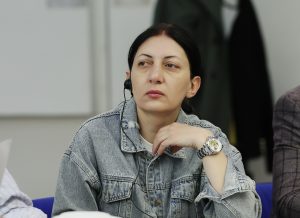
In 2024, EU support through the Prague Civil Society Centre helped the Regional Sustainable Development NGO to launch an initiative that combined scientific evidence, public awareness and citizen participation. Originally established in 2021 to support local self-government reforms, the organisation soon realised that environmental and public health issues represented some of the most pressing challenges for Armavir and neighbouring provinces. “Communities are not able to solve these problems on their own,” says Angela Stepanyan, the president of the NGO.
The first step was to find out exactly what people were drinking. The NGO collected and analysed water samples from 94 settlements, creating one of the most comprehensive local databases on drinking water quality in Armavir Province. The results confirmed what many residents had suspected for years: in many communities, water hardness exceeded Armenia’s maximum permissible level of 7 mmol/L, in some cases by several times. These findings were summarised in a publicly accessible online map, allowing communities to see the dissolved salts level in the water supplied to their homes.
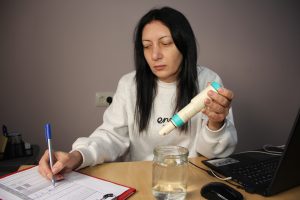
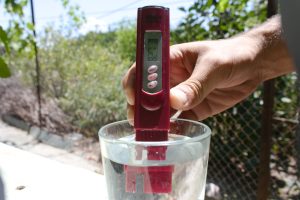
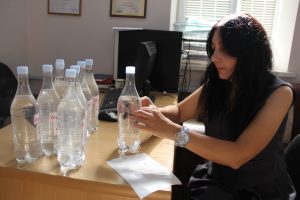
For many residents, it was the first time they got reliable information about the tap water quality. The tests showed that the problem was not ageing pipes, as many believed, but excessive water hardness caused by changes in underground water resources, confirming that, in some villages, water could pose risks to human health.
Knowledge feeds community voice
These findings became the starting point for community action. The NGO brought together active citizens from 40 settlements to discuss the results and better understand the causes of the problem. In the villages most affected by poor water quality, including Myasnikyan, Lenugi, Aknalich and Shenik, it also helped establish civic groups to ensure the issue remained a priority for local authorities. Residents, local authorities and experts came together to clarify institutional responsibilities and identify possible solutions to improve drinking water quality. “Over all these years, our voices have never been heard,” says Gagik. “Without the NGO’s intervention, the problem wouldn’t have been raised, and our concerns would have never reached the right people.“

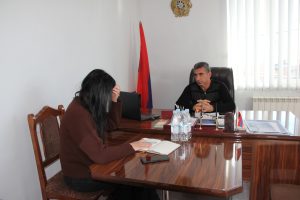
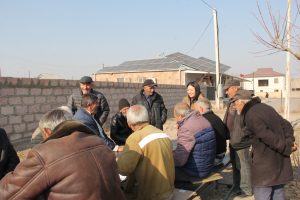
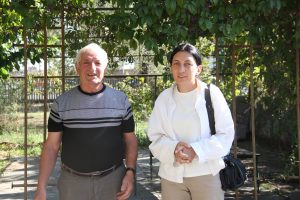
Through public meetings, awareness campaigns and media reaching more than 83,000 people, villagers learned not only about the health risks associated with tap water but also how to advocate for safer water. “We must constantly remind decision-makers to focus on this issue. If we stay silent, nothing will change,” continues Gagik.
Building a roadmap for long-term solutions
While a lasting solution would require a €6 million investment to construct a 22km pipeline from the Nazravan spring, several lower-cost measures could be introduced immediately to improve access to safe drinking water.
“We found that water hardness varies within the same area, depending on the depth and location of the wells,” says Angela Stepanyan. “For example, in the village of Aygevan, wells located only 650 metres apart have different levels of water hardness. Most of deep wells have been allocated to irrigation water supply enterprises, while only one or two remain in each settlement for drinking water supply. In some places, simply switching to another existing well could mitigate the problem.”

This inspired the NGO to create a comprehensive inventory and technical passports for 870 deep wells drilled across Armavir, including the 152 used for drinking water. This would enable local decision-makers to select water from wells with the best quality indicators.
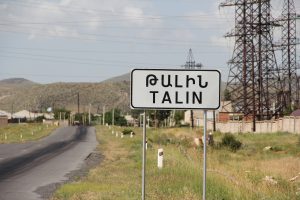
In parallel, the NGO has also been advocating for stronger oversight of drinking water sold through water trucks and stationary water distribution points. The water is transported from the nearby town of Talin, about 40 kilometres away, where it is sourced from clean mountain springs. However, the problem often lies with its distribution: water tanks and stationary pumps are rarely cleaned, and during the summer the tanks can remain under the hot sun for long periods, allowing the water to stagnate and creating sanitation risks. The NGO’s review of Armenia’s legal framework revealed a significant regulatory gap, as drinking water sold through these alternative channels is not subject to quality controls. The findings were shared with local authorities and communities, bringing this issue onto the public agenda.
The Regional Sustainable Development NGO has not solved Armavir’s drinking water problem overnight, but it has done something equally important: communities now have reliable evidence, a stronger voice and the confidence to demand change. For residents like Gagik, this achievement already means a lot: “Knowing that people and organisations outside our community care about us and share our concerns is something very valuable.”
Authors: Volha Prokharava, Alexandra Khoudokormoff
MOST READ





SEE ALSO

‘Europe became real faces and real stories’: Young European Ambassadors look back on ten years of friendships and community projects
Stories hidden in wood
Small ideas, real impact: how students built a natural food brand
Crafted by youth, inspired by tradition: the Hinunik story, a school where new ideas are born within old walls
From waste to high-value products: circular economy in action in Lukashin


The information on this site is subject to a Disclaimer and Protection of personal data. © European Union,
