

From waste to high-value products: circular economy in action in Lukashin
When discussing agriculture in Armenia, attention is often focused on harvests, exports, and market access. Yet in recent years, another important question has come to the forefront: how can agriculture become not only productive and profitable, but also environmentally sustainable, healthy, and nearly waste-free?
For the Lukashin Agricultural Association CC, this question has guided its work for more than two decades. The association’s director, Vardges Davtyan, explained how agricultural waste can be transformed into high-value products.
From non-marketable fruit to a new business idea
Founded in 2005 in Armenia’s Armavir region, the Lukashin Agricultural Association CC today brings together more than 134 farms. Its activities span organic agriculture, farmer training, agricultural machinery services, marketing support, and the development of circular economy models.
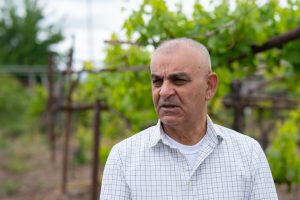
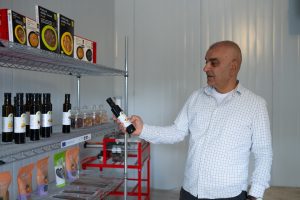
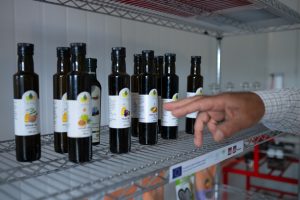
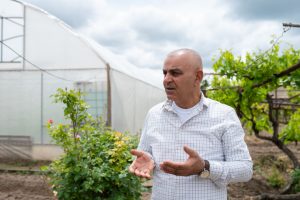
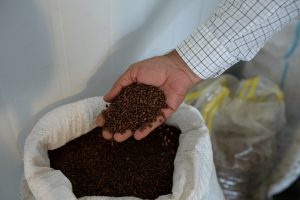
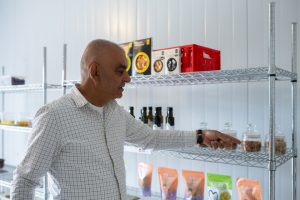
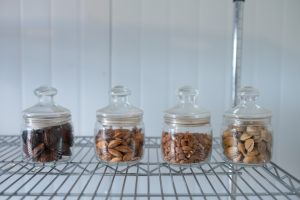
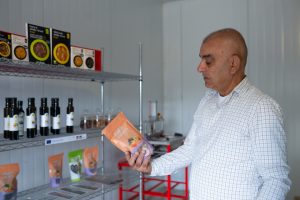
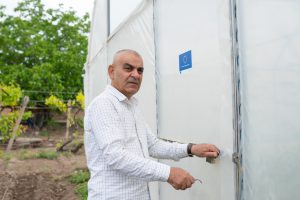
Within the framework of the European Union-funded CirculUP! project, the association produces cold-pressed organic oils used in the food, cosmetics, perfumery, and pharmaceutical industries. “For years, we watched non-marketable fruit rot beneath the trees. Processing factories offered such low prices that farmers often found it unprofitable even to harvest them. That prompted us to look for ways to turn what was considered waste into a valuable product,” said Vardges Davtyan, director of the association.
The association initially focused on producing fruit leathers and other processed food products. Over time, however, its attention shifted to fruit kernels. While participating in international exhibitions in Italy, Germany, France, and other countries, the team discovered growing demand for apricot and peach kernel oils. Although highly valued across various industries, these oils had a limited presence on the market, revealing a promising niche for the association.
German technology at the heart of quality products
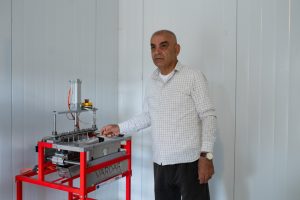
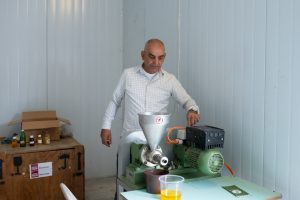
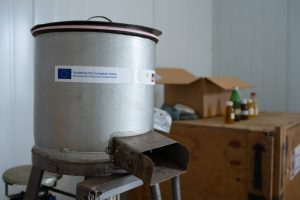
The association initially relied on small-scale Chinese equipment. However, through the CirculUP! project, it acquired German-made machinery.
“The technology you use is critically important. Chinese devices heat the oil to temperatures of 60°C and above, which can compromise its valuable properties. The German equipment allows us to maintain precise temperature control throughout the process, helping to preserve the oil’s natural qualities and ensuring a premium-quality product,” explained Davtyan.
The development of the initiative was supported through phased funding under the CirculUP! project. The association became one of the winners of a SME sub-grant competition, receiving funding of up to €50,000.
This support enabled the construction of the oil production facility and the purchase of the necessary equipment. Following the successful implementation of the sub-grant project, the association gained opportunities to expand its business and engage with other donors and funding institutions.
Delicious does not always mean healthy
Today, the association’s products are exported to London, several cities in Austria, and other markets. Production volumes, however, remain relatively limited, as organic farming and processing require strict compliance with certification standards and quality requirements.
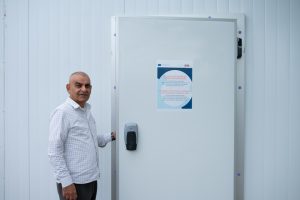
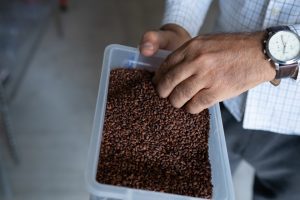
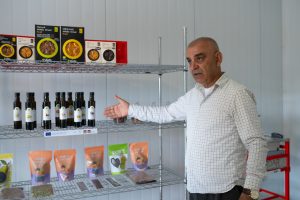
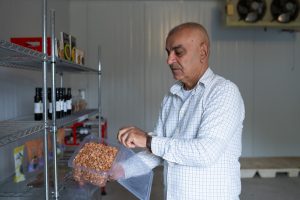
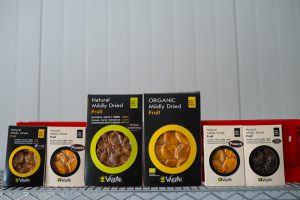
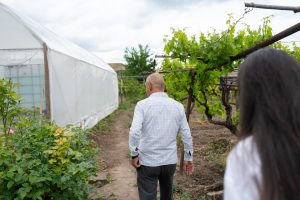
“European consumers place a particularly high value on healthy, certified products, whether dried fruits, oils, or other agricultural goods. People often tell us that Armenian fruits are delicious, but being healthy is a different matter altogether. Delicious does not always mean healthy. There is still a lack of awareness about organic products in the Armenian market, but we are already seeing encouraging changes. More and more dried-fruit producers are beginning to think not only about their main product, but also about how to make use of leftovers instead of simply discarding them,” noted Vardges Davtyan.
Lack of knowledge remains a key challenge for agriculture
According to Davtyan, one of the most significant obstacles facing Armenian agriculture today is the lack of knowledge and advisory services.
“We still have a great deal to learn. Farmers need to understand the true cost of their products, know how to calculate expenses, and clearly assess their profitability. In many cases, people work tirelessly every day without knowing whether their business is actually generating a profit,” he said.
To help address this challenge, the association has for years been organising training programmes, covering a wide range of topics – from organic farming to livestock management.
The main advantage of Armenian products
Davtyan is convinced that Armenian products should be competitive in the international market not due to patriotic accents, but due to quality.
“Armenia competes with major agricultural producers such as Turkey, Uzbekistan, and Iran. Our advantage is not in volume – it is in quality. Today, many Armenian products are exported without Armenian branding and are later repackaged abroad under the labels of other countries.
“If a product is truly high quality, it will find its place in the market. We will never compete with large countries in terms of quantity. What we can do is produce high-value, healthy, and professionally packaged products,” said Davtyan.
Circular economy: when waste becomes a resource
Although the concept of the circular economy is still relatively new in Armenia, it has the potential to transform the agricultural sector by reducing waste and creating additional sources of income.
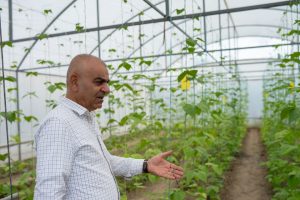
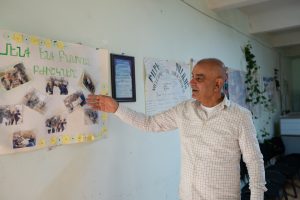
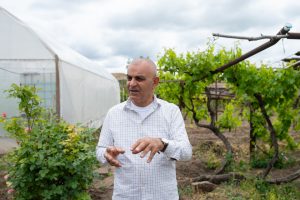
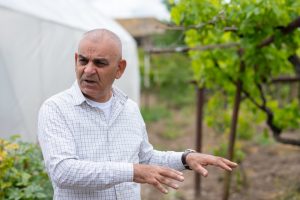
“I am a member of the Armenian Circular Economy Coalition and participate in various training programmes and discussions as an expert. The idea of a circular economy is actually quite simple: what is traditionally considered waste can become a new raw material or a new product. This is particularly important in agriculture, where almost every by-product can potentially be put to use,” said Davtyan.
For many years, large volumes of agricultural residues were either discarded or left in orchards and fields. Yet from a circular economy perspective, these materials represent untapped economic opportunities rather than waste.
“A farmer can generate several products from the same raw material and increase overall profitability. This is especially important for a small country like Armenia. Unfortunately, the opportunities offered by the circular economy have not yet been fully realised,” said Davtyan.
CirculUP! was a comprehensive initiative created and funded by the European Union. The project brought together a wide range of stakeholders with the shared goal of generating positive economic, environmental, and social impact. The initiative was jointly implemented by Impact Hub Network, Impact Hub Yerevan, and the Environment and Health NGO.
Among its key activities, CirculUP! delivered capacity-building and educational programmes designed to equip participants with the knowledge and practical tools needed to understand and apply circular economy principles. Through workshops, seminars, training courses, and sub-grants, the project helped foster new skills and encourage innovation.
Author: Nune Grigoryan
Article published in Armenian, Russian and English by Mediamax.am
MOST READ





SEE ALSO

Armavir citizens mobilise for safe drinking water

‘Europe became real faces and real stories’: Young European Ambassadors look back on ten years of friendships and community projects

Stories hidden in wood
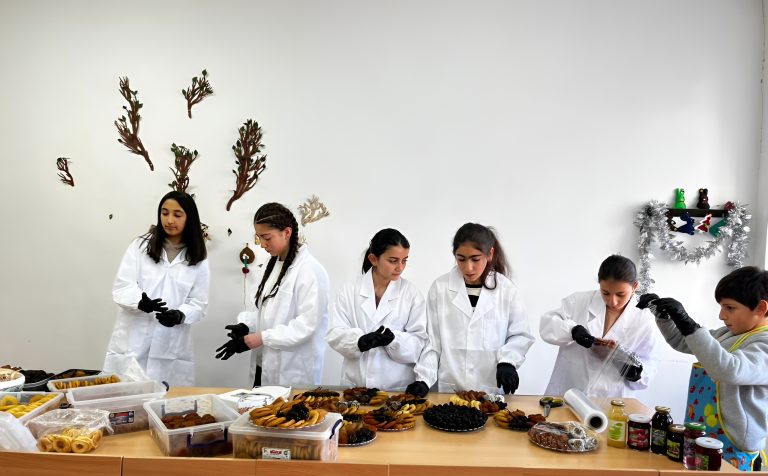
Small ideas, real impact: how students built a natural food brand
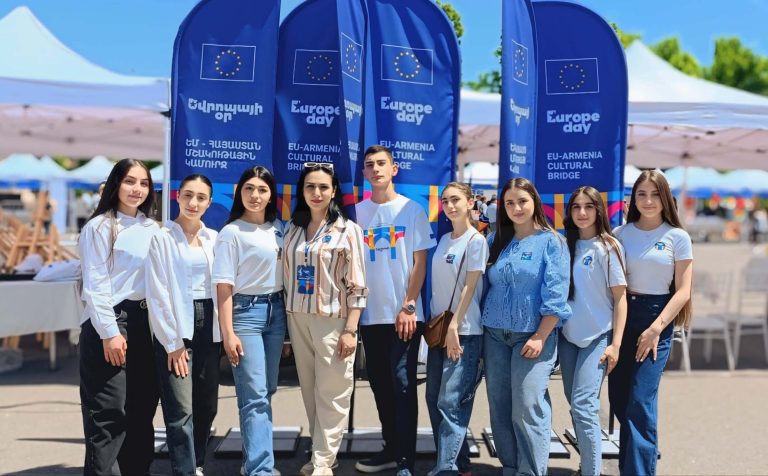
Crafted by youth, inspired by tradition: the Hinunik story, a school where new ideas are born within old walls


The information on this site is subject to a Disclaimer and Protection of personal data. © European Union,
