

Twentieth package of EU sanctions hits Russian energy revenues, military industrial complex, trade and financial services including crypto
On 23 April, the Council of the European Union adopted the 20th package of restrictive measures comprising 120 further individual listings – the biggest package of listings in two years – and multi-layered economic sanctions, targeting key sectors which fuel Russia’s war of aggression against Ukraine.
“Russia’s war economy is under growing strain, while Ukraine is getting a major boost. We must keep up this pressure until Putin understands his war leads nowhere,” EU High Representative Kaja Kallas said.
Russia’s energy revenues
The package includes the basis for a future maritime services ban on Russian crude oil and petroleum products. It will be in full coordination and discussion with the G7 and the Price Cap Coalition – G7 members and other participating countries.
The 20th package introduces a comprehensive set of 36 designations encompassing both the upstream and downstream segments of the Russian energy sector, including the exploration, extraction, refining, and transportation of oil. This package strategically targets emerging players which have recently increased their export market share.
Revenues from Russian oil exports are further suppressed through listings focusing on the shadow fleet ecosystem, including entities operating in third countries, as well as a significant maritime insurer.
An additional 46 vessels are now subject to a port access ban and a ban on the provision of a broad range of services related to maritime transport, bringing the total number of designated vessels to 632. These measures target non-EU tankers that are part of the shadow fleet circumventing the oil price cap mechanism, which otherwise support Russia’s energy sector, or transport military equipment for Russia or stolen Ukrainian grain.
The 20th package also introduces mandatory due diligence checks for the sale of tankers, thereby making it more difficult for Russia to expand its shadow fleet, and bans the provision of maintenance and other services for Russian liquified natural gas (LNG) tankers and ice-breakers.
Furthermore, as of January 2027, it will be illegal to provide LNG terminal services to Russian entities or entities owned or controlled by Russian nationals or operators.
Lastly, the package bans transactions with two Russian ports – Murmansk and Tuapse – and with the oil terminal of the Karimun port in Indonesia, which are used to circumvent the oil price cap.
Financial services and crypto
The EU is imposing a transaction ban on 20 Russian banks.
In addition, the EU is targeting four financial institutions in third-countries with a transaction ban for circumventing EU sanctions or for connection with the Russian System for Transfer of Financial Messages, the Russian banking messaging network.
Due to sweeping sanctions on its financial sector, Russia is becoming increasingly reliant on cryptocurrencies for international transactions. Noting this trend, the EU is designating a Kyrgyz entity operating an exchange where significant amounts of the government backed stablecoin A7A5 is traded. Moreover, the Union is introducing a total sectoral ban on providers and platforms established in Russia that allow for the transfer and exchange of crypto assets. The EU is also banning transactions in another crypto currency (RUBx) and all EU support for the development of the digital ruble. Lastly, netting transactions with Russian agents are now forbidden to avoid the circumvention of EU sanctions.
Russia’s military industrial complex
The 20th package designates 58 companies and associated individuals involved in, inter alia, the development and manufacturing of military goods, such as drones. In addition to denying Russian military enterprises valuable EU technology, this package also addresses Russia’s reliance on third countries for the provision of critical high-tech items. Specifically, the EU has now designated 16 entities based in China, the United Arab Emirates, Uzbekistan, Kazakhstan and Belarus which have provided dual-use goods or weapons systems to the Russian military-industrial complex.
Furthermore, 60 new entities will be subject to tighter export restrictions on items which contribute to the technological enhancement of Russia’s defence sector. Some of these entities are also located in third countries other than Russia, such as in China (including Hong Kong), Türkiye, and the United Arab Emirates.
Trade
For the first time ever, the EU is activating its anti-circumvention tool, by prohibiting the export of any computer numerical control machine and radios to Kyrgyzstan, where there is a high risk that these products will be re-exported to Russia. This decision follows a thorough analysis of trade data showing a significant surge in re-export of common high priority items through Kyrgyzstan to Russia.
The EU has also agreed to expand the existing export ban to include laboratory glassware, certain high performance lubricants and their additives, energetic materials, chemicals, rubber and articles made of vulcanised rubber, articles made of steel, tools for metal production and industrial tractors, worth over €360 million. In addition, the EU has introduced further restrictions on the import of goods which generate significant revenues for Russia: certain raw materials, metals, certain minerals, scraps of steel and other metals, chemicals, articles made of vulcanised rubber and tanned fur skins, worth over €570 million. All these measures will be complemented by an enhanced prohibition on transit via Russian territory.
Lastly, The EU is introducing a quota for imports of ammonia.
Accountability
To enforce accountability, the EU is listing five individuals and one entity enabling the abduction, forced transfer and indoctrination of Ukrainian children, as well as four persons involved in the appropriation of Ukrainian cultural heritage. Moreover, the 20th package designates four propagandists, including those with state-sponsored platforms.
Other measures
The EU is introducing stronger legal safeguards to protect EU companies from violations of their intellectual property rights or from unfair expropriation in Russia due to abusive court rulings in relation to sanctions. It is also introducing a ban on the provision of cyber security services to Russia.
The Council has decided to expand the existing broadcasting prohibition to include sites which mirror the prohibited entities, thus circumventing EU measures. In line with the Charter of Fundamental Rights, the measures agreed today will not prevent the targeted media outlets and their staff from carrying out activities in the EU other than broadcasting, e.g. research and interviews.
The traceability requirements for diamonds have been tightened, obliging importers of polished diamonds to provide a due-diligence statement confirming that the diamonds were not mined, processed or produced in Russia.
Belarus
The package includes three new listings related to the Belarusian military-industrial complex and the Lukashenka regime. For the first time under the Belarus sanctions regime, a Chinese state-owned entity is targeted, due to its role in the production of Belarusian military goods.
Additionally, it includes measures intended to mirror those imposed on Russia, notably trade measures, legal protection, measures on crypto and restrictions on the provision of cyber security services and tourism services.
The Belarus sanctions regime was extended by the Council until 28 February 2027.
Find out more
MOST READ





SEE ALSO
EU and Ukraine discuss consequences of temporary occupation of Ukrainian territories by Russia
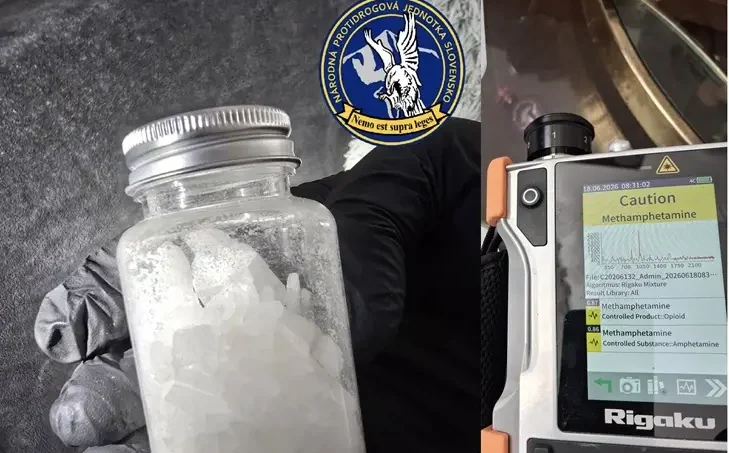
Drug trafficking: Europol arrests 20 suspects in coordinated operation across Czechia, Slovakia and Ukraine
EU Advisory Mission: Sweden helps Ukraine strengthen financial crime investigations
EU4Dialogue’s new phase kicks off in Armenia
Ukraine: Safety Centre opens in Zaporizhzhia Oblast with EU support

The information on this site is subject to a Disclaimer and Protection of personal data. © European Union,
