

Ukraine is not a case study in suffering: a new cultural language for Europe
“Don’t call me resilient,” says curator and cultural activist Mariana Berezovska, who works between Kyiv and Berlin. The phrase has become almost a personal manifesto. While the word is often used positively in European discourse, for many Ukrainians it increasingly feels like a simplification of an experience that is far more complex.
This conversation is not only about how Ukraine is seen from abroad, but about how it is actively reshaping its position within European culture. Beyond narratives of war and resilience, Ukrainian artists are increasingly participating in European cultural production as equal contributors – working across ecology, technology, digital art, and interdisciplinary practice. In this sense, Ukraine is not an object of cultural observation, but part of the evolving cultural language of Europe itself.
We spoke with Berezovska about how Ukrainian artists are trying to move beyond narratives centred exclusively on trauma and suffering, and how culture is becoming part of a broader European dialogue around ecology, technology, identity, and collective experience.
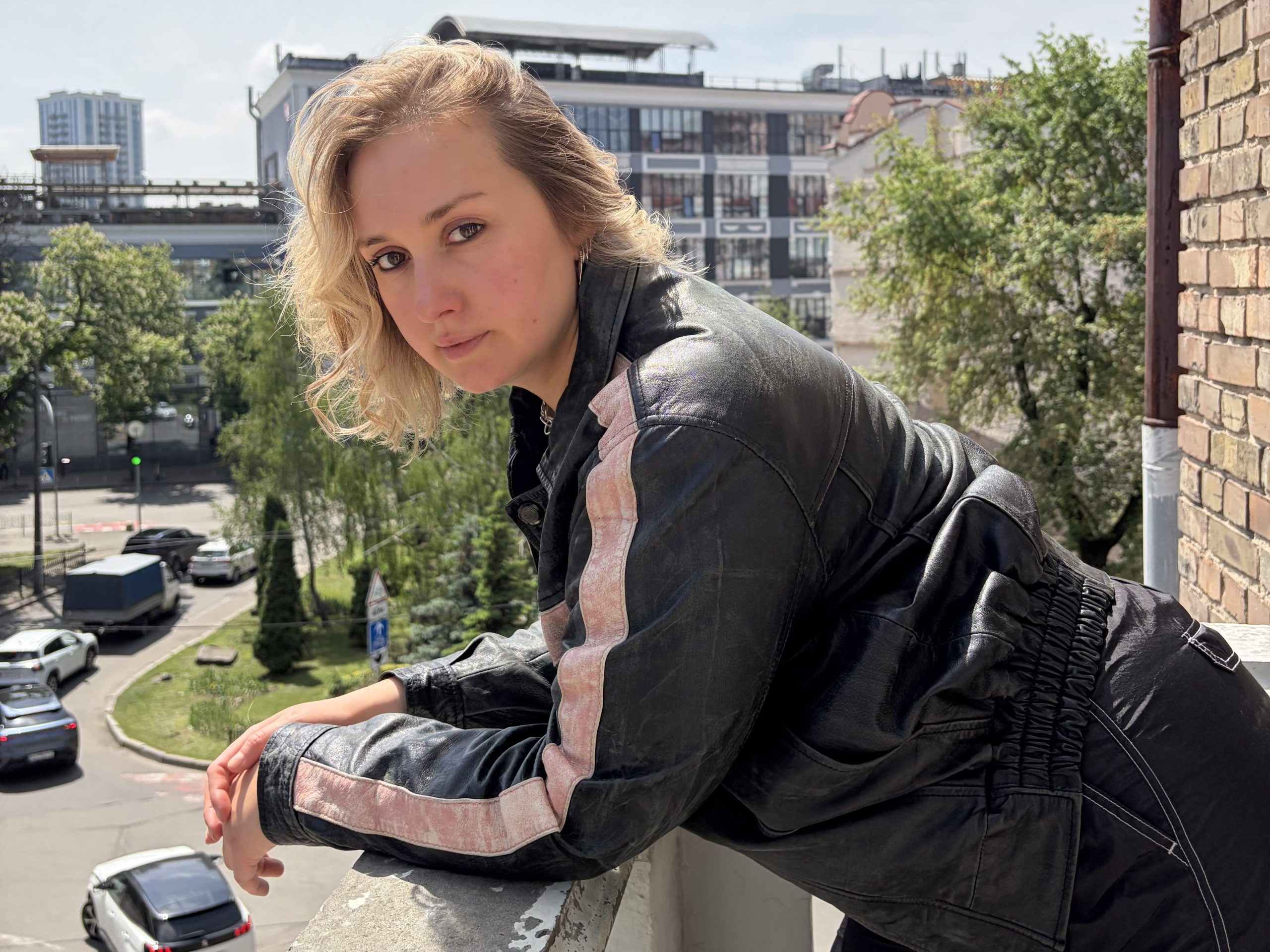
“Has this time been enough for Europeans to become interested and understand? One hundred per cent no,” she insists, despite the emergence of strong cultural and public actors who systematically work with the representation of Ukraine.
It is precisely this logic that she is trying to challenge through interdisciplinary artistic projects combining sound, light, video, digital environments, and scientific research.
Ukrainians are courageous and united
One of the reasons for this distance remains that the image of Ukraine in the international context is still often shaped by simplistic narratives. The most common of these is “resilience”. In European discourse, this word is usually used as a positive characteristic, but for Ukrainians themselves it increasingly sounds like the generalisation of a complex experience into a single trait. In conversations with foreign colleagues, Mariana often insists: “Don’t call me resilient.”
She names other characteristics that, in her opinion, define Ukrainian society today. “Courageous, freedom-loving, and united. We can show an example of how grassroots initiatives work, how foundations arise, how people unite,” the curator said.
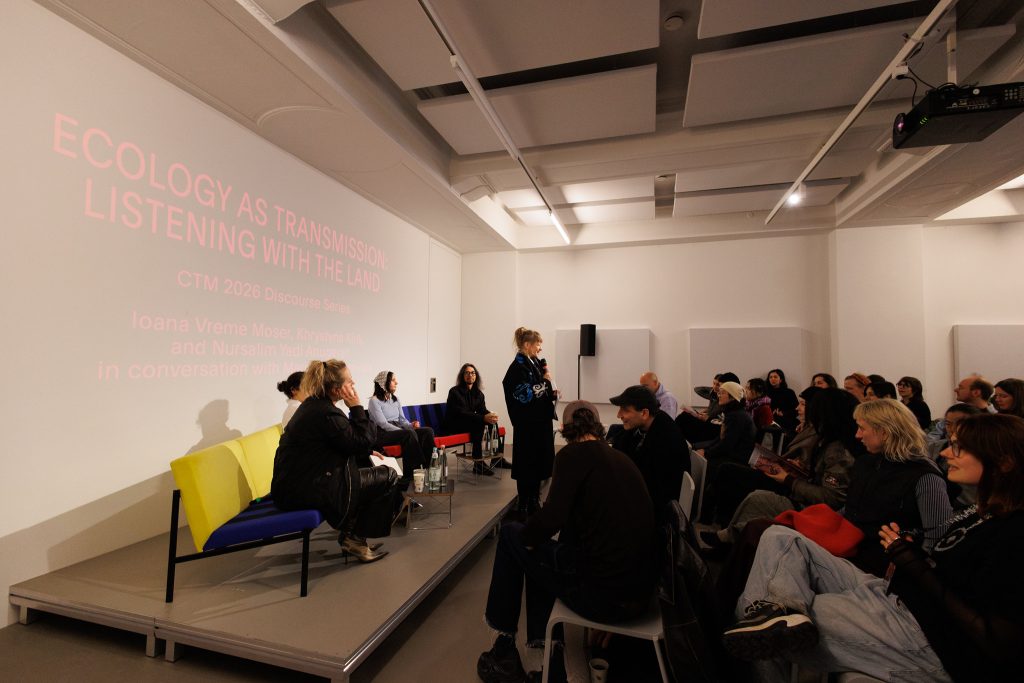
Rethinking is also taking place at the level of cultural production. According to Berezovska, there is an unspoken division of topics: “There is a tendency: countries like Ukraine, the Balkans, Georgia, many African countries – they always talk about their suffering. And technological development and anything innovative is left behind by Western countries.” It is this logic that she is trying to change, working with new media and interdisciplinary formats.
Projects in collaboration with Anastasia Syradoyeva and Alain Hast, such as ‘Echoes of the Earth’ (2024) and ‘Disturbed Ground’ (2025-2026), demonstrate this approach in practice. In the first case, it is a residency and exhibition in Kyiv at the Concert Hall – a cultural space that hosts performances, film screenings, and festivals. Here, Ukrainian artists worked with field research by ecologists who documented the consequences of the war – from the demolition of the Kakhovka hydroelectric power station to the pollution of water systems and the destruction of natural areas. This data was transformed into multimedia installations that combined sound, light, photogrammetry, and digital environments, creating a holistic sensory narrative of the ecological catastrophe.
European cultural infrastructure plays an important role in creating space for Ukrainian voices not as humanitarian cases, but as equal participants in cultural dialogue.
The Disturbed Ground project, created in collaboration with the Kyiv-based space ∄ and Berlin CTM Festival, brought together Ukrainian and European artists to explore the environmental consequences of war.
The project was developed with the support of the Goethe-Institut’s International Coproduction Fund, funded by the German Federal Foreign Office. At the same time, its international dimension is also connected to broader European cultural cooperation platforms. The CTM Festival is part of SHAPE+, a European platform for innovative music and audiovisual art co-financed by the EU Creative Europe programme, which supports cross-border artistic collaboration and mobility across Europe.
Such initiatives demonstrate how Ukrainian and European artists are increasingly becoming active contributors to European cultural conversations rather than simply subjects of international attention. They also illustrate how European cultural cooperation programmes create opportunities for long-term exchange, co-production, and international visibility, even under wartime conditions. “I have always been interested in new media – sound, light, video as mediums. And this immersive experience affects all the senses. We wanted it to be understood not only intellectually, but intuitively, emotionally,” explains Berezovska.
These projects work not only as artistic expressions, but also as tools for translating experience from scientific language into an emotional and sensory dimension understandable to a wider audience. They also changed Ukraine’s position in the European cultural space: from an object of observation to an active participant in the formation of new themes and approaches, particularly in the fields of ecology, technology, and interdisciplinary art.
According to Berezovska, such connections are essential not only for artistic development, but also for ensuring that Ukrainian voices remain present within broader European cultural debates.
Having gained experience through projects supported by the Goethe-Institut’s International Co-Production Fund, she and her colleagues are now developing their own initiative, with hopes of applying for Creative Europe – a programme they see as an especially promising space.
Language as a right to self-identification
At the same time, the conversation inevitably touches on language and identity. For decades, Ukrainians have been trying to be included in the same “team” with Russian-speaking artists. But the opportunity to create with your own individual voice also helps to develop and open yourself up to the world. Despite the complexity of the topic, Mariana Berezovska insists on its obviousness in the European context: “The right to self-identification is one of the basic European values. And language is the easiest way to say who you are.” For example, in her essay, which touches on the issue of language, the cultural figure emphasises that the Ukrainian experience is part of a broader history of colonial pressure on languages.
“This is not only Ukrainian history. Many languages have been destroyed, and now they are trying to restore them. It’s just that our language is still alive – and this is a great opportunity,” she says.
Changes in the practice of language within a country often occur not because of political decisions, but because of personal choice. “All my closest friends were Russian-speaking. Now everyone speaks Ukrainian. And it’s not because they were forced to – it’s because they think about their values,” she insists.
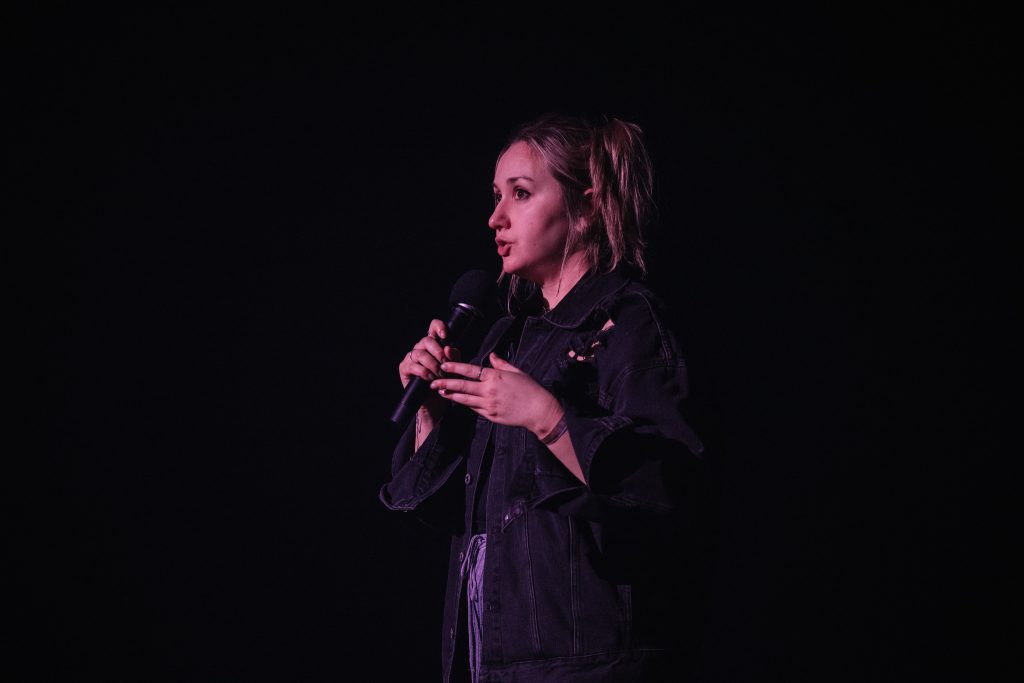
Despite active international interaction, Berezovska emphasises that culture in Ukraine also has an internal function – forming an environment in which people can feel part of a common process: “It is very important to create something here. So that people feel that we are not only living in destruction and bomb shelters.”
This is crucial for the young generation, which is being formed in conditions of war and needs not only stability, but also a cultural perspective. “Young people need the feeling that something is happening here, that there is culture, there is movement, there is a space to which they can belong,” confirms Maryana Berezovska, who believes that cultural projects are becoming not only a form of expression, but also a way of maintaining contact between people.
Infrastructure as a condition for equality
Despite the openness of international partners and the availability of separate support programmes, the key challenge remains the lack of a stable infrastructure. Berezovska puts it as bluntly as possible: “I understood very clearly that funding is the most important thing. Without it, nothing works.” It’s not just about access to grants, but about systemic conditions that allow culture to develop in the long term.
“In Ukraine, there are not enough foundations, there are not enough places where artists can work, think, develop. This is the basis in Europe,” she notes. It is this difference that indicates the possibilities and level of integration of culture into a common space. International support is important, but without the development of domestic institutions, it cannot provide a sustainable effect.
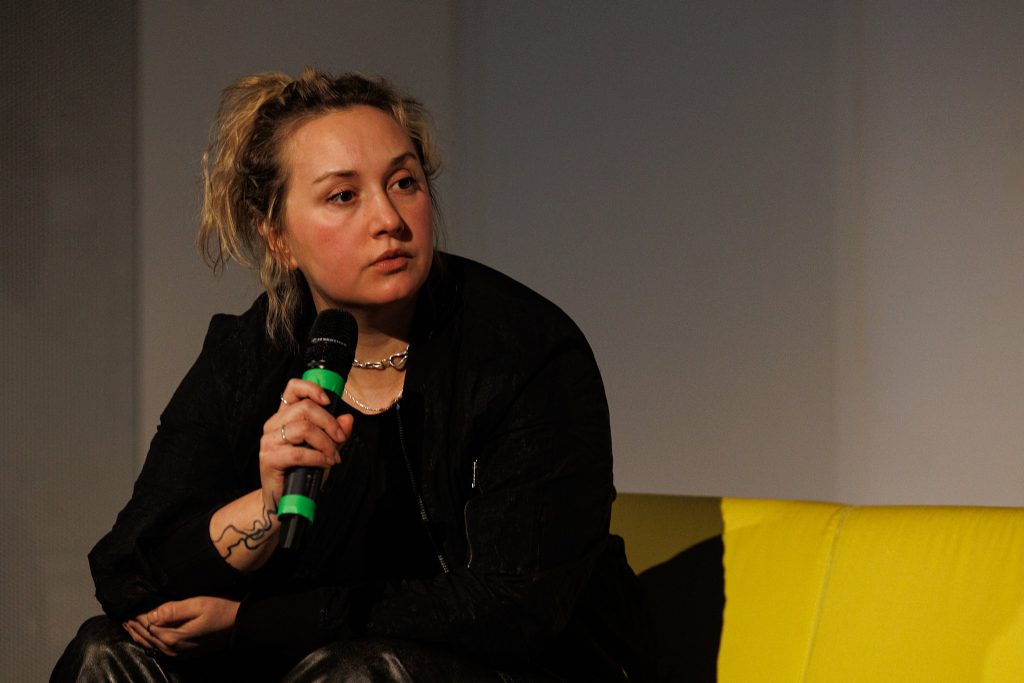
In this sense, the discussion around culture also becomes part of a broader conversation about reconstruction and European integration. Sustainable cultural infrastructure, long-term institutional support, and equal international partnerships are increasingly seen as essential elements of rebuilding Ukrainian society beyond the immediate realities of war.
Today, Ukrainian culture is gradually changing its position within Europe. It is moving beyond narratives focused solely on suffering and “resilience”, offering new perspectives on ecology, technology, memory, identity, and collective experience that resonate far beyond Ukraine itself.
In this context, Ukraine appears not as an object of aid, but as an equal participant in cultural dialogue. Ukrainian artists are increasingly shaping Europe’s cultural conversations on equal terms.
As Mariana Berezovska concludes, the basis of this dialogue remains quite simple: “We don’t need to invent anything. We need to know our history and be able to tell it.”
Today, Ukrainian culture is not defined solely by the context of war or resilience. It is actively shaping European cultural conversations through new approaches to ecology, technology, memory, identity, and artistic practice. In this evolving space, Ukraine is not positioned as a recipient of cultural attention, but as a co-author of Europe’s contemporary cultural landscape.
Author: Olga Konsevych
Article published in Ukrainian by TSN.ua
MOST READ
SEE ALSO
From passion to mission: how Sofiia Nazarenko became a voice of Ukrainian journalism through EU4Youth
A partnership that builds resilience
Packaging from mushrooms: how a Ukrainian start-up is contributing to Europe’s green economy
From idea to energy: how Kyiv youth are developing the ‘energy willow’ project
A space where science comes to life: how an interactive museum in Ternopil is inspiring the community


The information on this site is subject to a Disclaimer and Protection of personal data. © European Union,
