

Packaging from mushrooms: how a Ukrainian start-up is contributing to Europe’s green economy
The packaging industry produces hundreds of millions of tones of materials every year, most of which will remain in the environment for far longer than any modern business is likely to exist. It is this fundamental contradiction – between the short lifespan of use and the long-term environmental consequences – that a new generation of companies is seeking to address by building businesses at the intersection of biotechnology and the circular economy.
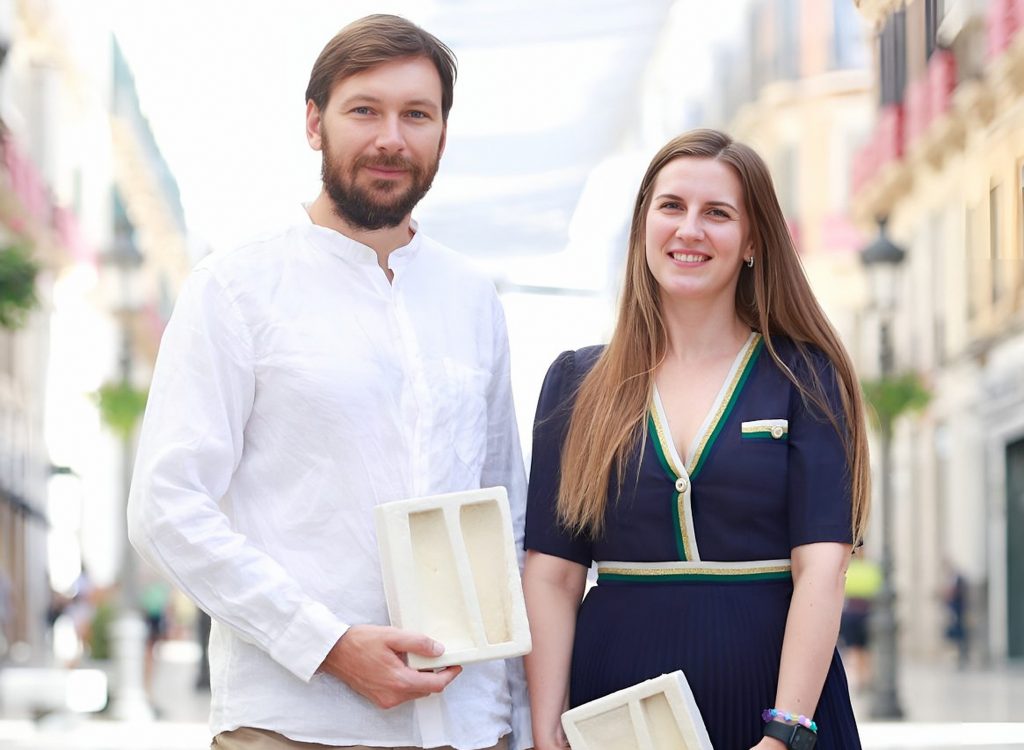
S.Lab is one such company. The Ukrainian start-up has developed a technology that transforms mycelium and agricultural waste into packaging materials that fully biodegrade under natural conditions. The solution has already received international OK Home Compost certification. In just a few years, the company has progressed from laboratory prototypes to pilot projects with major corporations, secured support through the EU-funded Greencubator programme, and is now building a decentralised production network across Europe and Asia.
Julia Bialetska, CEO and co-founder of S.Lab, spoke about the technological and business rationale behind this model: how biodegradability can be combined with industrial-strength performance requirements; why local production based on locally sourced raw materials is a structural advantage rather than a marketing slogan; and what the growing readiness of the Ukrainian market to adopt sustainable packaging reveals about broader shifts in entrepreneurial thinking.
The S.Lab journey: from idea to product
How did the idea for S.Lab emerge? What motivated you to move away from traditional materials and focus specifically on mycelium and agricultural waste?
The idea for S.Lab was born not in a laboratory, but on a beach in Bali. Several years ago, while travelling around the island, I witnessed the scale of plastic pollution at first hand. Many beaches that appeared to be tropical paradises were, during certain seasons, covered with plastic waste, much of it from packaging materials.
What struck me was a simple thought: we create materials that we use for just a few minutes, yet they remain in the environment for hundreds of years. This is especially true for packaging materials that are not recycled and instead accumulate in landfills, polluting soil, oceans, and even our own bodies.
When I returned home, I began exploring possible alternatives. That was when we turned our attention to mycelium – the root-like structure of fungi, which serves in nature as a remarkably effective biological binding material. We were fascinated by the idea of harnessing its ability to form strong structures and combining it with agricultural waste, which is often simply burned or discarded.
That is how S.Lab came into being. From the very beginning, our goal was to offer an industrial-scale packaging alternative that could fully return to nature after use without causing harm to the environment.
What did the journey from the initial idea to your first real product look like? What were the biggest challenges in the early stages, and how did you overcome them?
It all began with experiments involving hemp and fungi. While that may sound like a joke, we really did begin by testing hemp waste and trying to create a new material – a biocomposite – from scratch.
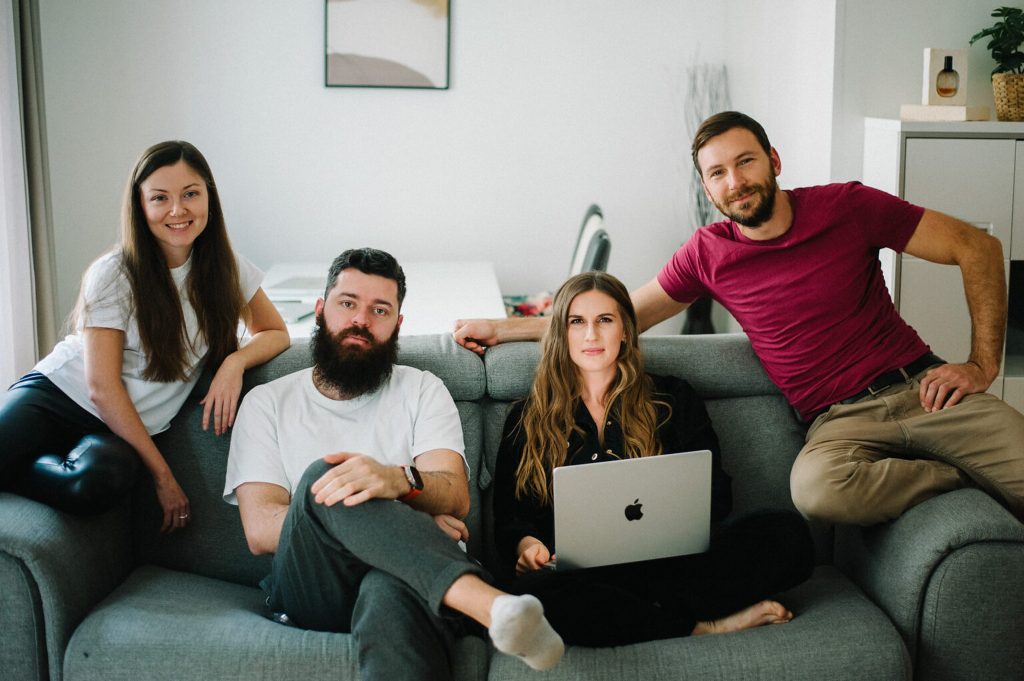
Together with my husband, Yevhen, who is S.Lab’s co-founder and Chief Technology Officer (CTO), we began researching new materials and experimenting with different components until we found what proved to be the ideal combination: mycelium and industrial hemp residues.
We literally mixed plant-based raw materials with fungal mycelium, observed the growth process, adjusted formulations, and tried to determine whether this could become something more than just an interesting biological experiment.
At the time, we did not have a large production facility or a sophisticated laboratory. What we did have were dozens of failed attempts and countless samples that broke, crumbled, or simply failed to grow as expected. Gradually, however, we began to see promising results.
Perhaps the most interesting part is that our first “testers” were friends, acquaintances, and colleagues. We would bring them material samples and ask for honest feedback. That was when we first heard that this could become an excellent packaging material – one that potential customers would actually be willing to buy.
We realised something equally important: if we wanted to transform an entire industry, creating an environmentally friendly material would not be enough. It had to be just as functional as conventional alternatives. The material needed to protect products, be reliable, and remain cost-competitive. Most importantly, we needed to be capable of producing it at a scale that could generate a meaningful environmental and economic impact.
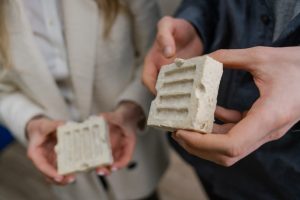
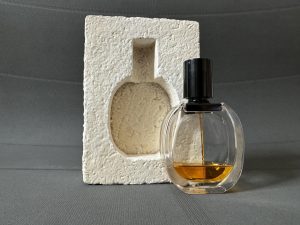
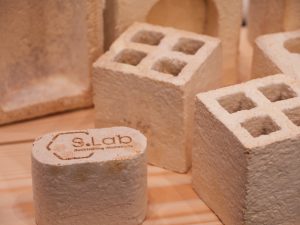
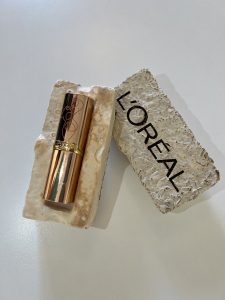
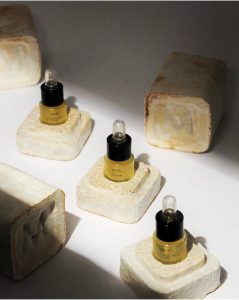

That was the moment we began thinking like manufacturers solving a real business problem. From developing an innovative technology to finding customers willing to test a completely new material and collaborate with us on product validation, we faced numerous challenges along the way.
The role of Greencubator
What role did your participation in the EU-funded Greencubator programme play in S.Lab’s development? What proved most valuable for you – knowledge, connections, or funding?
For us, participation in the programme was one of the key turning points in the company’s development. At that stage, we already had our first research results and a handful of early customers, but moving from laboratory experiments to viable technology required additional resources.
Thanks to the programme’s financial support, we were able to accelerate technology development, build the first prototype of our production process, and file our initial patent applications, which later became the foundation of the company’s intellectual property protection strategy.
This is particularly important for climate-tech start-ups, as developing innovative technology typically requires far more time and investment than launching a conventional digital product.
Greencubator is a Ukrainian non-governmental organisation that promotes sustainable entrepreneurship, low-carbon innovation, and the green economy. Since 2017, it has been implementing the Climate Innovation Vouchers programme in Ukraine – one of the country’s largest grant initiatives supporting innovators working on green and climate-friendly technologies. The programme operates within the framework of the EBRD’s FINTECC programme and is supported by the European Union.
At the same time, the value of the programme extended far beyond financial support. Backing from respected international institutions such as the European Bank for Reconstruction and Development (EBRD) provided a powerful signal of credibility and trust. When you are developing a fundamentally new technology, investors and partners evaluate not only the product itself, but also the organisations and institutions that choose to support it at an early stage.
That credibility helped us open new doors. In the years that followed, we attracted international investors, launched our first pilot projects with major corporations, participated in global acceleration programmes, and later received support from Morgan Stanley Inclusive Ventures Lab and other international partners.
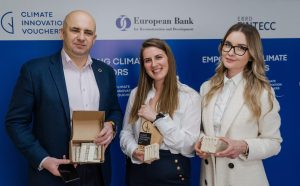

So, if I had to identify the most valuable aspect of the programme, it would be the combination of two things: the opportunity to advance our technology through financial support and the opportunity to build a reputation as a company trusted by leading international institutions. For an innovation-driven start-up, both factors are equally important.
Is the market ready for sustainable packaging?
In your view, how ready are Ukrainian businesses and the market as a whole to transition to environmentally friendly packaging? How has the attitude toward the green economy changed in recent years?
Today, around 30% of the companies using S.Lab packaging are Ukrainian businesses. In many ways, that is probably the best answer to the question of whether the market is ready.
Despite the war, economic uncertainty, supply chain disruptions, and the many other challenges that Ukrainian entrepreneurs face today, a significant number of companies continue to invest in sustainable solutions. From a business perspective, this is not always the easiest choice, as times of crisis naturally encourage companies to focus primarily on survival.
Yet what we see is different. Many Ukrainian brands are consciously choosing more sustainable alternatives because they care not only about the products they sell, but also about the values those products represent. They think about their environmental impact, responsible consumption, and the legacy they leave behind.
I believe an important shift in mindset has taken place over the past few years. Whereas sustainability was once often viewed as an added benefit or a marketing tool, an increasing number of companies now see it as an integral part of their identity and long-term strategy.
There is also another important dimension to consider. Unfortunately, the war has caused immense destruction across Ukraine. At the same time, the country’s future reconstruction presents a unique opportunity to rethink how we build our cities, infrastructure, and industries.
Today, Ukrainian entrepreneurs, engineers, and researchers are already developing new solutions in areas such as energy efficiency, the circular economy, renewable energy, resource management, and resilient infrastructure. We are not simply rebuilding what has been lost. We have an opportunity to create a more modern, efficient, and sustainable model of development.
I am also convinced that many of the solutions emerging in Ukraine today under extraordinarily challenging circumstances may, in the future, serve as examples for other countries around the world. After all, some of the most significant innovations are born out of the greatest challenges.
That is why I remain very optimistic about the future of the green economy in Ukraine. Despite all the difficulties, Ukrainian entrepreneurs continue to build businesses driven not only by profit, but also by purpose. It is this combination of the two that makes me optimistic.
How do you manage to combine full biodegradability with the strength and insulation properties that manufacturers require? Is it primarily a matter of technology or of selecting the right raw materials?
It is a combination of both.
Mycelium itself is a unique natural material. As it grows, it forms a complex network of fibres that bind plant-based particles together. This structure is what gives the material its mechanical strength and thermal insulation properties.
However, the material itself is only part of the equation. Equally important are the cultivation technology, precise control of production conditions, and the careful selection of raw materials. We spent years optimising these parameters and developing proprietary production processes that allow us to achieve consistent material performance.
In essence, we do not simply manufacture packaging — we manage a biological process in a way that delivers a predictable industrial outcome.
Because we use only agricultural waste and mycelium, without any synthetic additives or additional binding agents, we are able to guarantee the material’s biodegradability. In fact, we recently obtained OK Home Compost certification, which independently verifies that our material fully biodegrades under home composting conditions.
Why decentralised production matters
You are developing a decentralised production model across Europe and Asia. Why do you believe this approach – producing packaging locally from locally sourced agricultural waste – is key to the future of the industry?
Today, most packaging materials are produced in centralised facilities and then transported over long distances. This results in substantial logistics costs – which can account for more than 30% of the total cost of packaging – as well as a significant carbon footprint.
We believe the future lies in localised production. Agricultural waste is available in virtually every region of the world, although its composition varies from one location to another. Our technology allows us to adapt production processes to locally available feedstocks and manufacture packaging close to where it will ultimately be used.
This model reduces transportation costs, lowers CO₂ emissions, creates local jobs, and makes supply chains more resilient.
In my view, this is not only the future of the packaging industry but also part of a broader transformation taking place across global manufacturing. Increasingly, industries are moving toward production models that are more local, resource-efficient, and resilient.
The future of S.Lab
Where do you see S.Lab in five years, and what message would you like to share with other Ukrainian entrepreneurs who are considering building businesses around sustainability principles?
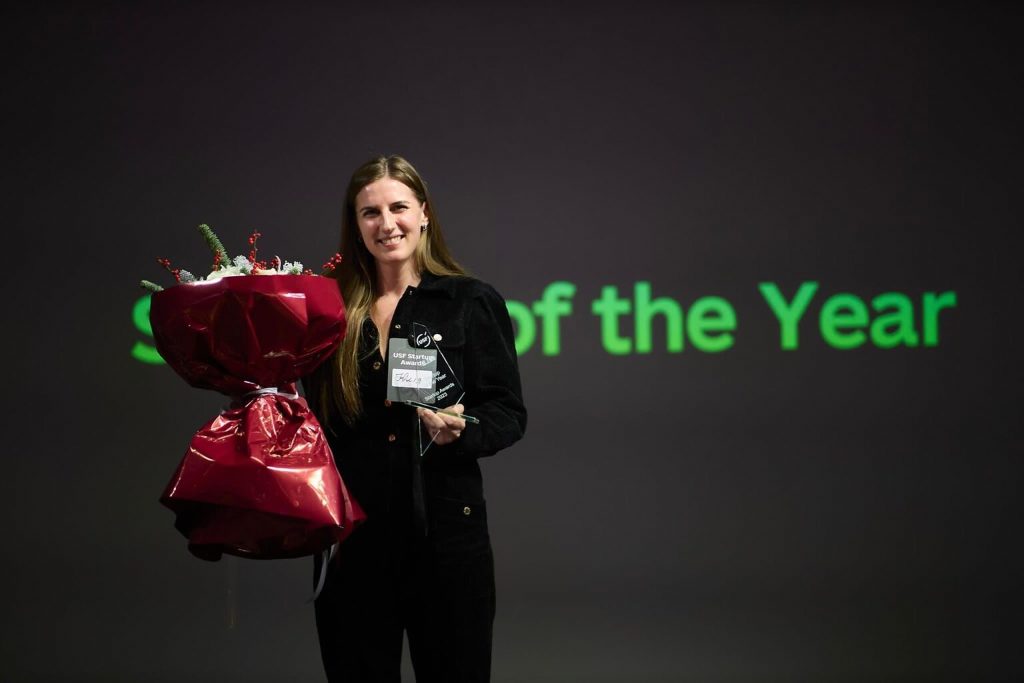
In five years, I see S.Lab as a global company with a network of local production facilities operating across different countries. Our goal is to make sustainable packaging not a niche alternative, but the new industry standard.
Equally important to me is ensuring that S.Lab remains an example of world-class Ukrainian innovation. Ukraine has tremendous potential in science, engineering, and entrepreneurship, and today we are seeing an increasing number of Ukrainian companies successfully competing in global markets.
My message to other entrepreneurs is simple: do not view sustainability as a constraint or a compromise. The most exciting businesses of the future will be built where economic value creation goes hand in hand with solving real social and environmental challenges.
S.Lab’s story demonstrates that Ukrainian green-tech companies are already part of a broader European transformation – one that is not only technological, but also values-driven. Through the support of European institutions, partnerships with Greencubator, and expansion into international markets, start-ups like S.Lab are becoming integrated into Europe’s wider agenda of decarbonisation, the circular economy, and sustainable industrial development.
For Ukraine, this means far more than the creation of new products. It represents the emergence of a modern model of recovery and economic development – one that can remain competitive within Europe while simultaneously advancing the country’s green transition.
Author: Lev Shevchenko
This article was originally published in Ukrainian by 24tv.ua & Zaxid.net
MOST READ



SEE ALSO

Children are not the only ones to be deported: parents are also taken hostage in occupied Ukrainian territories

Occupation through education: how Russia took over Ukrainian schools

From passion to mission: how Sofiia Nazarenko became a voice of Ukrainian journalism through EU4Youth
A partnership that builds resilience
From idea to energy: how Kyiv youth are developing the ‘energy willow’ project


The information on this site is subject to a Disclaimer and Protection of personal data. © European Union,
