

A space where science comes to life: how an interactive museum in Ternopil is inspiring the community
How do you spark a child’s interest in physics or chemistry when there are so many digital distractions around and school textbooks can sometimes seem dull? In the western Ukrainian city of Ternopil, they have found an answer. For several years now, the local Youth Cultural and Educational Science Centre has been proving that science can be an exciting hands-on experience that children can literally touch and explore.
Behind every successful community space, however, are people who work every day to find resources for its growth and sustainability. The Centre’s director, Mykhailo Syrotiuk, wanted more than just a popular educational venue – he aimed to transform it into a stable and independent mechanism that would serve the community for years to come. The EU4Youth programme helped to bring this project to fruition.
A dream that needed stability
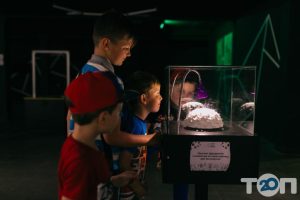
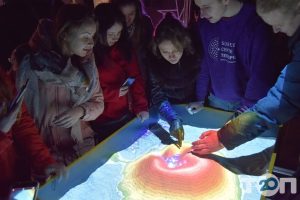
The Ternopil Science Centre became the first space in the region to make STEM education and science accessible to everyone. For years, a team of enthusiasts designed and built interactive exhibits by hand, allowing visitors to learn about physical phenomena through direct experience. Entire families came to explore and learn together.
Despite its popularity, the Centre faced a serious challenge. Expanding its activities, updating ageing exhibits, and developing new programmes for young people required a stable source of funding. Relying solely on grants and occasional donations meant constantly operating in uncertainty. What was missing was a sustainable business model and the entrepreneurial skills needed to support it.
“We already had the experience, the team, and a clear understanding of how to work with young people. But we wanted to create a model that would allow us not only to maintain what we had already built but also to continue growing. We had long wanted the Science Centre to become more than just a venue for events and activities – we wanted it to have the capacity to develop steadily and create even more opportunities for children and young people,”says Mykhailo Syrotiuk.
The solution was to launch a social enterprise within the Centre. But how do you turn an educational space into a viable business model?
The answer came through participation in the initiative ‘Start Up: Social Entrepreneurship in a Youth Centre’, implemented by School of ME and the NGO Youth Platform with the support of the EU4Youth programme.
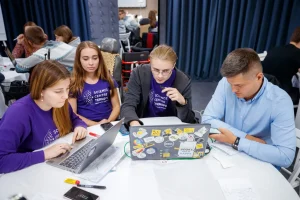
For Mykhailo and his colleagues, this was far more than financial support – it became a comprehensive transformation journey. Throughout the project, the team took part in intensive training, including online workshops, offline learning modules, and, most importantly, personalised mentoring. Together with mentors, they developed a realistic business plan, assessed financial risks, and adapted their educational services to market realities.
The final stage of the programme came with a €14,999 grant from EU4Youth, providing the financial boost needed to put their plans into action.
Transforming the space: bringing a new exhibition to life
Armed with new knowledge and funding, the team embarked on a major transformation. It was a process of change both internally and externally. First, they completed the necessary legal procedures and amended the organisation’s statutes to officially operate as a social enterprise.
Second, they significantly upgraded the science exhibition. Using grant funding, the team purchased and installed eight new interactive exhibits, each designed to demonstrate natural laws and physical phenomena in a practical way. Today, children can explore magnetic fields through the ‘Magnetic Bridge’, learn biology with the ‘Human Puzzle’, discover the nature of sound using the ‘Klapkophone’, or pedal the ’Bike Generator’ to produce electricity themselves. Every new exhibit was carefully tested, adjusted, and prepared before welcoming young inventors.
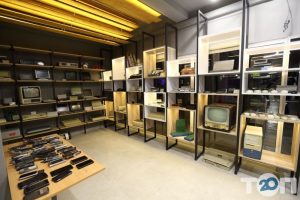
The Centre quickly came alive with renewed energy. LEGO courses, interactive workshops, and large-scale science shows were introduced for young visitors. The results speak for themselves: since the project began, approximately 4,000 people have visited the Science Centre, including 1,000 who participated specifically in services offered through the social enterprise. The team has already delivered more than 30 LEGO courses, 60 workshops and guided tours, and 10 science shows, demonstrating the strong demand for interactive education in the region.
The Science Centre has now become financially sustainable. It generates its own income through educational services and reinvests part of its profits into free programmes for children and young people.
“The Ternopil Science Centre is a vivid example of how a youth centre can be more than just a place for children and young people to spend their free time – it can also become a fully-fledged social enterprise,” says Volodymyr Pavliuk from the NGO ‘Youth Platform’, and Project Manager of the initiative ‘Start Up: Social Entrepreneurship in a Youth Centre’. “Mykhailo and his team entered the project with a clear vision and experience, and they successfully transformed these assets into a sustainable model. Their story proves that social entrepreneurship in the youth sector is not just a theory – it is a real tool for development.”
When belief in your potential changes a community’s future
For Mykhailo Syrotiuk and his team, the project transformed how they viewed their mission. They realised that a business-oriented approach does not diminish a social purpose; on the contrary, it protects it and creates opportunities for long-term planning.
“For us, this project was not simply an opportunity to update our exhibition. It was an important step toward ensuring the long-term sustainability of the Ternopil Science Centre. We were able to combine accessible science, youth work, and social entrepreneurship in a way that allows us to have an even greater impact on the development of children and young people in our community,” Mykhailo concludes.
The team has ambitious plans ahead. Thanks to the stability they have achieved, they are already preparing to launch a new programme called ‘Young Inventor’. The initiative will help even more teenagers believe in their abilities, unlock their creativity, and perhaps even choose a future path in science.
Most importantly, thousands of children in Ternopil now have a place where science is no longer just another chapter in a textbook. Instead, it becomes an exciting world they can explore, shape, and change with their own hands.
MOST READ

RELATED PROJECTS
SEE ALSO
Packaging from mushrooms: how a Ukrainian start-up is contributing to Europe’s green economy
From idea to energy: how Kyiv youth are developing the ‘energy willow’ project
‘Europe became real faces and real stories’: Young European Ambassadors look back on ten years of friendships and community projects
War is reshaping medicine in Ukraine
When dreams return from war: how veteran Andrij Kaspshyshak is developing a publishing house


The information on this site is subject to a Disclaimer and Protection of personal data. © European Union,
