

From idea to energy: how Kyiv youth are developing the ‘energy willow’ project
A few years ago, not many people could have imagined that a neglected plot of land in the Kyiv region would form the basis of an idea combining environmental protection, education, social entrepreneurship and energy independence. But that is exactly how the story of ‘Energy Willow’ began – a school initiative that helps Ukrainians today not only to learn, but also to create practical solutions for the future of their communities, with the support of the EU4Youth programme.
For the team, it all started with a simple question: can young people not only talk about sustainable development but also actively create change themselves?
From idea to first opportunity
The project originated among a group of active young people – school pupils from the Shevchenkivskyi district of Kyiv – who, under the guidance of their teachers, sought a way to combine environmental values, practical learning and tangible benefits for the community.
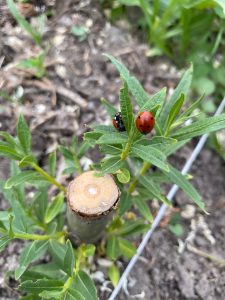
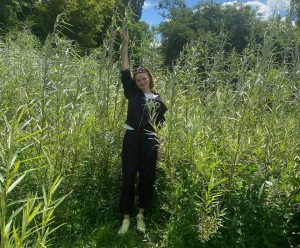
The focus fell on the energy willow – a plant that has long been used in European countries for biomass production. Once processed, it can be turned into wood chips, pellets or briquettes for heating buildings and reducing dependence on traditional energy sources.
The idea looked promising, but at the start it lacked something crucial – experience, structure, and an understanding of how to turn an initiative into a viable social entrepreneurship model. The team had no prior practice in business modelling, resource mobilisation, or long-term planning.
A turning point came with participation in the ‘Building Back Better Through Social Entrepreneurship’ initiative implemented by Junior Achievement Ukraine with the support of the EU4Youth programme. It was there that participants first took a systematic approach to the project – learning how to build a business model and a development plan, assess risks, and ensure economic sustainability.
That was the moment when the idea began to take real shape.
“I believe that real change begins where there are people ready to take responsibility for the future. Our task is not only to grow energy willow, but also to grow a generation of young leaders who will build strong, successful, and energy-independent communities in Ukraine,” says Maria Surzhyk, coordinator of the initiative.
From training to the first plantation
After completing the educational phase, the team moved on to practical implementation.
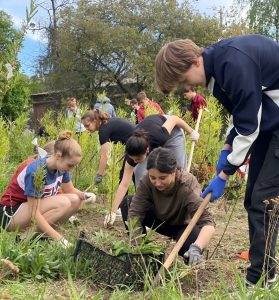
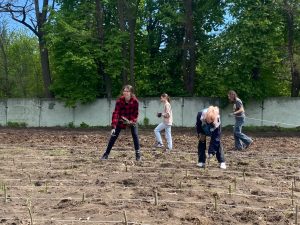
The first step was preparing the plot of land and organising the full cycle of fieldwork. The young participants independently sought resources, engaged partners, bought planting material, and planned the planting process.
This led to the establishment of the first energy willow plantation of the ‘Sakhalin’ variety, covering 0.07 hectares. The first dozen saplings were planted, marking the participants’ first experience in agricultural fieldwork. In the short term, the plan is to expand the plantation area to 0.3 hectares with around 2,600 plants.
At the same time, a broader community began to form around the initiative. School students, university students, volunteers, and local partners joined the project, providing both organisational and resource support. Later, a non-governmental organisation, ‘SHARM: Energy Willow’, was established to coordinate the initiative’s development.

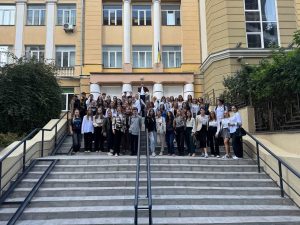
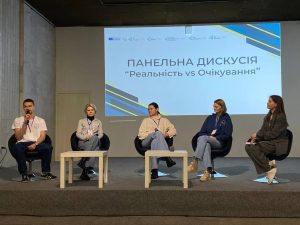
Today, ‘Energy Willow’ performs both an educational function and is transforming into a fully-fledged social enterprise. More than 120 young people have already gained practical knowledge in teamwork, project management, partner engagement, and the basics of sustainable development. Each participant can see a direct link between their actions and tangible results.
A future already taking root
The idea of the project emerged against the backdrop of the deeper energy challenges faced by Ukraine. In 2021, natural gas prices rose significantly, pushing communities to actively search for alternatives. After 2022, when Ukraine’s energy infrastructure became one of the main targets of Russian attacks, the issue of energy resilience became critically important.
In this context, ‘Energy Willow’ became not just an educational project, but an attempt to create a local renewable energy source that can be scaled at the community level.
The team plans to harvest its first major biomass yield in 2027-2028. After that, the willow will be processed into wood chips, pellets, or briquettes, which can be used to heat an educational institution in Kyiv’s Shevchenkivskyi district. According to preliminary estimates, using such energy resources is at least a third cheaper than heating with natural gas.
In the coming years, the plantations are expected to expand to two to three hectares, significantly increasing biomass production and moving the initiative closer to a fully functioning business model in the green energy sector.
For the participants, ‘Energy Willow’ is not only about plants, but also about a long-term investment in people, communities, and a new culture of energy responsibility.
A story that began with just an area of land is gradually turning into a model of change with the potential to be scaled across many Ukrainian communities amid the country’s ongoing energy transformation.
“I want to live in a country where young people are not afraid to take responsibility. ‘Energy Willow’ showed me that even a small idea can grow into something that benefits both the community and the environment,” says Yuliana Zharoyd, co-founder of the initiative.
MOST READ



SEE ALSO
From passion to mission: how Sofiia Nazarenko became a voice of Ukrainian journalism through EU4Youth
A partnership that builds resilience
Packaging from mushrooms: how a Ukrainian start-up is contributing to Europe’s green economy
A space where science comes to life: how an interactive museum in Ternopil is inspiring the community
‘Europe became real faces and real stories’: Young European Ambassadors look back on ten years of friendships and community projects


The information on this site is subject to a Disclaimer and Protection of personal data. © European Union,
