

They wrote names on their little hands: how Russia kidnapped children from the Kherson orphanage
In October 2022, retreating from Kherson, Russian soldiers took about 50 children under the age of five from the regional children’s home. Some of them are still in Crimean orphanages, while others were transferred to the Russian adoption database with their personal data changed. The youngest girl – Marharyta Prokopenko – was adopted by the family of a Russian deputy and Putin’s associate. Another child went missing.
This is a story about the kidnapping, hiding and forced adoption of Ukrainian children, which has become part of the Russians’ systematic practice of destroying identity. This story explains how the kidnapping took place and why the process of investigating and returning the children has become extremely complicated.
The sudden and brutal occupation came as a tragic surprise to the employees of the Kherson Regional Children’s Home. The nurses and nannies who were on duty on the night of the invasion were confused after the first explosions – the orphanage building had no shelter, not even a basement.
Later, a former employee and devoted volunteer Lyudmila Afanasyeva arranged an improvised shelter for the children nearby. But soon 58 residents (several more were in the hospital) were taken by private transport to the Golgotha Church on the outskirts of the city, where almost all the staff tried to hide the children from the Russians. All the children had ended up in the orphanage due to difficult life circumstances, illnesses, or problems with their parents.
On 24 February, 2022, some of the children already had the status of orphans, and some were “in limbo” by law, because according to Ukrainian laws, they could not be adopted. The orphanage staff, including director Olena Kornienko, contacted relatives, begging them urgently to pick up the children for fear of them being forcibly removed. Some of the children’s parents did come to pick them up, but most stayed behind.
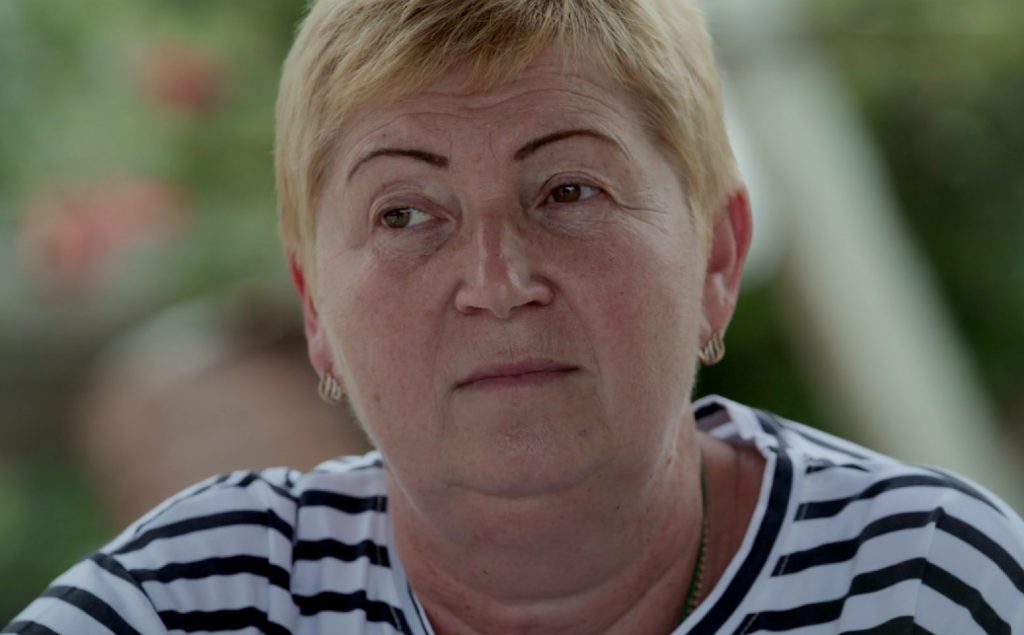
“We were safe for 52 days. No one came to our church. But on the evening of the 53rd day, two men appeared. They introduced themselves as representatives of the military administration. They asked if we had children. We said we hadn’t,” Afanasyeva says.
The men left, but within a few hours, the church yard was filled with cars with armed Russian soldiers. Among them was the leader, with the call sign “Navigator”. It later emerged that this was the deputy of the Russian State Duma Igor Kastyukevich, now one of the key suspects in the mass deportation of children from the Kherson region. He ordered all the children immediately to be returned to the orphanage. Afanasyeva was able to persuade him to wait a few days to warm up and clean the building.
So in May 2022, the institution began its new life under the occupation administration, and a local pediatrician and collaborator, Tetyana Zavalska, was appointed director.
Ilya and Marharyta were the first to be deported
Of all the children’s institutions whose pupils were deported by the Russians in 2022, the Kherson orphanage gained the most attention in Russian propaganda. Neither the Vuhlehirsk and Amvrosiivka boarding schools in the Donetsk region, nor the Oleshky specialised orphanage on the left bank of the Kherson region attracted such attention from high-ranking Russian officials and propagandists during the occupation.
In May 2022, the institution was visited by the Vice Speaker of the State Duma of the Russian Federation, Anna Kuznetsova, and in August by the deputy from the ‘A Just Russia’ party Yana Lantratova.
In late August 2022, a photo appeared on Lantratova’s Telegram channel, in which she is posing in the courtyard of the orphanage with an unknown woman in a lilac dress. Later, it became known this was the future wife of the head of Putin’s party and Lantratova’s leader, the State Duma deputy Sergei Mironov.
By that time, the atmosphere in the orphanage was already tense. One of the nurses Lyubov Saiko, who stayed with the children until the day of deportation, recalls that on the morning of 2 September, Zavalska, who had been appointed director by the Russians, suddenly came to breakfast and ordered to pack things for one-and-a-half-year-old Ilya.
“I asked where exactly they were taking the child,” Saiko recalls, and Zavalska replied: “To Moscow, for long-term treatment.”
On the floor below, they were preparing another child — the baby Marharyta. Meanwhile, three men arrived in the yard: armed, burly, in military trousers and black glasses. Saiko personally handed the boy over to the stranger from her hands:
“He was very attached to me… I knew he was very scared. Well, of course, he didn’t cry, nothing like that. But Zavalska was running around and was very, very nervous.”
The bearded stranger dryly assured that the children would be “in safe hands”. Marharyta was given to the occupiers by another employee. Within minutes, the men had disappeared through the gate with the children.
“We’ll take them out anyway”
The orphanage doctors explain that all their children had certain illnesses and were under the supervision of specialists, but Ilya and Marharyta did not need any special treatment, especially in Moscow.
According to sources involved in the investigation of the kidnapping of children in Kherson on 2 September, two more children from the orphanage were being prepared for removal at that time. However – unexpectedly – it was Ilya and Marharyta who were taken away.
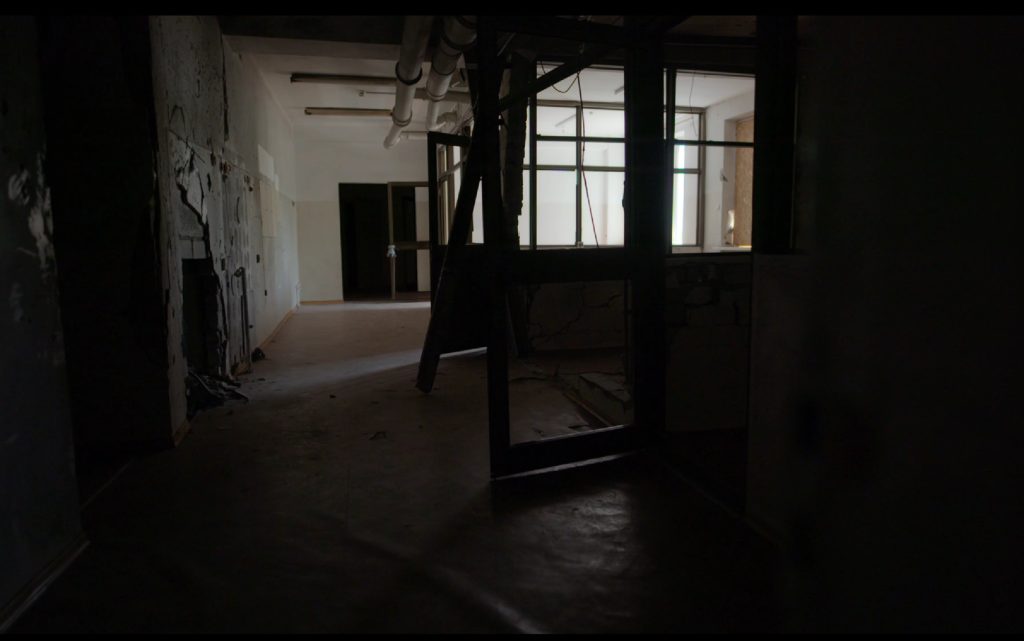
Then an accident happened that exposed the facts they were trying to hide: Russian officials, having mixed up email addresses, sent a letter not to their protege Zavalska, but to the former Ukrainian administration of the institution. The document stated that Marharyta and Ilya were in Moscow – in a region closely associated with the same woman in a lilac dress who appeared in the photo next to the MP Lantratova.
In October, the situation in Kherson escalated: Kastyukevich constantly “reported” on humanitarian aid for children and shot propaganda videos from the children’s home.
“Sometime in the autumn, even a little earlier, they started intimidating [us], saying: ‘We will take the children away’,” recalls one of the administration employees (we are not mentioning her name for security reasons).
“I saw Zavalska walking down the corridor next to Kastyukevich. He shouted at her, repeating: ‘We’ll take them [away] anyway.’ At that moment, I realised that it was about our children.”
The next morning, on 21 October, their worst fears were confirmed: at nine o’clock, local ambulances and two buses with Crimean licence plates and so-called volunteers lined up at the gate of the institution.
Kastyukevich ordered a video of the “evacuation” to be shot. Those who participated in the abduction of 48 Ukrainian children ended up on the footage.
Witnesses recall how on that day, all the children’s names were written on their little hands so that unfamiliar doctors in occupied Crimea would not confuse them, and that all the relevant documents were collected.
“There were also large paper boxes with all the children’s files, medical histories,” the workers say.
The names of the kidnappers are known
After the Russians left, the orphanage was left completely empty – without children, documents, without a single thing that had at least some value for the future search. Many employees were offered to go to Crimea with their children, and promised high salaries.
“Not many left. Mostly those who had relatives in Crimea. The majority stayed. We sat in an empty building in a state of silent shock,” recalls nurse Lyubov Saiko.
For several more days, the employees went to work by inertia – they cleaned the rooms, embarrassed by the silence.
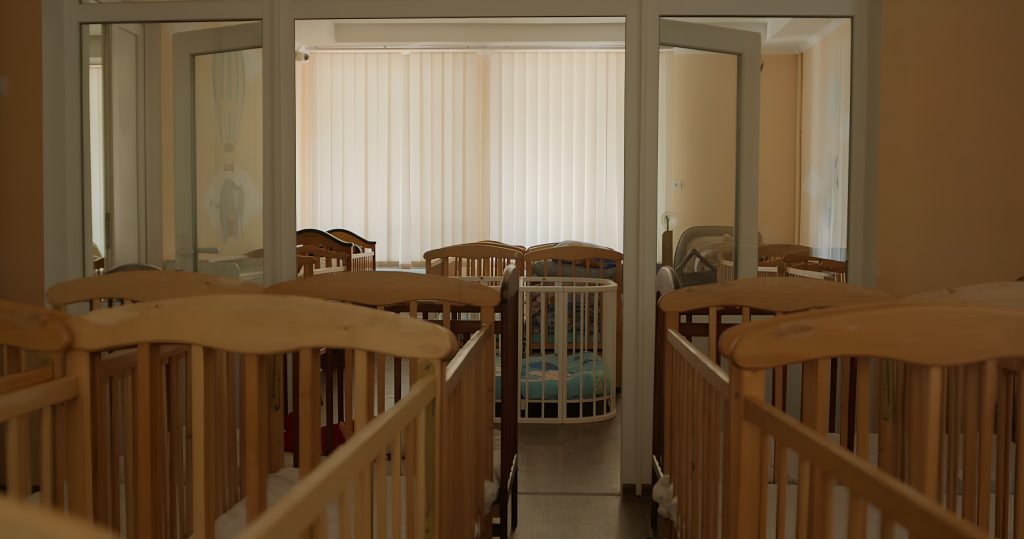
According to eyewitnesses, documents, and existing videos, several figures associated with the Russian authorities participated in the kidnapping of 48 residents of the Kherson orphanage on 21 October, 2022. In particular, the following:
- Yaroslav Reznikov, who is involved in the Russian security forces;
- Anton Lyaskovsky, the so-called ‘Deputy Minister of Health of Crimea’;
- Margarita Suslova, the deputy director of the Simferopol orphanage ‘Yolochka’;
- Kastyukevich;
- Zavalska.
The Prosecutor General’s Office of Ukraine has declared suspicions against some of them, and the investigation is ongoing.
At the end of 2023, investigators from the BBC and ‘Important Stories’ discovered important details about the mysterious woman in lilac. Ilya and Marharyta were taken away in September by Inna Varlamova, who is connected to the Russian special services. She planned the kidnapping and carried it out. A few weeks after the crime, Varlamova married Sergei Mironov, the leader of ‘A Just Russia’ and an associate of Putin.
Thanks to the marriage, they illegally adopted the kidnapped Ukrainian girl Marharyta and changed her name. Yana Lantratova, a State Duma deputy and Mironov’s right-hand woman, participated in the deportation. In March 2024, the Prosecutor’s General Office declared the suspicions against both Russian kidnappers.
No one knows for certain where Ilya and Marharyta are now, their names changed. Their lives are suspended between Russian birth certificates issued in the Moscow region. However, these children, like many others, have relatives in Ukraine.
By now, Kherson had been liberated from the Russian occupation, but in the still occupied Crimea they continued to highlight the case of the kidnapped children. Almost immediately, they were all granted Russian citizenship under a simplified procedure introduced by the President of the Russian Federation specifically for Ukrainian orphans.
As soon as it became possible, relatives in Ukraine began to raise the alarm. Olha Puzik was looking for her son – one-and-a-half-year-old Viktor – who, together with other children, was taken into a bus in October and kidnapped.
“I didn’t know where to turn or what to do with my son. No one informed me,” said a woman in despair who was looking for a kidnapped child.
Later, she received a call:
“Olha Dmytrivna, this is the Kherson Region Social Service. Send [us] all the documents and come to Crimea to pick up your son,” an official from the occupied left bank said in Russian.
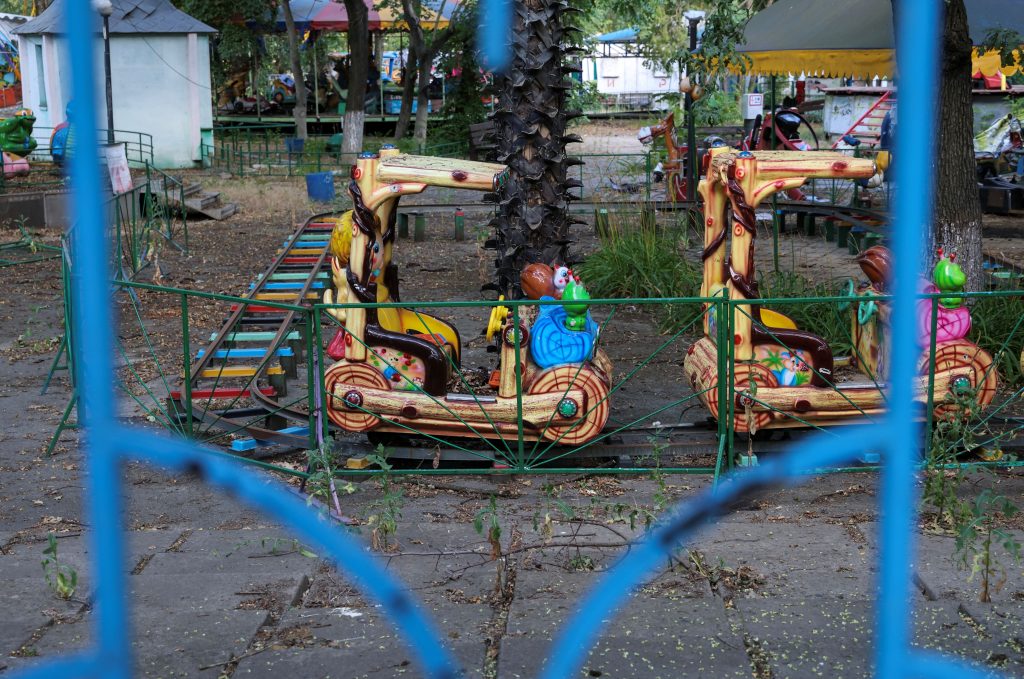
Presumably, having learned about the mother’s search, the Russians decided to return Viktor, but their condition was that the relatives personally come to the child’s place of residence.
Olha traveled a thousand kilometers and took her son from the ‘Yolochka’ orphanage in Crimea. Under the state programme, six more children from the Kherson orphanage were returned to Ukraine in 2023-2024. The fate of more than 40 children remains unknown.
In the forms, our children are listed as ‘Russian orphans’
The arrest warrant for Putin and his children’s rights commissioner Maria Lvova-Belova, issued by the International Criminal Court (ICC), has in no way stopped the Russians from further illegal assimilation and indoctrination of Ukrainian children. According to numerous human rights organisations, children are still being placed in foster families and adopted in Russia, changing their names, biographies, and even dates of birth.
On the Russian state website “usynovite.ru” we found several dozen entries from the Kherson orphanage. There is no mention that these are deported Ukrainian children, they are labelled as “Russian orphans” from Crimea and therefore can be adopted by any family in Russia. The digital footprint of these publications is very telling – even after widespread publicity and international investigations, Moscow is not trying to hide the crime. It is legalising it, turning child abduction into an element of state policy.
“I am a sister of the little Slavik,” says a young girl, looking at her brother’s photo on the website “usynovite.ru” (we deliberately do not mention her name for security reasons).
“We have many brothers and sisters in our family. To be honest, I am shocked by the information about the possible adoption of my brother. How can they do this?”
There are dozens of similar cases. While Ukraine is waiting for children, Russia is ignoring requests and building new schemes to kidnap and legalise the adoption of other people’s children. In three years, the children’s Ukrainian identity has been erased, and by order of the Kremlin they have been made invisible to searches – identification and return home are becoming almost impossible.
All deported orphans and children without status, having lost contact with Ukraine and their relatives, have become cogs in a large-scale ideological campaign aimed at making Ukrainian children loyal to the occupying state.
This article was prepared in collaboration with The Reckoning Project, a global team of journalists and lawyers, supported by the EU, dedicated to documenting, reporting on, and gathering evidence for war crimes investigations, and was written specifically for Signal to Resist.
Author: Viktoria Novikova, Senior Researcher of The Reckoning Project
The original article was published by Signaltoresist.com
MOST READ
SEE ALSO
From passion to mission: how Sofiia Nazarenko became a voice of Ukrainian journalism through EU4Youth
A partnership that builds resilience
Packaging from mushrooms: how a Ukrainian start-up is contributing to Europe’s green economy
From idea to energy: how Kyiv youth are developing the ‘energy willow’ project
A space where science comes to life: how an interactive museum in Ternopil is inspiring the community


The information on this site is subject to a Disclaimer and Protection of personal data. © European Union,
