

The simple joy of a carrying a school bag: recovery camps help war-affected children and families return to normal life
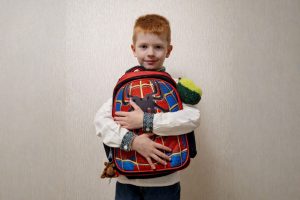
Oleh is late. He hurries down the corridor gripping his school backpack, trying to reach the others at the first bell. The backpack – almost as large as he is – slips and spills open, and Oleh stops, unsure for a second what to do. This seven-year-old boy has never seen any of it before − not like this. After two years of schooling, this is his first time carrying a backpack to class, his first time hearing a school bell ringing somewhere ahead, his first time stepping into a classroom that exists beyond a screen.
For one week, a holiday resort near Lviv in western Ukraine becomes a school that exists again. Here, the Lviv Charitable Foundation ‘Sincere Heart’, supported by the EU, runs a mobile school camp, bringing children from frontline regions to a safer place in the west of the country, where lessons are not interrupted by continuous air strikes, and learning does not depend on a stable internet connection.
Oleh arrived at the camp from the Kharkiv region in October 2025, meeting his classmates and his teacher in person for the first time on the train. Their school had been hit by a missile in the early days of the war, forcing their entire school life to begin − and continue − exclusively online. “They are primary school pupils – it’s especially hard for them to learn this way,” says their teacher, Inna Zakharova, who accompanied the class. “They really want to communicate with each other, but they don’t have that opportunity.”
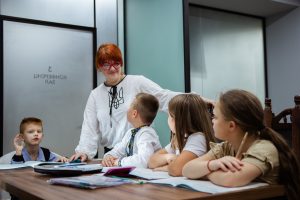
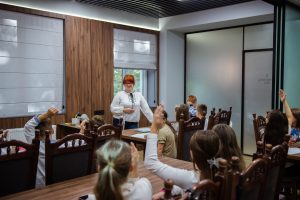
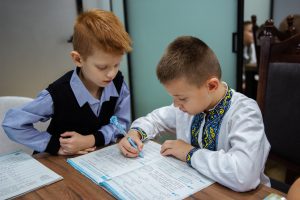
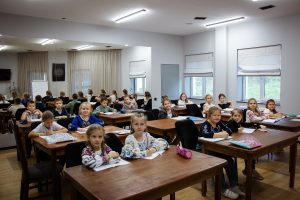
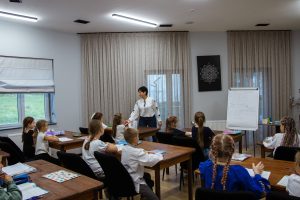
This is precisely the gap the six-day activity is designed to fill. Built around a structured daily programme, it combines in-person learning with psychosocial support and group activities. Days begin with morning exercises and continue with lessons held in adapted classrooms, where pupils and teachers can finally interact face-to-face. Learning is interwoven with team-building games, creative workshops, outdoor activities and play-based sessions designed to relieve anxiety and strengthen trust within the class. Teachers take part in group sessions with psychologists, working to recover classroom dynamics after years of remote education.
The shift is visible within days. Gradually moving from isolation to interaction, children become more active in class and more willing to speak, engage and work together. “It seems to me that in a week we regained what we had lost over the years of distance learning,” says the teacher.
Rest, recovery, reconnection
The pilot mobile school camp is one of more than 300 Recovery Camp initiatives organised by ‘Sincere Heart’ since the start of the full-scale invasion. Established in 2014 to support the psychological rehabilitation of soldiers’ families, the Foundation expanded its work in early 2022 to internally displaced people – mostly mothers with children from frontline areas.
One early case shaped that approach. “I remember a four-year-old boy arriving at our one-day camp in May 2022,” says Khrystyna Dudashvili, the Foundation’s Executive Director and the Founder of the Recovery Camp. “His family had fled under shelling and bombing, and under stress he stopped speaking. During the camp, through play and activities with the animators, the boy began to talk again and show emotions.”
During the first months of the full-scale invasion, ‘Sincere Heart’ organised 40 one-day camps for displaced families in the Lviv region. By autumn, the Foundation was focused on those who remained in frontline and near-frontline areas. This led to the creation of multi-day camps, designed to bring families living under constant danger to safer locations for longer-term support. “The main challenge for people from frontline areas is simply to survive and to hold on psychologically,” continues Khrystyna. “Once people regain inner strength, it becomes easier for them to care for themselves and their children.”
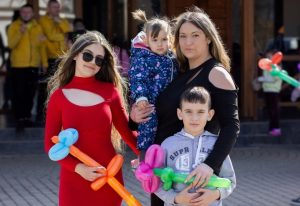
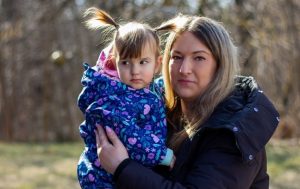
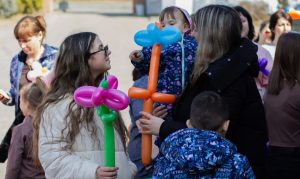
Over four years, 24,000 people have taken part in six-day and one-day camps, delivered year-round across western Ukraine. In autumn 2025, EU support via Solidarity Fund PL in Ukraine allowed to expand the model to include several formats: mobile school camp, mother-and-children camp and LeaderUp youth camp.
In September, a six-day camp brought together mothers and children from the Dnipropetrovsk, Kherson, Zaporizhzhia, Kharkiv and Donetsk regions. Over the course of a week, families took part in shared activities – games, creative workshops, excursions and talent performances – alongside individual and group sessions with psychologists. The structure was simple but deliberate: to create a safe space where mothers could relax and reconnect with their children, away from household responsibilities and constant war anxiety, also dedicating time to their own recovery through swimming, spa sessions, yoga and breathing exercises.
“I came with my three children: a son of eight and two daughters, aged 13 and 15,” recalls Kateryna Maliuta from Kharkiv region. “My son became tense and less confident while his father was at war and continued to have difficulties in communication even after his father returned. At the camp, he began to reconnect with peers, and when we came home, that tension eased,” she recalls, and adds: “I myself also felt completely relieved. Being able to speak out and hear other mothers made things a bit easier.”
Growing young leaders in wartime
For teenagers from frontline and occupied territories, ‘Sincere Heart’ developed a different kind of space – one focused more on guidance rather than recovery. The LeaderUp camp targets active young people aged 12 and above, motivated to bring change to their communities but lacking the skills or tools to do so. “We wanted them to understand that they are not neglected and that they can influence the future of their communities,” says Khrystyna Dudashvili.
Over six days, participants worked with trainers and invited experts on project development, financial literacy and civic engagement, combining practical exercises with discussions about how communities function. They designed and presented their own initiatives, turning ideas into structured projects. Dariia Popova, a 17-year-old from Nova Kakhovka now living in displacement, recalls being placed in charge during a business simulation: “I didn’t just learn how things work in theory. I had to make decisions, lead people, take responsibility.”
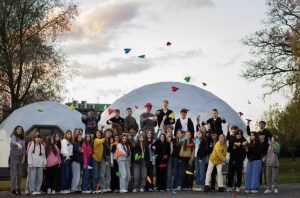
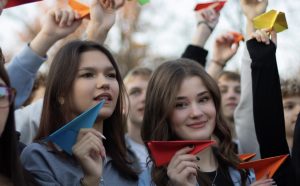
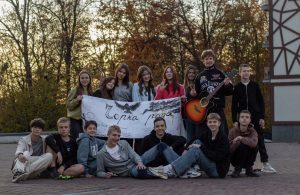
The impact extended well beyond the six days of the camp. After returning home, Dariia was selected for a competitive programme at the Ukrainian Catholic University where she developed her own start-up idea. “I started to believe that I really can influence decision-making, applying to different programmes. Now I am implementing a social project on mobile space for people with disabilities in my host community Kovel,” says the girl.
As the war continues, initiatives like these are becoming not only relevant, but essential. Over the past two years, the Foundation has worked to measure the long-term impact of its work, with findings published in influential foreign peer-reviewed journals and magazines like JAMA and COSMOS. At the same time, it has begun sharing its methodology more widely through the Recovery Camp Academy, a free training platform designed to help other organisations replicate the model across Ukraine. The goal is not only to reach more children like Oleh, but to ensure that such spaces of safety, learning and recovery can exist far beyond a single organisation. “Our work is not just about support − it is about giving people the strength to keep going,” concludes Khrystyna.
Authors: Volha Prokharava, Oksana Fedorovych
MOST READ

SEE ALSO
From passion to mission: how Sofiia Nazarenko became a voice of Ukrainian journalism through EU4Youth
A partnership that builds resilience
Packaging from mushrooms: how a Ukrainian start-up is contributing to Europe’s green economy
From idea to energy: how Kyiv youth are developing the ‘energy willow’ project
A space where science comes to life: how an interactive museum in Ternopil is inspiring the community


The information on this site is subject to a Disclaimer and Protection of personal data. © European Union,
