

The cyber twin of Uzhhorod Castle
Once upon a time, in Uzhhorod there was a castle. Today, its digital twin helps to protect it, study it, manage it. This historic stone fortress built on a hill in early medieval times, has resisted attacks from khans and Mongols, has passed from Hungarian kings to Italian noblemen: its forty halls are today filled with 200,000 exhibits, telling the story of a medieval stronghold converted into a Renaissance palace. A place full of tangible artefacts and intangible values, whose protection seems today more precious than ever.
A landmark to hold onto roots
Cultural heritage is not only about old buildings or museums; it is about who people are. Especially in times of war – when there is so much uncertainty all around – history and cultural landmarks can talk about roots and identity. The ‘Heritage 3D’ project – implemented within the EU-funded Interreg NEXT Hungary-Slovakia-Romania-Ukraine Programme – deals exactly with this: preserving cultural heritage sites in Slovakia and Ukraine through advanced digitisation and 3D technologies. In short, it digitises the past to safeguard the future.
Kseniya Okhotnyk is the project manager and member of the YADRO association, which has built quite an experience in this field. She explains why the preservation of the Uzhhorod castle was the first step to build upon in project implementation. “We made a 3D scanning of the whole site, it was a huge work done by our Slovak partner from Sabinov. This was the preliminary phase, necessary also for planning future restoration works.” The 3D mapping recorded the castle exactly as it stands today, with millimetre accuracy. Beside Uzhhorod and its fortifications in Ukraine, partners have created detailed digital models of Sabinov’s historic centre, several churches and the Town Bell Tower. Conservators and architects can now use all models to plan renovations, and if the buildings are scanned periodically, experts will be able to compare datasets and detect structural movements, or erosion. This will enable them to plan more accurate interventions. The 3D models could also be used to create virtual tours for visitors, or to develop digital platforms and other materials for cultural tourism. This brings us to the second component of the Heritage 3D project, which is the promotion.
“As part of the project,” continues Kseniya, “we have developed a new visual identity for the castle, giving it a stronger image. We are also planning to launch a modern, user-friendly website that will present Uzhhorod Castle not only as a historic monument, but as a centre of cultural life and an important tourist destination. Alongside this, we will implement a promotional campaign to increase the visibility of the castle and attract more visitors from Ukraine and abroad.”
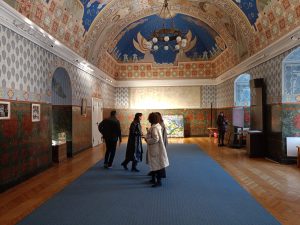
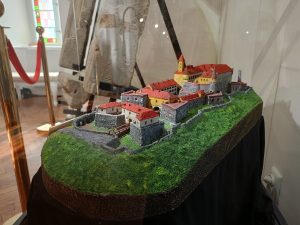
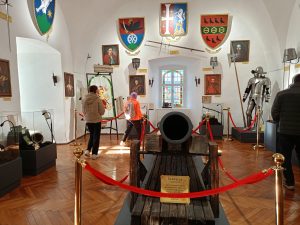
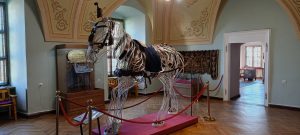
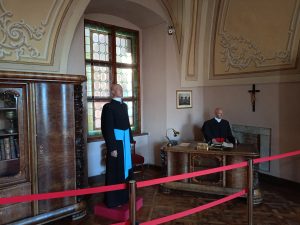
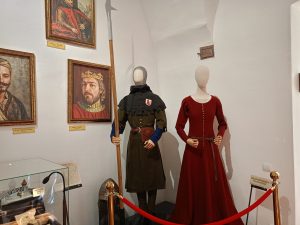
In a place like Zakarpattia, promotion is especially important. The region has a unique multicultural history, but many of its sites remain unknown beyond the immediate area. Increased visibility can bring multiple benefits: it can attract national and international visitors, support local tourism and create new opportunities for cultural events and educational activities. And here is where the third component of the project comes in: interactivity. “We have installed interactive touch screens.” says Kseniya, “where visitors can have a virtual tour around the castle, to discover its most hidden secrets.”
For a long time, castles and museums were seen mainly as places where objects were stored and protected. While preservation is still essential, simply displaying artefacts behind a glass case is no longer enough to engage today’s audiences, “especially younger generations who are used to dynamic, digital experiences”. Interactivity changes the relationship between people and heritage. Instead of passively observing, visitors can explore, understand and connect. A castle is no longer just a set of walls; it becomes a story you can walk through, a place where you can see how it evolved, how it looked centuries ago, sometimes even how people lived in it. “Interactive tools provide context, explain complex histories,” concludes Kseniya Okhotnyk. “They open heritage up to wider audiences, including non-specialists.”
Culture as a healing tool
But let’s go back to the beginning of this story: preservation and promotion are not only about tourism. Uzhhorod Castle is a place where centuries meet, where stories, identities and memories have been layered one upon another. And this is exactly what cultural heritage is: everything a community inherits from its past and chooses to carry into the future. It includes monuments and buildings, like the castle itself, but also traditions, languages, craftsmanship and ways of life.
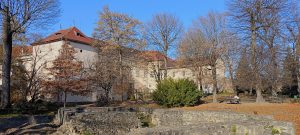
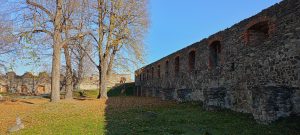
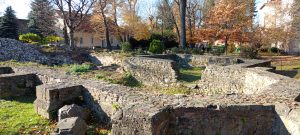
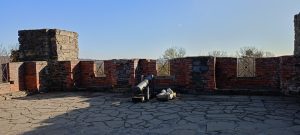
For people, especially in regions like Zakarpattia where cultures have crossed and mixed for generations, heritage is a kind of anchor. It gives continuity in times of uncertainty, like the present, allowing each generation to understand where it comes from, to interpret its past, and to build its future with a sense of belonging. Olga Shumovska, the museum’s Director, has no doubt about this. “It is extremely important to preserve our historical heritage, even more so because we are currently at war.” Olga thinks that cultural institutions such as museums or castles can offer people moments of psychological relief, helping to restore a sense of normality and continuity. Visiting these places can ease emotional strain, “as culture supports people’s well-being, helping them to cope, to reconnect and find meaning. Even in difficult times”.
This is why protecting places like Uzhhorod Castle is about keeping a dialogue open between past and present. Every restored wall, every preserved detail, ensures that the story does not stop, that it can still be read, explored and lived by those who come after us.
Author: Daniela Cavini, TESIM
MOST READ

SEE ALSO
From passion to mission: how Sofiia Nazarenko became a voice of Ukrainian journalism through EU4Youth
A partnership that builds resilience
Packaging from mushrooms: how a Ukrainian start-up is contributing to Europe’s green economy
From idea to energy: how Kyiv youth are developing the ‘energy willow’ project
A space where science comes to life: how an interactive museum in Ternopil is inspiring the community


The information on this site is subject to a Disclaimer and Protection of personal data. © European Union,
