

Quran, dolma, coffee grinder: how the Crimean Tatars survived
They have been driven from their land twice. The first time was in 1944, when the USSR deported them from their native Crimea. Half a century later, they returned home, but history repeated itself – in 2014, Russia annexed Crimea, and they once again lived in exile. These are the Crimean Tatars. Here’s how they live today.
Their Crimea exists in memory, passed down along with various objects. Today’s generations did not experience the deportation of the 1940s, but wherever they physically are, they carry its memory – with the Quran, the dishes in the kitchen, and the scent of the special morning coffee.
The Deportation of the Crimean Tatars in the 1940s
In May 1944, the Soviet authorities forcibly deported the Crimean Tatars from Crimea. The decision to expel them was made by a decree prepared by Lavrentiy Beria and signed by Joseph Stalin. Its purpose was to ‘punish’ the peoples believed to have sided with the German occupying forces during World War II.
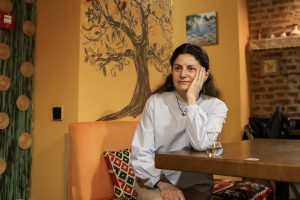
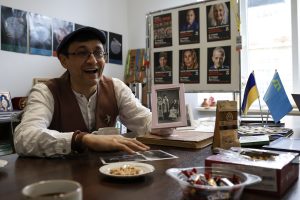
At the time of the decree, most of the men were still fighting in the war. As a result, the burden of deportation fell on the women and children. They were given only about fifteen minutes to pack their belongings. Around 190,000 Tatars were forcibly deported from Crimea, mainly to Uzbekistan. The relocation was carried out in cattle cars. About 8,000 deportees died on the trains, and another 60,000 perished during the first year of exile.
Modern scholars classify the forced relocation of the Tatars as a crime against humanity, on the basis that it was a comprehensive and systematic attack targeting a civilian population.The survivors were forbidden to return home.
The names of their villages were changed, cemeteries destroyed, and their history rewritten. For this reason, it is believed that the true aim of the deportation was assimilation, both physical and cultural. This, however, ultimately failed.
The Crimean Tatars survive because they preserved what could not be confiscated during searches: memory, faith, language, traditions, family recipes, music – things passed down from generation to generation, embodying the idea of home.
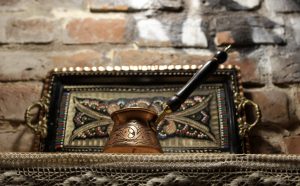
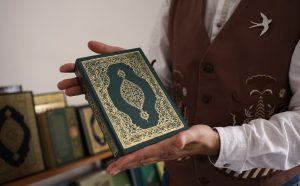
Back in the 1940s, some took with them a small coffee grinder – small enough to fit in the palm of a hand, yet enough to remind them of Crimea. Others brought the Quran, wrapped in cloth, with its pages meant to be passed on to their children. Some carried vine leaves for making sarma, so they could prepare a taste of home even in exile.
It was only after the collapse of the Soviet Union in 1991 that the Crimean Tatars began returning to Crimea en masse. They rebuilt homes and mosques, revived their language and culture. But in 2014, history repeated itself. Russia annexed Crimea, leading to direct arrests, politically motivated persecution, and the banning of the Mejlis, the sole representative and executive body of the Crimean Tatar people. Thousands were forced to leave again, taking only what was most essential.
We met with several Crimean Tatar families to understand what helps them to endure, preserve themselves, and maintain continuity across generations.
The pot and the coffee grinder
Ilyas Sheikhislyamov is a Crimean Tatar, a student, and a volunteer. His father, Ali Mamutov, was arrested by Russian security forces on charges of terrorism. The main ‘evidence’ is an audio recording claimed to contain Mamutov’s voice, a claim that has not been verified by expert analysis.
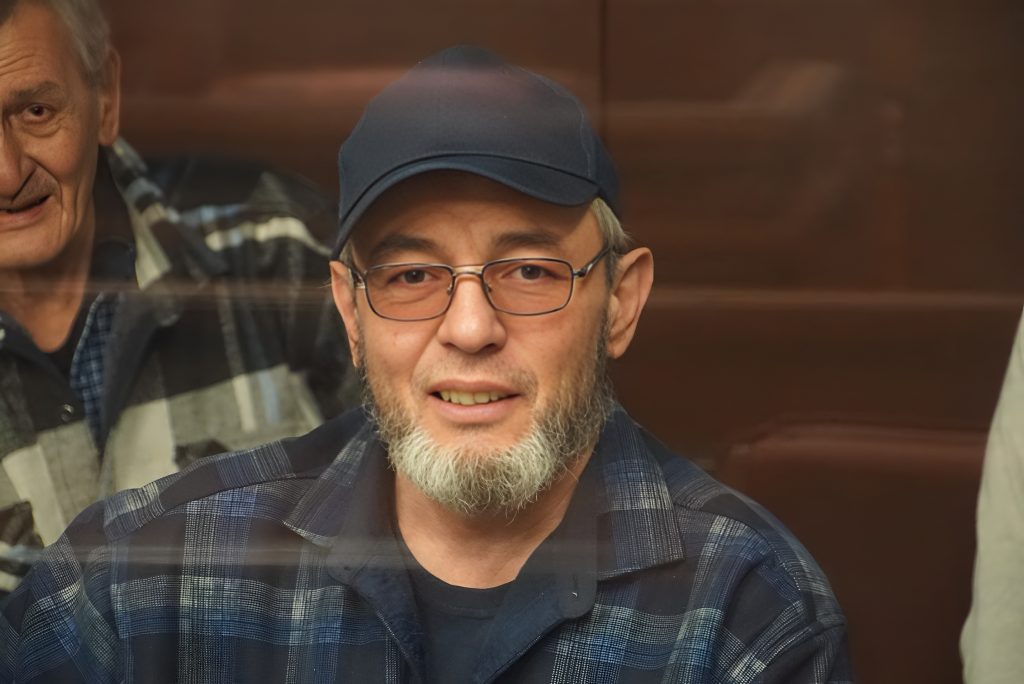
The case has been repeatedly reviewed in Russian courts. With each hearing, new charges have been added. Mamutov is now also accused of ‘forcible seizure of power’.
“He lives only with the thought of the next court session. The lawyer can meet my father only in the courtroom,” says Ilyas. “They pressure him to confess. But my father says: ‘I am a Muslim. I cannot lie about something I did not do.’”
Ali Mamutov has heart problems. His family buys medication, which is delivered in his name to the detention centre, but not all of it reaches him. Sometimes he receives only half the prescribed dose, sometimes even less.
In the Mamutov-Sheikhislyamov family, two objects survived the first deportation in 1944: a pot and a coffee grinder. The second object is more important than the first because Ilyas’s grandmother brought the grinder all the way from their native Crimea, while the pot appeared later, at the place of exile.
Soviet soldiers allowed people to take only the bare essentials. The grandmother chose something small, yet meaningful. The coffee grinder was not exactly a household item – it became a symbol of continuity.
“If you don’t drink coffee in the morning, it means either you have no coffee, or you have no brain,” Ilyas’ grandmother, Asiye, used to say.
In the family, it became a ritual: the beans were ground by hand, the coffee prepared slowly, waiting for the foam to form. Sometimes garlic was rubbed into the beans before roasting. Somehow, caring for the coffee became a way to feel together.
“For us, the coffee grinder is like the embroidered shirt for Ukrainians,” explains Ilyas. “It is part of our genetic code.”
As for the pot, it appeared later, in Uzbekistan. It marked the family’s new life, built from scratch. Pilaf was cooked in it for weddings, including Ilyas’ parents’ wedding. In the 1990s, the family brought both objects back to Crimea. The Soviet Union no longer existed, and Crimea was part of a free Ukraine.
“We thought that was the end of the deportation story,” says Ilyas.
But it wasn’t. Today, the pot sits unused. The coffee grinder is silent. The family is once again divided. They are experiencing a second deportation, but in a new form. People are no longer transported by trains; instead, they face searches, court trials, and life in prison cells. Ilyas’ greatest dream is for his father to be released from Russian detention, for the family to reunite, to cook pilaf in the old pot, and to drink coffee in a free Ukrainian Crimea.
The Quran
When the Crimean Tatars got off the trains in 1944, Uzbekistan was already waiting for them. The locals had been told that traitors and enemies would arrive by rail. People met the trains with sticks and stones.
But suddenly someone shouted, “Look – they’re holding Qurans! They are Muslims!”
And the crowd stopped the attack.
This story was told to us by Murat Suleymanov, the mufti of “Umma”, the Spiritual Administration of Muslims in Ukraine. He himself learned of it from his grandmother, Min Sultan, who had been deported as a child. On the night her family was expelled from Soviet Crimea, they were given only minutes to pack their belongings. Among the few things they took with them was a Quran.
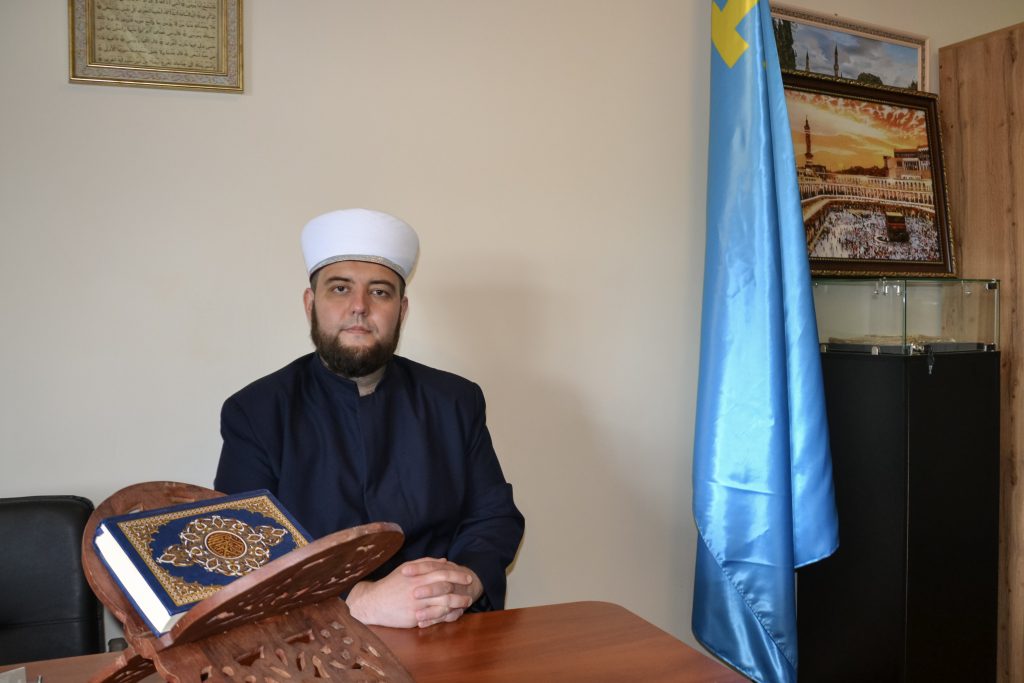
People were dying of hunger and disease in the cattle wagons. When the train finally reached its destination, the deportees emerged exhausted and defenceless. The Qurans in their hands became a language understood without translation.
“Perhaps these books saved our people,” says Suleymanov.
In exile, faith became the only support. Families preserved old Qurans, passed them down to children and grandchildren, and hid them whenever they were banned.
For the Crimean Tatars, Crimea is neither a slogan nor a symbol. It is their only homeland – sung about in lullabies, told about in stories by grandmothers and grandfathers.
“Occupation is not eternal,” says Suleymanov. “It’s a matter of justice.”
One day, he is convinced, the Qurans will return home – to a free Crimea.
His family is now engaged in a project that the family of Imam Mohamed Mamutov and his wife Niyara also undertook. They collect old Crimean Tatar Qurans.
The Mamutov family was also affected by deportation. In their home, there are objects that cannot be handled carelessly. For example, a prayer mat – used by the grandmother in her prayers – and a Quran, preserved in a cover and hung on the wall.
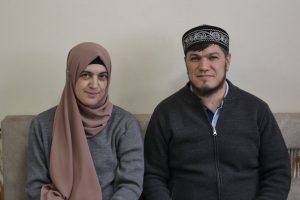
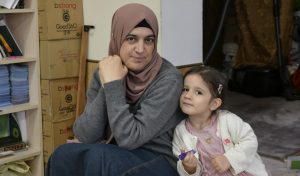
“First you must wash,” Mohamed’s father would say before letting the boy open the book. When he was finally allowed to turn the pages, small handwritten notes would fall out, prayers written in Arabic in his grandmother’s handwriting.
His father could not read the Quran, but he knew its stories. He would tell them to his son as bedtime tales. Only years later, when Mohamed was studying in a madrasa, did he recognise these stories in the sacred text. What he had known as fairy tales turned out to be passages from the Quran.
The first book Mohamed used to learn the Arabic letters was an old primer, Elifbe, brought from Uzbekistan. It was his first step toward the Quran and toward his own path as an imam.
The uneaten sarma
On the night of May 18, 1944, the Crimean home of Midne Sharfi smelled of pastries stuffed with vine leaves – sarma. They were meant to be eaten the next morning. But fate had other plans. At dawn, a Soviet soldier knocked the pot off the stove, spilling everything on the floor. Instead of breakfast, deportation began.
Lerane Khaibullaeva learned this story from her grandmother, Midne Sharfi. Before being deported, her grandmother managed to collect vine leaves in Crimea, and once in Central Asia, she used them to make sarma. The recipe has been passed down from generation to generation as proof that a home can be taken, but memory cannot.
Lerane was born in Uzbekistan. She celebrated her eighth birthday on an airplane. That was when her family returned to Crimea, in the late 1980s, during the mass return of the Crimean Tatars. At that time, the family felt that the deportation belonged to the past.
Lerane is a journalist and activist. After Russia annexed Crimea, she wrote about the persecution of Crimean Tatars and the abduction of Reshat Ametov, one of the first killed for his pro-Ukrainian stance in Crimea. After receiving threats from Russian security services, the FSB, Lerane left Crimea.
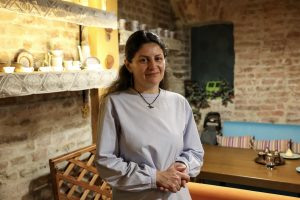
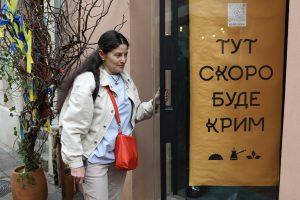
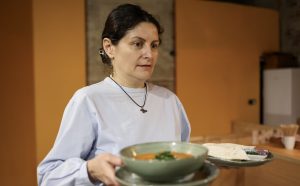
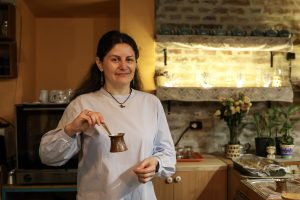
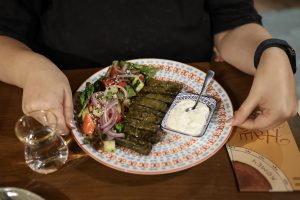
“I took the most valuable thing from Crimea – myself,” she says.
In Lviv, Lerane opened a restaurant called ‘Crimean Courtyard’. For her, cooking is not business; it is a way to preserve the culinary heritage of her people. Crimean Tatar cuisine is not just chebureki, yantak, or pilaf. It is ritual, historical memory, and survival.
Chebureki, similar to fried pastries, are made before Ramadan as a festive dish and also to symbolically introduce a newborn to the outside world.
For Lerane, sarma is the dish of deportation. In her family, it is prepared every year on May 18.
“Wherever I am, I will always make something Crimean,” she says. She explains that she feels Crimea not just as a territory, but as something people carry within themselves. Sarma can be taken off the stove, but memory cannot, she adds.
The Bekirov family and cultural heritage in exile
For Amet Bekirov, family life has always changed when someone is five years old. His father, Dzylyaver, was five in 1944, when the family was forcibly deported from Crimea. His daughter, Kamila, was five when the family left the peninsula again in 2014.
This grim “arithmetic” continues to haunt him.
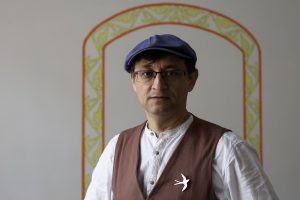
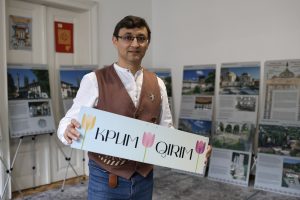
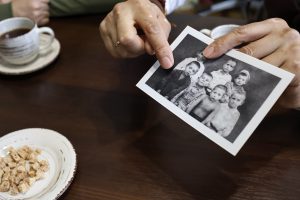
Amet was born in Uzbekistan. His father had been deported there as a child and sent to an orphanage because his mother could not feed all her sons. In exile, she survived by trading gold coins from the family fez – a traditional piece of jewellery – for bread.
The family managed to return to Crimea only decades later. Amet spent 13 years on the peninsula – more than his father, who after returning managed to live on his native land for only a few years. Amet worked in Bakhchisaray, in the Khan’s Palace, the only surviving example of Crimean Tatar palace architecture in the world. For him, it seemed that history had finally come to an end.
But in 2014, after the occupation of Crimea, the Bekirov family first moved to Drohobych, and later to Lviv, where they began creating their own island called Crimea. They founded a civic organisation and worked to promote the cultural heritage of their people.
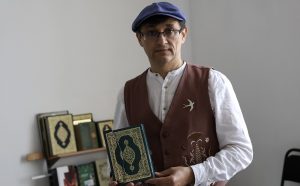
Amet’s wife, Dilyara, keeps an old Quran printed at the end of the 18th century. It has travelled with the women in her family from Crimea to Uzbekistan, back again, and now to Lviv. During Soviet times, it was read secretly by candlelight, passed down exclusively through the female line. Her grandmother Safiye bequeathed it to Dilyara.
“Will you pass it on to me too?” their daughter Kamila often asks. Dilyara nods. And so, it is said.
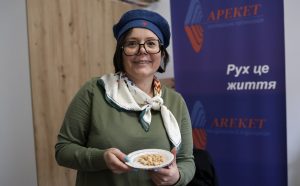
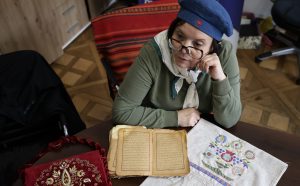
From her grandmother, Dilyara learned to embroider ornek – a traditional Crimean Tatar ornament recognised by UNESCO as part of the world’s intangible cultural heritage.
The patterns contain female and male symbols, protective signs, and family stories. This is not mere decoration; it is a full language, a kind of visual map of hopes and desires. What once helped women survive in exile has now become a way to preserve identity.
Amet and Dilyara’s daughter, Kamila, speaks the language of music. She plays Crimean Tatar folk melodies on the violin, songs whose notes were once forbidden. The lullabies her mother sang to her as a child eventually evolved into professional musical training.
Amet has one particular dream: one day, to return to Crimea and climb the highest mountain with his daughter, where she would play the violin. He says it may be just a beautiful dream. But the Crimean Tatars know that dreams of return are what have inspired and sustained their people for centuries.
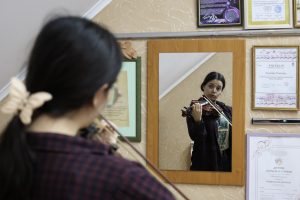
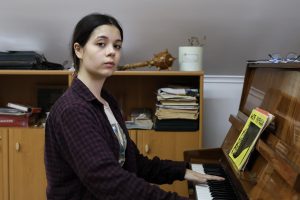
Among the Crimean Tatars, there is a legend of a golden cradle hidden deep in the mountains, a metaphor for cultural heritage that must be protected from enemies.
“The golden cradle rings. Every Crimean Tatar hears that sound. And that is why we always return to Crimea, wherever we are,” says Amet.
Until return becomes possible, the Bekirov family continues to gather ‘seeds’ – memories, music, ornaments, books – so that one day they can be replanted on their native land.
This story was written in collaboration with The Reckoning Project, an initiative that brings together journalists, researchers, data scientists and legal experts to document war crimes, build legal cases, and combat disinformation by using reliable media outlets. The European Union last year reinforced its support for The Reckoning Project.
Author: Inna Kubay
The original article was published in Bulgarian by Radio Free Europe/Radio Liberty
MOST READ
SEE ALSO
From passion to mission: how Sofiia Nazarenko became a voice of Ukrainian journalism through EU4Youth
A partnership that builds resilience
Packaging from mushrooms: how a Ukrainian start-up is contributing to Europe’s green economy
From idea to energy: how Kyiv youth are developing the ‘energy willow’ project
A space where science comes to life: how an interactive museum in Ternopil is inspiring the community


The information on this site is subject to a Disclaimer and Protection of personal data. © European Union,
