

One shot, less stress: a healthier path to colon surgery recovery
One injection is enough: no more week-long antibiotic treatments before intestinal cancer surgery. And no more unnecessary stress on the colonic microbiome – the vital community of microorganisms that protect our gut walls and support our health from birth. A new, more restrictive antibiotic protocol for colon surgery is one of the key outcomes of the COLONSTRESS project, whose objective was – among others – to provide evidence of how antibiotics can alter our intestinal environment, and not for the better.
It is well established that the excessive use of antibiotics can seriously harm our health. This issue was further exacerbated during the COVID-19 pandemic, when prolonged and excessive antibiotic use became more widespread – often without medical necessity. While intended to fight potential infections, these treatments have unintended consequences: in fact, not only do they target harmful pathogens, but they also disrupt our beneficial microbiota. These ‘good’ bacteria are essential for immune balance, digestion, and overall well-being. “By disturbing this delicate ecosystem, we risk weakening one of the body’s most important natural defences,” explains Marcel Ciobanu, manager of the COLONSTRESS project. “Unfortunately, after the pandemic we more and more often encounter dysbiosis, an imbalance in the microbial communities, where the good bacterial groups are harmed.”
So, the use of antibiotics must be rational, and adequate. But what’s the best approach when facing colon cancer surgery? One of its most frequent complications is postoperative infection. To prevent this, surgical antibiotic prophylaxis is necessary – requiring that the antibiotic is present in the tissue exactly when the wound is open, when the risk of infection is at its highest. “Previously,” continues Ciobanu, “to prevent the infection of the wound we were using five to seven days of antibiotics before the operation.” That meant exposing patients to a heavy antibiotic load, over several days, with heavy stress on the microbiome. But what if there was a more efficient and less invasive alternative? For example, administering just one dose of antibiotics at the start of anaesthesia. Through the project – funded by the ENI CBC Romania-Republic of Moldova programme – research teams from both countries have compared two different antibiotic protocols on similar patient groups, running parallel test samples and thus identifying the most effective approach. Four hundred patients were tested, 200 in each country, and 70 were tested twice, in Chisinau and Iasi, to validate the method in both partner institutions. “Our research,” says Ciobanu, “has demonstrated that administering a single dose at the beginning of anaesthesia, is more effective in preventing postoperative complications, without causing any changes in the human colonic microbiome.”
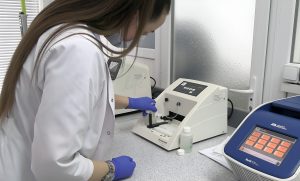
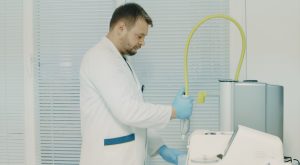
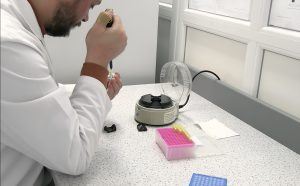
Research was a pivotal component of the project. In fact, one of the goals of COLONSTRESS was to train researchers from the Republic of Moldova in DNA sequencing, specifically bacterial metagenomics. As the researcher Valeriu Tutuianu explains: “Since our colleagues in Iași (Romania) had much more experience in this field, they guided us through every step – from isolating the samples, to interpreting the data. Together,” he continues, “we have fine-tuned the protocol, which helped us train even more researchers, so they could use the method themselves, and get results reliable enough for clinical use.” And by the end of the activities, the two partnering oncology institutes have managed to establish a shared platform for molecular biology.
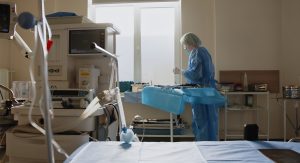
Finally, the COLONSTRESS project has clearly demonstrated that the proper use of antibiotic prophylaxis can significantly lower the risk of complications in colorectal surgery. By limiting unnecessary antibiotic use, the rate of post-operative issues – such as allergic reactions, gut imbalance, or the need for reinterventions – has been reduced. “Patients have experienced shorter hospital stays,” concludes Ruslan Baltaga, Director of the institute of Oncology in Chisinau, “and overall, the quality of care has improved substantially”.
Author: Daniela Cavini, TESIM
MOST READ






SEE ALSO

Moldova between reforms and hybrid threats: the European path of a country on the front lines
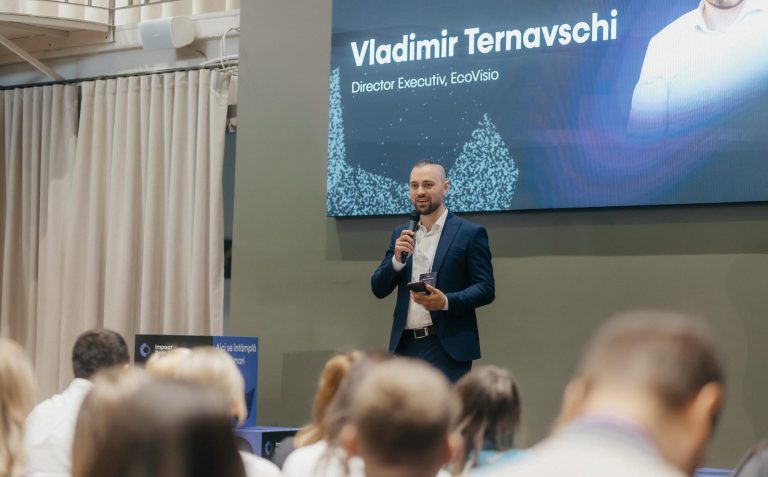
Heading an environmental organisation at the age of 29: Vladimir Ternavschi on his superpower to bring people and ideas together

‘Europe became real faces and real stories’: Young European Ambassadors look back on ten years of friendships and community projects
Seamstress turns entrepreneur with support from EU4Youth in Moldova
Artificial intelligence that makes a difference in people’s lives: how EU4Youth helped Denis Zacon achieve his social mission


The information on this site is subject to a Disclaimer and Protection of personal data. © European Union,
