

Heading an environmental organisation at the age of 29: Vladimir Ternavschi on his superpower to bring people and ideas together
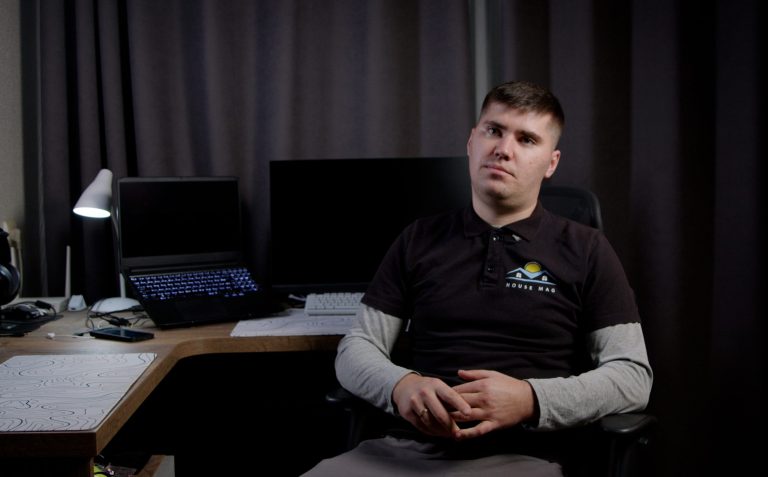
Vladimir Ternavschi has been the executive director of EcoVisio for over five years. Before taking on the role of overseeing between 10 and 15 projects each year, he was an environmental activist. Originally, Vladimir is from the Transnistria region. After moving to Chișinău to study, he decided, together with his colleagues, to set up an environmental start-up to bringing like-minded people and ideas together.
The director of EcoVisio is 29 years old. He studied at the Academy of Economic Sciences of Moldova and the Institute of Physical Education and Sport in Chișinău. There Vladimir took his first steps as an activist promoting public participation in environmental protection.
“Together with a few colleagues, we set up a start-up to help people understand how to sort their rubbish properly. Our project title was ‘Youth for Eco-Plastic’. We made equipment, recycled waste and tried to show that plastic can be a valuable resource that shouldn’t be thrown away, but at the same time shouldn’t be overused either,” Vladimir recalls.
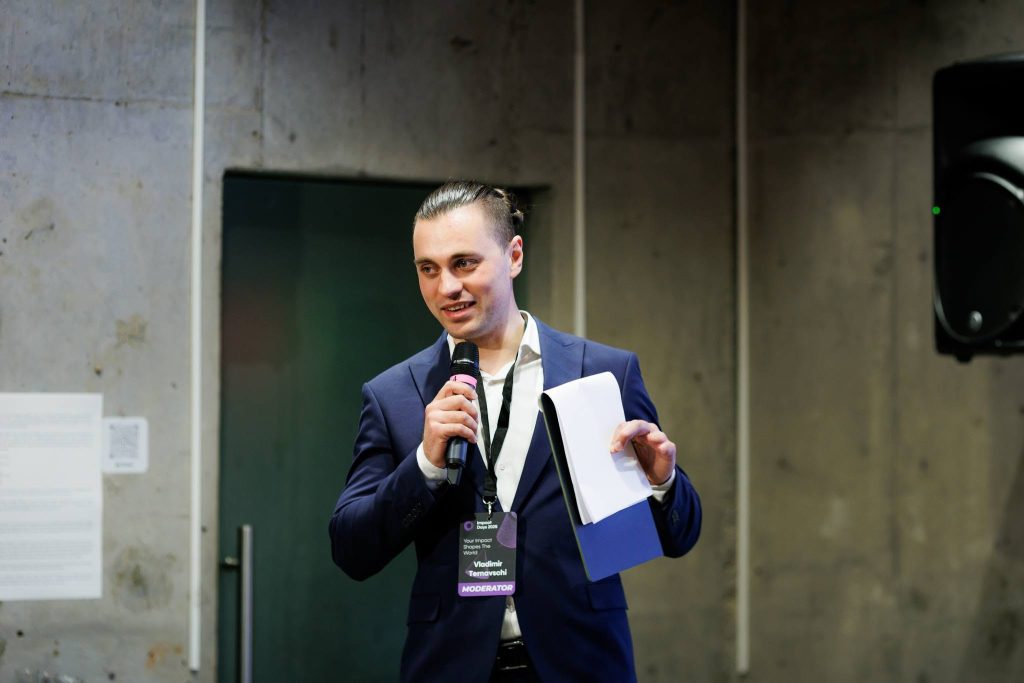
The idea for the project came about after a trip to Germany: “I went to a small village in Germany and helped my relatives run a bakery. For example, I noticed that unsold bread was sent to biogas plants. In Germany, there were solar panels everywhere, and the waste collection system was well organised thanks to separate bins for different types of rubbish. This experience inspired me to introduce similar practices back home.”
It was during this period of developing his start-up that Vladimir also enrolled in the EcoVisio programme, designed for young people launching environmental projects in the Republic of Moldova.
“In the early stages, EcoVisio helped us with a small grant to build the equipment, and that’s how my relationship with the organisation began. Later, in 2020, I enrolled on a ‘training for trainers’ programme in non-formal education. At that time, EcoVisio had announced a vacancy for the role of executive director. Aware of the difficulties the organisation was facing, I was initially hesitant, but I decided to apply anyway. I was also inspired to do so by a colleague, who advised me to give it a go.”
After submitting his application, Vladimir went through the selection process and an interview, and in November 2020 he officially became EcoVisio’s executive director.
How EcoVisio is changing teachers’ approach to teaching
Today, more than five years after his appointment, Vladimir oversees all the processes within the organisation. One of his responsibilities is to create opportunities for the whole team to develop.
“I draft project proposals, seek out donors or they find us themselves, negotiate with them, develop project concepts, take part in various discussions and public consultations, and represent the organisation at external events. In addition, I keep abreast of all the projects the organisation is working on.”
EcoVisio consists of five departments and coordinates up to 15 projects each year. The head of the organisation acknowledges that it is not always easy to overcome the challenges, but relishes the diversity of the projects.
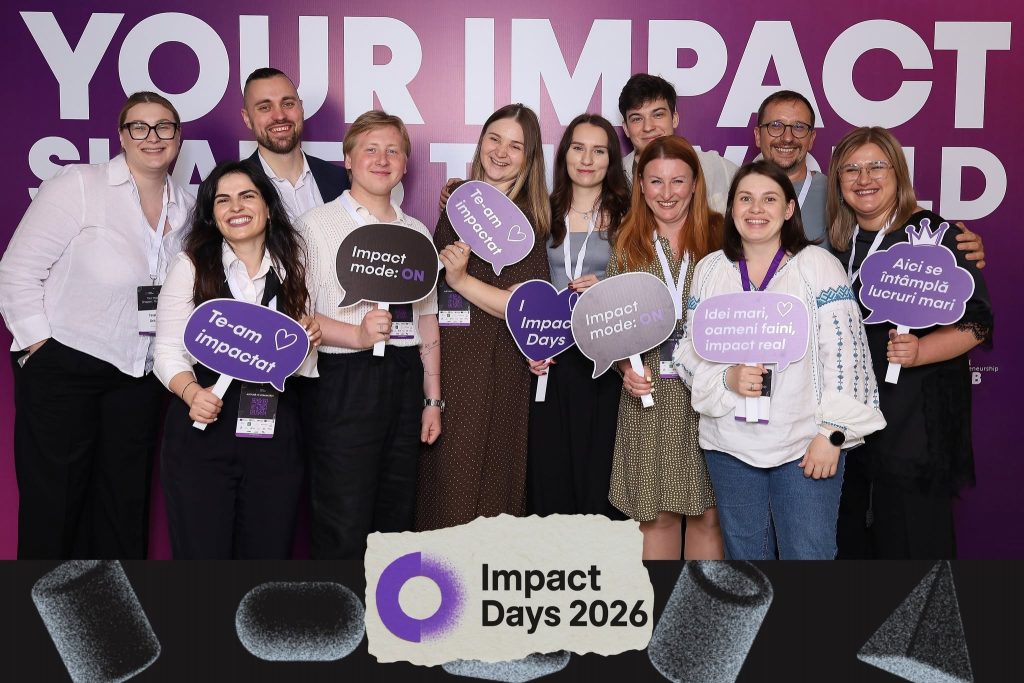
For example, Vladimir explains that he plans to launch a project aimed at teachers. The initiative will help them understand how to organise a 45-minute session that not simply imparts information but changes pupils’ outlook on the world.
“We help teachers become organisers of an interactive and engaging educational process. At the same time, I enjoy projects dedicated to entrepreneurs. One of them is Impact Days.”
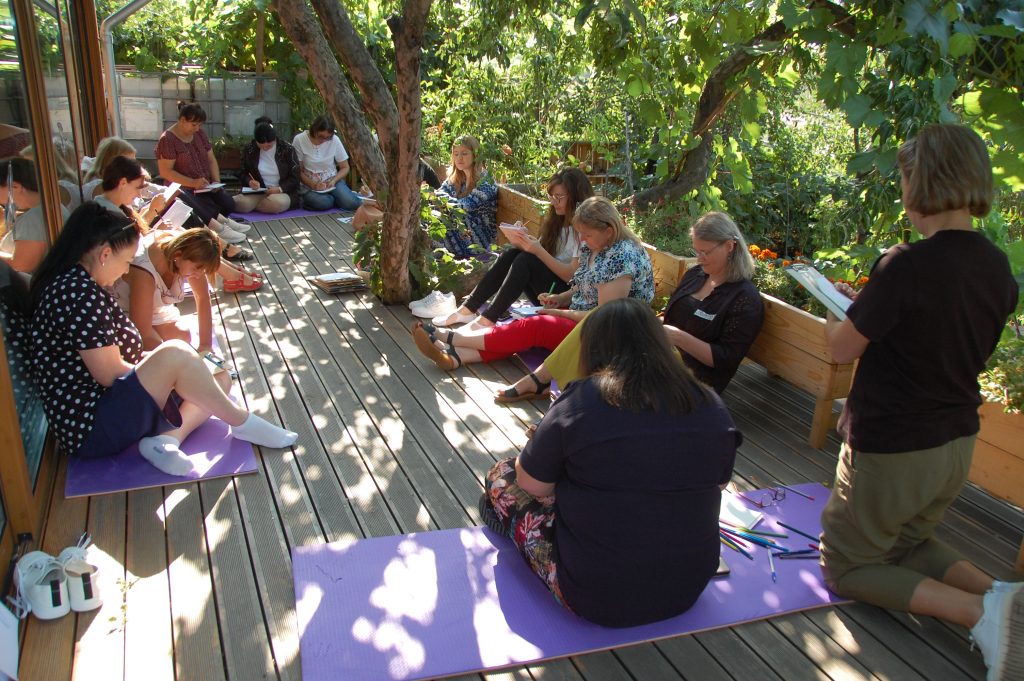
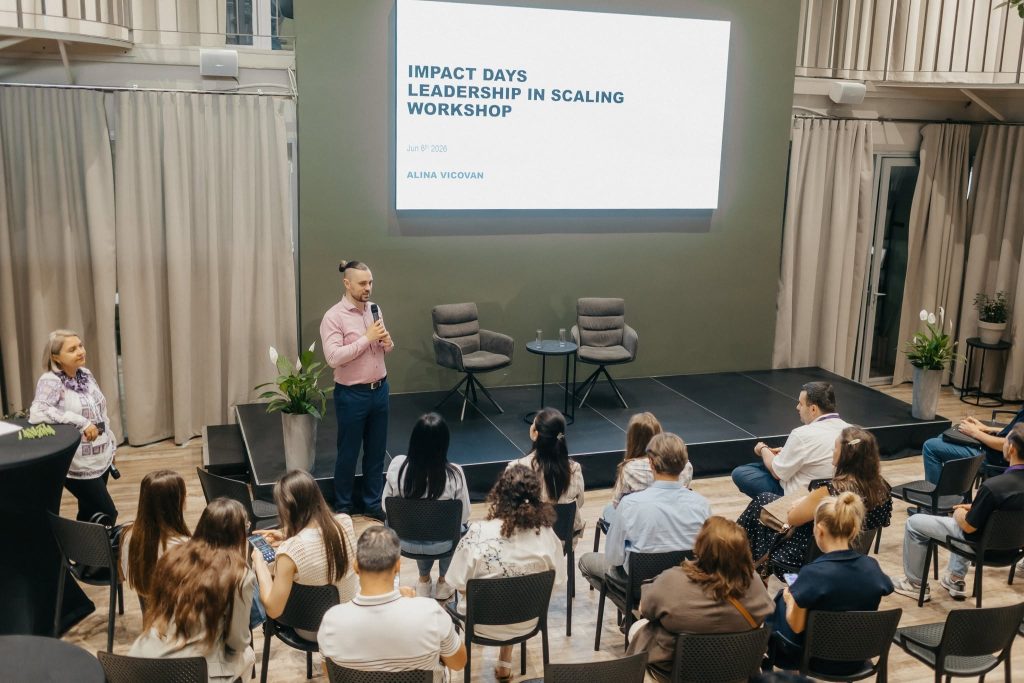
In 2026, the Impact Days conference was held for the fourth time on 5-6 June. It was co-funded by the European Union. According to Vladimir, it was attended by entrepreneurs for whom the social aspects of business are more important than economic gain.
“The conference programme covered topics such as the use of artificial intelligence in business, strategic communications, cybersecurity, leadership, and access to finance.”
One of the key discussions was the panel ‘Impact Heroes: Business that Changes the World’, where participants were introduced to entrepreneurs and companies that operate with a focus on social and environmental impact.
“The event featured over 30 speakers from Austria, Romania and Moldova. Participants had the opportunity to speak with them in person. We also organised screenings of documentaries filmed in Moldova. There were also masterclasses and many networking sessions to establish contacts and build relationships.”
In addition to initiatives in the fields of education and the economy, EcoVisio focuses on energy and climate issues.
“We registered the first energy community in the Republic of Moldova and continue developing this concept. We are also working to raise public awareness of waste management issues,” says Vladimir.
For example, through the ‘Empower Her’ project, the organisation has helped many women in rural areas to adapt to climate change. They have gained the knowledge and skills to grow fruit and vegetables and to harvest crops even during periods of extreme heat and water shortages.
With EU support, EcoVisio has implemented the project ‘ActEU for Moldova – Activating communities for EU integration’. The project aims to support civil society organisations and local action groups so that they can participate more actively in the process of the country’s integration into the European Union. Participants receive grants of up to €31,000 and support in improving governance and ensuring long-term sustainability.
In addition to carrying out their own projects, members of the EcoVisio team run training sessions for other organisations and share their expertise in the field of organisational development.
“EcoVisio runs training sessions on different types of waste and recycling. It also organises training in areas key to internal operations, such as financial management, project management, communications and enhancing organisational sustainability. In addition, a network of trainers and facilitators takes part in various events, helping other organisations and NGOs to create useful and meaningful ways of engaging with their audience.”
‘If we continue to deplete soil, we risk losing a unique and highly valuable resource’
Vladimir shares his knowledge not only as the director of EcoVisio, but also as a private individual. Educational work is another of his passions.
“I take part in various training events as a trainer or facilitator and help people understand a wide range of topics. Whether they are training courses or educational sessions, I run them free of charge, and in return I ask for a donation to support the Ukrainian army. I’m also involved in online activism, promoting the ideas of democracy and the reintegration of the Republic of Moldova.”
It is also worth noting that this young man actively promotes issues related to environmental protection. According to Vladimir, some of the main problems facing society today are access to drinking water and soil degradation.
“If we continue to deplete soil, we risk losing a unique and extremely valuable resource. We have no oil, gas or coal, but we do have fertile soil, and we are exploiting it to the limit – and we need to change these approaches,” he says.
Vladimir also highlights the role of the economy and large companies, as they are largely responsible for the state of the environment.
“When the country’s economy will become more environmentally friendly, more socially oriented and better adapted to the climatic conditions in which we live, then people’s everyday choices and habits will also change,” says Vladimir.
According to the director of EcoVisio, responsibility cannot be placed entirely on ordinary people. They are often the ones who suffer most from the consequences of environmental pollution.
“When the same product – for example, bread, which we buy every day – is sold not only in plastic packaging but also in other types of packaging, the composition of the waste changes. This, in turn, can have a positive impact on the waste management system and recycling.”
Vladimir says that EcoVisio constantly develops cooperation with other environmental organisations. He believes that problems in this area can only be effectively solved through joint efforts.
And what’s your superpower?
Vladimir Ternavschi’s story shows that superpowers do exist, and that anyone can develop their own. Have you ever wondered what your superpower is?
To learn more about Vladimir’s superpower, watch this video.
Author: Nicoleta Botnaru
MOST READ
SEE ALSO
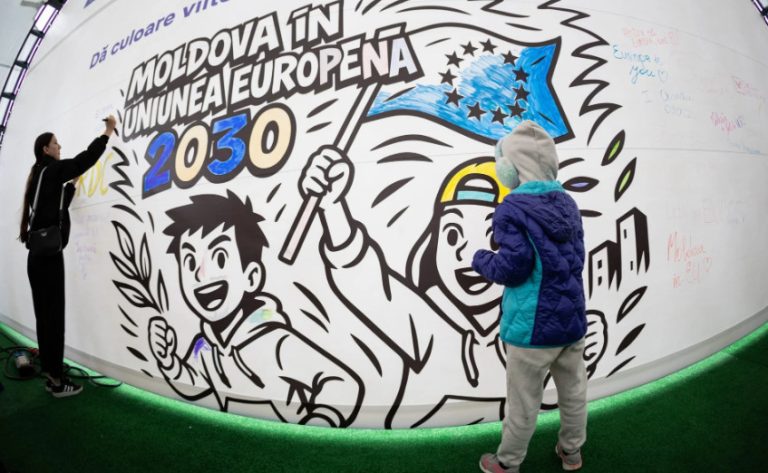
Moldova between reforms and hybrid threats: the European path of a country on the front lines
‘Europe became real faces and real stories’: Young European Ambassadors look back on ten years of friendships and community projects
Seamstress turns entrepreneur with support from EU4Youth in Moldova
Artificial intelligence that makes a difference in people’s lives: how EU4Youth helped Denis Zacon achieve his social mission
For one rural entrepreneur, time turned into opportunity with Persp@ctive


The information on this site is subject to a Disclaimer and Protection of personal data. © European Union,
