

From school portraits to new learning spaces: inside ‘Story Book’
At first, it was supposed to be a café.
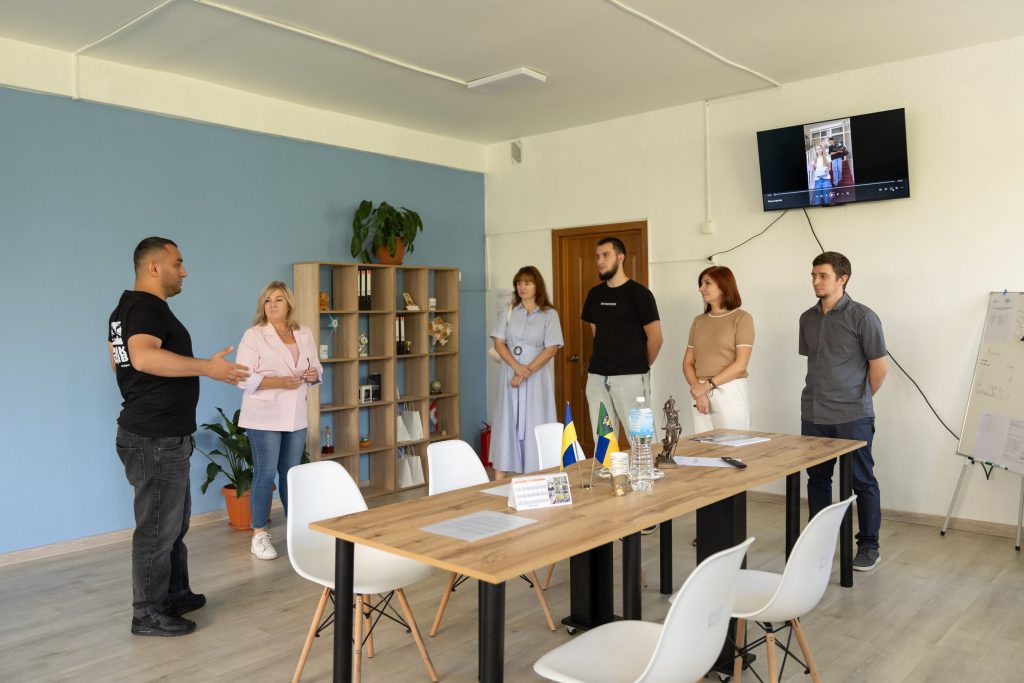
A space where young people could gather. Talk. Exchange ideas. But as the team from Dnipro worked more closely with school students and youth initiatives, they began to notice something else. The real shortage was not coffee tables or cosy corners. It was space – real, modern, functional space inside schools. Places where young people could meet, work in teams, test ideas, hold events, and simply feel supported.
That is how ‘Story Book’ was born.
Not as a café. But as a social enterprise that combines technology, entrepreneurship, and a clear social mission.
The project officially launched on 18 October, 2024, at the Dnipro Youth Centre as part of the ‘STARTUI: Social Entrepreneurship in a Youth Centre’ initiative, implemented by the School of ME and the ‘Youth Platform’ NGO, as part of the ‘EU4Youth – Youth Employment and Entrepreneurship’ programme.
Rethinking the school yearbook
Almost everyone remembers their school yearbook. A final photo. A few signatures. A keepsake placed on a shelf.
The ‘Story Book’ team asked a different question:
What if a yearbook could do more than preserve memories?
Their answer was both simple and unexpected. They began producing modern school yearbooks with augmented reality features – photos that ‘come alive’ through a smartphone. For students, this made the product engaging and relevant. For schools, it created something new and exciting.
“We were given a very wide choice of album designs, covers and content options. The team offered a personalised approach for our class, the whole process took place in a friendly atmosphere, and we really liked the idea,” says Maxym Tomashevsky, a school graduate whose class ordered albums from ‘Story Book’.
But the real innovation was in the business model.
Twenty per cent of revenue from each yearbook is reinvested in developing youth spaces in Dnipro schools. Each order becomes more than a purchase. It becomes a contribution to new desks, equipment, workshops, student initiatives, and self-governance projects.
Alongside production, the ‘Story Book’ team launched its own grant programme. Schools and lyceums can apply for funding to create spaces for non-formal education, teamwork, training sessions, and leisure activities. Instead of waiting for external donors, educational institutions become active drivers of change.
From an idea to real youth spaces
In its first year of operation, ‘Story Book’ has already delivered measurable results.
During the 2024-2025 academic year, the team produced 354 school yearbooks and invested more than €2,500 into youth space development.
Two new youth spaces have already opened in Dnipro.
The first, ‘PROskills’, was created at the Scientific Lyceum of International Relations. It now hosts training sessions, teamwork activities, and skills-development events.
The second, ‘DYULIA’, was launched at the City Law Lyceum, focusing on student self-governance and legal education initiatives.
The newly created spaces are not symbolic. They are active. They regularly host non-formal education training sessions, youth community meetings, and educational activities, delivered in collaboration with the ‘Story Book’ team.
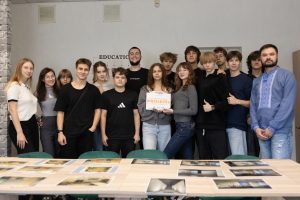
“We really wanted our own space, and when we found an opportunity to apply for a grant, we immediately got to work. We started filling out the paperwork, and that’s how the story of our space began. We made a video showing what our centre looked like before we received financial assistance, and then we prepared a large document with all the materials. It was painstaking work, but the result is there. When you walk into the space, you see how beautiful it is and realise how valuable it is that we did everything ourselves,” Maria Hutsalova, president of City Law Lyceum self-governance, says of the ‘DYULIA’ space which was arranged with the support of ‘Story Book’.
At the same time, the ‘Story Book’ team organised three motivational meetings with representatives of local businesses in Dnipro, bringing together more than 120 young people. These meetings help students see real career paths, receive practical advice, and hear honest stories about entrepreneurship.
A familiar product. A systemic effect.
The main beneficiaries of ‘Story Book’ are school students and young people who gain access to modern learning conditions, opportunities for self-development, and spaces where their voices matter.
Schools receive additional resources for development.
Communities begin building a culture of social responsibility.
And entrepreneurship becomes something practical and visible.
“At ‘Story Book’, the team was able to view the school album not as the end point of the educational journey, but as a resource that opens up new opportunities for young people: through a product that is familiar to graduates, funds are raised for educational spaces, and the funds are put back to work for schools. For us, this is an example of how social entrepreneurship works through simple but well-thought-out solutions,” says Anna Gladka, head of Education and Consulting at the School of ME.
The ambitions go further.
During the 2025-2026 academic year, ‘Story Book’ plans to open 10 additional youth spaces in Dnipro schools. In the long term, the team aims to scale the model and turn social entrepreneurship into a sustainable mechanism for supporting young people.
“Our goal is not just to create school yearbooks, but to make sure that every yearbook brings real value to young people,” says Mykyta Ihraiev, Head of ‘Story Book’.
What began as a conversation about opening a café has become something more structural.
Where there were once isolated initiatives, today there are rooms filled with discussion, teamwork, and new ideas. A familiar school product has turned into a financial engine for youth development.
And in Dnipro, every graduation photo now carries something more than a memory – it carries investment in the future.
MOST READ

RELATED PROJECTS
SEE ALSO
From passion to mission: how Sofiia Nazarenko became a voice of Ukrainian journalism through EU4Youth
A partnership that builds resilience
Packaging from mushrooms: how a Ukrainian start-up is contributing to Europe’s green economy
From idea to energy: how Kyiv youth are developing the ‘energy willow’ project
A space where science comes to life: how an interactive museum in Ternopil is inspiring the community


The information on this site is subject to a Disclaimer and Protection of personal data. © European Union,
