

She baked bread at home and did not let her children leave the yard for three years: how a Ukrainian mother escaped occupation to prevent the Russians from taking her children
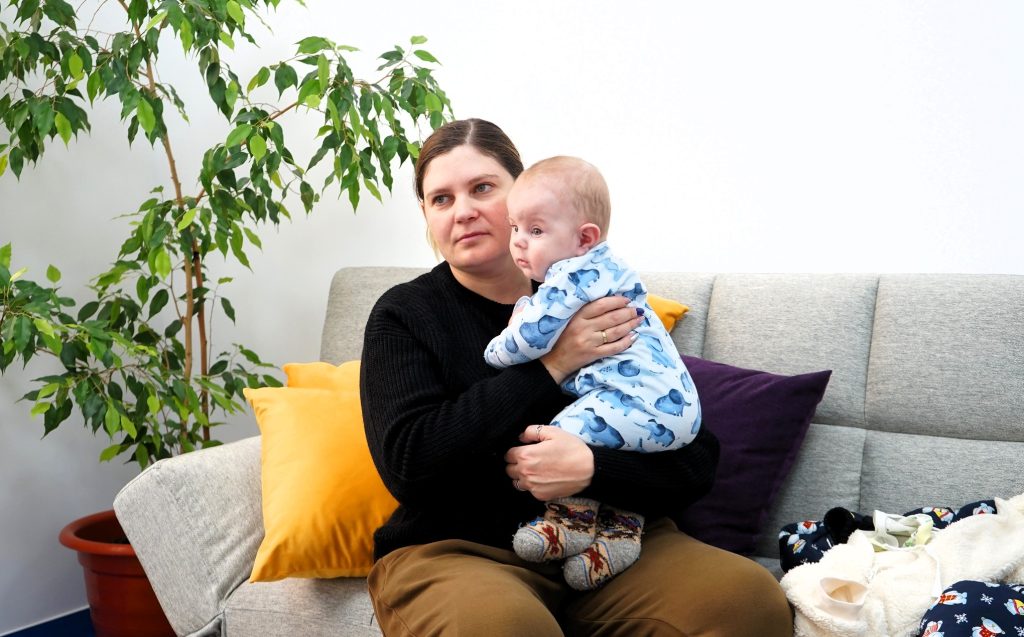
In the autumn of 2024, armed Russian soldiers came to Maria’s home (not her real name). “They told me that if my children did not go to school, they had every right to take them away and that there would be nothing we could do about it,” the woman recalls. Her village was occupied in 2022 following Russia’s armed aggression against Ukraine. After that, the mother gathered her children and left the occupied territory.
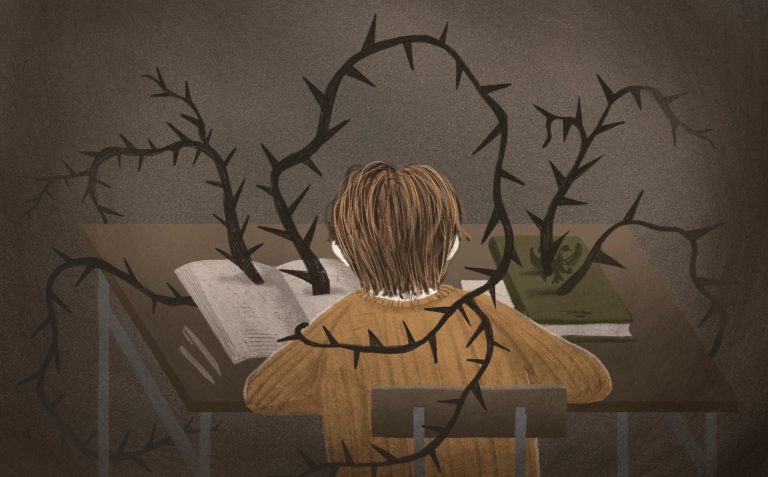
Over the four years since the start of Russia’s full-scale war against Ukraine, the occupation authorities have switched schools in the occupied territories to the Russian curriculum. Under this system, pupils are taught a version of history that denies Ukraine’s existence as a state, the study and use of the Ukrainian language are effectively banned, and military-style training has been introduced.
Some parents, like Maria, simply refused to send their children to Russian schools. Gradually, however, the occupation administrations forced them to do so through financial incentives or threats. Those who still did not want their children to study there were forced to leave their homes.
The children did not leave the yard for three years
On 24 February 2022, Maria saw Russian army tanks, armoured personnel carriers and Grad multiple rocket launchers on the main street of her village. She did not know what to do, so she took her children and went down to the basement. The soldiers occupied the village in southern Ukraine, raised the Russian flag and took over the local school.
For three years, the mother did not allow her children to leave the yard. There were more soldiers in the village than local residents. She started baking bread at home to avoid going to the shop unnecessarily, as Russian troops often went there carrying weapons.
When the occupation administration of the region reopened schools under the Russian curriculum in September 2022, few people wanted to attend them, Maria says. Many families had left the village, as had some Ukrainian teachers. To encourage parents to send their children to Russian schools, the occupation authorities paid them 10,000 roubles (€150) for each child. Some accepted the money but still did not send their children to school.
As the village’s only school did not reopen, pupils were bused 40–60 kilometres to neighbouring districts. They returned home in the afternoon. Maria says she was outraged because there were no air raid alerts in the occupied territories, unlike in Ukraine, where they have not stopped since February 2022. “A strike could happen at any moment, but the occupiers simply did not care,” the mother says.
She refused the money and instead enrolled her children in a relocated Ukrainian online school. Whenever there was an internet connection, they attended classes in secret. She says it was dangerous because Russian soldiers could come at any moment to carry out inspections. So while the children were studying, she kept watch over the street and the yard.
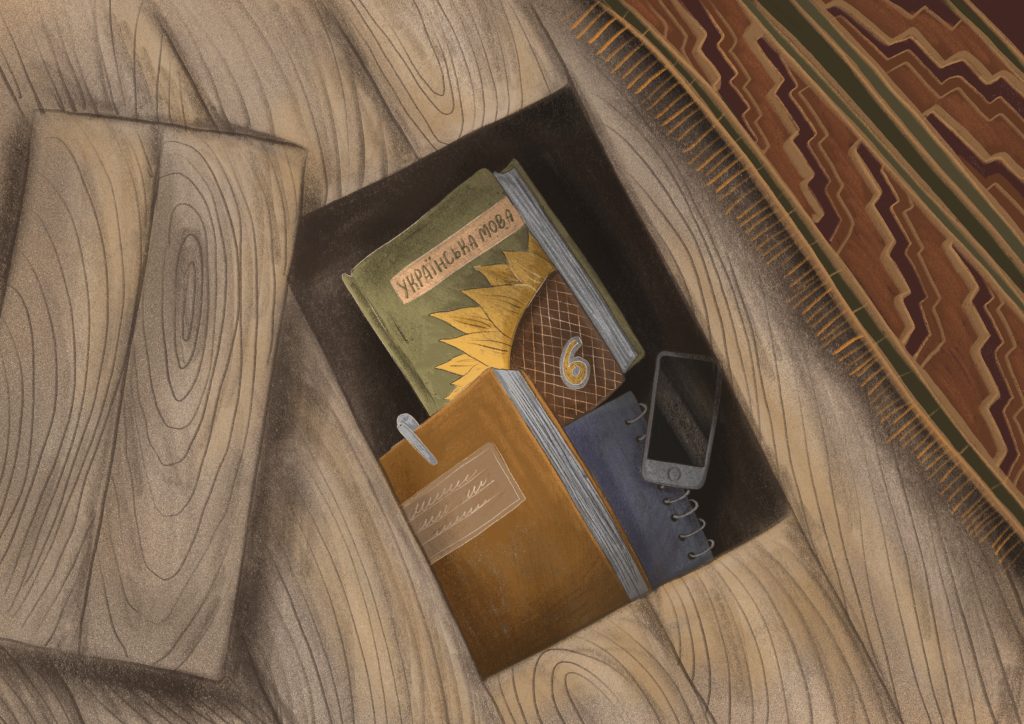
‘They said they had the right to take them away, and there would be nothing we could do about it’
The soldiers carried out inspections regularly. Russian soldiers came in groups, searching the yard, the barn and the house. Whenever they entered the house, they went through everything. Maria carefully hid the notebooks and the mobile phone her children used for online learning. “If they had found it and seen anything Ukrainian on it, we could have faced very serious consequences,” she says.
Starting in September 2023, armed Russian soldiers went from house to house in the village, asking why children were not attending school. “I promised that my child would go, even though I knew I would never send them. I did not want my child to go there,” Maria explains. Faced with armed soldiers from the occupying army, whom her children feared, she did not argue. She was fortunate because that year the occupation authorities mainly pressured parents who had accepted financial assistance but still had not sent their children to school.
A classmate of one of her sons, who attended the occupation school, told him that they were taught almost nothing there. Instead, they were made to line up, recite the Russian national anthem from memory and speak Russian. Then they were told how great Putin is.
“It seems to me that it is nothing but propaganda,” the mother says.
In the third year of the occupation, during one of the inspections, Russian soldiers threatened Maria that if she did not send her children to a Russian school, she would be stripped of her parental rights and her children would be deported to Russia. Until then, she had remained under occupation because she did not want to leave her home and did not have enough money to leave on her own. She also hoped that the occupied region would be liberated. But the threats forced Maria to call volunteers in Kyiv, who helped her family leave the occupied territory. “What else was I supposed to do? When armed men in military uniforms come to your house, your children are crying and terrified, you have no choice. You humble yourself, ask for help and leave, knowing that your children’s lives matter more,” the mother explains.
By the fourth year of the war, virtually all children in the occupied territories are attending Russian schools
Threats to strip parents of their parental rights often force families in the occupied territories to send their children to Russian schools. This is according to teachers from schools that were forced to relocate to areas under Ukrainian government control after the start of the full-scale invasion and continue teaching online. Since September 2022, these schools have been educating children who either moved to government-controlled regions of Ukraine or abroad, as well as those who remain in the occupied territories. As of 2025, fewer than 45,000 pupils are connecting from the occupied territories (8% of those who remain there). Most of them attend both Russian and Ukrainian schools at the same time. However, according to the Office of the Ukrainian Parliament Commissioner for Human Rights, headed by Dmytro Lubinets, the number of such children has been steadily declining due to persecution and pressure from the occupation authorities.
According to an analytical report by the Almenda Centre for Civic Education, nearly 2,000 schools are operating in the occupied territories during the 2025-2026 academic year. More than 582,000 children are enrolled in them. Children no longer study the Ukrainian language, while teachers deliver the propaganda-based ‘Conversations About Important Things’ lessons and teach a version of history distorted to fit the Russian narrative.
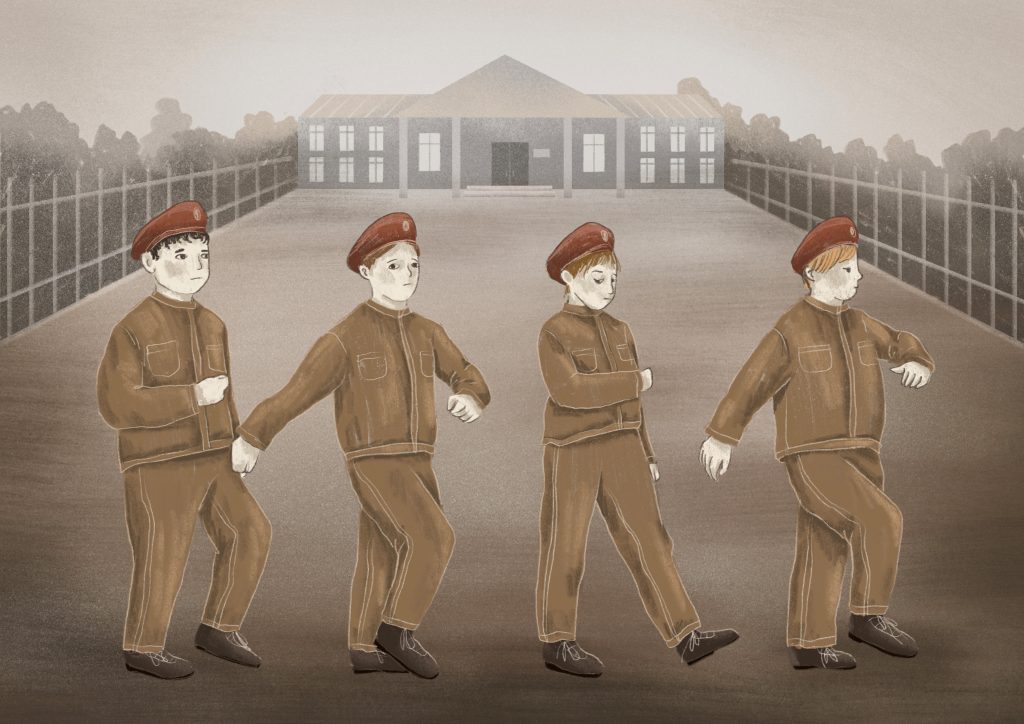
“Unified history textbooks for grades 10–11 have been in use since 2023. These textbooks systematically introduced, for the first time, narratives about the so-called ‘Crimean Spring’ and the ‘special military operation’, while presenting the occupied Ukrainian territories as part of the Russian Federation,” the Almenda Centre said in its 2025 annual report.
According to Almenda’s estimates, 344,000 children are involved in the Movement of the First, while another 44,000 belong to the Yunarmiya youth military movement. “The recorded changes point to the formation of a long-term state strategy by the Russian Federation aimed at reshaping children’s worldview, militarising them and preparing them for service in the institutions of the aggressor state,” the Centre concludes in its report.
Threats to strip parents of their parental rights are a tool of coercion
Under Article 43 of the Hague Regulations, an occupying power is obliged to respect and maintain public order and civil life in the territory it occupies, says Karim Asfari, legal analyst at The Reckoning Project.
“The Fourth Geneva Convention emphasises the protection of family unity. Separating children from their parents is permitted only in narrowly defined and exceptional circumstances. International human rights law further strengthens the protection of both family life and education: the separation of children must be necessary and in their best interests, while education must remain accessible, culturally appropriate and respectful of parental choice. Taken together, all these legal frameworks leave very little room for coercive interference in family relations through education policy in an occupation context,” Asfari explains.
In reality, however, the situation is different. “Along with the unlawful extension of Russian legislation to the occupied territories, the provisions of the Russian Family Code are also imposed. Under these provisions, parents are obliged to ensure that their children receive an education – and, evidently, an education based on Russian standards and the federal curriculum. There is no question of recognising Ukrainian distance education as equivalent to in-person Russian schooling. Russia has consistently refused to do so,” explains Ukrainian human rights expert Kateryna Rashevska.
According to the human rights expert, occupation schools are not only places of indoctrination and militarisation, but also a tool for forcing children to obtain Russian citizenship.
“It is extremely difficult for a child in the occupied territories to attend a Russian school without having Russian citizenship. For pupils in graduating classes, it is impossible, because otherwise they cannot complete identity verification, they will not receive their graduation certificates and will not be allowed to take university entrance exams,” Rashevska explains.
Vira Yastrebova, director of the Eastern Human Rights Group, believes that threats to strip parents of their parental rights are another instrument of coercion. Faced with such threats, parents usually either sent their children to Russian schools or, if they had the opportunity, left the occupied territories.
Human rights defender and co-founder of the organisation Pavlo Lysianskyi investigated the deportation of children to Russia throughout 2022 and found that it was carried out through occupation courts by stripping parents of their parental rights.
“Russian courts legitimise the removal of children from their families. This is not only about depriving parents of their parental rights, but also about placing children under the guardianship of Russian families. The child is entered into the Russian Federal Database of Orphaned Children, which effectively serves as a catalogue for Russians who choose a child and then travel to the occupied territories of Ukraine to take them away. After that, it becomes much more difficult to establish the child’s whereabouts,” says the human rights expert. According to the organisation’s analysts, this mechanism is still operating.
“In the occupied territories, parents are told that they have a school available because it has been reopened under the Russian curriculum. If they do not send their child there, the occupation authorities claim that the child is being deprived of the right to education because of the parents’ decision. That is why they hold these conversations. The first time it is a warning, the second time there is a commission to investigate why a school-age child is not attending school. Their goal is to establish maximum control. If a family refuses to send their child to a Russian school, it shows that they do not accept the occupation authorities and are raising their child in a Ukrainian environment. This is completely unacceptable to them because they do not want people who think differently in the occupied territories,”Yastrebova explains.
Officially, 19,500 children have been documented as deported, while only 2,000 have been returned over four years
Refusing to receive a Russian education is not the primary reason, but it is one of the most frequently cited reasons why Ukrainians leave territories occupied by Russia, Rashevska says. Every year, teenagers who have turned 18 also leave the occupied territories to enrol in Ukrainian or foreign universities. According to the National Information Bureau, Ukraine has officially documented the deportation or forcible transfer of 19,500 children. Some of them were separated from their parents or legal guardians by the Russian authorities. Some of the children taken to Russia have been adopted by Russian families.
According to the findings of a report by the human rights coalition Tribunal for Putin (“Coalition ‘5 a.m.'”), since the start of the full-scale invasion, between 2.8 million and 4.7 million Ukrainians have potentially become victims of deportation or forcible transfer to Russia, including between 260,000 and 700,000 children.
“Numerous testimonies from Ukrainian citizens who were transferred (deported) indicate that Russian military personnel used psychological coercion, deception and other criminal methods to force Ukrainians to choose routes leading either to other occupied territories or to Russia,” the report states.
This is likely to constitute a violation of Article 8 of the Rome Statute of the International Criminal Court and, where such acts are committed as part of a widespread or systematic attack, also Article 7.
As of February 2026, Ukraine has managed to return just over 2,000 children from Russia and the occupied territories. The process is complicated by obstacles created by the Russian side and the occupation administrations. In addition, many Ukrainians are afraid to undergo the so-called filtration process – a loyalty screening by the Russian authorities – during which they risk being separated from their children.
To leave the occupied territory, Maria and her children had to travel through Russia and Belarus. The journey took five days. “But when we crossed the border into Ukraine and heard one of our soldiers say, ‘Glory to Ukraine!’, my children and I burst into tears.”
The family now lives hundreds of kilometres from the front line, on the other side of which their home remains. Maria says she dreams of returning because her parents are buried there. But as long as Russian troops remain in control of her native village, she cannot go back.
She says that despite the air raid alerts, which did not exist under occupation, her children feel much better in Ukraine. They are hardly frightened by them. “The scariest place is the one we came from,” the mother says.
Author: Lesia Pyniak
The original article was published in Latvian, Ukrainian and Russian by Latvian Public Media (LSM.lv)
MOST READ
SEE ALSO
Agricultural panic or opportunity in the EU? Ukraine’s next battle is going to be grain
Children are not the only ones to be deported: parents are also taken hostage in occupied Ukrainian territories
Occupation through education: how Russia took over Ukrainian schools
From passion to mission: how Sofiia Nazarenko became a voice of Ukrainian journalism through EU4Youth
A partnership that builds resilience


The information on this site is subject to a Disclaimer and Protection of personal data. © European Union,
