

Tenth Recovery Diary episode: how EU support strengthens Ukraine’s resilience in the fifth year of war
EU NEIGHBOURS East, in partnership with Ukrainian television channel ICTV, has released the tenth episode of the ‘Recovery Diary’. The episode highlights examples of the multilateral assistance provided to Ukraine by the European Union and its Member States, showcasing how international support continues to strengthen the country’s resilience and recovery amid Russia’s ongoing war.
The episode opens with the updated joint Rapid Damage and Needs Assessment (RDNA5), released on 23 February by the Government of Ukraine, the World Bank Group, the European Commission, and the United Nations. The assessment estimates that, as of 31 December 2025, the total cost of reconstruction and recovery in Ukraine will reach almost $588 billion over the next decade, nearly three times Ukraine’s projected nominal GDP for 2025. European Commissioner for Enlargement Marta Kos stressed that rebuilding Ukraine as a strong and modern future EU Member State will require continued reforms and coordinated international support.
The episode reminds the contributions of the European Investment Bank, together with the European Investment Fund as part of the EIB Group, delivered almost €1.5 billion in financing in 2025 – a record year of support since the start of Russia’s full-scale invasion. The financing supports essential services including energy, water and heating, transport, healthcare and education, as well as small and medium-sized enterprises (SMEs) through loans, guarantees and equity.
This episode also features the launch of the electronic apostille in Ukraine, supported by the European Union. The update implements the best international practices of the Electronic Apostille Programme (e-APP) and enables the provision of an electronic apostille (e-Apostille) in Ukraine. The modernisation was completed as part of the EU-funded DT4UA project, implemented by the e-Governance Academy (eGA). The EU Delegation, which published the news, reminded that about 7 million Ukrainians live abroad now. For them, obtaining documents with an apostille is often a prerequisite for studying, finding employment, doing business, or receiving public and private services.
The episode also includes a report from Odesa, where Russian attacks have damaged cultural heritage sites, including the Odesa National Fine Arts Museum and restoration initiatives supported by European partners, including projects to restore historic Odesa doors and safeguard architectural heritage.
The episode also focuses on other rehabilitation programmes supported by the EU, including the Bucha Consultative and Diagnostic Centre. The EU financed the purchase of equipment, the renovation of the premises, and also financed the advanced training of a rehabilitation doctor. Currently, about 2,000 residents of Bucha have access to the services of this centre.
The episode also reports on aid from EU countries, including Germany, France, and Belgium, which includes special transport and generators for the Mykolaiv region, energy equipment for hospitals in Zaporizhia region, and the reconstruction of a school shelter in the Chernihiv region.
The European Union remains Ukraine’s strongest partner, playing a critical role in recovery, reconstruction, and the reforms needed for EU accession. Since the onset of Russia’s full-scale invasion, the EU has mobilised €177.5 billion in humanitarian, financial, economic, and military assistance.
The Recovery Diary is a television series produced by EU NEIGHBOURS East in partnership with ICTV. The series documents real progress across Ukraine, highlighting recovery and reconstruction efforts supported by the EU and its Member States.
Watch the episode
Episode on YouTube
MOST READ


SEE ALSO
Supplying energy recovery: Ukraine Energy Support Fund to launch market awareness session at Recovery Conference

European Environment Agency and Eionet welcome Ukraine as a cooperating country
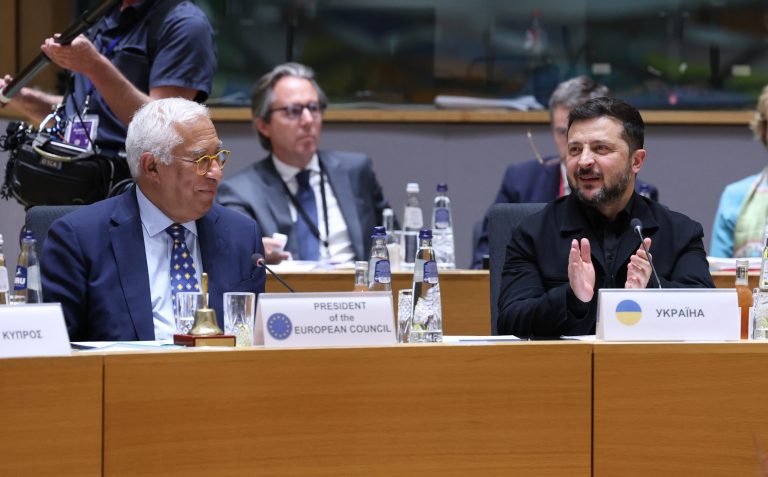
European Council joined by Zelenskyy: ‘Ukraine is moving forward on EU accession’
G7 agrees to increase delivery of air defence capacities to Ukraine
EU allocates €75 million to support the reconstruction of Chornobyl’s New Safe Confinement

The information on this site is subject to a Disclaimer and Protection of personal data. © European Union,
