
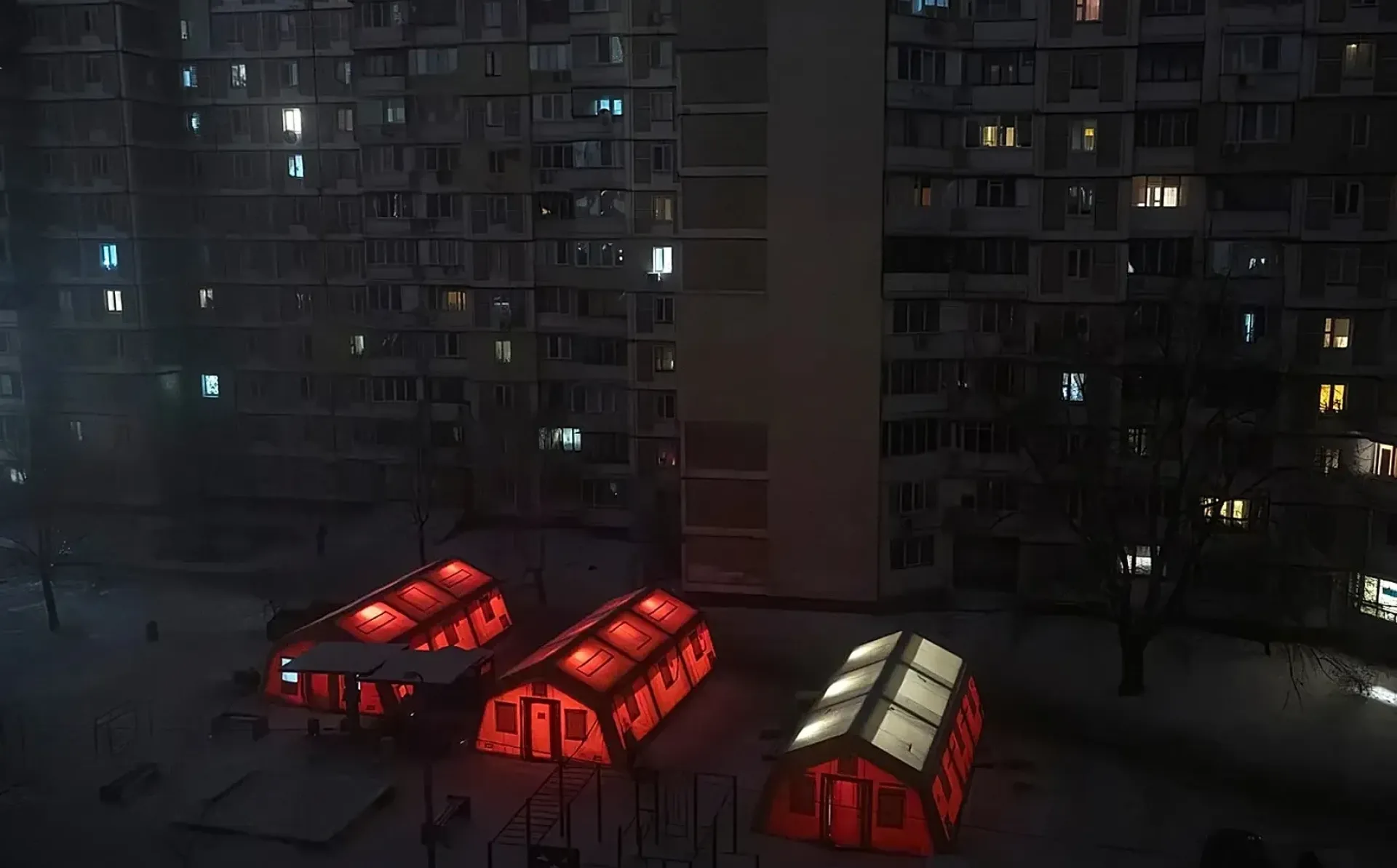
What can other European societies learn from Ukraine’s experience?
“Dying of hypothermia in your own bed in a city of millions in Eastern Europe should not be part of anyone’s life plan.”
Serhii Zhadan, Ukrainian writer and translator, military officer, speaking at the Munich Security Conference, 12 February, 2026.
The most tragic event that can happen to an ordinary person is war. Nothing in the world is as inevitable in its consequences, destructive, and ominous as the realisation of evil human intent.
Ukrainians know the price of their freedom, having fought for it for over 10 years in a war that began as a local conflict and escalated into a full-scale invasion. Meanwhile, gloomy moods and anticipation are spreading through the streets of Europe, more out of ignorance than awareness of the reality of the danger – should we wait for something or prepare ourselves? How can the EU become more self-reliant, looking at the example of our nation?
In this blog, I would like to share some thoughts and observations that will be useful to anyone whose life compass has recently begun to spin in different directions.
Tip 1: fight back
But you have no weapons! You have no advantage in strength! You have no economy, no culture, no language of your own, no history – russian propaganda successfully continues and keeps adding to this list. Looking the truth in the eye, it is worth saying that Ukraine exists primarily because of our military and volunteers, who have united and are fighting back against the enemy. However, our strength of resistance is not infinite. Human losses are irreversible. Therefore, I want to urge you to think about your own strength and capabilities: how can you help yourself (read Ukraine) now, to survive this war and achieve a just peace? Struggle and resistance once broke Hitler’s war machine from within, so we have a unique chance to put an end to another tyranny by defending Europe’s right to freedom.
Tip 2: develop respect
The Constitution of Ukraine defines human dignity, along with life and health, as the highest social value. Ukraine has a unique experience of combining different layers of respect for people – cultural, religious, and linguistic. Each of these elements has played a role in the heat of military action. The most striking thing is that the combination of seemingly incompatible (and at other times hostile) elements produced an unexpected result. When it was necessary to unite to resist the enemy, the entire population came together as if you were preparing borscht – a mixture of ingredients in intense heat created an almost unique dish. At a time when Europe must unite to have the strength to respond to today’s global challenges, respect and recognition of dignity must become the foundation for further action. We are different, and it is good that we have each other.
Tip 3: make plans
Whenever you face great uncertainty in your life, it becomes difficult to master the simplest things that you used to do automatically. What if you lose your job tomorrow? Your home? One of your friends or loved ones?
Loss or the threat of loss seems to cut out a part of your life. When stressed, people lose control and the ability to act rationally. Despite everything, Ukrainians have learned to cope with this – we not only dream of a better future, but also fight for it at all levels: on the front lines, in the rear, at international conferences and meetings, in schools and hospitals, and in our own homes.
We want our own ‘build back better’, and it definitely goes beyond this definition. That is why we are rebuilding our cities and villages, launching programmes to bring Ukrainians home, and maintaining dialogue with the diaspora. We do not want to be a suffering nation; we want a bright and peaceful future among the family of European nations. A person without plans can only go with the flow, while a person with plans can choose both the channel and the direction of movement along it. So I want to call on Europeans to plan their own Europe and determine its future, despite all external circumstances and obstacles.
In conclusion, it seems to me that Europe’s success depends entirely on its citizens – the same citizens who are here in Ukraine. We have a unique chance not to lose ourselves, but honestly to acknowledge all the advantages and disadvantages, not to give up (even though the battlefield may seem endless), but to have faith and inspiration to act, to move forward and achieve our own goals, towards a strong, united, and self-sufficient Europe that will end the war and achieve a just peace.
LATEST
A message from the YED Coordinators
My personal experience as a Young European Diplomat viewing the EU for the first time
A blueprint for enlargement: what we can learn from Moldova, Ukraine, and Montenegro
Young European Diplomats Club
Europe is more than the EU – it’s a practice. On Europe, belonging, and the quiet power of those who refuse to wait


The information on this site is subject to a Disclaimer and Protection of personal data. © European Union,
