

When helicopters cross borders to respond to emergencies
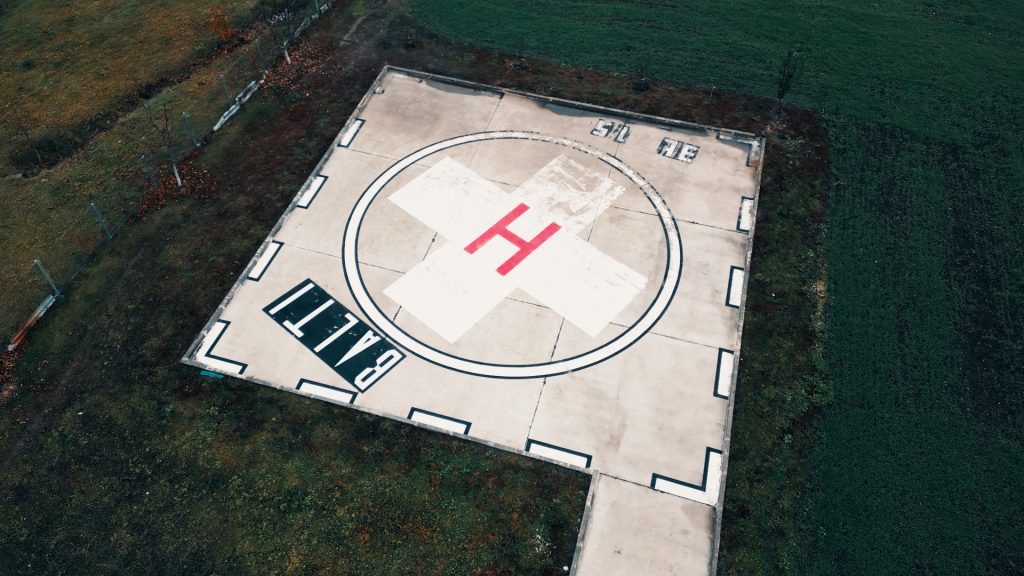
Borders can hamper emergency response: legal and administrative barriers, lack of bilateral agreements, resource fragmentation, technical obstacles… But take for example the SMURD project implemented between Romania and the Republic of Moldova. Before 2014, Moldova couldn’t dispose of any helicopter for quick evacuation of injured people, and a first EU-funded Cross-Border Cooperation (CBC) activity (SMURD-1) addressed this issue, developing a set of procedures between the two countries for mutual support in case of emergency. Then, the SMURD-2 project came along: four landing platforms were built in Moldova, and an emergency response plan was jointly established. Now vital choices can be made in a matter of moments. “When we need a helicopter to come from Romania to Moldova to pick up a victim,” explains Ghenadie Machidon, Deputy Head of the Regional Directorate for Emergency Coordination of Interventions, “the process is now practically automated, the decision is up to the medical dispatcher, and it takes only a few minutes. No more need of ministerial approvals.” This means that when disaster strikes, teams from both countries can intervene from any location and act in unison, ultimately saving more lives and minimising damage.
Over the past two decades, Moldova has experienced a significant increase in emergency incidents, with daily interventions rising from 20-30 to around 100. There are several reasons contributing to this rise. First, the conflict in neighbouring Ukraine has had a spillover effect, including refugee influx and security concerns, which have strained Moldova’s emergency services and increased the number of events requiring intervention. Second, there is a global rise in incidents, likely linked to our increasingly fast-paced lifestyle and the distractions posed by modern technology. The constant need to multitask and the persistent use of devices – especially while driving – significantly elevate the risk of accidents. The range of emergencies has also expanded beyond traditional incidents, to include fires, road traffic collisions, rope rescues, well rescues, etc. To address all this, Moldova has recognised the importance of enhancing its professional and technical capacities. “That is why,” says Don Gritco, project manager and Head of the Directorate for Response of the General Inspectorate for Emergency Situations (Moldova), “initiatives like the SMURD project play a crucial role in building the necessary infrastructure and expertise to manage these challenges”.
Infrastructure and expertise. SMURD-2 has increased the emergency response capabilities in Moldovan regions by reconstructing two fire and rescue stations and acquiring 15 state-of-the-art emergency vehicles. These include four extrication trucks for road incidents, ten fully equipped ambulances, and one off-road command jeep. “These vehicles have already been deployed in 1,700 interventions and five international missions,” continues Gritco, “including emergency response to the 2023 earthquake in Türkiye, and support for containing the wildfires in Greece last summer.”
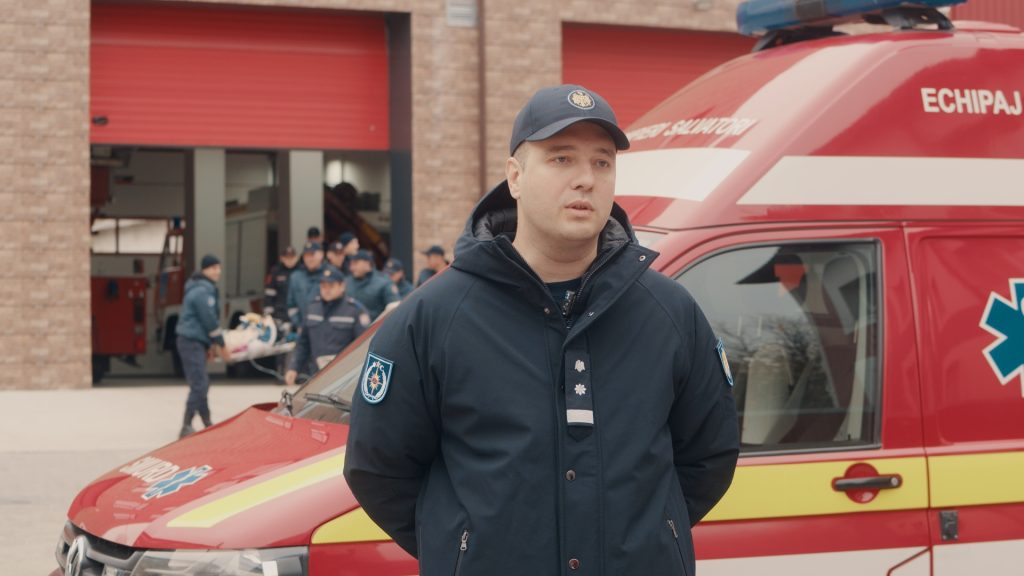
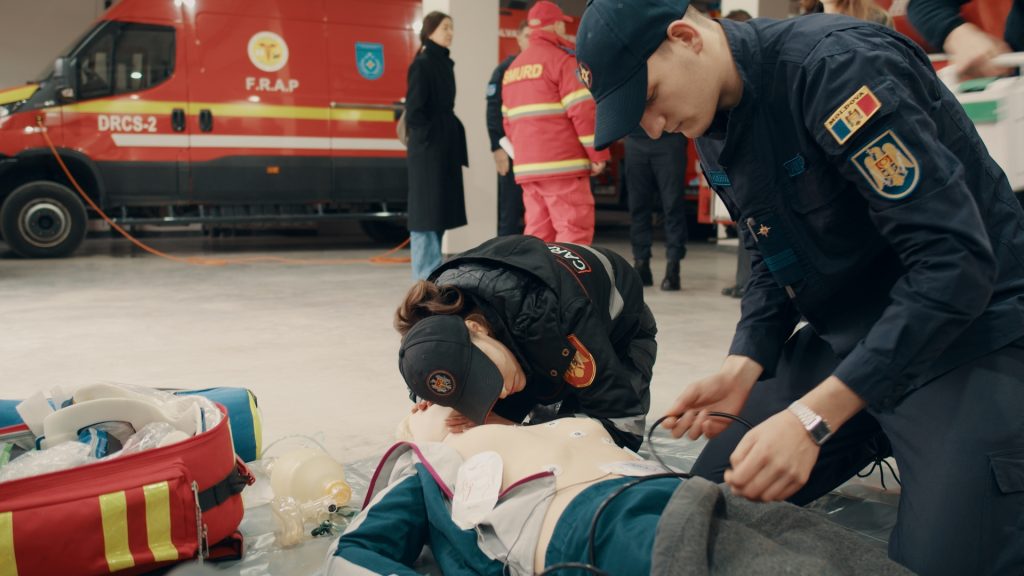
And now expertise. A crucial element to enhance the emergency response is the development of human capacity and cross-border coordination: thanks to the project, Moldovan rescuers and firefighters underwent intensive training alongside their Romanian counterparts, and the initiative has equipped them with the skills and knowledge to operate on both sides of the border. “We managed to develop two joint curricula, one for firefighting, another for urban search and rescue,” adds the paramedics trainer Ion Picalau. “After that, 100 Moldovan rescuers and firefighters were trained with their Romanian colleagues at the Common Training Centre in Iași. So now we are speaking the same technical language, we are interoperable and able to respond commonly in both countries. Right now,” he concludes, “we are training the paramedic team that will be able to work with the fire extinguishing modules, the extrication modules, and most importantly, with the first aid modules.”
Rushing to the new emergency department
By helicopter or ambulance, victims extricated from car crashes are swiftly carried to the new Emergency Department at Chișinău’s Institute of Emergency Medicine. This facility – now the largest in the country – was reconstructed and enlarged through the SMURD-2 project. A visit to this state-of-the-art unit reveals the project’s comprehensive approach, integrating the infrastructural component with medical expertise and collaboration with partners.
This is the frontline of healthcare: here is where patients arrive following sudden illnesses, car accidents or life-threatening conditions, like heart attacks. Here is where rapid decisions and expertise come together to provide often life-saving treatment. The difference between life and death can be a matter of minutes. Equipped with high-level medical technology – including ventilators, scanners, and a laboratory with advanced diagnostic tools – this department is staffed by a dedicated team of 300 professionals operating around the clock. Together, they ensure rapid, high-quality care for patients in critical need who arrive from all over the country. “No other hospital in the republic has 24-hour shifts like we do,” explains proudly Diana Manea, Director of the Institute, who remembers how it all started. “The old department faced a significant increase in patient visits, it was overcrowded, and sometimes it became difficult to provide adequate medical assistance. Also, the limited space made it problematic to install advanced medical equipment, further affecting the care we could offer.” That is why addressing these issues became a national priority.
And here is also where the collaborative efforts and expertise exchange of cross-border cooperation projects can make a difference. “The idea of this department clearly came after visits to Târgu Mureș, one of the first emergency care units in Romania to be equipped by the European Union,” continues Manea. “Their team helped us with every step of the project, they assisted regarding the technology and the management.”
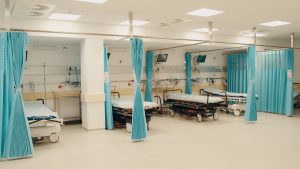
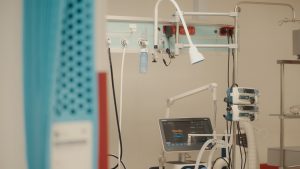
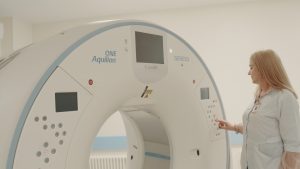
Effective organisation and management are crucial for a large facility like the Emergency Department of the Institute of Emergency Medicine, which is divided into red, yellow, and green zones, corresponding to the severity of patients’ conditions. Each zone is fully equipped to handle its own cases; however, if necessary, any zone can be reconfigured into a red zone by adding additional equipment. “This flexibility is very important,” explains Boris Leontii, Head of the Emergency Care Unit, “as we can now accommodate and attend more critical patients simultaneously, in case of a major accident, natural disaster or other mass casualty situations. I participated in the SMURD-1 project in 2015,” continues Leontii, “which laid the foundation for emergency medical care. The subsequent SMURD-2 initiative has provided us with a new, large, modern emergency reception unit, with greater capabilities.” And this has led an increase in patient visits, from 50,000 to 82,000 cases annually, underscoring the critical role of these cross-border initiatives in the enhancement of emergency medical services for the region.
SMURD-2 was funded by the European Union and implemented under the ENI CBC Romania–Republic of Moldova Programme, with a budget of €10 million.
Author: Daniela Cavini, TESIM
MOST READ



SEE ALSO

Moldova between reforms and hybrid threats: the European path of a country on the front lines
Heading an environmental organisation at the age of 29: Vladimir Ternavschi on his superpower to bring people and ideas together

‘Europe became real faces and real stories’: Young European Ambassadors look back on ten years of friendships and community projects
Seamstress turns entrepreneur with support from EU4Youth in Moldova
Artificial intelligence that makes a difference in people’s lives: how EU4Youth helped Denis Zacon achieve his social mission

The information on this site is subject to a Disclaimer and Protection of personal data. © European Union,
