

“Now I know that miracles happen”: Creating caring homes for children with disabilities
In Armenia’s Syunik region, 243 children live with disabilities, including 91 in the Sisian community, where economic hardship is a daily struggle for many families. Out of 4.000 households, around 1.100 minors grow up in socially vulnerable conditions, including children with disabilities, large families and those displaced from Nagorno-Karabakh. For many disabled children home itself is a barrier: outdoor toilets, uneven floors or inaccessible stairs make even basic mobility and care a challenge. With EU support provided through People in Need, the local NGO “Public Consultation and Research Centre”, gives such families something they have long lacked – safer and more dignified living spaces for their children, but, above all, a renewed sense of hope.
Varduhi (36) lives in Sisian with her 16-year-old son Gagik, who was diagnosed with cerebral palsy at just 14 months. “Receiving the diagnosis was emotionally difficult for me, but I set a goal to make my child’s life as happy as possible so that he does not feel limited by his condition”, – she says. Since then, she has supported her son with full-time care, including feeding, bathing, dressing, mobility and any other daily activity. Over the years, the physical demands grew heavier, while the family’s small house – with narrow doorways, steep thresholds and an outdated bathroom – made daily care increasingly difficult. But things changed the day a social worker from the NGO knocked on their door.
“I visited 35 settlements in the Sisian region to identify children with disabilities as part of the “Child’s Dream” initiative run by the Centre, – recalls Lusine Harutyunyan, a social worker. These visits were followed by in-depth home assessments of each child’s living conditions and social needs. The NGO’s team identified the most vulnerable children who required tailored home adaptations and developed individual intervention plans – a foundation for the housing improvement programmes.
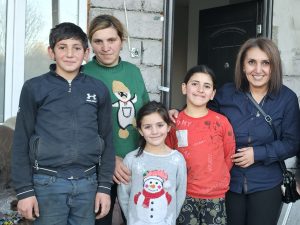
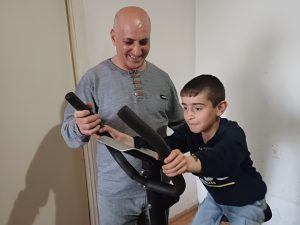
“When I got a call that our family was included in the programme, I realized that miracles happen,“ – Varduhi says. Her family’s bathroom and toilet were fully renovated, the doors widened to move the child without barriers. The bathtub, that had made bathing increasingly difficult as the child grew heavier, was replaced with an accessible shower and supportive handles. The sink was adapted to her son’s height and mobility needs. Throughout the project, the NGO’s team made regular visits to monitor progress and guide the family in accessing social, educational and health services. The changes and support have eased Varduhi’s daily burden and allowed Gagik to experience comfort and dignity at home.
A gap that pushed to act
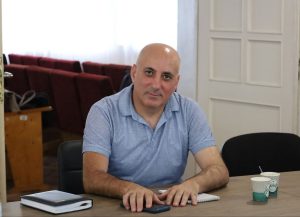
The transformation of homes like Varduhi’s became possible thanks to the efforts of the “Public Consultation and Research Centre”, that has been providing social services to vulnerable groups since 2007. The idea behind the “Child’s Dream” housing improvement programme was born from a simple observation, explains Arthak Sargsyan, the NGO’s head: “While society focuses on accessibility of public spaces, very little attention is paid to the most important space – the child’s own home”. Despite various national social programmes, Armenia has no state service dedicated to adapting home environments to the needs of children with disabilities. Across the Syunik region, many families have no means to make such essential changes.
Recognizing this gap, the NGO used EU support to pilot Armenia’s first-ever home-adaptation social service for children and adolescents with disabilities from socially vulnerable families. In total, 21 children from 18 families in Sisian and nearby villages received the assistance they urgently needed.
The improvements ranged from fully renovated bathrooms and new sewage systems to replacement of doors and windows, installation of support handles and reparation of entire rooms, like bedrooms and kitchens. Laminate flooring was added where uneven or damaged surfaces posed risks. Some houses received new ramps and safer staircases, while others had electrical systems repaired. Alongside construction work, families received exercise equipment, health-monitoring devices, essential household appliances and furniture – everything that could ease caregiving.
Some cases left an unforgettable mark. In one remote village, two children with disabilities lived in a home without an indoor bathroom. They relied on an outdoor wooden toilet reachable only by descending a staircase, which was particularly hard at night and during winter. “When a fully equipped bathroom was built on the second floor, the children were jumping for joy,” – shares the social worker. “Their grandmother, who also has health problems, stood there with tears in her eyes. That moment was the greatest appreciation for our work.”
Catalysing change in Armenia
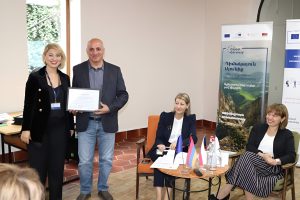
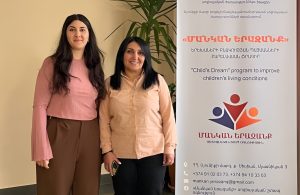
Housing improvement programmes are part of the broader mission of the “Child’s Dream” Social Emergency Centre (SEC), established in Sisian in 2024 as a dedicated hub for children and families in vulnerable situations. The SEC brings together services that were previously fragmented or missing in the region: from identification of vulnerable families and assessing their needs to rights protection, direct assistance and coordinating support with more than 80 partner organisations. It works not only to ensure that families receive timely assistance but also pilots innovative social service models that lay the groundwork for community- and state-level reforms aimed at institutionalizing accessible home adaptation services across Armenia.
The success of “Child’s Dream” has sparked momentum across Syunik, with municipalities and civil society calling for the service to continue and expand. This led to a new advocacy initiative “My Convenient Home” aiming to transform home adaptations for all persons with disabilities into a community-based and state-level social service. To date, 30 civil society organizations and several municipalities, including Sisian, Goris and Kapan, have expressed readiness to adopt the model.
EU-funded initiatives like “Child’s Dream” demonstrate how targeted support can lighten daily burdens, while giving families a sense of protection and inclusion. “They show families that support exists, and that they are not isolated from their communities,” – affirms Varduhi. At the same time, the initiative is reshaping public attitudes, promoting a new culture of increased attention and care toward people with disabilities through practical solutions. “This visibility among local, regional and state authorities creates momentum for integrating our initiative into future social reforms.” – concludes Arthak Sargsyan.
Authors: Volha Prokharava, Kristine Hovhannisyan
MOST READ
SEE ALSO
Armavir citizens mobilise for safe drinking water
‘Europe became real faces and real stories’: Young European Ambassadors look back on ten years of friendships and community projects
Stories hidden in wood
Small ideas, real impact: how students built a natural food brand
Crafted by youth, inspired by tradition: the Hinunik story, a school where new ideas are born within old walls


The information on this site is subject to a Disclaimer and Protection of personal data. © European Union,
