

Life at war. Kateryna: I will never forget that fear for my life, my loved ones, and my Ukraine
Kateryna, a Young European Ambassador from Ukraine, recently received her master’s degree in German language and literature from the Oles Honchar National University of Dnipro. In her peaceful life, she works as a German teacher, does volunteer work, takes part in Erasmus+ youth exchanges, and actively contributes to non-governmental organisations in her city, such as FRI Dnipro, the League of Tolerance, EU4Youth Alumni Network, etc.
The war caught up with Kateryna in her native Dnipro, when explosions woke her up on 24 February at 5am.
“I will never forget that feeling, that fear and surreal worry for my life, my loved ones, and my Ukraine. I started calling all my relatives and friends right away. I didn’t know what to do. My mind started to produce the most frightening pictures from war movies, in which the entire city was under fire from missiles. I quickly packed up and went to my parents on the edge of the city. I didn’t sleep all night, waiting for the worst. I was thinking about Kyiv, which was hit by the most bombs, and my relatives who were there,” Kateryna remembers.
The next day, she moved to her mother’s village in the Dnipropetrovska region. Having joined the volunteer platform of German translators, she helped her country on the information front. The young woman remained in the village until 8 March, the day when a missile exploded 10 km away, shocking everyone. A few days later; Kateryna convinced her mother to go to Dnipro to stay there, because she believed that it would be a safer place, protected by air defence.
“After two days, however, Dnipro was also bombed, especially at night, which made the situation even more terrible. Sitting in the corridor in the middle of the sirens and explosions became a new reality. You quickly become accustomed to the sirens, but the explosions were terrible. I could not sleep normally at all,” she recalls.
In Dnipro, Kateryna managed to complete her education and receive her diploma. She continued to volunteer, too, by making safety nets, translating, and finding shelter for animals from hot spots, therefore providing her friends with pets.
But as the explosions in Dnipro became more frequent, her family began to press her to go abroad, where she could at least be physically safe. After a month of hoping for the better in Dnipro, Kateryna finally decided to evacuate from Ukraine with her mother and little dog.
“Lasting three days, our trip was quite challenging. First, there was a train from Dnipro to Chełm. It took us more than 24 hours to reach the border, where we spent about 6 hours. Then the Chełm-Warsaw train was waiting for us. In Warsaw, we spent a night in a refugee camp. Poles help Ukrainians a lot. We noticed that the volunteer service there was already well established. We took a night train to Berlin, but they dropped us off in Frankfurt (Oder), saying that if we do not have someone in Berlin, it is better to switch to Hanover, because Berlin was already overcrowded with refugees, so they sent them to other regions,” Kateryna said.
They then took another train from Hanover to Cologne, where they had to stay overnight in a refugee camp. On the third day of the trip, they were finally on a way to a host family in Düsseldorf, which an acquaintance helped them to find.
“It was here that I was able to sleep normally for the first time, and started to recollect myself. At the same time, I miss Ukraine as never before and worry about my loved ones who are still there,” says Kateryna.
Reflecting on her stay in refugee camps in Warsaw and Cologne, Kateryna notes that the latter one was somewhat less hospitable. To enter, you had to take a coronavirus test and then receive an entry bracelet. The camp was small, and so was the sleeping room, which accommodated 20 people. Despite the presence of heaters, it was quite cold, and only chemical toilets were available. However, the food was fine, and the residents were provided with hygiene products and pet food.
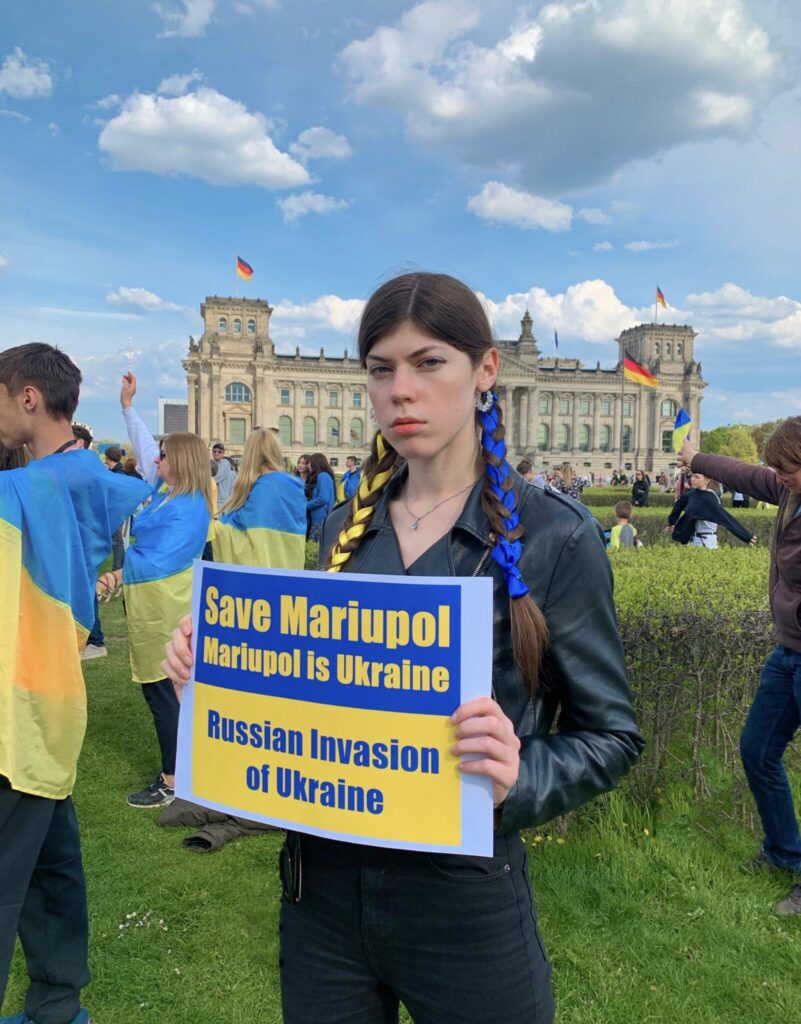
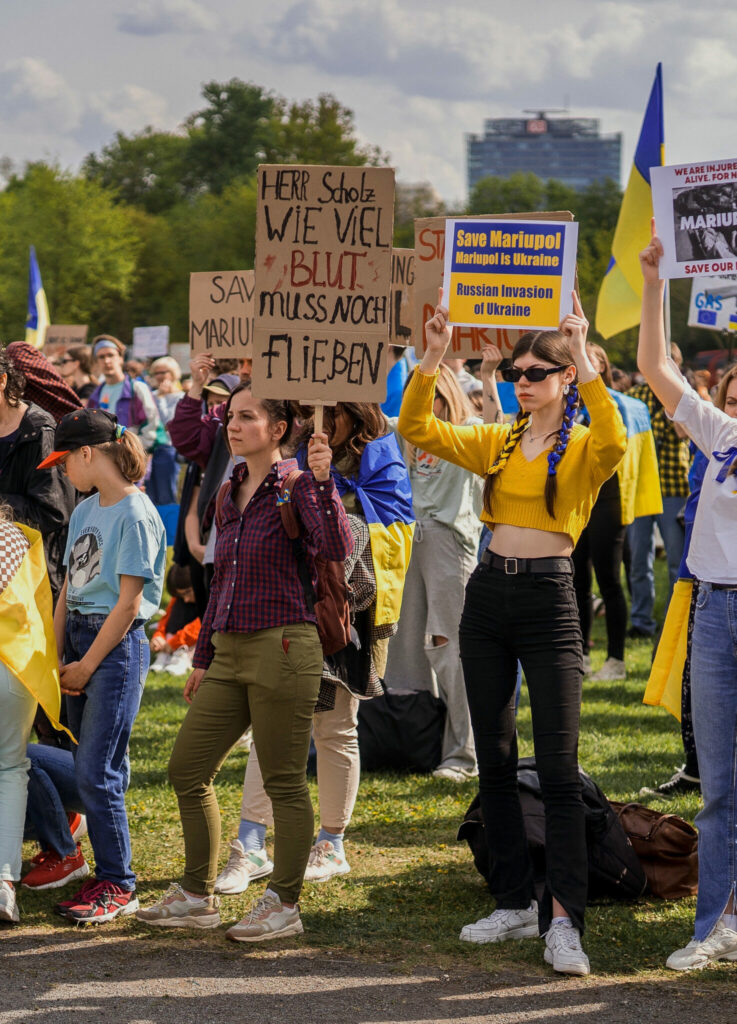
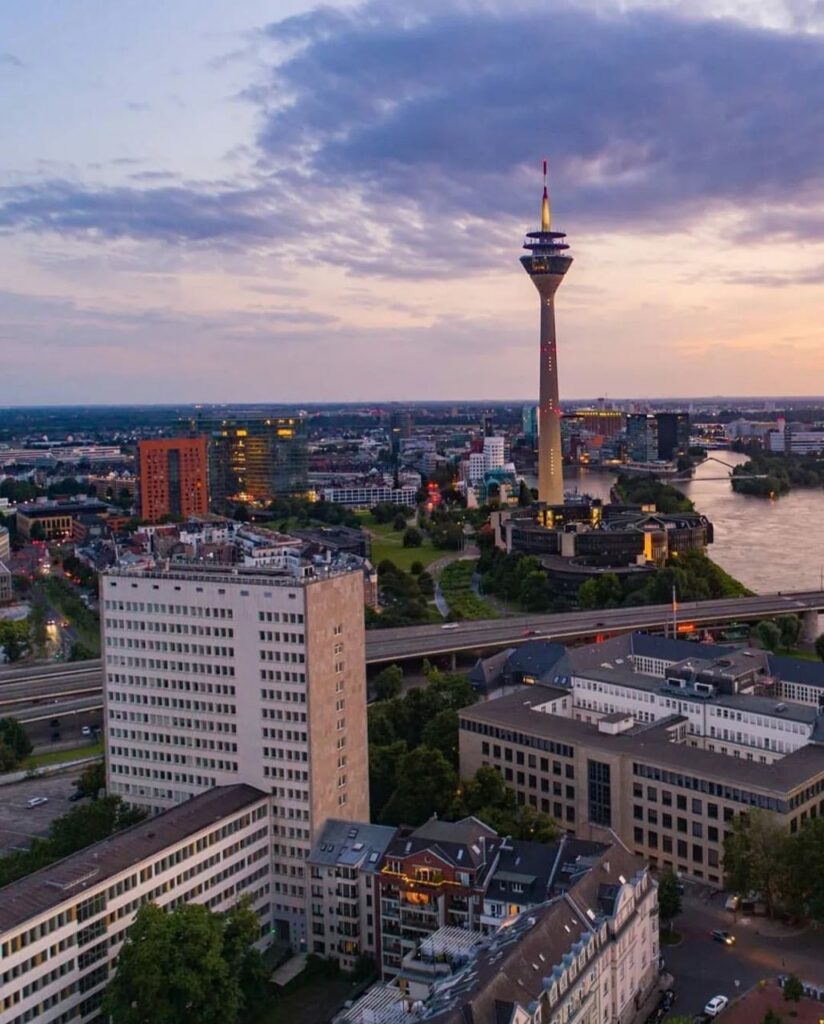
Now, the Young European Ambassador is preparing documents for her stay in Germany. Because she speaks German well, she joined a local volunteer service that provides translation assistance to Ukrainian refugees. In the first weekend after her arrival, Kateryna attended an anti-war rally, which she plans to continue doing every weekend.
“My grandfather and grandmother are still in Ukraine, not far from the Donetsk region. They hear explosions every day, and they intensify. As the war continues, the international community gets used to it as something normal. I do not want to allow that. I want to help Ukraine from abroad as much as possible, including by taking part in various rallies and demonstrations, because it is important to make our voice heard, so that people do not get accustomed to the war and do not forget about it,” said Kateryna.
Moreover, she wants to help the young Germans to raise awareness about the situation in Ukraine. In the near future, she hopes to implement activities to contribute to this, with the support of the Young European Ambassadors initiative.
Author: Sofia Korol
MOST READ



SEE ALSO
Children are not the only ones to be deported: parents are also taken hostage in occupied Ukrainian territories
Occupation through education: how Russia took over Ukrainian schools
From passion to mission: how Sofiia Nazarenko became a voice of Ukrainian journalism through EU4Youth
A partnership that builds resilience
Packaging from mushrooms: how a Ukrainian start-up is contributing to Europe’s green economy


The information on this site is subject to a Disclaimer and Protection of personal data. © European Union,
