

‘He came back with a Russian passport and a military ID’: how a former resident of the Oleshky boarding school returned after three years of deportation
For more than half a year, nearly a hundred residents and about the same number of staff at the Oleshky boarding school for children with disabilities waited in vain for evacuation. In the autumn, when Ukrainian forces approached the Dnipro River, the occupation authorities removed all the residents of the institution and dispersed them across various regions of Russia – thousands of kilometers away from home.
This is the story of Sasha Danylchuk, an adult former resident who was effectively taken under the control of Russia’s Commissioner for Children’s Rights, Maria Lvova-Belova and her sister Sofia. It is an almost detective-like account of his return to Ukraine – and of how the Oleshky boarding school, once full of life, has today been left abandoned and forgotten.
‘We grabbed the children and ran to the basement’
Among those who lived through the first days of occupation and witnessed how life at the boarding school changed after Russian troops arrived was Natalka Hrabovska. She now lives in a relatively safe place, but any mention of home reminds her of the abducted children and brings tears to her eyes.
From her window, she could once see the place she loved most – the Oleshky children’s home for children with special needs,
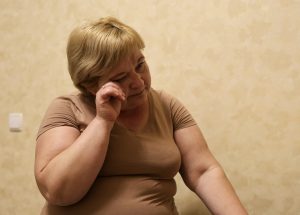
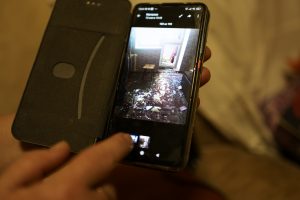
“I worked as a nanny. We spent the most time with the children. We also had adult residents, but we considered all of them children.”
Her hometown of Oleshky, on the left bank of the Dnipro River, was occupied from the very first days of the full-scale invasion. Today, it lies directly on the front line. Russian soldiers live in the apartment next to Natalka’s former home in Oleshky, and her own apartment was recently destroyed.
“No one warned us about anything,” the woman says. “Towards morning, we heard bursts of gunfire and explosions. Panic set in. But we quickly began preparing to bring the children down into the basement.”
The basement of the children’s home was not set up as a proper shelter. All 101 residents could not fit there.
Russian troops quickly took over the town, and soon everything in Oleshky fell silent. Then came the long months of life under occupation.
Closeness that doesn’t require paperwork: the story of a foster father
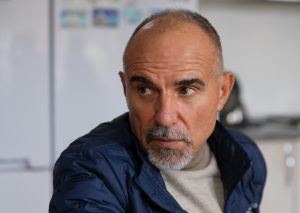
From another side, this story was witnessed by Viacheslav Shchyryskyi –de facto foster father to several residents of the boarding school, including Sasha Danylchuk.
“They were under occupation. At times I stayed in contact with Sasha,” says Viacheslav Shchyryskyi, the head of a foster family for people with disabilities. “The staff of the boarding school remained with the residents. They barely had enough food and medicine, but they did not submit to the Russians.”
Viacheslav Shchyryskyi served for many years as the pastor of an Evangelical Baptist church in a village near Kherson. In 2019, in the neighboring village of Dariivka, the organisation TruPromise, supported by American Baptist donors, built an inclusive home for young people with disabilities. Viacheslav and his wife were invited to lead what was called the ‘House of Stefan’, which could accommodate up to 13 people with disabilities.
“Sasha became dear to us. He was already living with us in the home, but formally he still remained under the institution’s guardianship. That was our last happy Christmas together before the war,” Viacheslav recalls.
Sasha Danylchuk and Viacheslav Shchyryskyi met at the beginning of the full-scale Russian invasion on opposite banks of the Dnipro. Sasha had travelled back to the boarding school on personal business, leaving his belongings with Viacheslav.
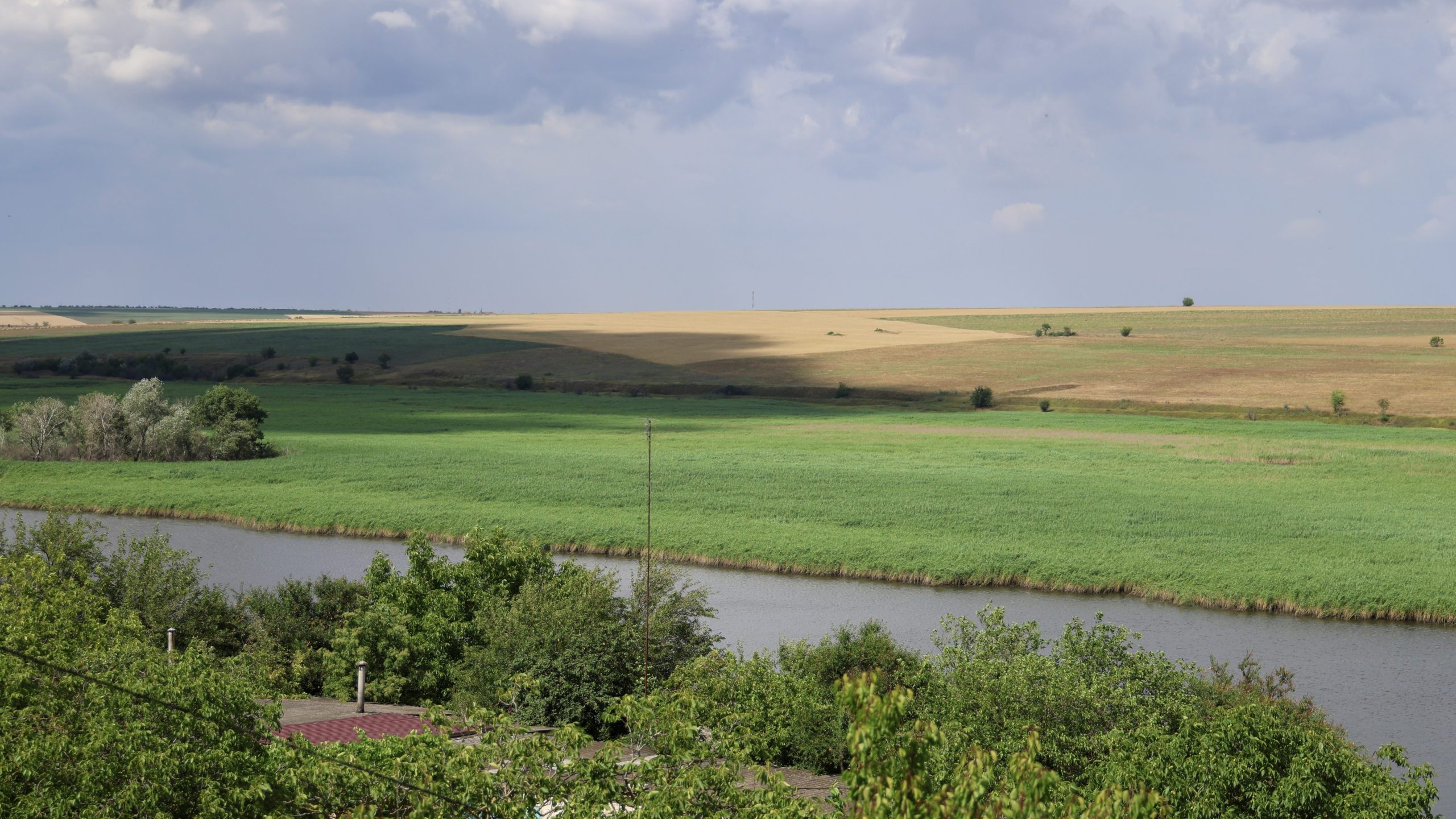
Viacheslav, meanwhile, was responsible for three of his own adult children and three people with disabilities under his care. The family decided to evacuate urgently – first to Odesa, and later to Romania. Remaining in occupied Dariivka, filled with Russian troops, was extremely dangerous. Communication with Oleshky was unstable, and by the end of summer it was almost completely cut off.
The path from the boarding school to a family
Sasha Danylchuk had been brought to the Oleshky boarding school as a child. He was born in Zhytomyr region with congenital leg defects and could not walk. Later, doctors diagnosed him with intellectual disabilities. Sasha never knew his biological family, and the boarding school became his only home.
Despite this difficult diagnosis, he grew up open and sociable, easily made friends, and had a talent for drawing.
When Sasha turned 23, he met Viacheslav. He began asking to visit him “as a guest” on weekends. After several such trips, it became clear that the young man was drawn to people with whom he felt safety and care.
Viacheslav did not refuse. He allowed Sasha to stay more often, and over time began the process of becoming his legal guardian. But the war shattered all their plans, separated those close to each other, and sentenced Sasha to long years of life in Russia.
A road into the unknown: deportation, decline, chaos
After the occupation, dozens of adult residents of the Oleshky boarding school and more than fifty children with disabilities were cut off from their loved ones. Unlike many others, Sasha held a firm personal stance: no matter what happened, he would return to Viacheslav – whom he always called “father”.
“We all understood that sooner or later we would be taken away, and then in the autumn one day I saw – the children were being transported out,” Sasha recalls.
In October, as the Ukrainian army approached from the west, the Russian occupation authorities in Kherson region hastily began a mass removal of civilians to the left bank of the Dnipro and toward Russia and occupied Crimea. Children were taken with parents, from institutions, and from foster families.
The children from the Oleshky boarding school were removed in three stages – suddenly, without any warning. On 21 October, the most mobile 16 residents were taken first. They were transported to Crimea to a psychiatric hospital and almost immediately transferred to Krasnodar region to institutions for children with disabilities.
On 4 November, Crimean doctors arrived in Oleshky again – this time taking another 12 children to a hospital in Crimea.
On the day Kherson was liberated, 11 November, everyone who remained was taken – 56 people were transported to occupied Skadovsk. Sasha was among them.
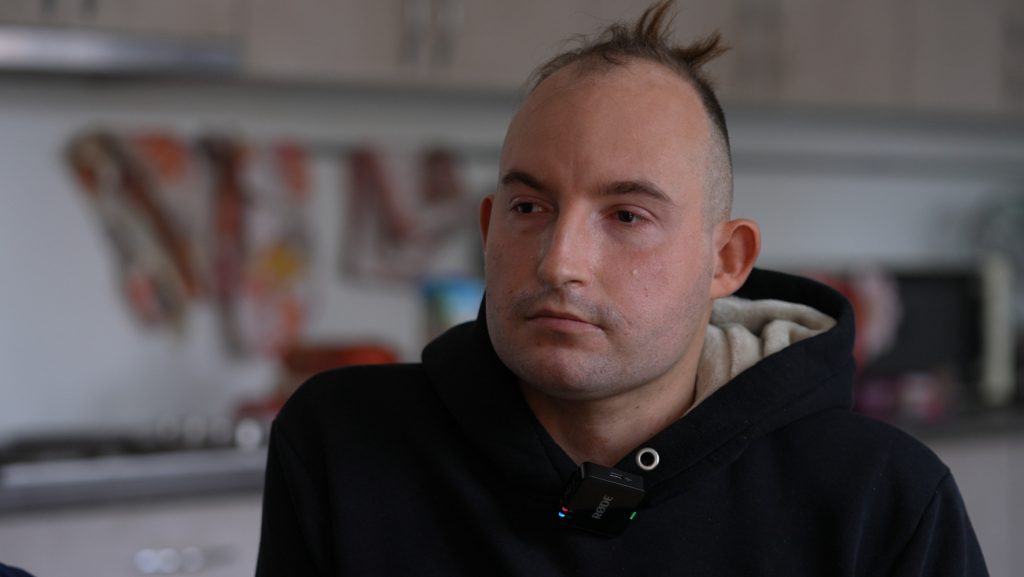
“They placed us in terrible conditions. I couldn’t inform my father – phones didn’t work.”
At that time, Viacheslav began sounding the alarm and searching for ways to bring Sasha home.
He had no information from the Ukrainian authorities or the management of the boarding school. Viacheslav found himself in a complete information vacuum. Only later did he learn that Danylchuk and the other adult residents from Oleshky had been transferred to the village of Strilkove in Henichesk district. There, they were formally removed from the guardianship of the Oleshky institution and registered at a Russian geriatric centre.
According to Sasha, conditions in Strilkove were cold and dirty. He stayed there for almost a year, with virtually no ability to communicate with loved ones, until one day he was suddenly told that he was being taken to the city of Penza in Russia.
“I appealed to the office of the ombudsman in Ukraine, in Russia, wrote letters to guardianship and social protection agencies of Kherson region, and to the Red Cross in both countries. All in vain,” Viacheslav says.
During this time, the Ukrainian boarding school became an ‘orphaned institution’. After all the residents had been removed, the Russians looted the building. Staff who witnessed the deportation said they took everything: valuable kitchen and medical equipment, computers, carpets, paintings. The Russians appointed their own director – a collaborator named Vitalii Suka. Meanwhile, Ukraine did not relocate the institution; legally, it was left suspended in limbo.
Only a few relatives, without instructions from the state and often through suffering and hardship, managed to retrieve some of their children on their own – some from Krasnodar region, some from Crimea or Skadovsk. One mother managed to bring her daughter back from Strilkove.
“My situation with Sasha’s documents was like a trap. In Ukraine he was registered as legally incapacitated, but I did not have guardianship over him. Legally, I was no one to him, and my applications were not treated seriously. There was no director at the Ukrainian institution. Later, in Kherson, they told me Sasha had already been discharged from the boarding school. At the same time, in Russia, they issued Sasha a passport and declared him legally capable – but he had no Ukrainian documents at all. I learned this personally from Sofia Lvova-Belova,” Viacheslav explains.
While Viacheslav struggled to understand the legal collapse surrounding the status of an adult person with disabilities who had been deported during an armed conflict, Sasha and three other young women from Oleshky were placed in Penza, in a settlement called ‘Novye Berega’ (“New Shores”). This was a Belova family project for supported living for people with disabilities. The residential complex was built through donations from numerous benefactors and included everything necessary – a café, hotel, beauty salon, and more.
In Penza, Sasha often communicated with Sofia Lvova-Belova, whom he simply calls “Sonya”. Life in Berega suited Sasha in everyday terms, but he constantly resisted. He and the other residents were fed narratives about “great Russia” and were persuaded that in Ukraine they would supposedly be placed in a psychiatric hospital.
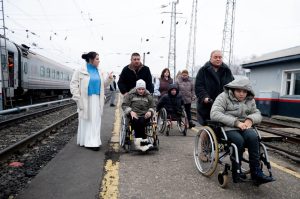
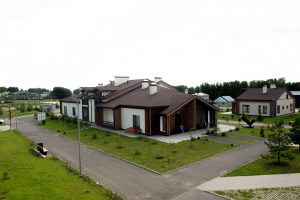
According to Sasha and Viacheslav, these claims affected him: at times he began to trust the new guardians and said he wanted to stay in Russia, while at other times he listened to Viacheslav and again demanded to return to Ukraine.
Viacheslav wanted to bring back not only Sasha but also the other three young women from Oleshky. He even prepared a separate room for them in his home in Romania. But the Russian side reacted coldly.
“We will give Sasha to you, but not to Ukraine – to Romania. And the girls want to stay,” Sofia Belova told Viacheslav in early 2024.
But months passed, and the Russians continued to delay the boy’s return. First they said they were making him a Russian foreign passport and did not have enough money for it. Then they claimed Sasha had changed his mind.
In March 2024, Sasha was forced to vote in the so-called presidential elections of the Russian Federation. He said television crews filmed them:
“I got used to cameras. They were filming me constantly there, in Penza.”
At one point, security services took an interest in Sasha. He recalls several interrogations about whether he was transferring money to Ukraine’s Armed Forces and who he was communicating with.
“Who is Shchyryskyi?” they asked, seeing the name in his phone contacts.
“Shchyryskyi is my father,” Sasha answered.
“Then let’s call your father and talk to him.”
The man turned on a recorder and instructed Sasha to ask how to contact the Armed Forces of Ukraine. Later, Viacheslav said he remembers that call and the strange question from his son.
“Sasha, you don’t need that right now. You are in a foreign country, communications are controlled there – why do you need trouble? We are working to free you and bring you back to us,” he recalls replying.
The ‘Qatari’ route
In mid-August 2025, Sasha’s phone stopped receiving messages. The silence lasted about two weeks, Viacheslav says. Later it became clear that during that time the Russians were preparing Sasha for return: isolating him from the outside world, conducting interrogations with FSB representatives, and then taking him to the Qatari embassy for a “ceremonial” reception together with Maria Lvova-Belova.
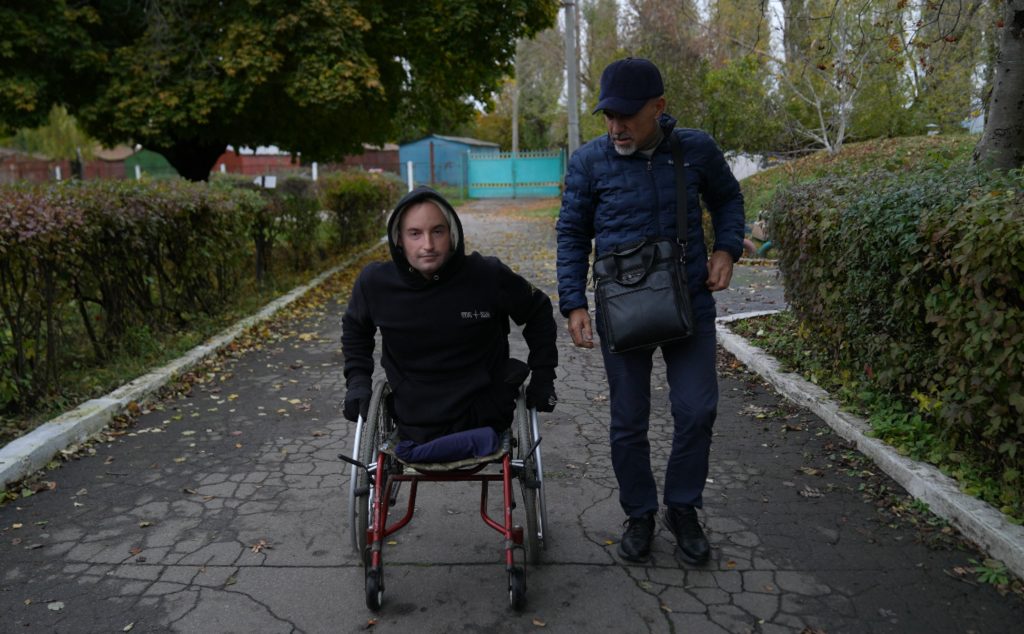
Sasha, along with several Ukrainian families, was taken to Moscow. From there, the group was flown to Minsk, and then transported by bus to Kyiv.
After arrival, the young man was placed in a boarding institution in Bila Tserkva, where Viacheslav came to see his son for the first time after years of separation.
“We were somewhat shocked when we learned that Sasha had with him only a Russian passport and a military ID,” says Ms. Alla, the director of the institution where Sasha was temporarily placed. “First of all, we urgently began restoring all of his documents.”
According to Viacheslav, in Ukraine Sasha is now also legally capable, and in order for him to travel abroad, the only remaining step is to pass a military medical commission. While these procedures are ongoing, Viacheslav is forced to travel back and forth between Romania and Bila Tserkva.
He believes that at the beginning of next year – almost four years after the Russian invasion separated their family – Sasha will finally be able to return home.
This story was written in collaboration with The Reckoning Project, an initiative that brings together journalists, researchers, data scientists and legal experts to document war crimes, build legal cases, and combat disinformation by using reliable media outlets. The European Union has recently reinforced its support for The Reckoning Project.
Author: Viktoriia Novikova
The original article was published in Ukrainian by LivePravda
MOST READ
SEE ALSO
From passion to mission: how Sofiia Nazarenko became a voice of Ukrainian journalism through EU4Youth
A partnership that builds resilience
Packaging from mushrooms: how a Ukrainian start-up is contributing to Europe’s green economy
From idea to energy: how Kyiv youth are developing the ‘energy willow’ project
A space where science comes to life: how an interactive museum in Ternopil is inspiring the community


The information on this site is subject to a Disclaimer and Protection of personal data. © European Union,
