

Framing a new start: how veteran Roman Paramushchak is developing Spalah studio in Lviv
“After military service, it feels like you have freedom, but at the same time you have to find yourself again,” says veteran Roman Paramushchak.
Like many veterans in Ukraine, Roman faced a difficult question: how to return to civilian life and find meaningful work again. The answer did not come immediately. He first tried several different jobs. Then came sneaker sales, his first independent product photoshoots, and later the idea of creating ‘Spalah’, a product photography studio in Lviv.
Today, Spalah helps businesses create high-quality visual content: product photos, video reviews, and content for websites, marketplaces, and social media. But for Roman, it has a deeper meaning. The studio became a new starting point, a source of professional stability, and a way to support other veterans. The EU4Youth programme played an important part in this by supporting the further growth of the studio through business training, mentoring, and opportunities to strengthen its social impact.
After military service: a search for a new direction
Roman Paramushchak joined the Azov Battalion in July 2014 and took part in combat operations in the Donetsk region until April 2015. When the full-scale invasion began in 2022, he fought in the ranks of the Azov Special Operations Forces in the Kyiv region.
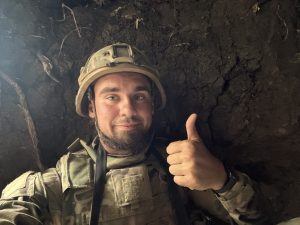
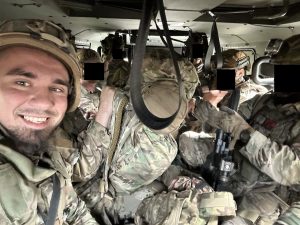
Returning to civilian life was not easy. Roman recalls an experience familiar to many veterans after leaving the military. It was not enough simply to find a job. He needed to understand where he could feel needed and fulfilled again.
“I faced many new feelings after service. The first was a feeling of absolute freedom and, at the same time, complete uselessness. You had a big goal, and now there is emptiness. You are looking for yourself,”Roman says.
During this period, he began looking for work that could give him both stability and a sense of moving forward. In autumn 2023, Roman started selling sneakers through dropshipping. He found customers, passed orders to the supplier, and the supplier handled delivery. But quite quickly, it became clear that the products could sell better if they had stronger photos.
How the idea of Spalah appeared
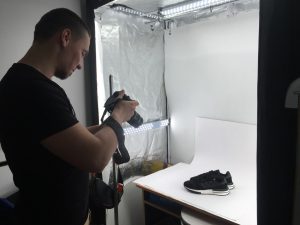
At first, Roman took photos only for his own online sales. He arranged with the supplier to receive sneakers for photoshoots, photograph them, and then send them back. This gave him stronger visuals for sales and helped him to develop a skill that later became the basis for his business.
“I offered to help the supplier with this, and he agreed. We developed a photoshoot concept so that the images would look consistent, created a small photo setup, and I bought a camera and lighting,” Roman recalls.
The result was clear. The images improved, sales grew, and Roman became more and more involved in product photography. Over time, he realised that the need for professional product photos went far beyond his own sales. Producers, sellers, local brands, and e-commerce businesses needed them too.
Roman also saw that there were very few studios in Lviv specialising in product photography for businesses. This became another reason to turn his practical skill into a business of his own.
This is how the idea of Spalah, the product photography studio, was born. Its name symbolises the moment when an idea becomes visible, like a flash of light that helps clearly show an object, its shape, quality, and details.
Support that helped the studio grow
Roman received his first major support for launching the studio from Lviv City Council. He applied to a voucher support programme for veterans and their family members and received his first grant to develop the project. With these funds, he was able to buy the basic equipment the studio needed: a camera, laptops, autonomous power sources, light cubes, and other tools.
“This money covered the cost of all the essential equipment for the studio. It simply would not have existed without these funds, because we bought everything we needed to get started,” Roman says.
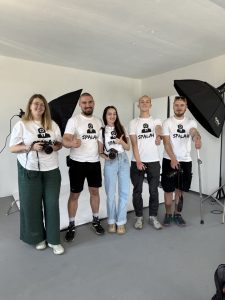
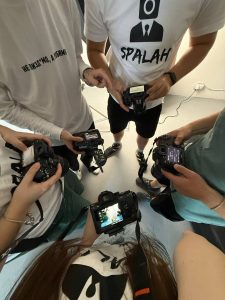
However, after the launch, it became clear that the studio needed more than initial resources to grow. Roman also needed training, additional equipment, a promotion strategy, and a broader business model.
The next stage came with support from the ‘Smart Media’ and ‘Action Times’ organisations, which implemented the ‘EU4Youth Phase III – Support for Young Veterans and Internally Displaced Persons in Ukraine’ project. As part of this programme, Roman completed professional business training and continued developing the studio as a social enterprise that creates opportunities for veterans and people with war-related disabilities.
“Roman’s story shows that it is important to support veteran businesses not only at the launch stage, but also when they already have their first clients and are ready to grow. In the case of Spalah, this is not just about developing a studio. It is about a business that can create jobs, help people build new skills, and support other veterans. Initiatives like this have long-term value for communities,” says Oleksandra Shchukina, leader of ‘Smart Media’.
Today, Spalah has been operating in Lviv for two years. The studio team carries out product photoshoots and creates photo and video content for businesses. Clients value not only the final result, but also how well the team understands their needs.
One of them is Ivan Pavlish, a representative of the Batatko brand: “We have worked with the studio more than once, and the result is always excellent. The photos turned out vivid, vibrant, and natural. You can see every detail, shape, and texture. It is a pleasure to work with a team that understands the needs of agribusiness.”
For Roman, such feedback confirms that the studio has strong potential. He already sees where it can grow next.
“We intend to turn the studio into a full-cycle social media marketing agency. Right now, we are preparing to launch a podcast studio. We also plan to launch advertising campaigns, create websites, develop brand concepts and logos, and manage social media,” he says.
More than a photo studio
For Roman, Spalah is not only about photography or content creation for businesses. From the beginning, he built a social mission into the studio: not just to provide services, but to create an environment where veterans can gain new opportunities. This approach aligns with the UN Sustainable Development Goals, particularly the idea of decent work, productive employment, and equal opportunities for all.
“Our studio combines business with a clear social mission. We create jobs for veterans and help them make a smoother transition back into civilian life, earn a stable income, and find a new sense of professional stability,” Roman explains.
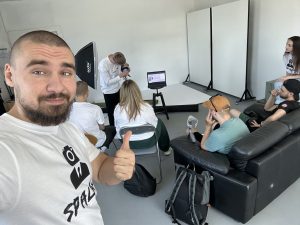
The studio team shares this mission. Yaryna Paslavska works alongside Roman and is responsible for retouching and video editing.
“Spalah has become a space where I can freely use my professional skills, support a veteran-led business, and work side by side with my partner. That is why it is already much more than just a business,” says Yaryna Paslavska.
One area of this work is free training for veterans in the basics of working with a camera. During these sessions, participants can try product photography, video production, and content creation. For some, this can become the first step toward a new profession. For others, it is a way to understand whether this field is right for them.
Another area is advising veteran-owned businesses on launching and developing YouTube channels. The team helps with positioning, content strategy, technical setup, and promotion, so that entrepreneurs can build their own media presence and attract clients.
At the same time, the studio also has a broader social role. It creates high-quality Ukrainian-language content and contributes to the development of a culture of Ukrainian-language business content.
Roman wants Spalah’s social impact to grow together with the business. For him, this means new jobs, new areas of training, and more opportunities for veterans.
“Our business is growing steadily. The number of satisfied clients is increasing, and so is our income. We are moving in line with our vision for the studio’s development and want to increase our social impact by bringing more veterans into the team,” says the veteran.
MOST READ



SEE ALSO
Where the lights are always on: how a solar-powered Point of Invincibility is helping Shostka endure
Freedom, trust and the future of science: Nobel laureates reflect on the ideas shaping tomorrow
Agricultural panic or opportunity in the EU? Ukraine’s next battle is going to be grain
Children are not the only ones to be deported: parents are also taken hostage in occupied Ukrainian territories
Occupation through education: how Russia took over Ukrainian schools


The information on this site is subject to a Disclaimer and Protection of personal data. © European Union,
