

‘Clothing must not be a source of daily pain’ – the story behind Ukraine’s most necessary clothing brand
Most of us don’t think about getting dressed. We just do it. For people recovering from injury or amputation, it’s not that simple. A button can take minutes. A sleeve can cause pain. Something most of us do on autopilot becomes a daily reminder of everything that’s changed.
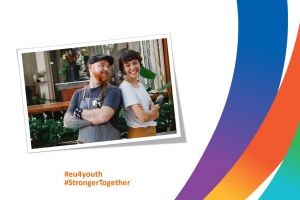
In the face of Russia’s full-scale invasion of Ukraine, one group of young people – Roman Kifa, Vlada Tatarchenko, and mentor Anzhelika Shestozub – refused to stay on the sidelines. They looked at the thousands of military personnel and civilians undergoing rehabilitation after injuries and amputations, and saw a hidden barrier: the clothes they were wearing. Not one you could see from the outside. But one that showed up every single morning, in every hospital room, in every home where someone was trying to piece their life back together. So in early 2024, with the support of the EU4Youth programme, they built Freedom Fit.
They started with people
Before a single garment was made, the team did something that not enough people do: they sat down and listened. Surveys, questionnaires, and prolonged focus groups with veterans, people with disabilities, and individuals transitioning out of rehabilitation back into everyday life. They asked hard questions and stayed with the answers. What hurts? What takes too long? What would make mornings feel less of a struggle?
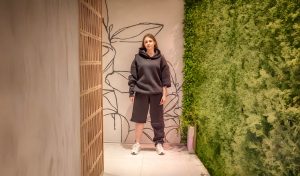
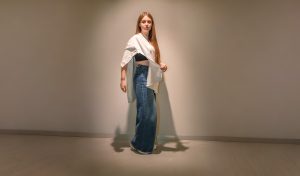
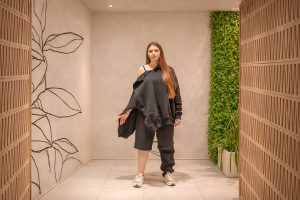
Those conversations became the blueprint. The cuts, the fabrics, and the small details that most clothing brands never consider, because they’ve never needed to. Freedom Fit built their collections, starting with the person, not the product.
“Creating an adaptive clothing line is a complex and meticulous process. It involves constant focus groups, continuous refinement, and striving each time to achieve the best possible result, because creating a barrier-free environment is the core mission we set for ourselves. Clothing must be comfortable and convenient, not a source of daily pain,” says Roman Kifa, co-founder of Freedom Fit.
The result is two complete adaptive clothing collections, featuring new design solutions, reaching the people who need them most. Clothes that make dressing faster, easier, and pain-free – but that also look good. Because dignity and aesthetics are not separate things. Feeling put-together matters. Recognising yourself in the mirror on an ordinary Tuesday morning means more than most people realise.
Building something bigger
Freedom Fit is not only about what they make, but it’s also about how and why they make it. The team works with recycled materials and follows zero-waste production principles, building something conscious at every level, from the first sketch to the final stitch. Social responsibility and good design in the same garment.
Alongside their collections, the team runs educational sessions on social entrepreneurship – lectures and real conversations for other young people who want to launch or grow their own initiatives, because part of their mission is showing that young people can be powerful drivers of recovery and inclusion, and then making space for others to try too.
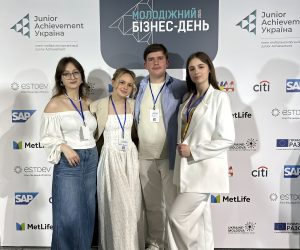
“Working with young people, I see that social entrepreneurship often becomes their first point of self-confidence. It is the moment when an idea ceases to be ‘just a thought’ and turns into action, responsibility, and real impact. For many, it’s not about business – it’s about the feeling that you can change the surrounding environment right now,” says Yelyzaveta Radutna, programme manager at Junior Achievement Ukraine.
The support that made it possible
None of this happened alone. Freedom Fit was created with the support of Junior Achievement Ukraine, within the framework of the programme ‘EU4Youth – Youth Employment and Entrepreneurship’, co-financed by the European Union and the Ministry of Foreign Affairs of Lithuania, through the project ‘Building Back Better through Social Entrepreneurship’, implemented across Ukraine, Moldova, and Georgia.
Through this initiative, the EU4Youth programme helped young people aged 17-22 turn ideas into real social businesses, walking with them from the first concept through to launch, and providing mini-grants that help turn good intentions into something you can actually wear, sell, and build on.
Today, Freedom Fit has two fully implemented clothing lines, a growing customer base, and a clear road ahead – with plans to scale, expand the product range, and enter international markets. Their goal hasn’t changed since day one: make adaptive clothing accessible to anyone who needs it, and prove that young entrepreneurs can drive real change even in the hardest of times.
Roman, Vlada and Anzhelika started with a question most people never think to ask. They turned it into solutions, into something that makes real people’s lives a little easier.
MOST READ
SEE ALSO
Children are not the only ones to be deported: parents are also taken hostage in occupied Ukrainian territories
Occupation through education: how Russia took over Ukrainian schools
From passion to mission: how Sofiia Nazarenko became a voice of Ukrainian journalism through EU4Youth
A partnership that builds resilience
Packaging from mushrooms: how a Ukrainian start-up is contributing to Europe’s green economy


The information on this site is subject to a Disclaimer and Protection of personal data. © European Union,
