

EU leaders pledge to cover Ukraine’s financial needs in 2026-2027 and discuss Moldova
Further support for Ukraine and Moldova were among the main topics discussed by EU leaders on 23 October at the European Council in Brussels. They also addressed how to ramp up Europe’s defence readiness by 2030, the latest developments in the Middle East, competitiveness and the twin transition, housing, and migration.
Ukraine
Leaders said the EU was ready to support Ukraine’s ability to deter aggression. To this end, they welcomed efforts to revise the mandates of EU advisory and military assistance missions to Ukraine. They also stressed the importance of providing equipment and training to the Ukrainian Armed Forces, air defence and anti-drone systems, and large-calibre ammunition. With regard to Ukraine’s defence industry, the leaders called for work on further support and investments to be speeded up.
The leaders also committed to address Ukraine’s pressing financial needs for 2026-2027 and invited the European Commission to present options for financial support. So far in 2025, the EU has provided €20.5 billion to Ukraine’s budget, of which €6.5 billion comes from the Ukraine Facility and €14 billion under the G7 ERA initiative, repaid by windfall profits from Russia’s immobilised assets.
“European Leaders committed to ensure that Ukraine’s financial needs will be covered for the next two years. We have asked the Commission to put forward ‘options’ as soon as possible, so that Ukraine has the resources it needs to continue defending itself and fight for a just and lasting peace in 2026 and 2027, if it’s necessary,” European Council President António Costa told journalists after the meeting. “Russia should take good note of this: Ukraine will have the financial resources it needs to defend itself against Russia’s aggression in the foreseeable future.”
Regarding Russia’s assets, the EU leaders insisted that, subject to EU law, these assets should remain immobilised until Russia ceases its war and compensates Ukraine for the damages caused by it. The European Council will revert to this issue at its next meeting.
The leaders welcomed the adoption of the 19th sanctions package and called for further measures to disrupt the operations of Russia’s shadow fleet. The leaders strongly condemned support by third countries that enables Russia to continue its war, including the military support from Iran, Belarus and North Korea. They also called on Russia and Belarus immediately to ensure the safe return of all Ukrainian children and other unlawfully deported civilians to Ukraine.
EU leaders welcomed the significant progress that Ukraine has made on its European path, despite the challenging circumstances. In this context, they encouraged Ukraine, the European Commission and the Council of the EU to move ahead on the accession process, in line with the merit-based approach.
Republic of Moldova
With regard to the recent elections in Moldova, EU leaders commended the Moldovan authorities for safeguarding electoral integrity and ensuring free and fair elections, despite Russia’s hybrid attacks.
The EU leaders reaffirmed the EU’s steadfast support for Moldova’s path to EU membership. In this context, they encouraged Moldova, the Commission and the Council to make headway on the accession process, in line with the merit-based approach. They also noted the Commission’s assessment that the negotiation clusters on the fundamentals, internal market and external relations are ready to be opened.
Find out more
MOST READ




SEE ALSO

Ukraine: international infrastructure project DRIVEConnect implemented in Zakarpattia with EU support
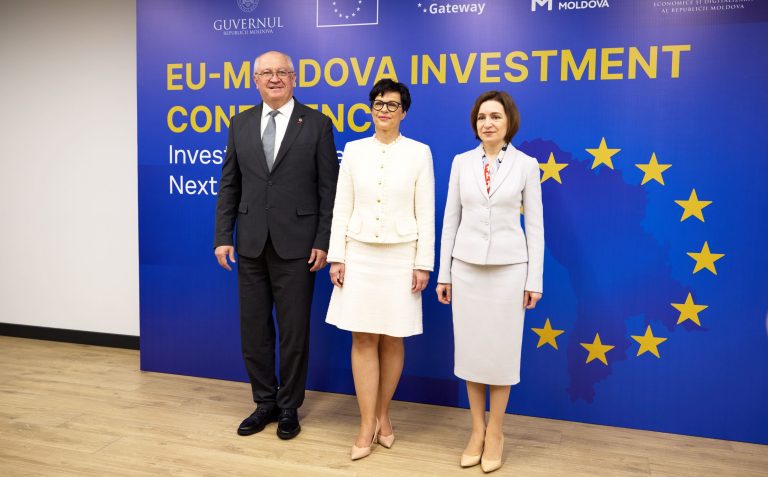
EU-Moldova Investment Conference announces up to €641 million in strategic investments
Alexei Taran from Moldova elected President of the Energy Community Regulatory Board
European Commissioner for Enlargement to visit Moldova from 4 to 6 June
EBRD: Ukraine faces slower growth as war drags on, but stability holds

The information on this site is subject to a Disclaimer and Protection of personal data. © European Union,
