

EU adopts 19th package of sanctions targeting Russian energy, third-country banks and crypto providers
Today, the Council of the European Union adopted a 19th package of sanctions against Russia, with a further 69 individual listings and numerous economic restrictive measures targeting key sectors which fuel Russia’s illegal invasion of Ukraine, including energy, finance and the military industrial complex.
The EU is also strengthening control over the movement of Russian diplomats across the EU, and taking further measures against those responsible for the abduction of Ukrainian children. As part of the package, the Council also imposed further measures on Belarus to restrict the latter’s support for the Russian war effort.
Today’s package comes in response to Russia’s escalating aggression against Ukraine, in particular the recent brutal military campaign deliberately targeting civilian infrastructure, including energy, water and health facilities.
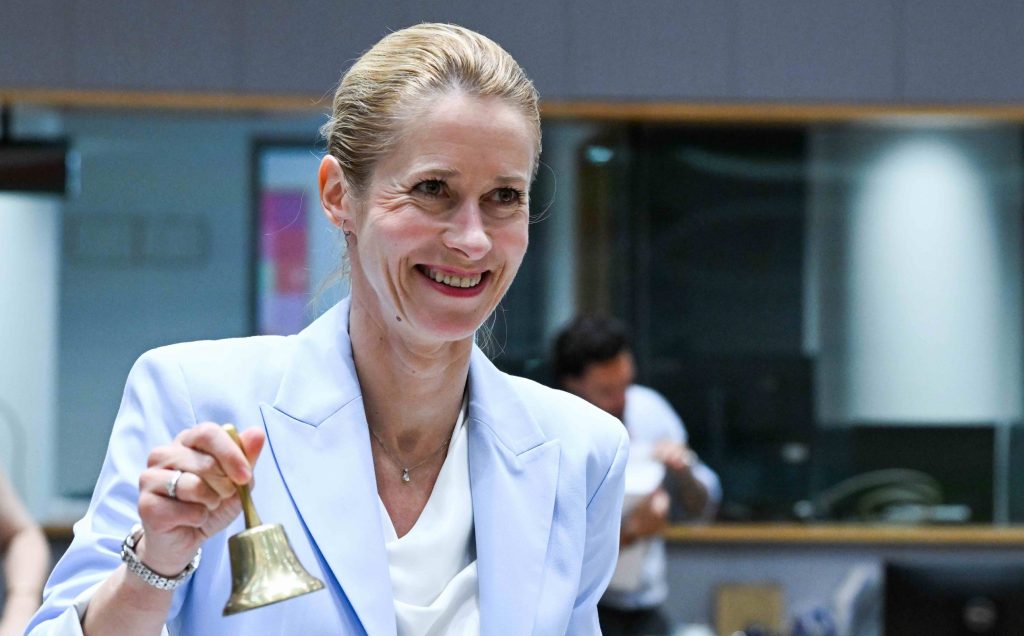
“Every euro we deny Russia is one it cannot spend on war. The 19th package will not be the last,” EU High Representative Kaja Kallas said.
Energy
The package introduces a ban on imports of Russian liquefied natural gas (LNG) into the EU, starting January 2027 for long-term contracts, and within six months for short-term contracts, and tightens the existing transaction ban on two major Russian state-owned oil producers (Rosneft and Gazprom Neft).
The EU is also listing a Tatarstani conglomerate active in the Russian oil sector. In parallel, the EU is taking measures against important third country operators enabling Russia’s revenue streams. This involves sanctioning Chinese entities – two refineries and an oil trader – that are significant buyers of Russian crude oil.
Furthermore, the EU is imposing additional sanctions across the shadow fleet value chain. Specifically, the 19th package includes the listing of Litasco Middle East DMCC, Lukoil’s prominent shadow fleet enabler based in the United Arab Emirates. Other listings include maritime registries providing false flags to shadow fleet vessels, allowing their continued operation by creating a fraudulent impression of compliance with certification requirements. Today’s measures also target the largest port container operator in the Russian Far East, and a leading shipbuilder for Sovcomflot.
An additional 117 vessels have been made subject to a port access ban and a ban on the provision of a broad range of services related to maritime transport, bringing the total number of designated vessels to 557. These measures target non-EU tankers that are part of the shadow fleet circumventing the oil price cap mechanism, which otherwise support Russia’s energy sector, or transport military equipment for Russia or stolen Ukrainian grain.
The 19th package also introduces a ban on reinsuring vessels belonging to the shadow fleet, further constraining their ability to operate.
Financial measures
The package introduces sanctions on the developer of the stablecoin A7A5 (created with Russian state support), the Kyrgyz issuer of that coin, and the operator of a platform where significant volumes of A7A5 is traded. According to the EU, A7A5 has emerged as a prominent tool for financing activities supporting the Russian war of aggression. Transactions involving this stablecoin A7A5 have been prohibited across the EU.
As of 23 October, eight banks and oil traders from Tajikistan, Kyrgyzstan, the UAE and Hong Kong that circumvent EU sanctions are subject to a transaction ban. Five additional Russian banks – Istina, Zemsky Bank, Commercial Bank Absolut Bank, MTS Bank, and Alfa-Bank – are targeted using the same measure. Four banks from Belarus and Kazakhstan are also put under a transaction ban, due to their connections to Russian financial messaging and payment systems.
Additionally, the EU is prohibiting its operators from engaging with the Russian National Payment Card System (‘Mir’) or the Fast Payments System (‘SBP’). Significant restrictions are also imposed on maintaining economic relationships with entities active in nine Russian special economic zones. These zones are central to Russia’s industrial and technological capacity, hosting enterprises engaged in the production or development of goods contributing to the Russian war effort.
Russian diplomats
When travelling across the Schengen area beyond their country of accreditation, Russian diplomats will be obliged to inform in advance the relevant EU member state. This obligation aims at ensuring the awareness of member states, against a backdrop of increasingly hostile intelligence activities that support Russia’s aggression against Ukraine. Additionally, EU member states may impose an authorisation requirement on Russian diplomats for traveling to their territories, based on visas or residence permits issued by another state.
Children
The EU is reinforcing the accountability of those involved in the deportation and indoctrination of Ukrainian children, by listing 11 additional individuals. Since 2022, nearly 20,000 Ukrainian children have been deported and forcibly transferred into Russia or into Ukrainian territories illegally occupied by Russia, according to a press release by the European Council.
To streamline future sanctions on persons responsible for the abduction, forced assimilation and militarised education of Ukrainian minors, the Council is also introducing a new listing criterion.
Military
The EU is targeting businesspersons and entities forming part of the Russian military-industrial complex and operators from the UAE and China producing or supplying military and dual-use goods to Russia. The listings also include a senior DPRK military commander deployed to Russia in support of the latter’s invasion of Ukraine, and an individual responsible for the inhumane treatment of Ukrainian prisoners of war.
Trade
The Council has identified 45 new entities directly supporting Russia’s military and industrial complex by, inter alia, enabling the circumvention of export restrictions on computer numerical control (CNC) machine tools, microelectronics, unmanned aerial vehicles (UAVs) and other advanced technology items. These entities will be subject to tighter export restrictions with regard to dual-use goods, as well as items which might generally contribute to the technological enhancement of Russia’s defence sector. Seventeen of these entities are located in third countries other than Russia (12 in China, including Hong Kong, three in India and two in Thailand).
The EU has also expanded the existing export ban to include electronic components, rangefinders, additional chemicals used in the preparation of propellants and additional metals, oxides and alloys used in the manufacturing of military systems. Salts and ores, articles made of rubber, tubes, tyres, millstones and construction materials will also be subject to more stringent export restrictions. Finally, the 19th package introduces a prohibition to purchase, import or transfer all acyclic hydrocarbons due to the importance of such materials in generating significant revenues for Russia.
Additionally, the EU is listing Russia’s largest gold producer, further constraining its revenue sources.
Services
The package makes prior authorisation mandatory for all services provided to the Russian government. Furthermore, it restricts the provision of AI services, high-performance computing services and commercial space-based services to Russian entities, including the Russian government.
Today’s measures also prohibit European operators from providing services directly related to tourism activities in Russia.
Belarus
The package includes five new listings related to the Belarusian military-industrial complex and the Lukashenka regime. Moreover, it further mirrors Belarus’ trade measures with the ones imposed on Russia.
Additionally, the agreed measures target crypto-related payment services and expand the prohibition on providing certain software, including for banking, finance, commercial space-based services, technical testing and analysis, AI and quantum computing.
Find out more
MOST READ



SEE ALSO
Ukraine Facility unlocks investment opportunities for dual-use and defence-related industries

EIB Group approves over €17 billion in new financing including for Ukraine-EU border crossings and agriculture in Moldova

‘There can be no lasting peace without justice,’ EU says on International Criminal Justice Day
EU’s Blue Book traineeship programme opens to graduates from vocational education and training
Moldova: Youth from ‘Orizont’ Euro Club go on study visit to Brussels


The information on this site is subject to a Disclaimer and Protection of personal data. © European Union,
