

2025 Enlargement Package shows progress towards EU membership for key enlargement partners
On 4 November 2025, the European Commission adopted its 2025 Enlargement Package, providing a detailed assessment of the state of play and the progress made by Ukraine, Moldova, Georgia, the Western Balkans and Türkiye on their respective paths towards the European Union. A particular focus is made on implementing fundamental reforms and clear guidance on the reform priorities ahead.
“We are more committed than ever to turning EU enlargement into a reality. Because a larger Union means a stronger and more influential Europe on the global stage. But it must and will remain a merit-based process,” Ursula von der Leyen, President of the European Commission said. “Our package provides specific recommendations to all our partners. And to all of them we say: EU accession is a unique offer. A promise of peace, prosperity and solidarity. With the right reforms and a strong political will, you all can seize this opportunity.”
Ukraine
Despite Russia’s war of aggression, Ukraine remains strongly committed to its EU accession path, having successfully completed the screening process and advanced on key reforms, the European Commission says. Ukraine has adopted roadmaps on the rule of law, public administration, and the functioning of democratic institutions, and an action plan on national minorities, which the Commission assessed positively.
Ukraine has met the conditions required to open clusters: one (fundamentals), six (external relations), and two (internal market). The Commission expects Ukraine to meet the conditions to open the remaining three clusters and works to ensure that the Council is in a position to take forward the opening of all clusters before the end of the year.
The Ukrainian government has signalled its objective to provisionally close accession negotiations by the end of 2028. The Commission is committed to support this ambitious objective but considers that, to meet it an acceleration of the pace of reforms is required, notably with regards to the fundamentals, in particular rule of law.
EU Enlargement page in English and Ukrainian
Moldova
In the face of continuous hybrid threats and attempts to destabilise the country, Moldova has significantly advanced on its accession path, successfully completing the screening process, the European Commission says. The first EU-Moldova summit in July 2025 marked a new stage of cooperation and integration. Moldova has adopted roadmaps on the rule of law, public administration, and the functioning of democratic institutions, which the Commission assessed positively.
The Commission’s assessment is that Moldova has met the conditions required to open clusters one (fundamentals), six (external relations), and two (internal market). The Commission expects Moldova to also meet the conditions to open the remaining three clusters and works to ensure that the Council is in a position to take forward the opening of all clusters before the end of the year.
The government of Moldova has signalled its objective to provisionally close accession negotiations by early 2028. The Commission is committed to supporting this objective, which is ambitious but achievable, provided Moldova accelerates the current pace of reforms. Sustaining reform momentum is crucial, reinforced by strong parliamentary support for the country’s European path following elections in September.
EU Enlargement page in English, Romanian and Russian
Georgia
In 2024, the European Council concluded that Georgia’s EU accession process was de facto halted. Since then, the situation has sharply deteriorated, with serious democratic backsliding marked by a rapid erosion of the rule of law and severe restrictions on fundamental rights. This includes legislation severely limiting civic space, undermining freedom of expression and assembly, and violating the principle of non-discrimination.
Georgian authorities need to urgently reverse their democratic backsliding and undertake comprehensive and tangible efforts to address outstanding concerns and key reforms supported by cross-party cooperation and civic engagement, in line with EU values.
Following the December 2024 European Council Conclusions and in light of Georgia’s continued backsliding, the Commission considers Georgia “a candidate country in name only”.
“The Georgian authorities must demonstrate resolute commitment to reverse course and return to the EU accession path,” the European Commission says.
Georgia Report 2025 / The EU and Georgia Factsheet
EU Enlargement page in English and Georgian
“Overall, 2025 was a year of significant progress for EU enlargement. Montenegro, Albania, Ukraine and Moldova stand out. They advanced most on reforms in the past year. At the current pace and quality of reforms, we may be able to conclude accession negotiations in the coming years,” said Marta Kos, Commissioner for Enlargement. “If done right, a larger Union will make Europe stronger. The Commission will insist on the highest quality of reforms, especially on the rule of law, democratic institutions, and fundamental freedoms. There will be no shortcuts.”
Find out more
2025 Communication on EU Enlargement Policy
EU Enlargement page in English, Georgian, Ukrainian, Romanian and Russian
MOST READ






SEE ALSO
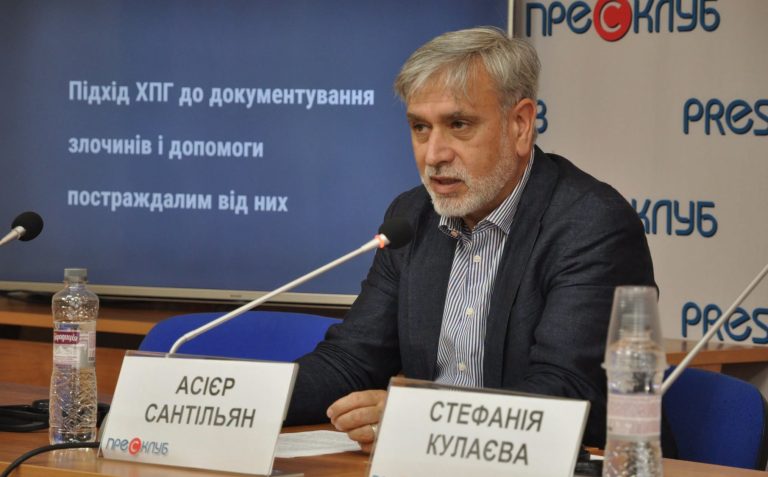
Ukrainian civil society documents more than 100,000 incidents of international crimes with EU support
EU sanctions VK group and leadership of prison in Russia, detaining Ukrainian civilians and prisoners of war

EU denounces Russia’s malicious cyber ecosystem targeting Union and its international partners
EU Foreign Affairs Council to discuss support to Ukraine and new Partnership Mission for Armenia

DG HOME: Poland sees new research and changes to policies on migrant integration


The information on this site is subject to a Disclaimer and Protection of personal data. © European Union,
