

DG HOME: Poland sees new research and changes to policies on migrant integration
The European Commission’s Directorate-General for Migration and Home Affairs has published an overview of Poland’s recent researches and legal acts concerning migrants, including from Eastern Partner countries.
Poland spent over PLN 8 billion in 2025 on support for people displaced from Ukraine
According to the latest report by Bank Gospodarstwa Krajowego, Poland spent over PLN 8 billion (around €1.9 billion) from its Assistance Fund to support people displaced from Ukraine by the ongoing war. The bulk of the funds came from the Polish state budget.
The largest share of these funds was spent on children’s education: PLN 3.3 billion to support local authorities in carrying out additional educational activities, and PLN 25 million for scholarships, allowances and educational materials for students from Ukraine.
The second-largest category, amounting to over PLN 2.4 billion, covered family benefits and various forms of financial support for raising children. 763.5 million was allocated to healthcare services and medicine, and nearly PLN 75.7 million to social assistance benefits.
Public opinion on provision of support to people displaced from Ukraine
Recent research by the Centrum Badania Opinii Społecznej (CBOS) shows a divided public opinion in Poland on providing assistance to people displaced from Ukraine. According to the latest survey, 48% of respondents believe that Poland should welcome those displaced from Ukraine, while 46% are opposed. This represents the lowest level of support recorded over the 10 years CBOS has been tracking attitudes on this issue, beginning after the annexation of Crimea by the Russian Federation.
This most recent survey was conducted between 27 November and 8 December 2025 on a representative sample of 948 respondents. The findings indicate that support is higher among residents of large cities, individuals with higher education, and those with higher incomes.
Phasing out of special assistance for people displaced from Ukraine
In March 2026, Poland is gradually phasing out measures introduced under the 2022 Act on assistance to Ukrainian citizens in connection with the armed conflict. Legal stay for people displaced from Ukraine under temporary protection (PESEL UKR status) will be extended until 4 March 2027, alongside extensions of certain visas and residence documents.
Access to the labour market via simplified employer notification procedures will continue, with transitional arrangements for some groups until 4 March 2029, and other key support measures will be reduced. Education-related assistance for children, including language classes, transport, and additional support in schools, will end by the 2025/2026 school year.
Access to free healthcare will also be restricted for many non-working beneficiaries, with exemptions for selected vulnerable groups. According to the Polish Migration Forum, the problem has affected primarily the elderly, the chronically ill, and patients undergoing life-saving treatment.
Changes to eligibility for facilitated employment rules
From 1 December 2025, citizens of Georgia were excluded from Poland’s simplified employment procedure based on an employer’s declaration of entrusting work to a foreigner registered with the local labour office. This change follows earlier restrictions applied to Russian citizens in October 2022.
As a result, the simplified scheme is now available to citizens of Ukraine, Belarus, Moldova and Armenia only, allowing employers to hire them under preferential administrative rules. Employment under this procedure may last for up to 24 months, after which a new declaration can be submitted for continued employment.
Over 1 million migrants employed in Poland in 2025
According to an experimental study by Statistics Poland, around 1.1 million third-country nationals (TCNs) were employed in Poland as of 31 August 2025. This corresponds to a 5.6% increase over 2 years and represents 6.7% of the total workforce, highlighting the growing role of migrant labour market integration in Poland’s economy.
Ukrainian nationals remain the largest migrant group (67%), followed by workers from Belarus, Georgia, India, Colombia, and the Philippines. Men account for 59.7%. The study also shows that 38.5% of migrant workers are employed under civil-law mandate contracts rather than standard employment contracts, which may affect job security and integration outcomes. The findings are based on administrative data sources.
The Directorate-General for Migration and Home Affairs (DG HOME) is the European Commission’s department responsible for Internal security, Migration, and Border management. Under Commissioner Magnus Brunner’s leadership, DG HOME works closely with EU Member States and Agencies, international organisations and other stakeholders to develop and implement effective policies at EU level.
Find out more
MOST READ






SEE ALSO
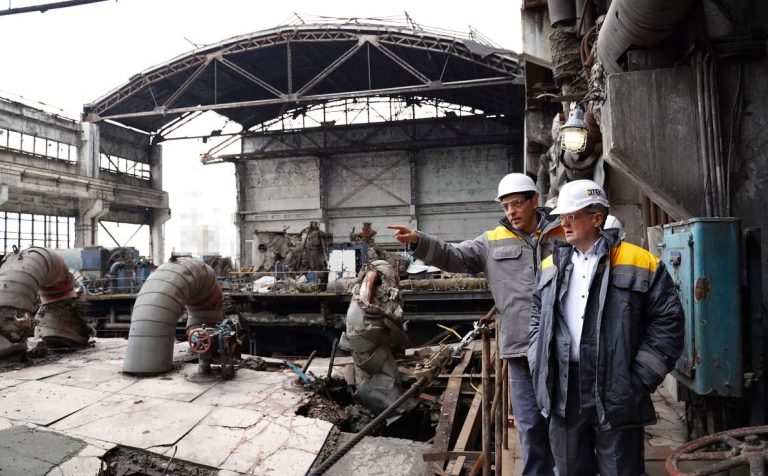
With Sweden’s contribution to the Ukraine Energy Support Fund, total lifetime contributions reach €2 billion
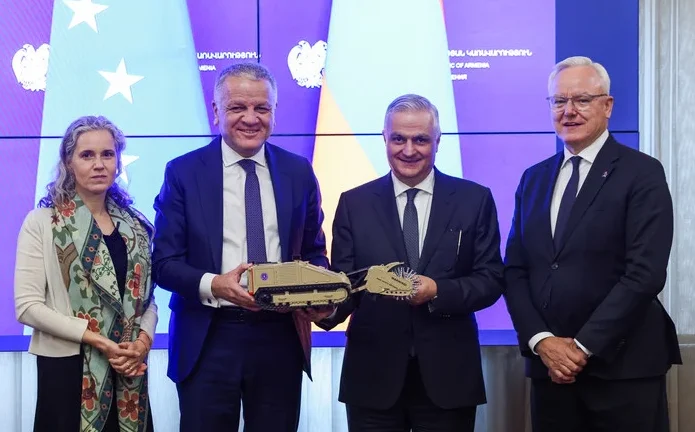
EU donates advanced demining machine to Armenia
European Parliament praises Moldova for reforms despite Moscow interference
Post-war elections in Ukraine: EU and its Member States help Kyiv in preparing for out-of-country voting

Moldova: 383 companies receive EU-backed grants so far this year


The information on this site is subject to a Disclaimer and Protection of personal data. © European Union,
