

WaterWiseEU: In your home and the Eastern partner countries
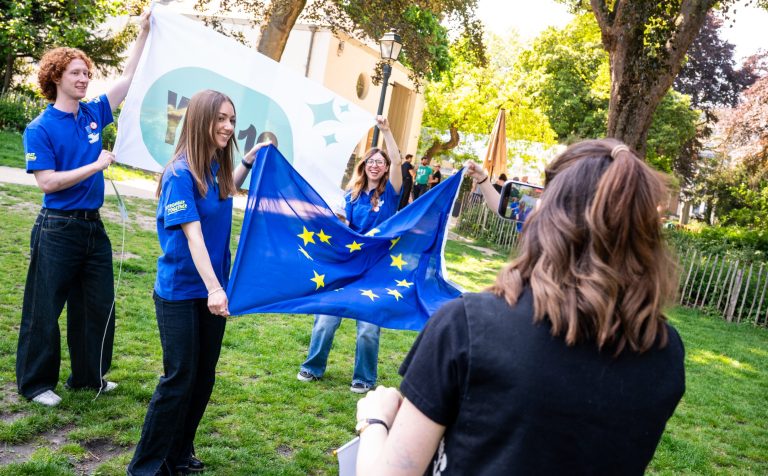
To celebrate EU Green Week, the Climate Action Working Group of Young European Ambassadors, a team of YEAs passionate about the environment and focused on organising activities to raise awareness about environmental issues, organised a social media campaign, about becoming water-wise.
Why do we care about water?
Water is fundamental for our lives and societies. Achieving sustainable water consumption should be a primary goal for all of us. Every action matters. That is why being #WaterWise should start with us all.
Why should people be concerned about water consumption first?
Water is a precious resource. It sustains life, supports agriculture, powers industries, and maintains ecosystems. Without water, food systems would collapse, natural habitats would be devastated, and human health would be endangered. Water is so important and yet there is so little of it.
The scarcity of water is a great problem in our world. Only 2.5% of all the water in the world is fresh water, and less than 1% of this is accessible, for around 7 billion people, which isn’t much. Climate change and population growth are intensifying the problem, making continuous conservation efforts more critical than ever. Recognising and valuing our water resources is the first step to ensuring a sustainable future for generations to come.
EU water projects in the EaP
As an important environmental player, the EU invests in multiple ways to lessen the damage caused to the environment. The motto for this year’s EU Green Week, a high-level event organised by the European Commission to raise awareness about the EU’s environmental policies, was #WaterWiseEU. To also help partner countries become water-wise, the European Union invests in multiple projects, such as the following:
EU4Georgia – Khashuri Water Supply and Sanitation: Khashuri is a city in central Georgia with less than 50,000 inhabitants. These people are currently only receiving water a few hours per day. Moreover, wastewater undergoes no treatment before being discharged into the river. As a result, both the environment and the local population are affected. Therefore, this project is being implemented by the state-owned water infrastructure operator (United Water Supply Company of Georgia), co-financed by the EU and the Agence française de développement. The project aims to rehabilitate water production, transport and storage facilities, and reconstruct and extend the water distribution network and sewer network. At the moment, drinking water is provided through the newly built 60 km of pipelines, however, there is still work to be done until the project’s deadline in 2028.
EU4Sevan – Environmental Protection of Lace Sevan: The Caucasus Region’s largest freshwater lake is Lake Sevan. Located in eastern Armenia, it serves as a crucial source of freshwater used both for irrigation and hydropower. In turn, environmental challenges such as overexploitation of water resources greatly impact not only the environment but also Armenia’s economy. Sadly, the water level has decreased by 13 cm between November 2022 and November 2023, therefore suffering significant biodiversity loss. To combat these damaging effects on the environment, the European Union and the German Federal Ministry for Economic Cooperation and Development, together with the United Nations Development Programme, are supporting capacity development interventions like water monitoring strategies or water-protecting cultivation practices.
But what can you do?
Hmm, well all that sounds very cool but is there anything that I could do? It’s not like I can build infrastructure in Georgia, Armenia or anywhere else myself… Don’t worry – we’ve got you!
Our social media campaign addressed precisely that aspect and in this blog post, we want to share with you 5 short & sweet tips. But before we jump in, the main takeaway is that you should strive to minimise your water consumption and try to reuse water whenever possible.
Without further ado, here are the tips:
- Water your plants in the early morning or late evening. Why are we so specific? You can save this precious resource by watering during cooler times. Lower temperature means lower evaporation which means that more water can reach the plant roots.
- Avoid washing cars at home: less water will be wasted in car washes (which often have recycling systems) than when you just take matters into your own hands, or in this case your hose.
- Our third tip might not be as pleasant as the previous ones but as they say, beauty is pain. To help the planet you should shorten your showers to 5-10 minutes to reduce the water that goes down the drain. And while you might prefer to take your time, this is one thing that you can do to make sure we do not run out of time to save our shared home.
- Wash full loads only: this is something to keep in mind not only for the well-being of our planet but also for the well-being of your wallet – maximising efficiency can lead to lower water bills.
- Educate family members, friends, and anyone who listens to you. It is very important to raise awareness about mindful water consumption as not many people may recognise the impact our daily actions can have on the future of our planet.
So, share this article, spread the knowledge and shape the future.
And remember – we are the ones who can make a #WaterWiseEU.
LATEST
From displacement to enterprise: rebuilding my community through entrepreneurship
A message from the YED Coordinators
My personal experience as a Young European Diplomat viewing the EU for the first time
A blueprint for enlargement: what we can learn from Moldova, Ukraine, and Montenegro
Young European Diplomats Club


The information on this site is subject to a Disclaimer and Protection of personal data. © European Union,
