

Ukraine as the foundation of new European security: from integration to EU strategic autonomy
In the context of the global reconfiguration of alliances and the ongoing aggression of the russian federation, the European Union faces a critical need to transform its role on the world stage. The concept of the EU’s ‘strategic autonomy’, which for a long time remained the subject of theoretical discussions in the corridors of Brussels, has today acquired the character of an existential imperative. In this new geopolitical and legal reality, Ukraine’s European integration demands a fundamental rethinking: it is not merely an enlargement of the bloc, but the systemic integration of a critically important security asset.
Consequently, the evolution of Ukraine’s role must be viewed through a multi-level prism, from a recipient of international aid to a fundamental donor of stability, capable of ensuring the practical realisation of a united Europe’s strategic autonomy. As Fredrik Wesslau, Acting Director of the European Policy Institute in Kyiv, aptly points out, “Ukraine’s accession to the EU is not an act of charity – but rather a matter of political survival for the EU”.
The military shield
For years, the traditional optics of European diplomacy perceived the Eastern Neighbourhood as a zone of potential instability requiring external management. However, the full-scale war has radically altered this balance. Today, Ukraine has made an unprecedented transition from the status of a ‘security consumer’ to its key provider. The Chair of the NATO Military Committee, Giuseppe Cavo Dragone, has explicitly stressed that Kyiv has “transitioned from a consumer of security services into a provider”.
The Ukrainian Armed Forces represent the most battle-ready army on the continent, hardened in large-scale conventional warfare, and serving as the undisputed leader in innovative defence technologies, particularly in unmanned systems, asymmetric operations, and battlefield management software. NATO Secretary General Mark Rutte has also acknowledged Ukraine’s undisputed leadership in military innovation and counter-drone technologies.
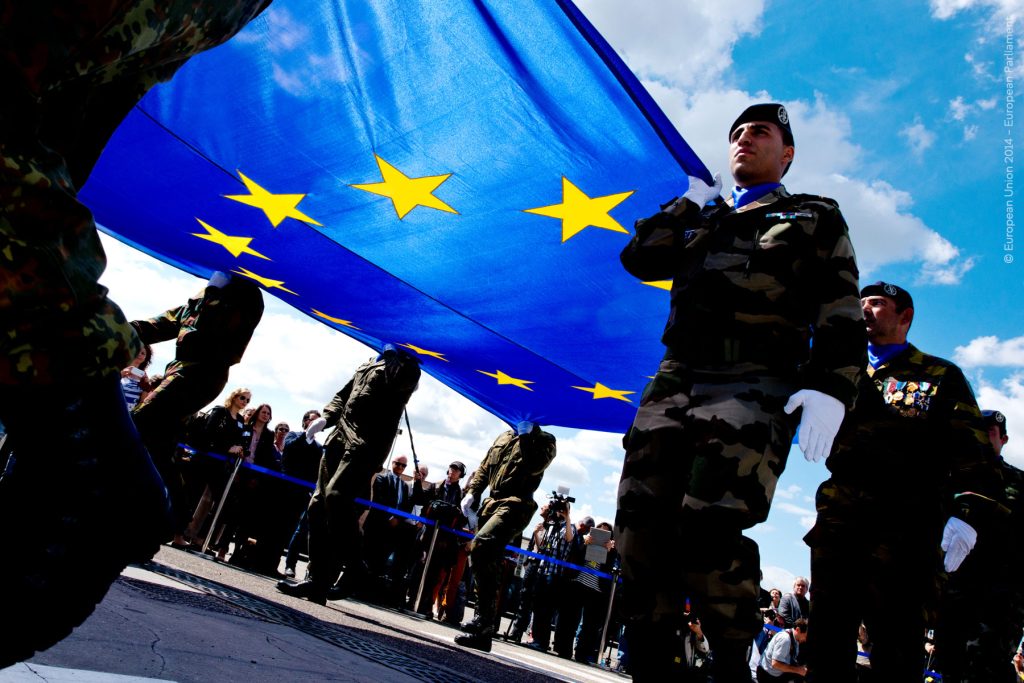
For an EU striving to achieve genuine geopolitical agency amid the potential revision of transatlantic commitments, this military-industrial potential is an indispensable asset, without which the creation of a fully-fledged European Defence Union is objectively impossible. Andrius Kubilius, the EU Commissioner for Defence and Space, summarises this new reality: “Our security, the security of Europe, depends on how quickly we start building a new security architecture, in which Ukraine with its battle-tested army and the most innovative defence industry will be the most important component.”
Comprehensive resilience and economic autonomy
At the same time, the EU’s strategic autonomy is not limited purely to the military dimension; modern security architecture demands comprehensive resilience, an area where Ukraine substantially strengthens European positions.
First, the integration of the Ukrainian agricultural sector transforms the EU into an absolute global leader in food security. Researchers like Susan Stewart note that Ukraine significantly increases the EU’s overall agricultural potential, minimising the risks of blackmail from third countries.
Secondly, the presence of vast reserves of critical raw materials and immense potential in the sphere of renewable energy forms the basis for Europe’s successful energy transition and the reduction of dependency on authoritarian suppliers.
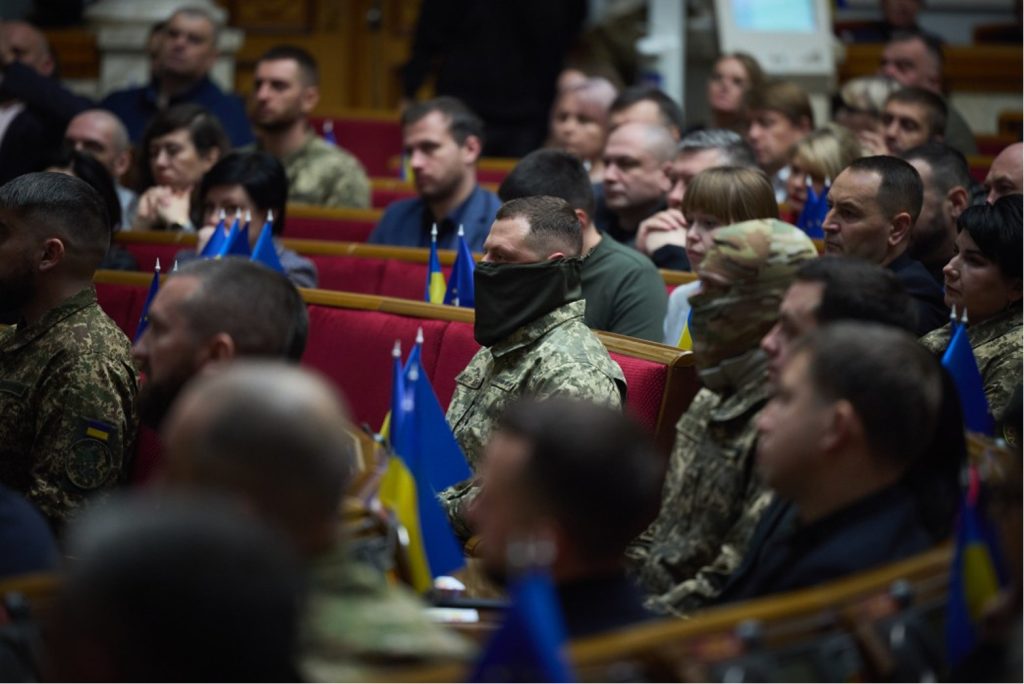
Furthermore, Ukrainian society has demonstrated a phenomenal level of resistance. Experts highlight Ukraine’s whole-of-society approach to resilience, where the experience of decentralised crisis management, countering massive cyberattacks, and neutralising state disinformation campaigns serves as unique practical material for developing new pan-European security protocols.
An unprecedented catalyst for institutional reform
From institutional and international legal perspectives, the current process of Ukraine’s European integration creates an unprecedented case of ‘accession through war’. This factor exposes a fundamental contradiction between the traditionally slow, bureaucratised EU enlargement process based on strict conditionality, and the acute geopolitical necessity for immediate security integration. Legal scholars observe that this will be an experimental exercise embracing new tracks like gradual integration into the single market before formal membership is finalised. Such pressure compels the European Union to reform its own structures, cascading overdue reforms such as updating the common agricultural policy and catalysing discussions on abandoning the unanimity principle in favour of qualified majority voting in joint foreign and security policy.
Conclusions
This process returns the EU to its ideological core, compelling European institutions to defend fundamental values: democracy, the rule of law, and human dignity, not solely in political declarations, but through real support on the battlefield. Civil society leaders emphasise the vital role of Ukrainians in defending these European values against authoritarian aggression. Ultimately, the integration of Ukraine is the ultimate proof of Europe’s vitality. As Nathalie Tocci eloquently concludes, “A European Ukraine would be a powerful reminder to Europeans and non Europeans alike of what Europe should be all about.” The evolution of Ukraine’s role must therefore be viewed not merely as an enlargement procedure, but as a systemic integration of a critically important security asset capable of ensuring the long-term strategic autonomy and prosperity of a united Europe.
LATEST
What does it mean to be part of the European family?
Reflections from the 2026 European Forum for Young Leaders

Lost Ukrainian Atlantis: the flooded memory of Polina Raiko’s house
Why does Armenia’s future belong to the youth who defend it?

Global warming is heating up gender differences


The information on this site is subject to a Disclaimer and Protection of personal data. © European Union,
