

Returning from oblivion: stories of prominent Ukrainian women of the 19th to mid-20th centuries
Ukrainian history is not only a chronicle of wars, reigns of princes or hetmans, but it is also the history of women – independent, strong-willed, and intelligent. Famous women of Ukraine played a key role in the formation of the state, culture, science, education and the struggle for freedom.
This article is one of two that attempt to honour women in Ukrainian history who changed our world yesterday and keep shaping it today, and it emphasises prominent representatives from the 19th to the mid-20th centuries. We will explore their life journeys, the fields in which they excelled, and the challenges they faced during eras marked by significant gender discrimination and societal inequality.
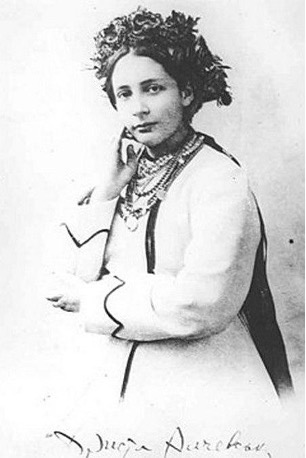
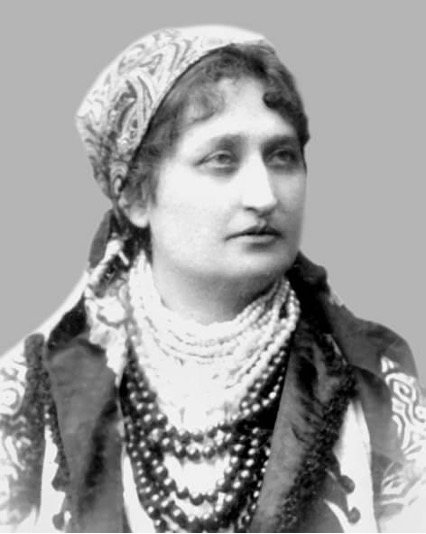
Khrystyna Alchevska: women in pedagogy
Khrystyna Danylivna Alchevska – a Ukrainian pedagogue, philanthropist, and public education organiser was the first to develop adult and female education in the 19th century. She was born on 16 April 1841, in the town of Borzna in Chernihiv Governorate, into the family of a district teacher. She had been denied an official education as a child and educated herself – it was there that she acquired an enduring commitment to accessible education.
In 1862 she established the Kharkiv Women’s Sunday School at her own expense. It became state-funded in 1870. Between 1881 and the late 1920s, the school gave free education to women and adults, and was a model for other institutions throughout the Russian Empire. Eventually, the students numbered a few hundred, and they were taught by more than 100 volunteer teachers in subjects ranging from literacy, maths and history to geography and science. In 1896, Alchevska erected a school building, the only Sunday school in the empire with its own premises. In total over 17,000 women were educated there.
In 1879, she established a second school in Oleksiivka (now in Luhansk oblast) that was taught only in Ukrainian. The famous writer Borys Hrinchenko held a position as an instructor. Alchevska was an advocate for the Ukrainian language and culture, helping to spread the works of Taras Shevchenko. In 1900, she installed the first monument to Shevchenko in Ukraine on her estate in Kharkiv.
Her three-volume manual, The People Must Learn to Read, received the international award of the Grand Prize at the Paris Exposition in 1889. That year she was also named vice president of the International League of Education in Paris.
Alchevska died in 1920 in Kharkiv. Her epitaph reads “Enlightener of the People”, consistent with her belief and practice of bringing education to the people, and empowering Ukrainian culture amongst its citizens.
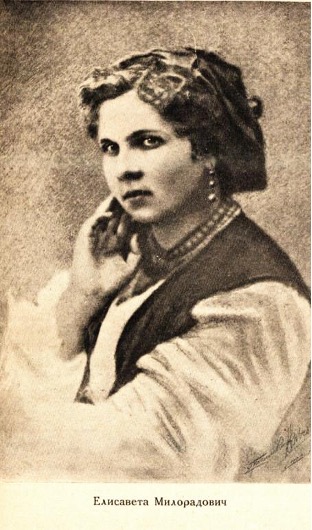
Yelyzaveta Myloradovych: the intellectual rebellion
Yelyzaveta Myloradovych (1832-1890) stands out as one of the most influential yet humble architects of the Ukrainian cultural revival. Born into the illustrious Skoropadsky family and aunt to the future Hetman Pavlo Skoropadsky – she used her aristocratic status and significant wealth not for personal luxury, but to ensure that the Ukrainian voice would not be silenced by imperial decrees. In history, she is rightfully remembered as the “Mother of the Shevchenko Scientific Society”.
Her most profound contribution came at a time of existential crisis for Ukrainian identity. In the mid-19th century, the Russian Empire’s Valuev Circular and later the Ems Decree effectively banned the Ukrainian language from public life, education, and printing. Recognising that the survival of the nation depended on its intellectual development, Myloradovych looked toward Galicia (then under the more liberal Austro-Hungarian Empire) as a sanctuary for Ukrainian thought.
In 1873, Myloradovych made a monumental donation of 20,000 Austrian krone to establish a literary and scientific society in Lviv. This funding was the cornerstone upon which the Shevchenko Scientific Society was built. Her contribution allowed for the purchase of a printing press and a building, creating a vital institutional hub where titans like Mykhailo Hrushevsky and Ivan Franko would later work. Essentially, she financed the creation of what became the first unofficial Ukrainian Academy of Sciences.
Beyond her financial patronage, Yelyzaveta was a woman of deep personal conviction. In an era when the aristocracy often mimicked Russian or French customs, she remained fiercely devoted to her roots. She was known for wearing traditional Ukrainian attire and speaking the language in her daily life, a quiet but radical act of defiance against Russification. In her native Poltava region, she funded Sunday schools for peasants and supported the “Poltava Hromada”, a circle of intellectuals dedicated to education and social progress.
Yelyzaveta Myloradovych’s legacy is a testament to the power of strategic philanthropy. She understood that for a nation to be free, it must first possess its own science, its own history, and its own books. Her death in 1890 was mourned across Ukraine lands, from Poltava to Lviv, signalling her role as a bridge between the divided Ukrainian territory. Today, she remains a symbol of how one woman’s vision and generosity can provide the foundation for an entire nation’s intellectual future.
Natalia Kobrynska: spreading feminism through art
Natalia Kobrynska (1855-1920) played a major role in the development and spread of feminism in Ukraine in the 19th-20th centuries. Despite being raised in a strictly religious, traditional family, she always advocated for women’s rights through her literature and her civil engagement.
By using her creativity and talent, she aimed to portray experiences of Ukrainian women. In one of her most famous works, Dukh Chasu (“The Spirit of Time”), she illustrated the extreme discrepancy in the social stance of men and women, highlighting the limited position of women. Natalia also paid attention to the internal battles that women go through. She showed how women could not feel safe even in the comfort of their own home, as they were constantly criticised by their families and disregarded by their own children. In her other work called Zadlya kusnyka khliba (“For a Piece of Bread”), she described the upsetting fate of young Ukrainian girls, who had to give up on the idea of love and were forced to marry a man who was able to provide. Since Natalia herself was married off at 16, she could deeply relate to the experiences she described in her works. That is why she always advocated for the ability of women to receive education, work, and sustain themselves.
For women’s rights to gain importance in Ukrainian society, Natalia gathered female activists and writers to create a feminist almanac. It was called Pershyi Vinok (“The First Wreath”) and included around 40 works that portrayed the lack of female rights as a systematic problem that had to be battled on various levels. In addition, Natalia became a founder of a new publishing centre called the Women’s Library, which aimed to spread feminist Ukrainian literature and to provide a voice to female artists.
Natalia Kobrynska also actively fought to expand the rights of women through action. At the end of the 19th century, she collected signatures for women to gain the ability to enrol in high school and university. Often, she would try to expand European feminism and its main principles into the territory of Ukraine, as she was inspired by the history of European feminism, as well as the degree of freedom that European women had gained in the 19th century. Nonetheless, Natalia always highlighted that European success should be used as an inspiration that could be adapted to the specifics of Ukrainian society and political environment.
She believed that women should always be seen as human beings, with their own feelings, dreams, and goals, and not viewed solely as mothers or wives. She wanted women to be seen as separate individuals who could freely express themselves. Natalia Kobrynska believed that there should be balance and equality between the roles and rights of men and women. She would argue that this could be realised by the inclusion of women in civil and political activities. By uniting into public organisations and communities, women could not only emancipate themselves and change the way that women are perceived, but also take an active part in political processes and make their own contribution to the independence of Ukraine.
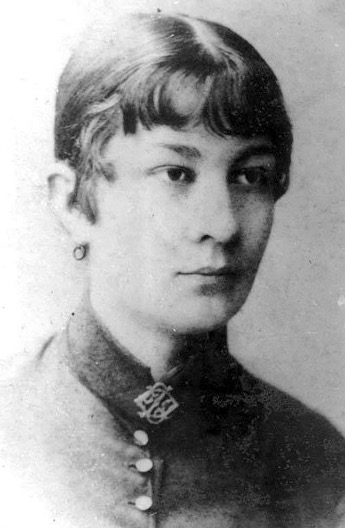
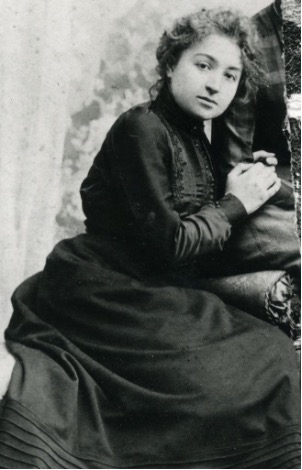
Sofia Okunevska: women in medicine
Sofia Okunevska (1865-1926) holds a significant place in Ukrainian and European history as a pioneering figure in medicine and women’s rights. Born in the village of Kropivnyk (then part of the Austro-Hungarian Empire, now Ivano-Frankivsk Oblast, Ukraine), she shattered formidable barriers to become the first woman from Ukrainian lands to earn a medical degree, and remarkably, the first woman officially recognised as a physician within the entire Austro-Hungarian Empire.
Her journey was marked by relentless determination in the face of entrenched prejudice. Denied admission to medical schools in the Empire solely because of her gender, Okunevska refused to be deterred. Following the path of many pioneering women scholars of the era, she travelled to Switzerland. In 1896, she graduated from the University of Zurich’s Faculty of Medicine.
Returning to Lviv, Okunevska faced initial resistance but eventually established a successful gynaecological practice. She became a prominent figure in the city, not only treating patients but also actively participating in the burgeoning Ukrainian women’s movement. She co-founded and led the Union of Ukrainian Women, championing education, professional opportunities, and social advancement for women. Her work extended to organising childcare centres and advocating tirelessly for gender equality.
Her groundbreaking achievement and unwavering commitment to women’s empowerment make Sofia Okunevska a truly iconic figure in Ukrainian history. A monument in Lviv stands as a lasting tribute to her courage and contribution.
Oleksandra Exter: the amazon of the avant-garde
Oleksandra Exter is widely recognised as one of the most prominent female avant-garde artists and scenographers of the 20th century. Exhibited in the most prestigious galleries around the globe, ‘The Amazon of the Avant-Garde’, a title bestowed upon her by art critics, developed a unique style that combined the influences of European Cubo-Futurism and Ukrainian folk art. Born in Białystok (now Poland, then part of the Russian Empire) to a Belarusian-Greek family, she spent most of her life in Kyiv, which, over the course of 35 years, witnessed the formation and development of Oleksandra Exter as an artist.
Upon discovering her passion for art, she enrolled in the Kyiv Art School, where she studied under the guidance of Mykola Murashko and Mykola Pymonenko, the leading figures of the Ukrainian artistic world at the time. Her academic studies focused on realism, but two pivotal experiences dramatically transformed her artistic vision: her travels to Paris and her engagement with Ukrainian folk art.
Paris dazzled her with new modern approaches to art. After returning to Kyiv, she gathered like-minded colleagues and organised exhibitions in Kyiv such as Lanka and Kiltse to promote Cubo-Futurism and other pioneering trends and experiments among the local audience.
Ukrainian folk art, in turn, captivated her with its bright colours, creativity, craftsmanship, and unique simplicity. Gradually, these characteristics began to appear in Exter’s own paintings. Oleksandra’s participation in 1906 ethnographic expeditions to Ukrainian villages, during which she collected household items for an exhibition at the Kyiv City Museum, allowed her to immerse herself in Ukrainian culture. Later, she became a central figure at the artistic workshop organised by her friend, Nataliya Davydova, in Verbivka (now in the Cherkasy region). Oleksandra and other professional artists collaborated with local craftswomen, experimenting with the combination of traditional embroidery and avant-garde patterns. Visitors to her home often noted the harmonious blend of cutting-edge futuristic paintings and Ukrainian embroidery, pottery, and carpets collected during her expeditions.
Oleksandra Exter also proved herself to be a successful mentor and teacher. She supported and nurtured Hanna Sobachko-Shostak’s talent, which later earned her international recognition. In 1918, she opened a studio in Kyiv where a pleiad of famous Ukrainian and world artists honed their scenographic skills. Her list of students includes Vadym Meller, Anatol Petrytsky, and Borys Aronson.
Fleeing from the Bolsheviks, Oleksandra Exter was forced to emigrate. Unfortunately, her life ended in hardship. Once a celebrated artist, she struggled with health issues and poverty in her final years in Fontenay-aux-Roses, in France. For decades, her works were banned in her homeland by Soviet censorship. However, a few were miraculously preserved and eventually rediscovered by the Ukrainian art critic Dmytro Horbachov. Today, her legacy endures, continuing to remind people of the Amazon of the Avant-Garde.
LATEST
From displacement to enterprise: rebuilding my community through entrepreneurship
A message from the YED Coordinators
My personal experience as a Young European Diplomat viewing the EU for the first time
A blueprint for enlargement: what we can learn from Moldova, Ukraine, and Montenegro
Young European Diplomats Club


The information on this site is subject to a Disclaimer and Protection of personal data. © European Union,
