

Living Europe: from Erasmus dreams to building Moldova’s European future
The moment Europe became real
I still remember the feeling of arriving in Salamanca with a suitcase, Google maps, and a quiet sense of fear. I didn’t know anyone. My Spanish was hesitant. Everything felt unfamiliar. Yet, somewhere between the ancient streets and the echo of student voices in one of Europe’s oldest universities, something shifted.
For the first time, Europe stopped being an idea. It became something I could live.
Learning to live Europe
When I left Iași for my Erasmus semester in Salamanca in 2023, I thought I was simply continuing my legal studies abroad. In reality, I was stepping into a completely new version of myself.
Salamanca felt like a city out of a storybook. Its golden buildings carried centuries of history, and its university reminded you that knowledge had travelled across borders long before we did. But my real journey wasn’t academic – it was deeply personal.
I arrived alone, without friends, without a safety net. I had to navigate everything myself, from finding my way around the city to holding conversations in a language I barely mastered. At first, it was intimidating, but the discomfort slowly turned to confidence.
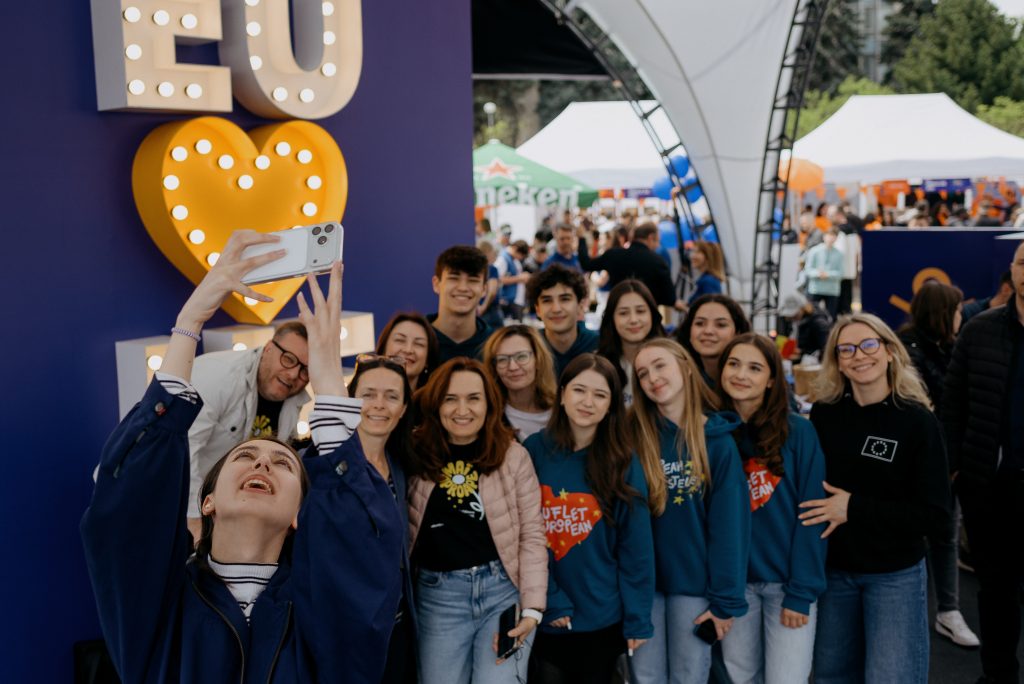
By the end of those months, my Spanish had grown from a B1 to a C1 level. More importantly, I had grown. I had built friendships with people from across Europe and beyond, connections that still shape my life today.
It was during that time that I truly understood something many take for granted. Freedom of movement. Borderless travel. Roaming without extra costs. A shared currency.
For many Europeans, these are everyday realities. For someone coming from outside the European Union, they represent something much deeper: a vision of freedom, opportunity, and belonging.
That is what Europe came to mean to me: freedom, values, peace, and possibility.
Seeing Europe in action
A year later, I returned to Salamanca, this time to pursue a Master’s degree in European Union Studies. I wanted to go beyond living Europe, I wanted to understand how it works.
That opportunity came during a study trip to Brussels and Luxembourg during my Master’s programme. For the first time, I stepped inside the institutions I had only read about in textbooks.
At the European Commission and the European Parliament, I saw policies debated, shaped, and negotiated. At the European External Action Service, I glimpsed Europe’s role in the world. But it was in Luxembourg, at the Court of Justice of the European Union, that everything became strikingly real.
Sitting in a courtroom, attending a hearing in a competition law case, I watched European law unfold in practice. It was no longer abstract. It was alive, dynamic, and consequential.
In that moment, I realised that Europe is not only about shared values, it is also about institutions that protect them, laws that give them meaning, and people who make them work.
Returning home: a different kind of journey
After five years abroad, returning to Moldova felt like stepping into another unfamiliar world.
I came back with a new mindset, shaped by experiences that had changed me profoundly. I was no longer the same person who had left. And that made the return both exciting and difficult.
The reverse cultural shock was real. The differences in mentality felt sharp at times. But instead of discouraging me, they gave me clarity.
I realised why I had come back.
Since 2022, Moldova has been on an accelerated path towards European Union membership. For me, this was not just a political process, it was a personal calling. I wanted to contribute, in whichever way I could, to the transformation of my country.
During my traineeship at the Bureau for European Integration, I worked on the National Programme for Accession to the EU for 2025-2029. My role involved supporting coordination and reporting across negotiation chapters such as Free Movement of Capital, Financial Services, and Energy.
It was my first real encounter with the complexity of accession.
What I discovered was both inspiring and sobering. Aligning legislation with EU standards is essential, but it is only part of the story. The real challenge lies in implementation, in building the administrative capacity, resources, and consistency needed to turn commitments into reality.
It is here that the European future of Moldova will truly be decided.
Moldova’s European path: beyond politics
When we speak about EU enlargement, we often focus on negotiations, benchmarks, and reforms. These are important. But they don’t capture the full picture.
For Moldova, European integration is also about transformation. It is about creating better opportunities, strengthening democratic institutions, and raising living standards. But more than anything, it is about changing mindsets.
A European Moldova means a society that believes in the rule of law, values human dignity, and embraces accountability. It means moving from aspiration to ownership.
Of course, the challenges are real. Brain drain continues to affect the country. Many young people leave in search of better opportunities. Administrative capacity remains limited, and resources are not always sufficient to meet ambitious goals.
But these challenges do not define our future. They simply remind us of the work ahead.
And perhaps that is what enlargement truly is – not a destination, but a continuous process of becoming.
Building Europe together
In December 2025, I joined the Young European Ambassadors initiative. For me, it felt like a natural continuation of everything I had experienced.
It gave me a platform to speak about the values I believe in – human dignity, democracy, freedom, equality – and to connect with others who share the same vision.
One moment in particular stayed with me.
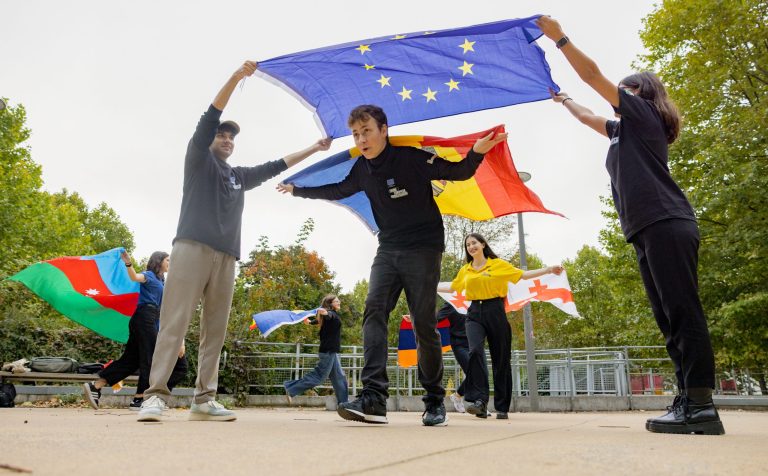
During the ‘More EU in Moldova’ initiative, we gathered with fellow ambassadors from across Europe and the Eastern Partnership, including Ukraine. We exchanged ideas, shared experiences, and discussed how we could bring Europe closer to our communities.
But the most memorable part was unexpectedly simple.
We cooked Moldovan plăcintă together.
In that moment, differences disappeared. Languages mixed. Laughter filled the room. It was not about policies or strategies, it was about connection.
And I realised, once again, that this is what Europe truly is. Not just institutions or treaties, but people coming together, sharing, learning, and building something common.
Europe is something we build
My journey with Europe began as a student searching for direction. It continues today as a young professional contributing to my country’s future.
Along the way, I have learned that Europe is not something distant or abstract. It is something we experience, shape, and carry within us.
For Moldova, the path to the European Union is both a challenge and an opportunity. It requires reforms, resilience, and commitment. But above all, it requires people who believe in it.
Because in the end, Europe is not only about accession chapters or institutional frameworks.
It is about us.
It is about the choices we make, the values we uphold, and the future we decide to build – together.
LATEST
From displacement to enterprise: rebuilding my community through entrepreneurship
A message from the YED Coordinators
My personal experience as a Young European Diplomat viewing the EU for the first time
A blueprint for enlargement: what we can learn from Moldova, Ukraine, and Montenegro
Young European Diplomats Club


The information on this site is subject to a Disclaimer and Protection of personal data. © European Union,
