

Zerkalo keeps millions of Belarusians informed when silence is the state’s strategy
Last summer at 4am, a ‘Zerkalo’ reader sent in a photo. Later they sent video footage from a surveillance camera. A Russian drone had crashed in a parking lot in a heavily populated area of central Minsk, narrowly missing a residential building.
The Zerkalo team opened their monitoring systems that morning at 6 am and verified the information. They called the security services who did not answer their call. After that, they published the news. An hour later, after Zerkalo went public, the authorities admitted what had happened.
Zerkalo, meaning “mirror”, covers the everyday issues of people inside Belarus. These are often stories that would never be published in a country where state-controlled media dominates, independent media websites are blocked, and journalists face broad repression.
The Mirror that stayed
The Zerkalo team are Belarusians in exile who work from Vilnius, Warsaw and other European cities, all while their entire reason for existing is inside Belarus. The media is a vital source of information for millions inside the country.
The team has moved twice, from Belarus to Ukraine, when Zerkalo’s predecessor Tut.by, one of Belarus’ most popular news outlets, was declared extremist by the Lukashenka regime. More than 10 Tut.by employees were arrested, including the CEO and editor-in-chief, as the authorities implemented a systematic and severe repression against journalists that saw hundreds detained. They were sentenced to 12 years in prison. Liudmila Chekina, Zerkalo’s CEO, remains behind bars to this day.
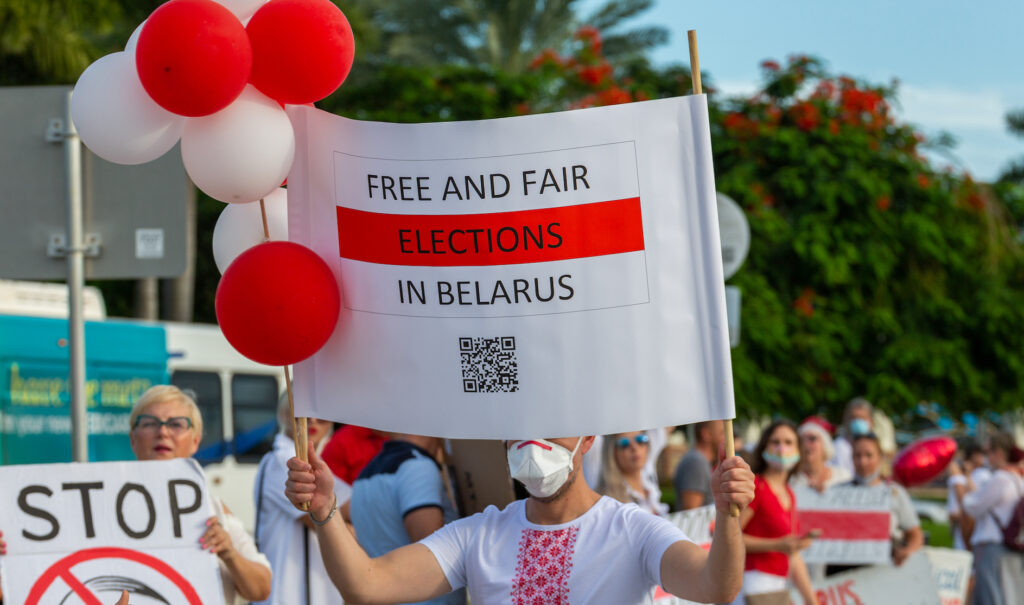
Zerkalo was created to preserve this legacy when it was launched in Ukraine in 2021. Then following the beginning of the full-scale war in Ukraine in 2022, the team moved again. It’s biggest success to this day, is maintaining its audience inside Belarus throughout the past five years. Their website gets 27 million views per month, and they constantly diversify content across TikTok, Instagram and YouTube. Today 2.2 million individuals visit Zerkalo’s website every month to read their stories, 55% of them from inside Belarus. 80% of their TikTok audience are inside the country, and most of these readers are under 30.
Covering stories from inside Belarus
“If we only wrote about Belarus from the perspective of Poland or Germany, we’d be irrelevant,” says a team member. Instead, they cover public transport problems in Minsk, wage theft, sick children needing fundraising and bureaucratic cruelty amongst other topics.
They monitor the nuclear power plant built by Russians without any public consultation, a particularly sensitive subject in a country that bore the brunt of radioactive exposure after the Chernobyl catastrophe of 1986.
A family member of a nuclear power plant worker reached out recently, and told them that the second reactor was not functioning, and the power plant was shut off, a dangerous situation as it needed to be maintained. The government had kept silent on this situation, and the individual was afraid they were being followed. The team verified the information and published the content. Four hours later, the government confirmed what Zerkalo had reported.
In another case, workers from the Opera and Ballet Theatre contacted them and related that they were being forced to perform in occupied Crimea. Zerkalo verified the story and published it. A month later, the trip was cancelled. Sources told them it was because of the public response their story generated.
The Zerkalo journalists related that on one occasion they contacted a state newspaper, posing as concerned citizens, asking why they hadn’t covered the story of a drone that fell near a school. Their response was revelatory. “Nobody gave us official information… Until we have official information, we can’t publish,” said the state media.
This simple answer sums up why Zerkalo matters inside Belarus, as without them and other independent Belarusian media, there is no one else to tell these stories. The state newspapers wait for permission, and the population waits for someone to notice.
Diversifying platforms for audiences
Zerkalo’s team admit that a big reason for their success is that they obsess over data. “We constantly look at what people consume, what topics interest them, where they watch the news, who they are and how old, what their gender is, where do they live, what city they live in if it is in Belarus or if they are based abroad. Based on this data we constantly adapt our editorial policy”.
They are focused on providing news in the formats their audience prefer. For instance, their YouTube long-form interviews attract older viewers, most of them 50 and above. Young people don’t tend to read long articles, so they repackage this material for TikTok as 12 to 20 second short films, as well as publishing YouTube shorts. On Instagram, they have carousel formats with short videos.
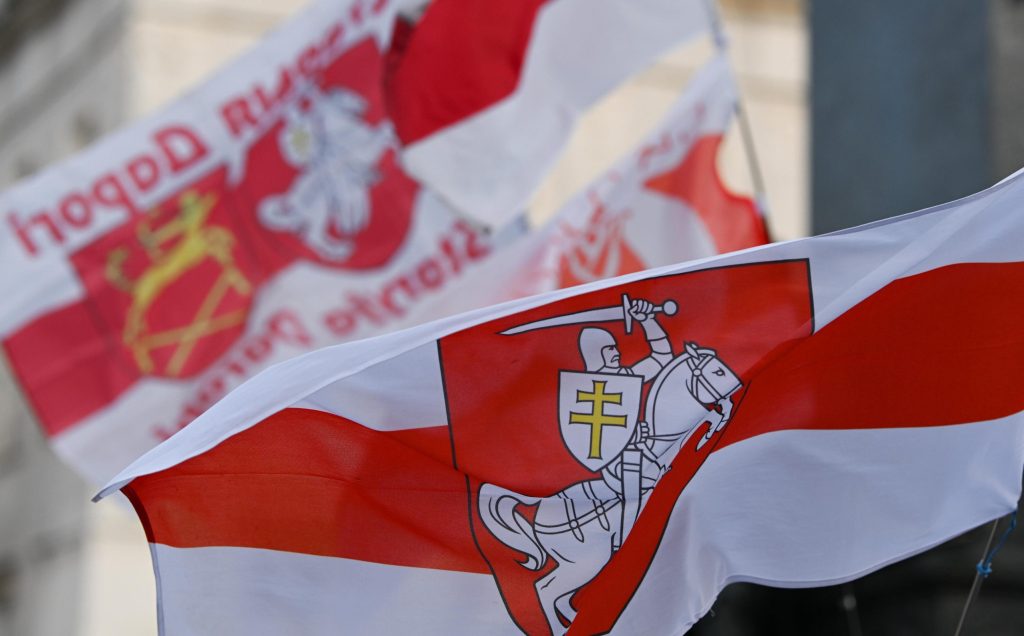
Members of the Belarusian diaspora displaying white-red-white opposition flags as they gather at Krakow’s Market Square for the Day of Solidarity with Belarus rally, on August 9, 2024 (Photo by Artur Widak/NurPhoto)
When Belarusian political prisoners were released in December 2025, Zerkalo’s coverage was viewed 9 million times across all their platforms. About 80% of those views came from inside Belarus.
Voices that refuse to fade
Zerkalo’s journalists are working in one of the most repressive contexts in the world. Any contact with Zerkalo from inside Belarus is a criminal offence, and it carries the risk of seven to ten years imprisonment. Despite this, people continue to reach out. Every day Zerkalo publishes material based on information shared by their audience.
They explain that their sources have never been leaked, therefore have never been exposed. As the team put it – “trust is everything”.
They have developed a bypass when it is too risky for people to contact them directly with information. They ask them to post their stories on their own social media first.
“Maybe someone makes a video on TikTok or they post something on Instagram. We can then use this. This is a way to cover the problems of ordinary small people,”.
They do everything they can to protect their sources. “We often get requests to delete content. If it’s not a public figure, we always do it. We understand that we’re safe here in Vilnius, in Warsaw. But our readers are not,”.
Financial challenges
Zerkalo suffers from the same challenges as all Belarusian independent media, particularly when it comes to funding.
“We cannot be self-sufficient,” a team member admits. “We’re trying to become more commercial, with banner advertisements, but our audience is in Belarus, and our advertisers must be outside the country. Our content is not relevant to Lithuanian or Polish businesses.”
They rely on donors to continue operating, but last year’s loss of US foreign funding hit them hard, as they lost 20% of their budget. The European Endowment for Democracy (EED) provides Zerkalo with key institutional support. Today, Zerkalo’s team continues to chase stories in a country they can’t enter, serving an audience that risks prison time just for reading their publications. They are a mirror that keeps reflecting the truths at home.
The European Endowment for Democracy
The Zerkalo was supported thanks to the European Commission contribution to the European Endowment for Democracy (EED), an independent, grant-making organisation, established in 2013 by the European Union and EU member states as an autonomous International Trust Fund to foster democracy in the European Neighbourhood, the Western Balkans, Turkey and beyond.
The EED supports civil society organisations, pro-democracy movements, civic and political activists, and independent media platforms and journalists working towards a pluralistic, democratic political system.
The EED was established by the EU as an independent, complementary mechanism to provide fast and flexible technical and financial support to democratisation and human rights promotion in the European Neighbourhood.
This story was first published by the European Endowment for Democracy (EED)
MOST READ


SEE ALSO

‘Europe became real faces and real stories’: Young European Ambassadors look back on ten years of friendships and community projects
One conversation can change everything: from Finland to Ukraine, rethinking what young people need – and how to support them
‘I knew repression would come after 2020; I just didn’t grasp the scale’. An interview with former Belarusian political prisoner Andrei Chapiuk

Can music influence politics, and did the ‘buzz’ die in Belarus after 2020? In conversation with cultural activist Papa Bo
Imprisoned, attacked and silenced: how journalists fight for truth

The information on this site is subject to a Disclaimer and Protection of personal data. © European Union,
