

Can music influence politics, and did the ‘buzz’ die in Belarus after 2020? In conversation with cultural activist Papa Bo
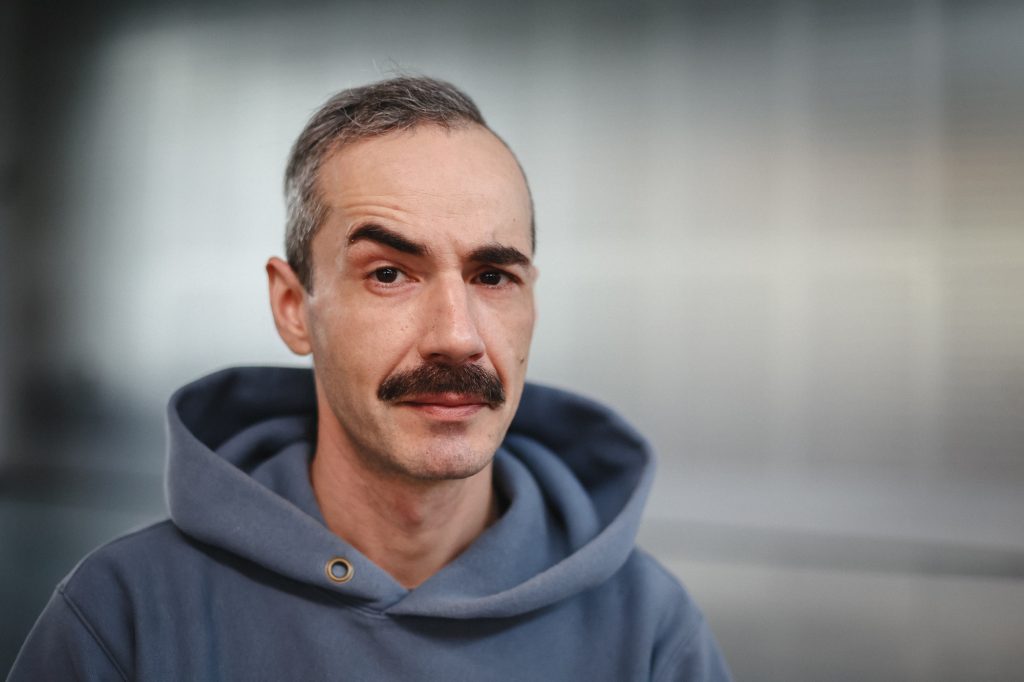
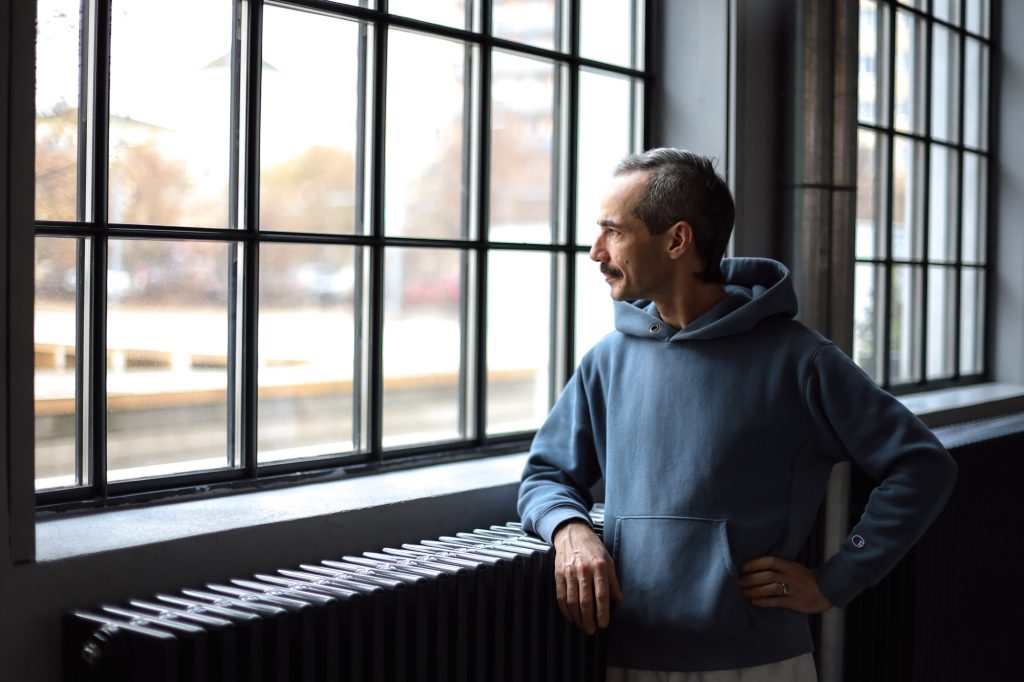
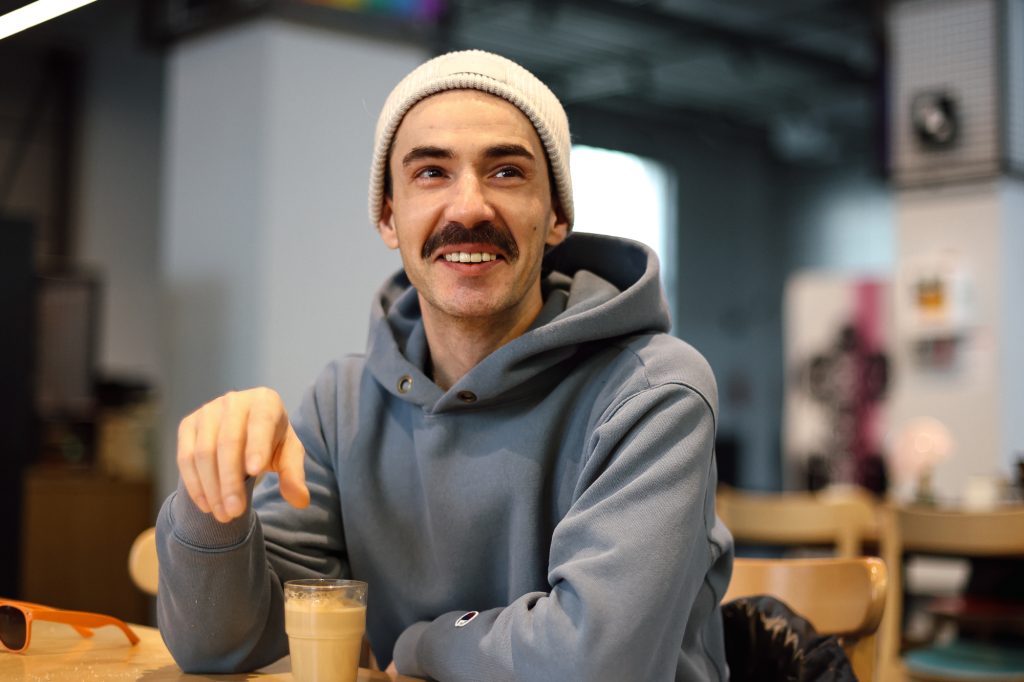
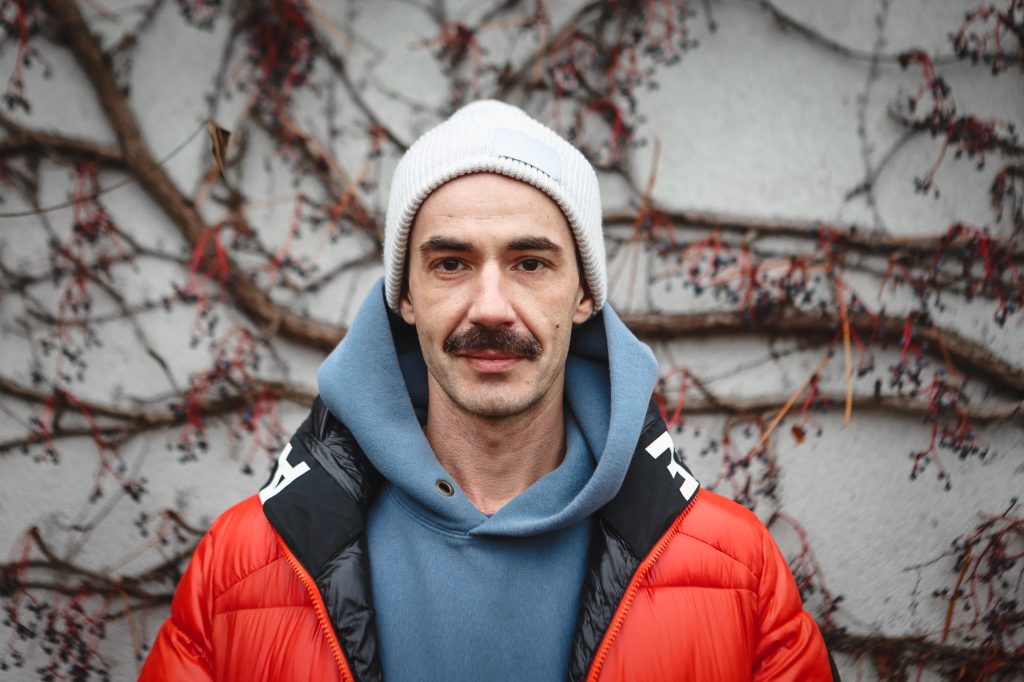
Art manager and musician Aleksiandr Bahdanau (Papa Bo) is one of the iconic figures of Belarusian music. For people who had little interest in underground culture, he became widely known in 2020, when he played his DJ sets during street protest marches. After a violent arrest and beating, several months in a pre-trial detention centre, a placement in an open-type correctional facility (“khimiya”), the destruction of the Korpus cultural centre, and forced emigration, he did not abandon activism. His new project, Belarus Outside Sound System (BOSS), supported by the EU4Culture programme, turns raves and concerts into an instrument of soft power. These are not just parties, but a way to unite the diaspora, to tell the world about the Belarusian crisis, and to raise money for political prisoners. Ahead of Human Rights Day, which is celebrated on 10 December, we spoke with Papa Bo about how music becomes a voice of freedom, why many artists who have left the country are on the edge of survival, and how a generation of Minsk residents has grown up that no longer remembers the old heroes.
When music meets activism
It has been more than three years since your last big interview with Zerkalo. At that time, you had just moved to Georgia, and now you live in Warsaw. How has your personal and professional adaptation to emigration gone during this time? Have you managed to find your place in the new environment?
I wouldn’t call it “successful” so far. I’m still searching and hoping that soon I’ll find a place where I can apply all my experience, knowledge and skills. All this time I’ve been involved in cultural projects, but that was more of a lucky exception than a well-established system.
You are not only a DJ, but also a music activist – you organised a disco at protests, and in May 2020, during the COVID-19 pandemic, you recorded a set called ‘Victory Day of Absurdity’ against the backdrop of a military parade rehearsal in Minsk. Do you continue your work in this direction?
Yes, I do. Essentially, nearly all of my activities in exile are designed to combine music with socially beneficial activism. The events of the Belarus Outside Sound System project, which I have been organising in exile for three years now, use music as a soft power to advocate for social causes. Almost all of them were charitable. We raised money to support political prisoners, and during the first months of the war, we collaborated with a foundation from Ukraine, collecting donations for Ukrainian children. In short, we are only involved in politically and socially oriented cultural activism.
‘Not for slogans, but for unity’
On 26 January 2025, the day of the presidential elections in Belarus, large Belarus Outside Sound System parties were held in four cities in Poland. How did this idea come about, and why were the events timed to coincide with the elections?
We thought that for Belarusians abroad, it would be a rather sad day – because of their powerlessness and inability to influence the situation. So we decided that at least in Poland, where we are based, we needed to organise some kind of event, to create a safe space where people could meet, spend this day in a good atmosphere, see each other, and feel that there is a community among emigrants.
We started thinking about what kind of concert could bring together our people from all over Poland. And we concluded that it would not be possible to organise an event in Warsaw that would attract not just 10 notorious partygoers from Poznań, Kraków, and Gdańsk, but a large number of people. So we decided instead to decentralise it and hold events on the same day in four cities where we had partners and volunteers with whom we could work locally. And we had a feeling that there were also people there who would come to the concerts.
How many people did you gather at all these events?
A little over 2,000 people. Some of the events were just concerts, some were markets, exhibitions, some were daytime or evening activities that turned into night-time events. Different formats and different turnouts.
The description says that the project supports Belarusian artists in exile and draws attention to social and political problems in Belarus. How did you integrate politics into the music events?
We articulated this through the slogan ‘Freedom is our choice’. In press releases, news reports, and announcements, we said that this is a gathering of Belarusians aimed at fostering a sense of unity and solidarity. The artists who played for us have a firm public stance. All of them are in forced exile. In reality, we did not want to make this action overtly political. But we assumed that, given the date – undeniably a sad one for Belarusians – it would be obvious to everyone why these events were happening and what they were for: not for slogans, but for unity.
The Belarus Outside Sound System project was supported by the European Union’s EU4Culture programme. How did this help in its implementation and development, and what role do such EU programmes play in the development of Belarusian independent culture in general?
EU4Culture gave rise to the project, and their grant enabled BOSS to launch with four consecutive festivals in 2023. We planned them, came up with the concept, selected the artists, and developed the formats – four cities with the largest concentration of young people interested in the advanced Belarusian scene. We chose Tbilisi, Vilnius, Warsaw, and Berlin.
We were living in Tbilisi at the time and applied for this programme. We outlined the concept so that half of the events would be concerts and half would be raves with electronic artists, capable of drawing hundreds of people.
Every city had its own headliner. In Tbilisi, it was Super Besse; in Vilnius, it was Galya Chikis and Sveta Ben; in Berlin, it was Shuma; and in Warsaw, we set up a separate stage at the first Varushnyak festival. Plus, in each city, there was a local DJ to connect with the local underground community, as well as our own DJs and musicians who had emigrated to that city.
Admission was by donation, which we passed on to the Belarusian Culture Council to support political prisoners who are artists. We raised about €4,000. Everything worked out. Many thanks to EU4Culture for this. Mad respect.
There were a lot of people and a lot of feedback. Everything went very well – financially, in terms of interest, and in terms of meeting the needs of the audience. Because it was obvious that there is a large segment of emigrated youth who are not interested in attending events with the classic lineup of the Belarusian émigré scene. These people are looking for something more cutting-edge and avant-garde.
Why is it impossible to stage such events on a commercial basis without the support of foundations?
It is very expensive. The costs of organising these concerts are four times higher than the amount of donations collected at the door. If we sold tickets, they would be very expensive. At the same time, to break even, we would need full houses everywhere. This is unlikely in the case of underground music parties without super headliners.
A new generation without cultural generational continuity
On the Belarus Outside Sound System vinyl record, the names of many artists are hidden behind pseudonyms. The cover says that they remain in Belarus. How are they doing there now?
Badly. One recently went to prison. Someone moved to a village and hardly ever leaves it. Someone has completely stepped away from music, doing something adjacent and “keeping a low profile”. Someone couldn’t take it any more and left Belarus.
But some of these musicians are sending word that cultural life is resuming in Minsk in a new form. Raves are being held, along with other activities. A space similar to Korpus has even opened – called ‘Echo’, in the courtyard of the Luch factory. There used to be an unsuccessful food court there.
Are you generally interested in what is happening in the musical sector in Minsk right now?
I’m very interested. I follow it closely and even try to analyse it. I follow all the young bands and artists who are doing something in Belarus. These are people who were 16-17 years old back in 2020. A new generation has grown up without cultural generational continuity. Most of them don’t even know that there used to be a cultural centre called Korpus in Minsk, where a guy called Papa Bo used to organise parties and concerts. They don’t know about Serebryanaya Svadba (Silver Wedding) and other iconic bands. They have adapted on what is essentially bare, ploughed ground and found ways to keep the scene alive inside Belarus anyway.
So the loss of Korpus is no longer such a disaster for the city’s cultural development?
Yes, it’s no longer as tragic. After all, five years have passed. The building that housed Korpus has been completely remodelled, and the mural on its façade has been destroyed. That’s actually a good thing. Korpus was in a state of disrepair. We had been pushing for its restoration for a very long time. Pieces of plaster weighing several kilograms used to fall from the walls of the second floor onto people’s heads.
It’s good that the building wasn’t demolished, but thoroughly restored. What it looks like now is a separate question. But there’s no need for a flashy façade there now, because flashy “movement” is no longer allowed there. Street art disappears sooner or later. Our mural has had a long life, actually. It symbolised the hustle and bustle around Korpus, which is no longer there. And it will never return there.
‘Any public connection between me and a project or band from Belarus is already a problem’
You live in Warsaw, the largest centre of Belarusian creative diaspora. Are musicians still depressed, or have they got back to their feet and adapted?
Some haven’t come to terms with it yet, some have already found their bearings. But very few have truly found their footing and adapted. Many are on the brink. Most eventually stop making music and turn to something that brings in money. There are a lot of people in Warsaw, and the music scene is very fragmented and prone to fighting.
What are they fighting about?
I don’t know, I’m not in the loop. I haven’t been going anywhere for a year. I lost interest. I want a new crowd. There’s no point in showing up just to chew over rumours about who did or said what. It’s uninformative and doesn’t help you grow.
That’s why I don’t hang out anywhere. I have a girlfriend, and her company is enough for me. We have fun together.
Are musicians who have made it big able to integrate into the Polish and European markets?
That’s more of an exception. But on the other hand, if you compare it to the Croatian, Slovenian, or Lithuanian music scenes, the situation there is even worse. If you’re a serious music lover, you’ll rarely remember one or two interesting underground bands from these countries. But Belarus has Molchat Doma, Dlina Volny, Yegor Zabelov, Super Besse, and Nürnberg. These are artists who attract hundreds to tens of thousands of non-Belarusians to concerts in Europe and around the world. I think that’s more than enough.
And whining about how the Belarusian scene is overlooked, and we’re not invited anywhere, is unjustified. Because our underground scene is already sufficiently represented on the world stage for a small country.
You mentioned that you follow musicians who remain in Belarus. Tell us what’s interesting there.
I won’t. They’re all afraid to communicate with me anyway. Any public connection between me and a project or band from Belarus is already a problem. That’s why I can’t even organise their concerts here privately. Because my name will appear in the ticket operator’s information or on some event organiser’s Facebook page. And that’s it, it’s no longer safe.
Unfortunately, it is difficult for most artists who are still based in Belarus to come here because, in any case, someone will bring a white-red-white flag [a historical Belarusian flag, used in protests against the government in 2020, symbol of the protest movement – Ed.], to the concert, shout “Long live Belarus!”, and it will be filmed and posted on social media. And then they will have to go back. Therefore, people who come from Belarus or return there are very cautious about performing here. For example, they do not indicate their name or the name of the band on the posters, stating that a “secret guest” will perform. Or they ask the audience to be careful and not to take photos or wave flags. Some performers are not announced until the very last moment.
Diversity of experience is better than just ‘listening to your own’
Are musicians and audiences tired of the political agenda?
Very much so. There is disappointment, a feeling that nothing will be resolved and that nothing is changing. Just like among ordinary people, it’s exactly the same among musicians and within the music scene.
You once said that your main fear is to become so detached from Belarus that you won’t want to return there. Do you still feel that way?
Of course, I do. Because there is a sense that this opportunity will appear when I will once again be able to be useful and in my place – to contribute to building a new cultural policy and shaping a new context.
This interview is being published on the eve of Human Rights Day. Do you think that artists and music in general can really have a social impact and influence the human rights situation in Belarus?
Inside Belarus – no. But music can be one of the tools for conveying information about the political crisis. A big stage means influence over large audiences. Through musicians and events, it is possible to proclaim important messages, to create a platform for speaking out – I won’t shy away from using such a grandiose word. It is also important to bring people together and to collect donations. And to preserve and promote Belarusian culture and identity.
I found your playlist ‘Belarus, I’m not afraid of you’ on Spotify. It has 46 songs. Who would you recommend listening to from this list?
I selected these tracks for a Belarusian mix that was commissioned by Belarusians in Seattle for their Dranik Fest event. They couldn’t bring me there, but they asked me to put together a two-hour mix consisting entirely of Belarusian tracks.
I recommend listening to Anastasia Rydlevskaya – definitely; to rapper Lightwaga; Domsun from Poznan – they’re cool; Dlina Volny is a great band; KOOB has a good album called Zubraniatka together with Sw@da; Palina has released a cool latest album; Žulavl is not bad; and the Sloznie project is Belarusian rap from 2012, which I don’t understand how I missed back then.
It’s not much, as you can see. But I’m not someone who listens only to Belarusian music, and I don’t consider myself to be an expert on it. I am in favour of diversity of experience and against the principle of just ‘listen to your own’. Because that mindset eventually cuts people off from the global cultural landscape.
The original story published in Belarusian and Russian on Zerkalo.io
MOST READ
RELATED PROJECTS
SEE ALSO
‘Europe became real faces and real stories’: Young European Ambassadors look back on ten years of friendships and community projects
One conversation can change everything: from Finland to Ukraine, rethinking what young people need – and how to support them
Zerkalo keeps millions of Belarusians informed when silence is the state’s strategy
‘I knew repression would come after 2020; I just didn’t grasp the scale’. An interview with former Belarusian political prisoner Andrei Chapiuk
Imprisoned, attacked and silenced: how journalists fight for truth


The information on this site is subject to a Disclaimer and Protection of personal data. © European Union,
