

The Russian bear chasing Ukraine and Moldova towards the EU
In EU jargon, the phrase “ambitious objective” hardly captures the magnitude of the challenge that the EU, Ukraine and Moldova have taken on with the European integration of these two countries. On the one hand, Ukrainians and Moldovans are eager to accelerate accession because they see it as their guarantee of security; on the other, the EU cannot compromise its merit-based approach. In other words, what Finland, Austria and Hungary once achieved, the same must now be demonstrated by the poorest states – living under the threat of war, or in the middle of a real one.
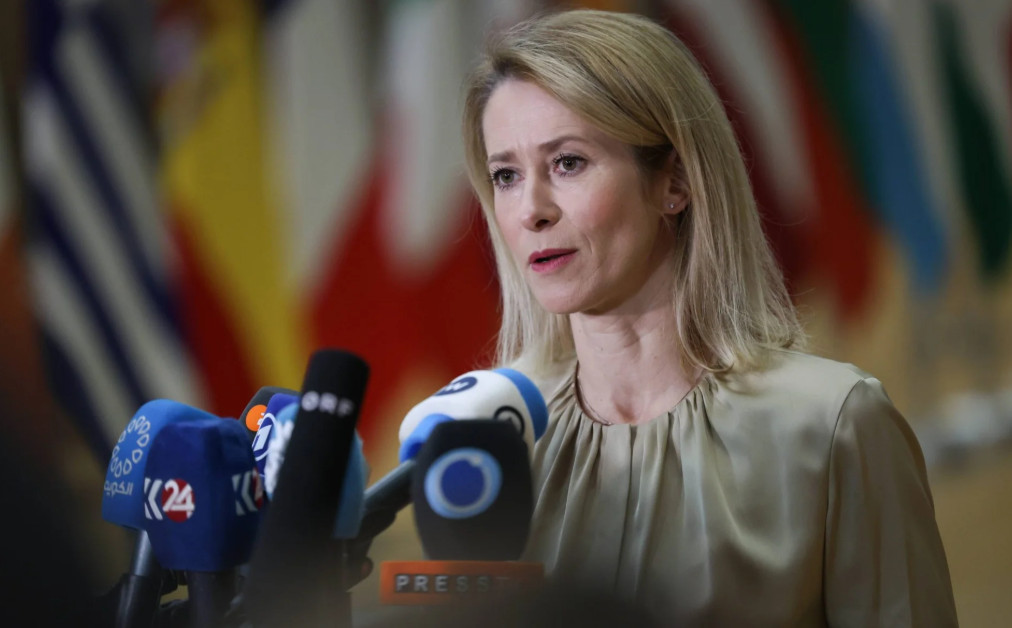
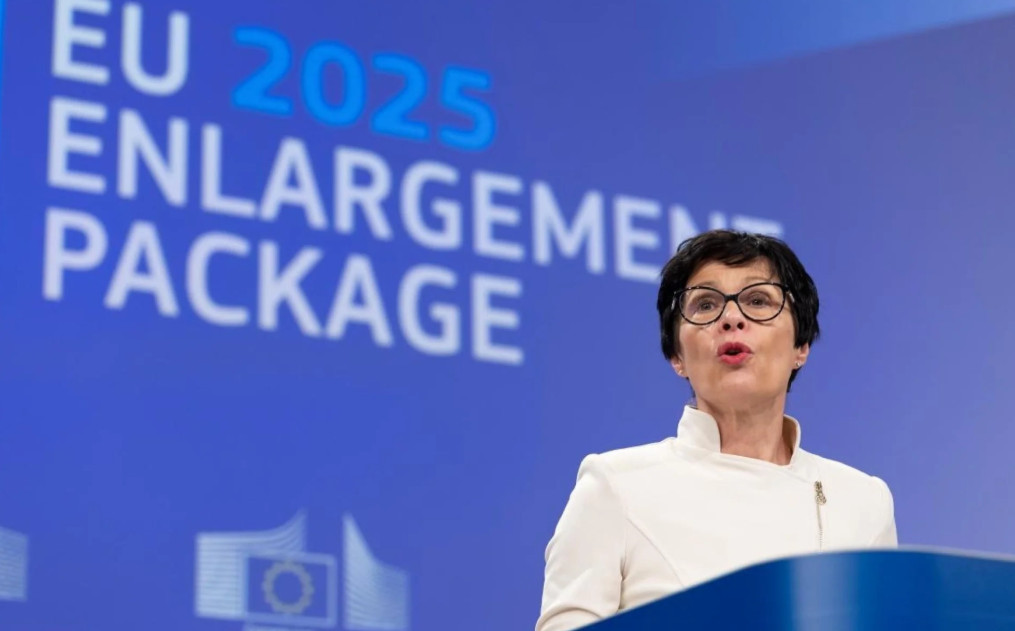
On 4 November 2025, the European Commission adopted its annual Enlargement Package, analysing in detail the preparedness and current stage of accession of ten candidate countries. Among them, the situations of Moldova and Ukraine are the most exceptional. Both have earned the Commission’s recognition for fulfilling their commitments under extraordinarily difficult conditions. Yet when and to what extent this will be enough cannot yet be said. Presenting the package, High Representative Kaja Kallas stated – without naming countries, that “the accession of new countries to the European Union by 2030 seems a realistic objective”.
Ukraine and Moldova may well be part of that circle, but this will require favourable geopolitical developments for both them and the EU, as well as superhuman effort on both sides.
Ukraine’s accession in the shadow of war
“Despite Russia’s ruthless war of aggression, Ukraine remains firmly committed to the path toward EU membership, having successfully completed the screening process and made progress on key reforms,” the European Commission’s 2025 assessment states.
Ukraine has adopted timetables for reforms concerning the rule of law, public administration and democratic institutions, as well as an Action Plan on national minorities – all positively evaluated by the Commission. The country has met the conditions required to open three negotiation clusters: Cluster 1 (Fundamentals), Cluster 6 (External Relations) and Cluster 2 (Internal Market). The Commission expects Ukraine to meet the requirements for the remaining three clusters, and stresses that reform efforts – especially regarding the rule of law – must accelerate.
According to the Commission, Ukraine’s strengths in the accession process include strong political commitment to EU values despite the war and almost full alignment in foreign and security policy – 98-99 per cent compliance. Weaknesses remain in fighting corruption, judicial reform and economic stability. The report notes that the war significantly complicates reforms. Next steps must prioritise public-administration reform, transparent public procurement, judicial independence, the green transition and economic resilience.
Marta Kos, the Commissioner for Enlargement, described Ukraine’s approach: “Although they are at war, Ukraine is the best-performing candidate. Sometimes they act late – but they act.”
Michael Gahler, the European Parliament’s rapporteur on Ukraine’s accession and a German Christian-Democrat MEP, said: “When we support Ukraine, we are not donating – we also receive something in return.” And he added, echoing others, that “despite the war, Ukraine is capable of adopting new laws, and real changes are happening.”
Escaping Russia’s embrace: Moldova
“Faced with continuous hybrid threats and attempts to destabilise the country, Moldova has made significant progress on the road to EU accession, successfully completing the screening process,” notes the European Commission.
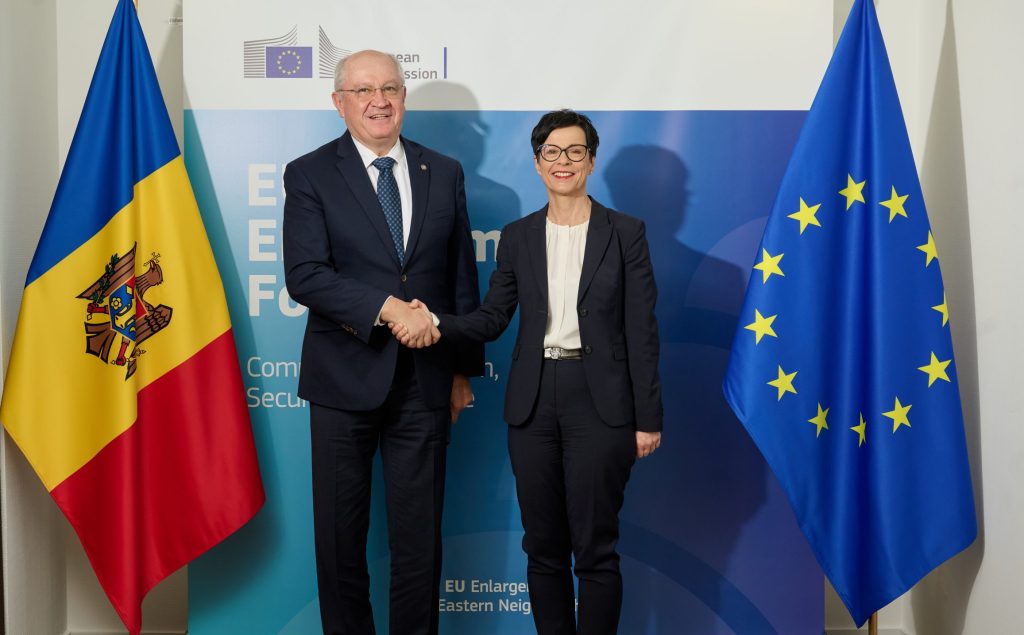
In July 2025, the first EU-Moldova summit was held, marking a new phase of cooperation and integration. Moldova adopted timetables for reforms on the rule of law, public administration and democratic institutions. Like Ukraine, it has fulfilled the conditions for opening three clusters; Brussels expects the same for the remaining three. The Moldovan government announced its aim to provisionally close accession negotiations by early 2028. The Commission supports this but called for remaining gaps to be filled. Officials in Brussels hope that the September elections, which strengthened domestic support for the country’s European path, will give new momentum to the process.
“After the elections, Moldova’s resistance to propaganda may be strengthened. What citizens have done so far can now be achieved institutionally,” said Marta Kos.
Although Moldova is not at war, part of its territory remains under strong Russian influence: in Transnistria, the authority of the Moldovan state is not fully exercised. Marta Kos said she was confident Moldova would resolve this issue before joining the EU. Progress is already visible: this year, Moldovan public television became accessible in Transnistria, illegal border crossings were closed, and the region can benefit from the €1.9 billion Growth Facility granted by the EU to Moldova.
According to the assessment, Moldova’s strengths include judicial reforms (vetting of judges, a functioning anti-corruption agency), stable democratic institutions and alignment of foreign policy with the EU. Weaknesses remain in limited administrative capacity in agriculture and food safety, and the need for further reforms in competition policy and public procurement. Priorities for the next stage should include strengthening judicial independence, combating corruption, improving financial oversight and integrating energy and transport networks with EU systems.
“A fair document – it praises where due, but contains a very detailed list of what still needs to be done,” summed up Sven Mikser, Estonian Social-Democrat MEP and Parliament rapporteur on Moldova’s accession.
Mikser reiterated that Moldovan voters had sent a positive message by supporting reform plans despite a major Russian disinformation campaign. The EU, he said, must now fulfil its own commitments and open the first three negotiation clusters.
Scoreboard – black and white
For each candidate country, the European Commission has produced a report exceeding a hundred pages. From these, a kind of scoreboard can be compiled, showing the current level of preparedness in every sub-area. The six negotiation clusters comprise 33 chapters, and therefore 33 ratings. The Commission applies a five-stage scale ranging from “initial stage” to “almost perfect”. Comparing the ratings reveals that for both countries, most assessments fall into stages 2 or 3 – meaning either that the country has begun aligning legislation and institutions but significant gaps remain, or that the legal framework is largely in place but implementation and institutional capacity are lacking. “Good level of preparedness,” corresponding to stage 4, is rare, and several areas are still described as “early stage of preparation”, indicating fundamental reforms are missing. Over time and through annual Commission assessments, this scoreboard will be worth monitoring, as it shows in black and white how each candidate performs in each area.
Hungarian blockade
Hungary continues to reject Ukraine’s EU membership for a variety of reasons. Most recently, Prime Minister Viktor Orbán proposed a “strategic partnership” between the EU and Ukraine, though he has yet to explain what that means. Concerns cited include that Ukraine’s entry would bring the war into the Union, and that “money belonging to Hungarians” would be diverted to Kyiv. The former would contradict the EU’s own principle that a country at war cannot join the Union, a point no EU institution or member state has disputed. The European Commission has repeatedly and firmly denied claims that Hungary’s frozen EU funds would go to Ukraine.
The verbal battles continue. At a recent European Parliament Budget Committee meeting, Tamás Deutsch, Hungarian Fidesz MEP, asked Budget Commissioner Piotr Serafin why the EU wanted to give “20 per cent of the next seven-year budget – €400 billion – to Ukraine.” The commissioner looked genuinely surprised and clarified that the proposal allocated €100 billion, not twenty but five per cent. Then he added to Deutsch: “I would like to understand how you think.”
Serafin said he had heard this “20 per cent” claim before, but still could not see on what Hungarian government politicians were basing it.
One argument that has long recurred is the alleged restriction of rights of the Hungarian minority in Transcarpathia. On this point, the European Commission prepared a detailed evaluation, stating: “The rights of persons belonging to minorities continue to be generally respected. Following the adoption of the Law on National Minorities in 2023, Ukraine adopted in May 2025 an Action Plan for the Protection of the Rights of National Minorities, developed in consultation with minority representatives and international partners. The Action Plan should be implemented in close cooperation with representatives of national minorities.”
Earlier, Commissioner Marta Kos had firmly declared that when she met representatives of the Hungarian minority in Ukraine, she did not hear the criticisms that are regularly voiced by the Hungarian government. The assessment notes that in the coming years Ukraine must, “continue implementing the amended legislation on the protection of the rights of persons belonging to national minorities and the Action Plan on National Minorities, in close cooperation with representatives of national minorities.”
Another passage adds that, “the issue of the role of national minorities in education will continue to be monitored under Chapter 23 on Judiciary and Fundamental Rights”.
This highlights that the most effective way to represent member-state interests and achieve results with the Ukrainian side is during actual accession negotiations, when every member state can argue transparently, and Ukraine can publicly demonstrate that it meets expectations.
2030?
The fruitless passage of time is causing growing frustration both in the two candidate countries and among EU governments. The Hungarian blockade affects negotiations with Moldova as well, since the original idea was to advance the two countries’ integration in parallel. Budapest’s veto therefore impacts Moldova even though Hungary is not formally blocking it. Efforts to lift or bypass the veto have so far failed, and as a partial solution, voices are increasingly calling to decouple the two accession processes. As Marta Kos put it: “In Moldova’s case, in November we will try to open all clusters – we are trying to find a solution; it is important that reforms do not stop.”
She added: “Reforms can be carried out even without Mr Orbán; the work can continue.”
She thus suggested – this applies to Ukraine as well – that while formal negotiations cannot proceed, both Moldova and Ukraine know what must be done, the European Commission provides constant guidance, and progress is being monitored. Therefore, when negotiations eventually begin, their duration could be much shorter, since both candidate countries have already done much of the groundwork.
Both nations would like to provisionally close their accession chapters by 2028. Even with the most ambitious timetable, that would allow for possible accession by 2030. Yet with negotiations still not started and peace in Ukraine not in sight, that seems an extremely tight schedule.
“The key point is that when we admit a new member to the European Union, it must make us stronger, not weaker. That is what matters most,” summed up Commissioner Marta Kos.
Romanian optimism
After the Commission’s assessment, it was worth watching how Romania, which borders both Moldova and Ukraine, reacted. The Romanian Foreign Ministry issued a statement saying, among other things:
“The Ministry of Foreign Affairs highly values that the Commission’s report clearly reflects the Republic of Moldova’s firm commitment to EU accession, reaffirmed by the 28 September parliamentary elections, which produced a solid pro-European majority dedicated to advancing the accession process. The Ministry also welcomes the European Commission’s support for the Moldovan authorities’ ambitious but achievable objective to close accession negotiations in early 2028.”
Romania has supported Moldova’s and Ukraine’s EU accession from the outset, including direct assistance to Chișinău during the negotiations.
At the end of September, President Nicușor Dan said he was “extremely optimistic” about Moldova’s EU integration after pro-European forces won an “undeniable” victory in the parliamentary elections. He estimated that “a three-year timeframe is very realistic” for Moldova’s EU membership.
Asked whether Moldova would join simultaneously with Ukraine, Dan reminded that “the two states currently have a joint negotiation timetable”, adding that he did not believe a split would happen “in the near future”.
“We have this difficulty with Hungary, which opposes Ukraine’s accession, and there is this debate about a possible separation. I do not think this will happen soon, because it would send a very bad signal to Ukraine,” he added.
Author: Arató László
The original article was published in Hungarian by HVG
MOST READ




SEE ALSO
A free press for a free city

The postal code of independence
Ukraine is not a case study in suffering: a new cultural language for Europe
How merch became a tool for change in the community: the story of the ‘LEЛЕ’ social enterprise
Giving tyres a second chance in Kharkiv

The information on this site is subject to a Disclaimer and Protection of personal data. © European Union,
