

Syunik: Young European Ambassadors’ awareness campaign in Goris
The fifth day of the nationwide awareness campaign ‘More EU in Armenia’, implemented in the framework of the European Union’s Young European Ambassadors (YEA) initiative, was dedicated to Syunik. The YEAs visited Goris, where they met with students, youth organisations, and beneficiaries of EU-supported programmes.
Taking place at a time of intensified EU-Armenia relations, the campaign aimed to enhance the visibility of EU-Armenia cooperation, present opportunities available to young people, and foster intercultural dialogue. It brought together young ambassadors from Armenia alongside six participants from various European countries, facilitating the exchange of experience and encouraging direct engagement among young people from diverse cultural backgrounds.
The meetings and visits organised throughout the week – including to universities, youth organisations, and EU-supported initiatives – were designed not only to disseminate information, but also to cultivate an environment of dialogue and mutual learning, especially for young people living in the regions.
Goris State University: dialogue for innovation and educational opportunities
The ambassadors’ first stop was Goris State University, where their meeting with students evolved into an interactive discussion on the EU-Armenia partnership, European values, and educational programmes such as Erasmus+ and Erasmus Mundus. Students were given the opportunity to engage directly with the ambassadors, ask questions, and receive comprehensive information about both academic and non-formal education, as well as exchange opportunities.

Welcoming the YEAs, the rector of the university, Tigran Vandunts, said the initiative served as an excellent platform for the exchange of ideas, the development of new programmes, and the formation of a clear vision for the future: “We highly value student engagement with such progressive structures and active young people, who can bring and localise the best practices of European countries. Syunik, as a southern and strategically significant region of Armenia, holds particular importance, and GSU plays a key role in the region,” the rector noted.
During the meeting, Mariam Hovhannisyan, National Coordinator of the initiative, presented the objectives of the More EU in Armenia campaign and elaborated on the mission of the ambassadors’ network.
“We believe that young people are not only the future, but also the present. Their voice matters within this partnership, which is why we prioritise direct engagement to ensure they become active participants in this process,” she said.


According to Mariam Hovhannisyan, the network currently includes around 120 volunteers representing all regions of Armenia. Initiatives of this kind play a crucial role in reaching young people beyond the capital, helping them gain a clearer understanding of their future prospects and the tangible impact of EU-Armenia cooperation.
Intercultural Dialogue: from social media to direct contact
One of the unique features of the campaign was its emphasis on moving beyond virtual engagement, offering young people the opportunity to experience European values and connect with European peers through direct interaction. Arsen Sahakyan from Gyumri, who has been a member of the initiative’s board for about three years, noted that it is precisely through face-to-face communication that many of the barriers often reinforced by social media begin to dissolve:
“People not only listen, but also meet, communicate, and get to know who Europeans are, what they do and what values they uphold. In live interaction, these perceived ‘borders’ fade away, and it becomes clear that, regardless of geographical distance, we are in fact very similar and share a common system of values.”

For Arsen, it is particularly important to demonstrate that EU-supported opportunities are accessible to all young people, regardless of where they live. This is further reinforced by the presence of international ambassadors participating in the campaign, including Paul from Germany. A political science student who has previously visited Georgia and Romania, Paul was in Syunik for the first time.
“The students here were very similar to us – curious, open, and communicative. At the same time, there are differences: for instance, Germany does not have such mountainous landscapes, and I think this influences people’s character to some extent,” Paul noted. He added that initiatives like this not only bring Europe closer to Armenia, but also help to build genuine human connections.
Mane and Tigran, who have been actively engaged in community initiatives for about a year, have joined the Young European Ambassadors network from Goris. Mane, a student at the Department of History at GSU, stressed that being an ambassador offers not only opportunities to participate in international programmes, but also a platform to initiate educational and community-based projects at the local level.
“It is a valuable opportunity to make new friends, develop new skills, and become part of an international environment. To join, it is important to have a strong motivation for volunteering and a good command of English,” Mane advised her peers.
Innovative Solutions from Goris
As part of the campaign, the Young European Ambassadors’ visit to Impact Hub Syunik was dedicated to exploring innovative and entrepreneurial projects implemented in the region with EU support. Hub Coordinator Raisa Aghabekyan presented the social entrepreneurship and local initiative support programmes available for young people, also responding to the young ambassadors’ questions and explaining how the Hub serves as a bridge between regional youth ideas and international funding opportunities.

Ashot Baghdasaryan, a 17-year-old entrepreneur from Karahunj settlement in the enlarged Goris community and beneficiary of the ‘Syunik’s Present Changemakers’ project implemented as part of the EU-funded EU4Dialogue initiative (implemented by UNDP), presented the full production cycle of his venture developed together with his partner Levon Asatryan. Their initiative stands as one of the most notable local examples of circular economy practices in Goris today.
“The idea came about a year and a half ago. I am quite curious and wanted to start something. At first, I thought about having three printers and producing and selling different parts. Later, I discovered that it is possible not only to print, but also to independently produce the material used in 3D printers. That is where the idea was born,” Ashot explained.
Through the programme, the young entrepreneurs received a $1,000 seed grant, which played a decisive role in purchasing their first 3D printer and establishing their initial workstation.
This EU-supported foundation enabled them to move beyond conventional 3D printing. The team is now developing recycling machines that convert plastic waste into filament for 3D printing, creating a closed-loop production model. Their work has already expanded beyond the local level, with collaborations involving educational and scientific institutions in Armenia.
The production process begins with the collection of raw materials. Plastic bottles gathered from the Goris municipality and local restaurants serve as the primary input. After thorough cleaning and sorting, the material is processed using a specially designed machine that heats the plastic to approximately 230°C, transforms it into strips, and converts it into high-quality filament.
This material is then used in their 3D printing studio to produce a wide range of items, from automotive components to household goods. Notably, some of the equipment used in this process is itself produced from recycled plastic, demonstrating the project’s strong emphasis on sustainability and resource efficiency.


Ashot is already developing new ideas, including the ‘FarmBot’ project, a fully automated greenhouse system. He encouraged his peers to take initiative without delay: “Today, many young people want to start their own business. I would advise not to be afraid of risk and to try. Many people only think about ‘enjoying’ their youth, but you can also create something during that time.”
The visit provided the Young European Ambassadors with the opportunity not only to observe the tangible outcomes of EU support, but also to actively engage in the 3D printing process, gaining first-hand insight into how targeted funding can transform small regional initiatives into high-tech, scalable startups.
Community engagement and creativity: Verishen Youth Centre
Following their meetings in Goris, the YEAs continued their visit to the settlement of Verishen, where they visited the Verishen Youth and Arts Centre (ACAS), coordinated by the Winnet Goris Development Foundation. This initiative represents another successful project implemented with EU support, through which the former House of Culture library has been transformed into a modern and vibrant youth hub.
The continuity of the project is particularly significant: building on EU support in 2025, and with the backing of UNICEF, the centre was further enhanced with inclusive infrastructure, including an Armenian-made elevator and adapted sanitary facilities.

A representative of the Foundation, Anna Danielyan, presented the centre’s activities, highlighting the active involvement of young people in shaping community life. “The centre serves as an important platform for youth in terms of experience exchange and skills development. Non-formal education courses, meetings, and discussions are regularly organised with representatives of both local and international organisations,” she noted.
According to Anna Danielyan, the centre’s young participants are also engaged in local decision-making processes. A youth council operates in Goris, with most of its members actively participating in the centre’s programmes and initiatives.
During the visit, the Young European Ambassadors presented also EU educational and exchange opportunities, sharing their own experiences and fostering an open and interactive discussion.
The YEAs’ visit to Goris thus became a platform where experience-sharing, new connections, and awareness of opportunities converged, once again highlighting, that international programmes can generate tangible impact beyond the capital through active youth engagement at the local level.
Author: Anahit Baghdasaryan
Article published in Armenian, Russian and English by Mediamax.am
MOST READ

SEE ALSO

Armavir citizens mobilise for safe drinking water
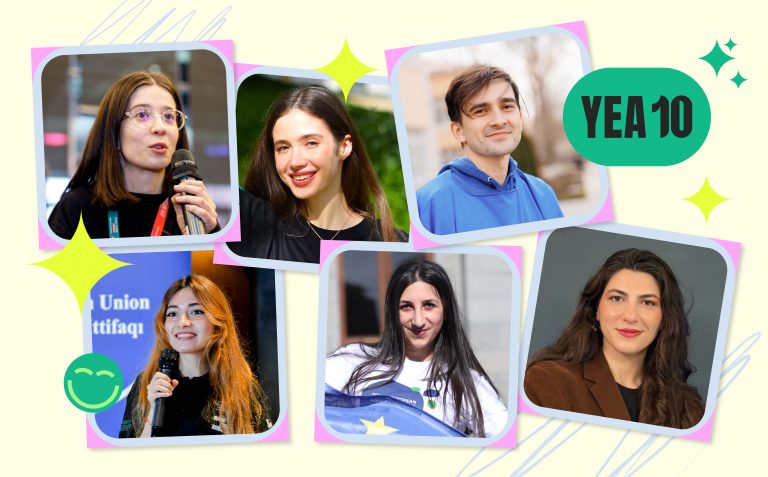
‘Europe became real faces and real stories’: Young European Ambassadors look back on ten years of friendships and community projects
Stories hidden in wood
Small ideas, real impact: how students built a natural food brand
Crafted by youth, inspired by tradition: the Hinunik story, a school where new ideas are born within old walls


The information on this site is subject to a Disclaimer and Protection of personal data. © European Union,
