

Moldova races towards EU membership as accession talks launch
As Brussels opens the first cluster of accession negotiations, Moldova’s leaders see a rare window of opportunity. The challenge now is to turn reform momentum into lasting security, prosperity and, eventually, reintegration of Transnistria.
A few years ago, Moldova was widely seen as one of Europe’s most vulnerable states: dependent on Russian energy, plagued by corruption and caught in the shadow of the Kremlin’s influence.
Today, the country is preparing to take what could be its most significant step towards European integration since independence. Following the approval, on 3 June, by all 27 EU Member States of preparations to open the first cluster of accession negotiations with Moldova and Ukraine, the European Commission opened the process on 15 June. European leaders could then endorse the move at the European Council summit in Brussels two days later.
For President Maia Sandu, the moment represents more than a technical milestone.
“A few years ago, not many believed in us,” she told investors gathered in Chișinău in early June. “We were told too small, too fragile and too close to the war. We were told our European choice would not survive the pressure. It survived because we stood by it.”
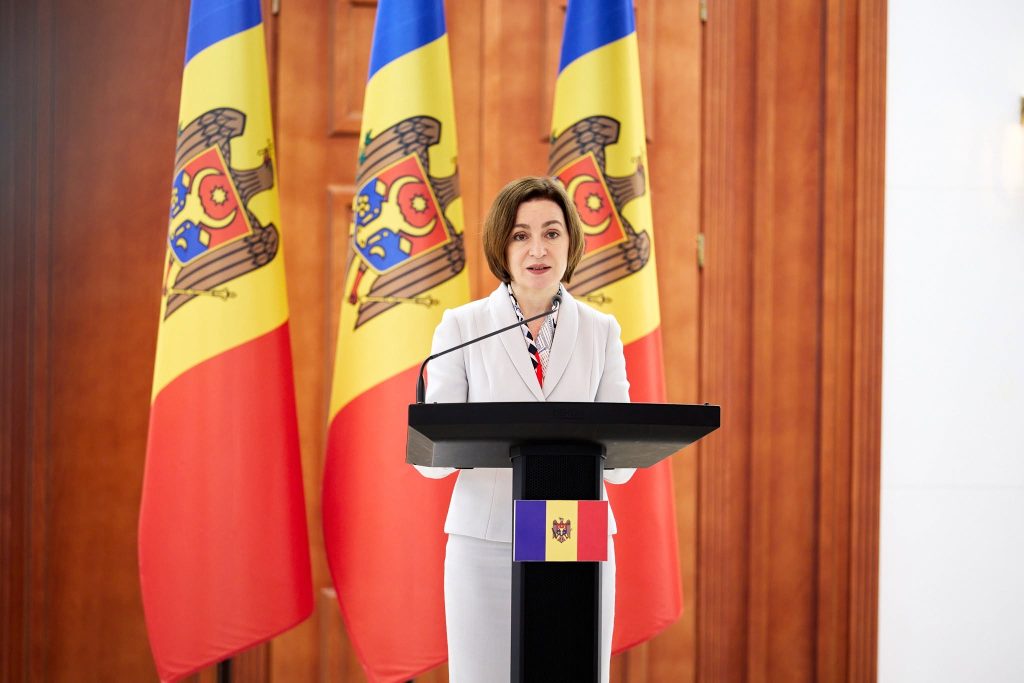
The opening of Cluster 1 – covering rule of law, democratic institutions and fundamental rights – marks the formal start of a process that could ultimately lead Moldova into the European Union. While accession remains years away, Brussels increasingly views the country as one of the enlargement process’s success stories.
“Moldova is the top performer in preparing for EU membership,” Enlargement Commissioner Marta Kos said during a visit to Chișinău. “Moldova made the single biggest jump in the enlargement report last year from all candidate countries.”
The numbers back her up. In October 2024, the European Commission proposed a growth plan for Moldova worth up to €1.9 billion for 2025-2027, the largest EU financial support package in the country’s history. Kos noted that Moldova had achieved a 93% implementation rate on the reforms tied to that plan, unlocking more than €600 million in investments already on their way to the country.
Kos also offered a timeline that, while carefully hedged, was striking in its ambition: “It is also the opinion of the European Commission that Moldova and Ukraine will open all the clusters, and I hope that this will happen before the summer holidays.” She added that, if the current pace held, Moldova could complete the technical part of its negotiations within the mandate of the present Commission, which ends in November 2029.
A government source said they could even be closed by the end of 2028. The main challenges, the same source said, are the most capital-intensive chapters, such as those linked to the implementation of the Green Deal and the interconnection with the Trans-European Transport Network, which connects roads, railways, airports and water infrastructure in the EU.
Reform as a geopolitical project
Moldova’s European ambitions have always been closely linked to geopolitics. Since Russia’s full-scale invasion of Ukraine in 2022, accession has become not only an economic and political project but also a security strategy, in a context where Russia is now considered as posing a direct threat to the country, as a source at the Defence ministry said. Nearly 50 Russian drones have fallen on Moldova’s territory since 2022, though local authorities could not tell whether it was by accident – the latest on 13 May, on the eve of an important meeting of the Council of Europe ministries in Chișinău.
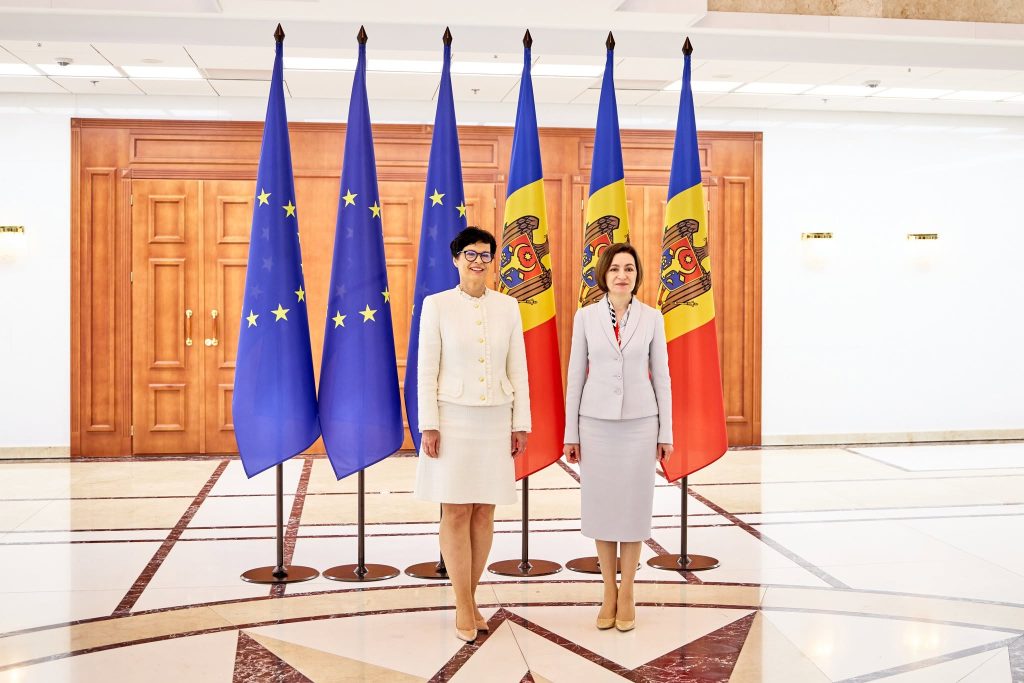
Where military pressure is not possible, Sandu argued, Moscow uses other means. “Where Russia’s drones cannot get, Russia will use other types of hybrid work to interfere with and to try to destabilise democracies around the continent.”
“The Russian interference is constant,” Sandu said when asked about hybrid attacks and election meddling. “It happens before the elections, it happens during the elections, it happens after the elections.” According to the Moldovan President, the country faces a combination of cyberattacks, manipulation of the Orthodox Church, dirty money, disinformation campaigns and political interference aimed to destabilise Moldovan democratic institutions and slow its European path.
Russian- and Bulgarian-speaking minorities in Gagauzia are particularly receptive to Russian propaganda, a government source noted, especially narratives about Moldova being drawn into the war in Ukraine.
International observers confirmed that Moldova’s 2024 presidential election and EU referendum, as well as its 2025 parliamentary election, took place in the context of intense hybrid interference. Despite that pressure, Moldovans voted to enshrine EU membership in the constitution and re-elected Sandu in late 2024.
Kos framed Moldova’s experience as increasingly relevant for the European Union itself. “We are aware of what Russia is capable of,” she said. “When we speak about the accession process of Moldova, the geopolitical part is getting more and more important.”
Far from being merely a recipient of European assistance, Moldova is increasingly seen in Brussels as a contributor to European resilience. “Moldova is already contributing to our European security,” Kos said, noting that lessons learned from Moldova’s efforts to counter foreign interference are now being shared with other candidate countries.
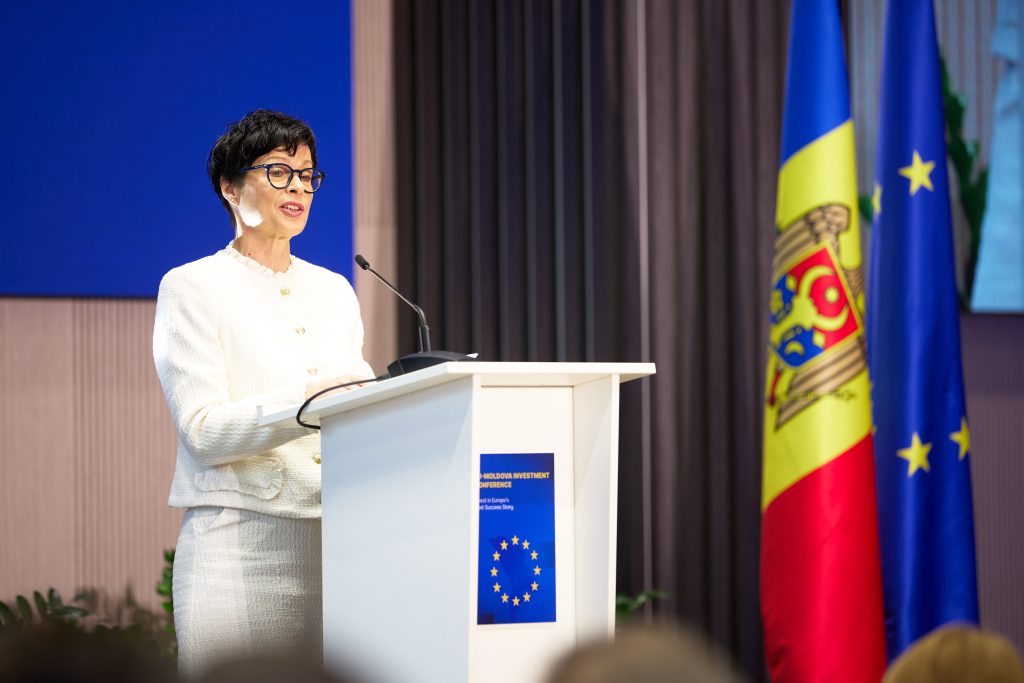
The European Commission plans to include Moldova in its emerging “Democracy Shield” initiative, designed to strengthen democratic resilience across both member states and candidate countries.
Meanwhile, NATO membership is not on the table. But Moldova has raised its defence budget to 0.6% of GDP, with a target of 1% by 2030, mostly to modernise Soviet-era equipment in line with NATO standards.
Energy: from vulnerability to strength
Perhaps nowhere is Moldova’s transformation more visible than in the energy sector. For decades, Russian gas and electricity generated in the breakaway pro-Russian region of Transnistria gave Moscow powerful leverage over Chișinău. Successive governments struggled to reduce that dependence.
Sandu argues that the current administration has achieved what previous governments avoided: “Four years ago, Moldova depended entirely on a single supplier for its gas and electricity,” she said. “That dependency was used against us, and we ended it.”
Before Russia’s full-scale invasion of Ukraine, Moldova imported nearly all its natural gas from Russia, and gas provided free of charge to Transnistria generated about 75% of the country’s electricity. The country has since diversified gas supplies, expanded interconnections with Romania and accelerated renewable investment. It disconnected its grid from the Soviet-era system and synchronised with the European network. “We grew renewables from 3 to 25 per cent of our domestic electricity needs,” Sandu said. In April 2025, locally produced renewable energy covered a record 36% of total consumption.


“We have been transforming our energy vulnerability into strength,” Sandu told journalists. “I believe there is no other country in the recent past which has shown such a significant change when it comes to diversification and energy security.”
The energy transition has become one of Brussels’ most cited examples of Moldova’s reform capacity. “I can’t imagine security in Europe without working hand in hand strongly with Moldova,” Kos said, “I’m not talking just about military policy, but energy security.”
The economic argument for Europe
Alongside security, Moldovan officials increasingly present EU integration as an economic opportunity. The government hopes accession negotiations will reinforce investor confidence and accelerate foreign investment even before membership becomes reality.
“Moldova’s place in the European Union has the support of all 27 member states,” Sandu told business leaders. “When you invest in Moldova, you invest in a country whose future is anchored in Europe.”
Moldova is among the top recipients of bilateral EU assistance in recent years, and its Association Agreement – which includes a deep and comprehensive free trade area – has already brought its regulatory framework closer to single-market standards. European investment in Moldova has increased by almost 30 per cent over the past four years, according to Sandu.
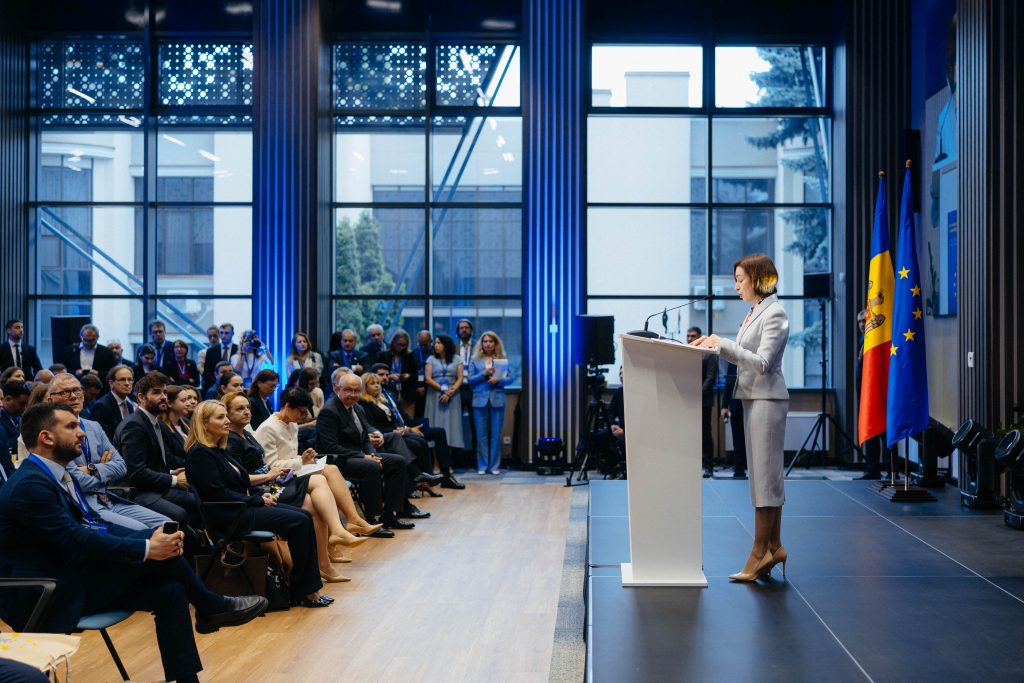
Sandu pointed to the technology sector as a particular strength, noting that innovation and digital services already generate around €1 billion a year for the Moldovan economy. She also flagged the country’s geographical position as an emerging advantage: “Once the reconstruction of Ukraine starts, Moldova will be a natural hub for logistics, services, manufacturing and energy.”
What about Transnistria?
The unresolved question of Transnistria continues to hover over Moldova’s European future.
The breakaway region, which borders Ukraine and has been controlled by a pro-Russian administration since the early 1990s, covers around 11% of Moldova’s territory and remains outside Chișinău’s effective control. Russia maintains about 1,200 troops there, which Moscow says are needed to preserve peace and stability along the Dniester River.
Apart from 70 to 100 Russian officers, most of these soldiers are local recruits who hold Moldovan citizenship and enjoy the same rights as other Moldovan citizens. On the Moldovan side, around 300 troops are deployed in the Security Zone, a demilitarised buffer strip along the Dniester designed to prevent tensions from escalating.
Yet Moldovan officials increasingly argue that European integration offers the best framework for the eventual reintegration of Transnistria.
Sandu did not directly address future constitutional arrangements during her recent speeches, but repeatedly stressed that European integration should benefit all Moldovans.
The government’s strategy increasingly relies on economic convergence rather than political confrontation. By integrating with European markets, improving infrastructure and raising living standards, Chișinău hopes eventually to make closer ties with the rest of Moldova more attractive to residents of the separatist region.
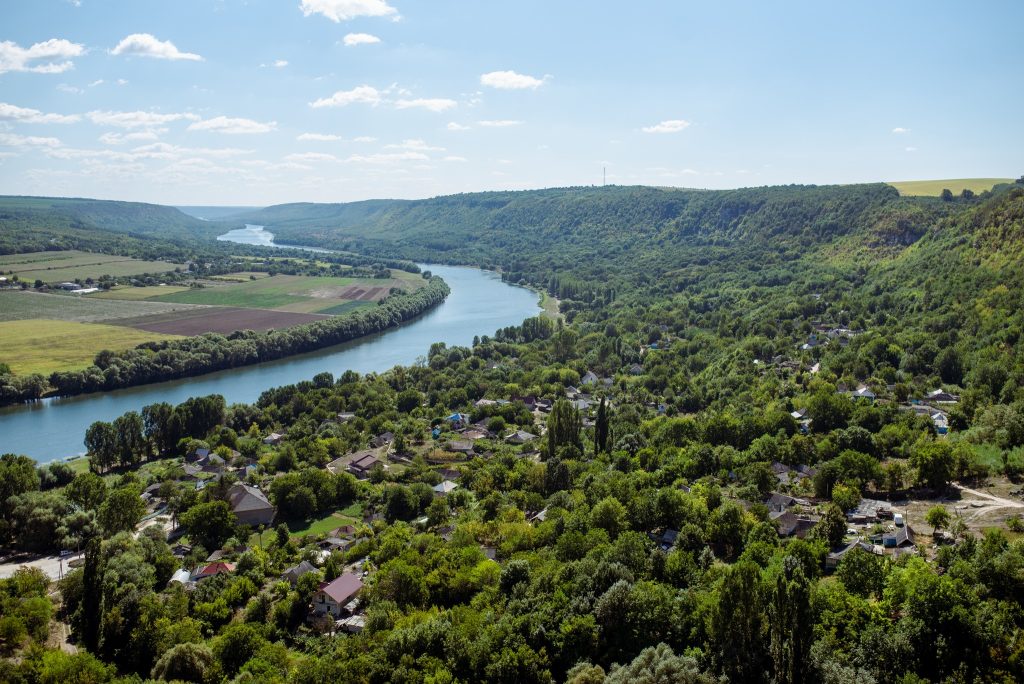
At the same time, the end of Russian gas transit through Ukraine and the gradual erosion of Moscow’s influence have weakened some of the economic foundations underpinning the Transnistrian model: 71% of the region’s exports already go to the EU (Moldova’s share of exports to the EU is 68%), a government source told us, adding that “to some extent Transnistria is better integrated than Moldova itself”.
For many officials in Chișinău, time is no longer necessarily working in Russia’s favour.
The road ahead
Despite the optimism in Brussels and Chișinău, significant challenges remain. Kos repeatedly emphasised that opening negotiation clusters is only the beginning. Judicial reform is incomplete, corruption remains a concern and the economic benefits of accession have yet to be fully felt by many citizens.
“The accession process is not just technical negotiations,” she said. “Please deliver further on the reforms, work on the interim benchmarks of the rule of law and engage with the member states.”
The procedural path ahead is clear but not trivial. The process requires passage through the Committee of Permanent Representatives and approval by all member states at an intergovernmental conference. Kos noted that the unblocking of Hungary, following a change of government in Budapest and a bilateral agreement between Hungary and Ukraine on minority rights, had removed the main political obstacle.
The coming local elections – to be held next year – will test public support for the European path, while Russian influence operations are expected to continue.
Still, both Brussels and Chișinău increasingly speak the language of inevitability. “We chose Europe,” Sandu said. “Really, clearly, against the odds and the pressure.”
If the first negotiation cluster opens as expected this month, that choice will be more deeply embedded in both Moldovan institutions and European ones – a foundation that, whatever pressures follow, will be harder to undo.
Author: Gian-Paolo Accardo
The original article was published by VoxEurop.eu
This article was produced following a press trip to Chișinău organised by the EUNEIGHBOURS EAST programme
MOST READ

SEE ALSO
Agricultural panic or opportunity in the EU? Ukraine’s next battle is going to be grain
‘It’s like returning to the Wild West’ – Moldova seeks to attract back its lost citizens

Moldova between reforms and hybrid threats: the European path of a country on the front lines
Heading an environmental organisation at the age of 29: Vladimir Ternavschi on his superpower to bring people and ideas together

‘Europe became real faces and real stories’: Young European Ambassadors look back on ten years of friendships and community projects


The information on this site is subject to a Disclaimer and Protection of personal data. © European Union,
