

Home, but not alone: how Vlad unlocked his superpower to promote critical thinking among the young
Superpowers come in many forms. Vlad Dumitrascu, for example, helps young people to identify manipulation and think critically. He works for the Youth Media Centre, a Moldovan non-governmental organisation, which promotes media literacy among young people.
Vlad Dumitrascu is 23 years old and has devoted the last seven years to the Media Centre. He found out about the centre by chance. While studying at college, his friend, a volunteer at the centre, invited Vlad to take part in filming a video for social media. Vlad at once agreed, and this experience inspired him to become a volunteer at the centre as well.
“I was not only a volunteer but also participated in various competitions organised by the Youth Media Centre. I even won one of them. When I went to collect my prize, I met the whole team. This meeting motivated me to become more actively involved in the centre’s activities,” Vlad recalls.
‘I wanted to change something in society’
Filming the video unlocked Vlad’s talent. His creative nature came to the fore – he realised he was good at making videos. After graduating from college, he therefore decided to continue his studies at the Faculty of Journalism and Communication Sciences at the University of Chisinau.
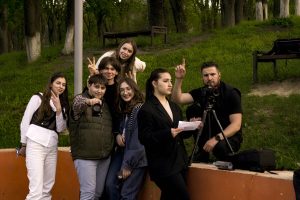
“As a student, I was able to do an internship at the centre. I worked as a media education trainer for some time. A little later, already having experience as a participant, volunteer and trainer, I was offered a job. Since I knew people, how the centre worked and wanted to change something in society, I agreed,“ says Vlad.
Vlad became the manager of the Youth Participation programme. He continues the work as a media education trainer, which he started while still at university. At the same time, he works as a reporter, photographer, and videographer, and even as an actor when necessary.
“The centre has several tools that we use to develop critical thinking, teach media literacy to young people and give them a voice. We want to reach all young people in the Republic of Moldova and provide equal opportunities for everyone. Accordingly, we are active both online and offline.”
The organisation has developed two online platforms. Both inform and educate young people in Moldovan regions through engaging content: Abraziv (for Romanian speakers) and Najda4ka (for Russian speakers).
‘We are not afraid to experiment’
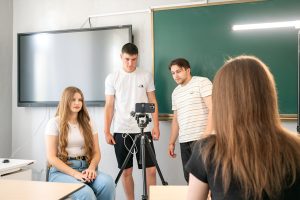
“On both platforms, we fight misinformation and fake news and address controversial topics that have gone viral on the internet. We also try to show how important it is to stay informed, think critically, and what happens when you lack these skills,” says Vlad. “We do this in various formats: through surveys, programmes, podcasts, reports, satirical sketches, and videos. And if we see that trends are changing, we are not afraid to experiment.”
In 2023, Abraziv became famous thanks to a product unique to Moldova – a series on media literacy called Home Alone. The series was created with the support of Internews Moldova. Funding for the series was provided by the Institute for War & Peace Reporting and the European Union. In each episode of the sitcom, the characters face a specific media education problem and then find a solution. The series explored various topics such as fake news, freedom of elections, propaganda, disinformation, online fraud, source verification, and digital disintoxication.
“We created this series to better convey information to our audience. Many people no longer want to watch videos where someone stands in front of a camera and explains something. So, we decided to do something different. Especially since there were no series dedicated to media literacy in Moldova before.”
‘Our classes are deliberately different from traditional ones’
Offline, the Youth Media Centre team is particularly known for three types of activities: the Media Quiz ‘Who stole the billion?’, Media Tour, and Media Camp.
The aim of the Media Quiz, coordinated by Vlad, is to develop critical thinking and digital skills among young people. The quiz lasts no more than an hour and a half. It ends with a discussion in which young people analyse the processes they have gone through and draw conclusions.
“Most young people who participate in the quiz for the first time know some terminology from the field of media education but cannot explain them. Accordingly, one of the goals of this game is to help them better understand these terms and learn to distinguish between them in an accessible and interesting way.”
The Media Touris a trip lasting several days to one of the country’s regions. It usually involves five to ten young people. They learn to identify topics of public interest, find out what storytelling is and how to tell stories about local life. They write scripts and shoot video reports, which are then published on the internet.
Vlad explains that when young people go through the entire creative process – from defining the topic to publication – they begin to understand how certain information affects the audience and take a more responsible approach to its dissemination.
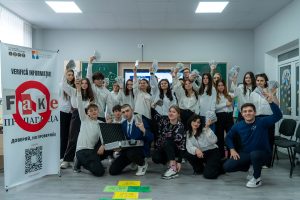
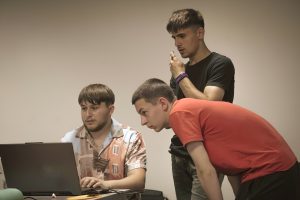
The Media Camp is a four-day summer school for young people aged 15-18. Its goal is to improve participants’ media literacy and multimedia content creation skills.
“In the first few days, young people take part in training sessions run by both the Media Centre team and various prominent figures – journalists, presenters, content creators and influencers,“ says Vlad. “Participants can learn from people they consider to be role models. This is followed by a practical part, in which they apply the skills they have acquired and create various media products, either individually or in teams. Later, if they are interested, they can apply for our internship programmes.”
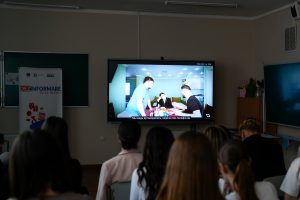
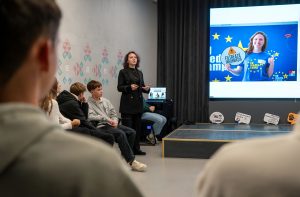
In addition, the Youth Media Centre periodically organises interactive training sessions in different localities. During these training sessions, young people usually watch several episodes of the series Home Alone and discuss its topics with the trainers. This format gives them the opportunity to better understand how manipulation, disinformation and other media influence tools work.
“Our classes are deliberately structured differently from traditional PowerPoint presentations. We organise informal events and discussions on an equal footing. This way, young people gain new experiences, better understand what we want to convey to them, and continue to participate in our events.”
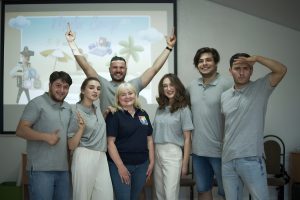
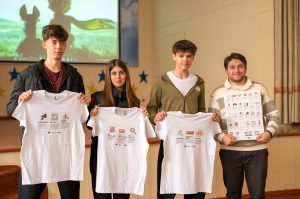
The Youth Media Centre has another exciting project – the #media10tion network of media education promoters. It consists of young people trained by the media centre’s team. The promoters organise media literacy events in their communities – schools, youth centres or student councils. Thanks to the promoters, every year hundreds of young people learn about the principle of freedom of speech, the pros and cons of using artificial intelligence, deepfakes, the goals of propaganda and much more.
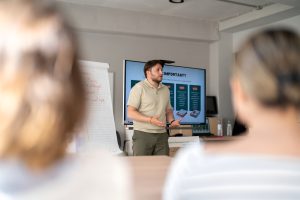
‘We want young people to be resilient to manipulation’
Vlad says every event organised by the centre and every video posted online is aimed at educating young people.
“Fake news and misinformation are not going to disappear from the daily flow of information, so we are trying to help young people develop critical thinking skills. This defence mechanism will allow them to be confident that the decisions they make are correct, at least from their point of view,” says Vlad. “At the same time, we teach them to identify fakes, explain how to check anything that seems suspicious, and encourage them not to be lazy about doing this every time. We want young people to be resilient to manipulation.”
What’s your superpower?
Vlad Dumitrascu’s story proves that superpowers do exist and that each of us can develop them within ourselves. Have you ever wondered about what your superpower might be?
To learn more about Vlad’s superpowers, watch this video.
Author: Cristina Platas
MOST READ
SEE ALSO
Moldova between reforms and hybrid threats: the European path of a country on the front lines
Heading an environmental organisation at the age of 29: Vladimir Ternavschi on his superpower to bring people and ideas together
‘Europe became real faces and real stories’: Young European Ambassadors look back on ten years of friendships and community projects
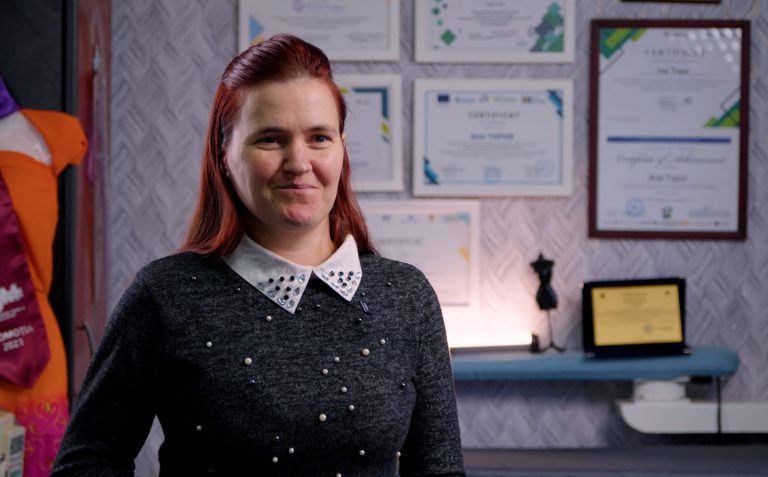
Seamstress turns entrepreneur with support from EU4Youth in Moldova
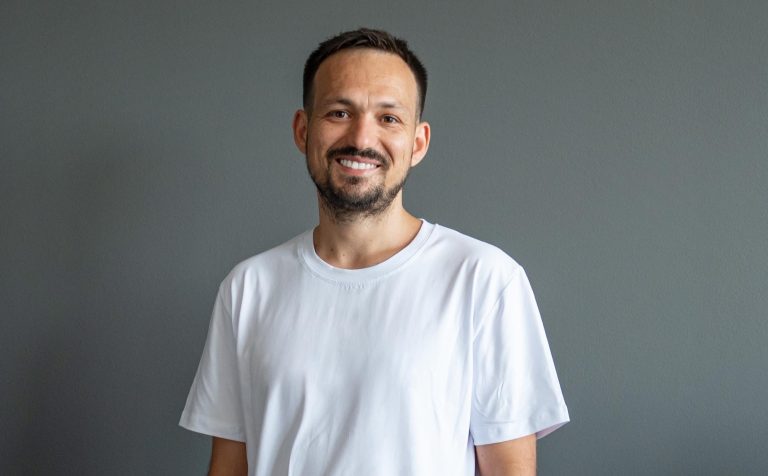
Artificial intelligence that makes a difference in people’s lives: how EU4Youth helped Denis Zacon achieve his social mission


The information on this site is subject to a Disclaimer and Protection of personal data. © European Union,
