

Already fighting against Ukraine: how children in occupied Luhansk are being prepared for service in the Russian army
The smiling young woman in the photo is Anastasiia Safronova. Behind her are Ukrainian-language textbooks, a painted vase with willow branches, a “memory diary”, and a notice in Ukrainian reading: “The lesson has begun – switch off your mobile phone.” The photograph was taken before 2014, when Anastasiia taught Ukrainian language and literature to primary school students in Luhansk.
Anastasiia graduated from the Taras Shevchenko Luhansk National Pedagogical University, specialising in ‘Primary Education, Ukrainian Language and Literature’.
The young woman had clearly read Kobzar and the works of Vasyl Symonenko, and knew the biographies of prominent figures who fought for Ukraine’s statehood and cultural sovereignty.
Yet she turned away from all of that when her hometown was occupied by Russian troops and illegal armed groups. In Anastasiia’s social media before the occupation of Luhansk, there was not even a hint of any sympathy toward Russia – only romantic pictures and phrases, occasionally interrupted by a post supporting Zorya, the Luhansk football club.
Now, Anastasiia’s page is filled with photos against the backdrop of Russian tricolours and patriotic Russian slogans.
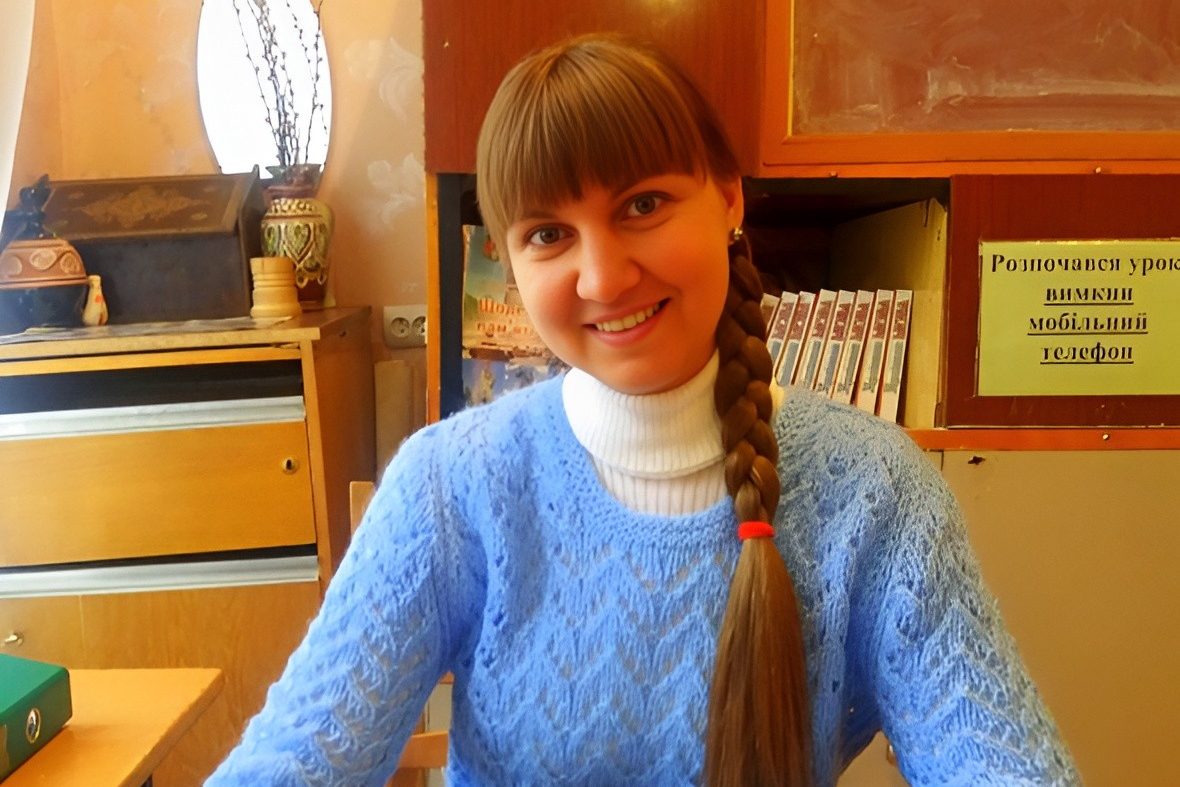
In 2015, Anastasiia enrolled in the same university but changed her field – retraining as a teacher of the Russian language. A few years later, she would become a history teacher. In 2021, she completed training at the pedagogical university, now under occupation.
Today, she lectures about the “greatness of the Russian world” and gives lessons on Peter I.
Anastasiia Safronova has been identified as an instructor at the so-called ‘Republican Cossack Cadet Corps named after Marshal of Aviation Oleksandr Yefimov’. In her current classroom, there is clearly no “Memory Diary” or Ukrainian-language textbook – as in any school today.
Safronova’s choice may qualify as collaboration under Article 111-1 of the Criminal Code of Ukraine.
After the occupation of Luhansk, some local teachers became part of a system that prepares children for war against Ukraine.
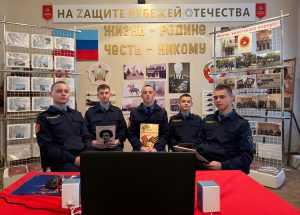
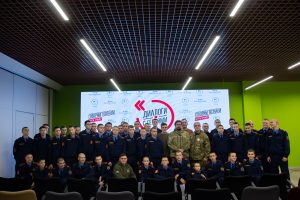
We have identified 14 teachers working in institutions created by the occupiers on the basis of a former Ukrainian lyceum. Teenagers are taught Russian history, prepared for service in the Russian army, trained to operate drones, and instructed on how to load weapons.
All of this is part of Russia’s large-scale campaign to militarise Ukrainian children in the occupied territories.
What is happening in the Luhansk Cossack Cadet Corps
Before the occupation in 2014, this was the Luhansk Regional Lyceum with enhanced military and physical training, known as the ‘Cadet Corps named after the Heroes of the Young Guard’. When it was occupied by the Russians, the lyceum relocated to Ukrainian-controlled territory – to the town of Kreminna.
In its former location, the occupiers established the so-called Republican Cossack Cadet Corps named after Marshal of Aviation Oleksandr Yefimov – a general secondary education institution that prepares minors for military service in the occupying forces.
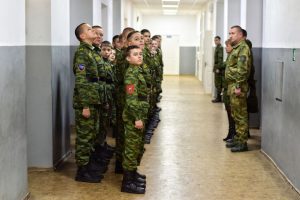
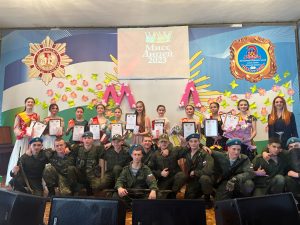
Children study here from the 5th through to the 11th grade. After graduation, cadets go into public service, military universities, or directly into the army, where some of them participate in the war against Ukraine as part of Cossack formations.
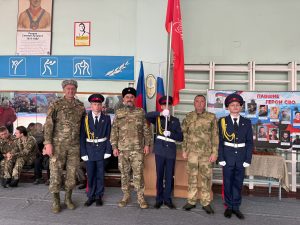
During open house days at the cadet corps, representatives of Russian armed units actively encourage teenagers to join them after finishing school.
In April 2025, a report from the corps was aired in Russian media. A resident of Luhansk named Daria came there with her son Sviatoslav. He is finishing the sixth grade at a regular school and wanted to become a cadet, his mother said.
“I believe that the earlier our boys, in these difficult times, understand what military service is, what it means to defend the Motherland – the better. They will leave the corps prepared, taught the most important thing: defending their land,” Daria explains.
The director helped Russia train future soldiers
Some of the former teachers and staff of the lyceum who did not leave Luhansk in 2014 began working for the occupiers at the Cossack cadet corps.
For example, Andrii Ustynskykh worked at the lyceum as a physical education teacher. He accepted an offer from the occupation authorities to become head of the supply department of the so-called Republican Cossack Cadet Corps. Ukrainian law enforcement identified him and opened a criminal case.
By 2022, Andrii Ustynskykh was serving as deputy director of the Cossack cadet corps. In spring 2023, he became its director – a position he still holds today.
Ustynskykh directly assisted Russia in organising the training and preparation of personnel for its armed formations. As a leader, he implemented the education standards of the aggressor state within the cadet corps’ teaching process.
In one interview, Ustynskykh said the Luhansk Cossack Cadet Corps named after Marshal of Aviation Yefimov “lays the foundation for the training of future defenders of the Fatherland”.
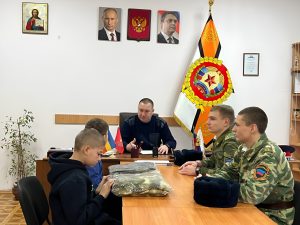
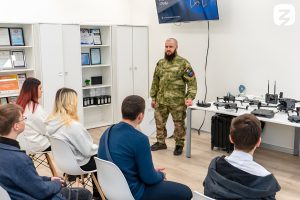
In February 2025, the Rivne City Court found Andrii Ustynskykh guilty of high treason and collaboration. He was sentenced in absentia to 14 years in prison, with confiscation of property, and banned from holding positions in state institutions for 15 years.
Also in February, he was issued a new notice of suspicion – this time for violations of the laws and customs of war. According to investigators, he promotes among children a positive attitude toward service in the Russian occupation army and within Russian Cossack structures.
In August 2023, Andrii Ustynskykh signed a cooperation agreement between his cadet corps and the ‘Terek’ Cossack brigade, which is part of the Armed Forces of the Russian Federation. By doing so, the new charge states, he helped foster a favourable perception of Russia’s paramilitary units.
In January 2024, he organised an event called “A Day in the Life of a Soldier” for two boys, Matvii and Vladyslav, and presented them with full sets of military uniforms.
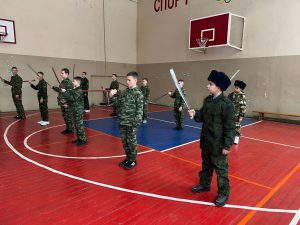
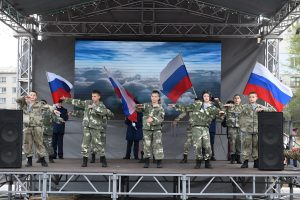
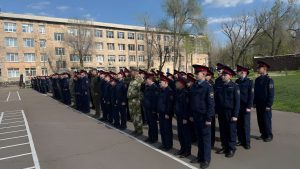
The Cossack cadet corps also teaches students how to operate drones, holds meetings with Russian combat participants, organises military marching parades, and conducts other activities that prepare children for service in the occupation army.
In one interview, the director of the corps emphasised that cadets not only take part in various events, but also fight against Ukraine. Graduates serve in different military structures of Russia and also study at higher military educational institutions.
“Every year we graduate about 50 cadets. The goal of the cadet corps is to prepare future defenders of our Motherland. Cadets undergo training so that they can later enter higher military academies and become worthy defenders of their country,” he said.
‘Children have no free time’
On 31 May, 2024, graduating cadets gathered in the courtyard of the Republican Cossack Corps. At the centre of the ceremonial lineup, several cadets, together with a young red-haired woman, sang a patriotic song in Russian.
The woman is Anzhelika Bova, the deputy director for educational work at the cadet corps. Recently, in an interview with Russian journalists, she said that the corps’ main educational programme consists of military-sports training and military instruction.
“The most important thing is that the children are busy twenty-four hours a day – they have no free time. The first half of the day is taken up by the teaching process, then additional education follows – extracurricular activities. Sports are also very diverse, starting with military hand-to-hand combat and ending with volleyball, basketball, and football,” Anzhelika Bova told Russian reporters.
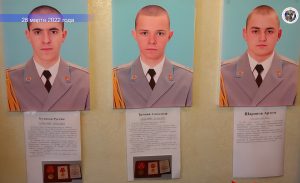
Anzhelika Bova herself is Ukrainian – a resident of Luhansk – who also studied at the Taras Shevchenko Pedagogical University. In one interview, she said she comes from a fifth-generation line of teachers, from her great-great-grandmother to her mother. Her mother, according to Bova, taught Russian in western Ukraine.
Anzhelika Bova worked as a teacher of humanities, and presents herself as an active public figure. One educational resource notes that in 2020 Bova recorded a video lecture on political ideology, political movements, and parties.
In addition to Bova, Ustynskykh, and Safronova, the journalist identified other instructors at the Republican Cossack Cadet Corps named after Yefimov.
‘Russia is not just radicalising children – it is planting thoughts of war in their minds’
Russia is actively building a network of institutions aimed at militarising Ukrainian children in the temporarily occupied territories. The concept of “militarisation” does not exist as a defined term in international legal treaties, yet for the past 11 years it has been a very real phenomenon under occupation.
Militarised movements such as ‘Yunarmiya’ and ‘The Movement of the First’ are already well known. But beyond these, Ukrainian children are being trained to become Russian soldiers even in ordinary educational institutions – for example, in cadet schools.
According to Kateryna Rashevska, a lawyer at the Regional Centre for Human Rights, the active creation of cadet corps in occupied Luhansk region began in 2015. Today, three Cossack cadet corps are operating in Luhansk region – in Alchevsk, Luhansk, and Starobilsk.
Kateryna says that 40 Cossack cadet classes function on the basis of 30 schools, along with three police cadet classes, three cadet classes affiliated with the Investigative Committee, six cadet classes of the Ministry of Emergency Situations, and nine cadet classes of the Russian National Guard (Rosgvardia).
“I have observed a very alarming trend: Luhansk region is becoming a kind of hub for luring children from the newly occupied territories. For example, representatives from these cadet classes – including those linked to the Investigative Committee – often travel to Kherson region and campaign for children to first relocate to occupied Luhansk region, and then onward into the Russian Federation,” Kateryna Rashevska explains.
Human rights defenders have repeatedly documented how militarised and indoctrinated children become agents of Russian propaganda, especially aimed at children from newly occupied territories, she says.
Often, children who graduate from militarised classes are encouraged to go to the so-called “special military operation” – to take part in the war against Ukraine. And later, if they survive, they are expected to train the next generation.
There is also confirmation of this in Russian media reports. One story reported how Russian State Duma deputy Viktor Vodolatsky visited the Republican Cossack Cadet Corps to see 12-year-old Oleksandr and 14-year-old Vladyslav. The children were described as being in a “difficult life situation”: their father had been raising them alone, and after his brother was killed in the war against Ukraine, he also joined the Russian army.
“I spoke with the boys and told them that here they will be able to gain basic military training skills, and if they study well, they will continue their father’s path and become true defenders of their Motherland,” Vodolatsky said.
According to Kateryna Rashevska, the situation in occupied Luhansk region is more complicated than in the newly occupied territories. Areas under Russian control since 2014 have already been fully adjusted to the Russian education system – including propaganda promoting military service – and this system will only continue to expand.
“What is the Russian Federation doing? They are not simply radicalising children, planting these thoughts of war in their minds. They have turned it into state policy. This policy is not difficult to identify: you can look at Putin’s decrees, their youth policy, their strategies for combating terrorism and extremism, the draft law on unifying camp programmes with a reinforcement of the military-patriotic component,” Rashevska explains.
The lawyer explained that the Geneva Convention clearly prohibits propaganda promoting military service in the forces of an opposing state. Under International Humanitarian Law, education must be provided in accordance with the cultural and linguistic traditions of these children, as it was before the occupation. Likewise, the Hague Convention forbids forcing civilians to demonstrate loyalty to the occupying power.
“There are a number of violations here. But the problem is that none of them reaches the threshold of an international crime. In other words, propaganda of service in the occupiers’ armed forces, the spread of Russian standards, even involving children in militarised organisations – these are not classified as war crimes. The only war crime is the direct participation of children, or the recruitment of children into active combat operations, which Russia is not doing. It will wait until they turn eighteen and then force them – through conscription or coercion into signing contracts, including through propaganda,” Rashevska says.
She is convinced that international organisations, including the International Criminal Court, can be persuaded to recognise such militarisation as an international war crime. At a meeting last year with ICC Prosecutor Karim Khan, human rights defenders agreed that militarisation mentally traumatises children and may be considered inhuman treatment of civilians.
“Both crimes would simultaneously constitute a war crime and a crime against humanity,” Rashevska explains. “Or it may be recognised as discriminatory persecution. Russia is effectively attacking Ukrainian children in occupied territories, turning them into its own patriots – even though under International Humanitarian Law and the Convention on the Rights of the Child, it should treat them as foreign citizens and leave them alone.”
Rashevska also believes that sanctions against individuals involved in the militarisation and indoctrination of children could influence Russia.
“Perhaps this could slow the pace and demonstrate to parents that this is an illegal activity that can harm their children. Some say they were not forced to join ‘Yunarmiya’,” Kateryna says. “Others, on the contrary, say they were forced. People came and said: ‘Choose one of the movements and join – or you’ll have problems’.”
At present, the Republican Cossack Cadet Corps is competing for the title of the best in an all-Russian contest and has already reached the top ten finalists. In one Russian news report about the corps, it is stated:
“More than 90% of graduates of the Cossack cadet corps enter higher military educational institutions, the FSB Academy, the Ministry of Internal Affairs, and Rosgvardia. They connect their lives with serving Russia.”
Over the years of occupation, the education system has taken on a militarised character. Former Ukrainian teachers have become part of a Russian curriculum that instils in children’s minds a cult of war and service to the aggressor state.
And if today these children wear Russian uniforms in cadet classes and learn how to assemble assault rifles, tomorrow they may be holding weapons on the frontline and taking part in a war against the country where they were born.
This story was written in collaboration with The Reckoning Project, an initiative that brings together journalists, researchers, data scientists and legal experts to document war crimes, build legal cases, and combat disinformation by using reliable media outlets. The European Union has recently reinforced its support for The Reckoning Project.
Author: Yuliia Khymerik
The original article was published in Ukrainian by LivePravda
MOST READ

SEE ALSO
Where the lights are always on: how a solar-powered Point of Invincibility is helping Shostka endure
Freedom, trust and the future of science: Nobel laureates reflect on the ideas shaping tomorrow
Agricultural panic or opportunity in the EU? Ukraine’s next battle is going to be grain
Children are not the only ones to be deported: parents are also taken hostage in occupied Ukrainian territories
Occupation through education: how Russia took over Ukrainian schools


The information on this site is subject to a Disclaimer and Protection of personal data. © European Union,
