

Exploring the use of encrypted evidence in serious and organised crime cases
Prosecutors and law enforcement representatives from the Western Balkan and the Eastern Partnership countries met in The Hague during the week of 20 to 24 April 2026 for a workshop focused on the use of encrypted communication evidence in organised crime cases. The activity was organised by Eurojust and CEPOL, in partnership with Europol, under programmes aimed at strengthening criminal justice co-operation and combatting crime in both regions, including WB PaCT and TOPCOP projects.
The workshop addressed one of the most pressing challenges in today’s fight against serious and organised crime: how to effectively use evidence derived from encrypted communications in criminal investigations and court proceedings. As highlighted by the EU Serious and Organised Crime Threat Assessment (EU-SOCTA), criminal networks increasingly rely on advanced technologies and secure communication tools to evade detection, creating new challenges for investigators, prosecutors and courts alike.
Against this background, the workshop provided a platform for practitioners to exchange experiences and examined recent developments across Europe and partner regions. Discussions focused on operational support for decryption, the use of decrypted communications in cross-border investigations, and recent court developments concerning the admissibility of evidence and challenges raised by the defence.
“The workshop provided valuable insight into how large-scale encrypted communication data can be analysed and turned into actionable intelligence, while also allowing us to share our experience on analytical work and the handling of such evidence in court,” said Rafayel Poghosyan, Armenian National EMPACT Coordinator.
Representatives from the EMPACT network also took part, underlining the workshop’s relevance to the EU’s co-ordinated response to serious and organised crime.
By bringing together key actors from different regions and professional backgrounds, the workshop contributed to a shared understanding of how to address increasingly complex criminal investigations involving encrypted communications. It also reinforced cooperation between operational and judicial authorities, helping partners respond more effectively to technology-driven crime threats.
EMPACT training activity
Combatting new forms of organised crime requires more cooperation between police and gendarmes, customs officers, border guards, judges, and prosecutors. EU institutions, agencies and Member States work together to tackle organised and serious international crime through a permanent and key instrument: the European Multidisciplinary Platform Against Criminal Threats (EMPACT).
CEPOL plays a crucial role in the EMPACT mechanism through the provision of specialised training and the identification of training needs within each common security threat. Every year, CEPOL provides a comprehensive training package for each common EU crime priority consisting of onsite, online and exchange training activities.
Check more of CEPOL’s EMPACT training activities here.
About TOPCOP
The Training and Operational Partnership against Organised Crime (TOPCOP) project continues to support Eastern Partnership countries in their fight against organised crime. The project aims to further enhance operational effectiveness and joint efforts between the Eastern Partnership and the EU, strengthening the strategic and operational cooperation across the region to address criminal threats. For more information, please visit the project page.
About WB PaCT
CEPOL, together with Europol, implements the Partnership against Crime and Terrorism project in the Western Balkans (WB PaCT), which aims to enhance the capacities of the authorities in the Western Balkans to fight organised crime and terrorism, including preventing and countering violent extremism by enhancing cooperation within the region and with the EU. For more information, please visit the project page.
MOST READ




SEE ALSO
Around 829,000 SEPA transactions processed in Moldova between October 2025 and June 2026

New Ukraine Energy Support Fund contribution from Norway targets winter preparedness and private investment
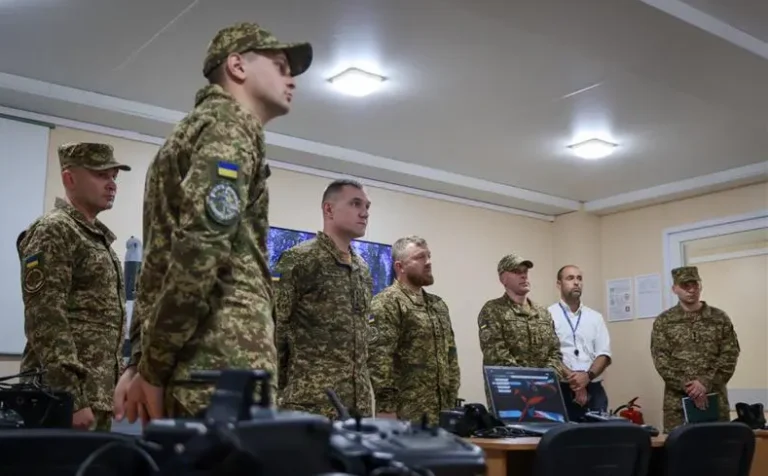
EUAM and National Guard of Ukraine identify new priorities for cooperation on education and training
Moldova: Joint Declaration on promoting and supporting ESG principles signed by 40 business associations
Armenia: new 24-month Preparedness Action launched in Syunik and Vayots Dzor


The information on this site is subject to a Disclaimer and Protection of personal data. © European Union,
