

Young voices, Europe’s future
A question of belonging
What does Europe mean if you don’t live there? For many of us in Armenia, it’s a mix of curiosity and distance. We hear about it in the news, in classrooms, or through exchange schemes – but it often feels like something happening elsewhere. Yet for my generation, Europe isn’t just an idea on a map. It’s a set of values and opportunities that shape how we imagine our future.
Seeing Europe from Armenia
Growing up in Gyumri, a small town in the North of Armenia, I often find myself thinking about what Europe looks like from the outside. Conversations about the European Union and enlargement are usually framed in policy language, but this perspective misses how young people actually experience Europe.
For us, Europe becomes real in smaller, everyday things: following European youth discussions online, attending local events, or engaging in youth-led initiatives. These moments gradually build a sense of connection, making Europe feel less distant and more tangible.
Why young voices matter
Too often, Europe is discussed in terms of numbers, frameworks, and agreements, while the human dimension is overlooked. Yet young people experience it differently. Issues such as climate change, education, inclusion, and digital transformation are not abstract topics for us; they shape our daily conversations and priorities. When young people are included in these discussions, Europe becomes more grounded in lived experience rather than abstract policy.
Reflections from Armenia
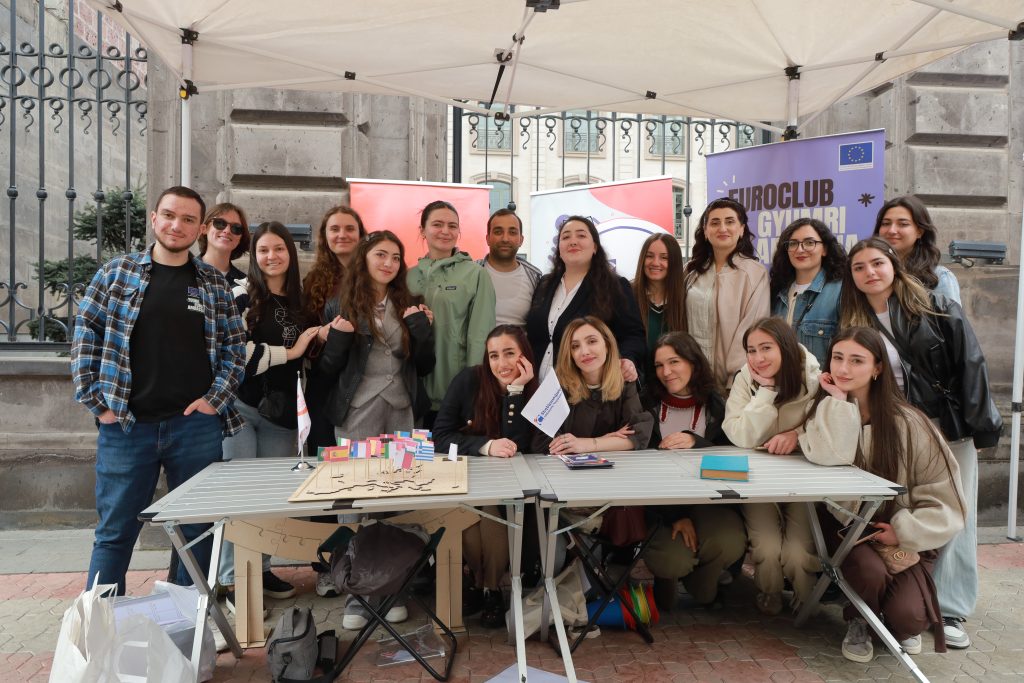
In Armenia, curiosity about Europe is visible in the choices that young people make and the opportunities they pursue. Some of my peers are currently participating in EU exchanges or volunteering projects, like the European Solidarity Corps, while others engage through initiatives like the Young European Ambassadors (YEAs). Through these platforms, young people from cities like Gyumri and Yerevan collaborate with peers across Europe on topics such as media literacy, environmental awareness, and civic participation. These are not symbolic encounters, they involve real collaboration and the exchange of perspectives.
One of the best ways for young people from Armenia to experience Europe directly is through Erasmus+, which offers opportunities to study, volunteer, or gain experience abroad. Participants often come back with concrete insights, for example on how classrooms encourage discussion rather than memorisation, how student organisations influence university life, or how environmental policies are implemented in practice. Even for those who have not participated, these experiences circulate among peers and make Europe feel more accessible. However, access to such opportunities is still uneven, especially for those outside capital cities or from less resourced backgrounds.
Beyond youth-focused initiatives, the European Union is present in Armenia through broader frameworks such as the Eastern Partnership and EU-Armenia cooperation under the Comprehensive and Enhanced Partnership Agreement (CEPA). While these frameworks may sound technical, their impact is increasingly tangible in everyday life.
For example, CEPA supports reforms in education by encouraging universities to modernise curricula and align more closely with European standards. In the economic sphere, Armenian producers who meet EU requirements gain access to European markets, exporting goods that range from agricultural products to manufactured items. In this way, European standards increasingly influence local systems, from education to trade.
These developments are often gradual, but they have real-world effects. They shape how institutions operate, for example by improving teaching methods and aligning more closely with European educational standards. They also affect how businesses adapt, as companies adjust their production processes and quality standards in order to meet EU requirements and access European markets. For young people, these changes influence how they imagine their opportunities, making studying abroad, working internationally, and participating in exchange programmes a real possibility.
Hopes for the future
Looking ahead, the inclusion of young people in Armenia, especially those outside Yerevan or from less resourced backgrounds, needs to become more deliberate and practical.
Opportunities should reach beyond the capital city, with schools and local organisations in cities like Gyumri playing a stronger role in sharing information and guiding applicants. Expanding short-term and flexible exchange formats would also help to reduce barriers to participation.
At the same time, young people themselves need to contribute by joining initiatives, participating in discussions, and staying engaged with European topics. These actions, when combined, will strengthen the connection between Armenia and Europe.
When issues like education quality, environmental challenges, digital access, and inclusion are discussed, what matters most for youth in Armenia is not only being included in these discussions, but being taken seriously within them. When this happens, youth engagement becomes meaningful and sustained.
Sources:
European External Action Service. Eastern Partnership.
European External Action Service. EU Delegation to Armenia
European External Action Service. EU and Armenia Comprehensive and Enhanced Partnership Agreement enters into force.
European Commission. Erasmus+ programme.
European Commission. EU trade relations with Armenia.
CEPA Support Office (2025). Higher education report.
LATEST
Where culture meets diplomacy: the Armenian alphabet in Strasbourg
From displacement to enterprise: rebuilding my community through entrepreneurship
A message from the YED Coordinators
My personal experience as a Young European Diplomat viewing the EU for the first time
A blueprint for enlargement: what we can learn from Moldova, Ukraine, and Montenegro


The information on this site is subject to a Disclaimer and Protection of personal data. © European Union,
