
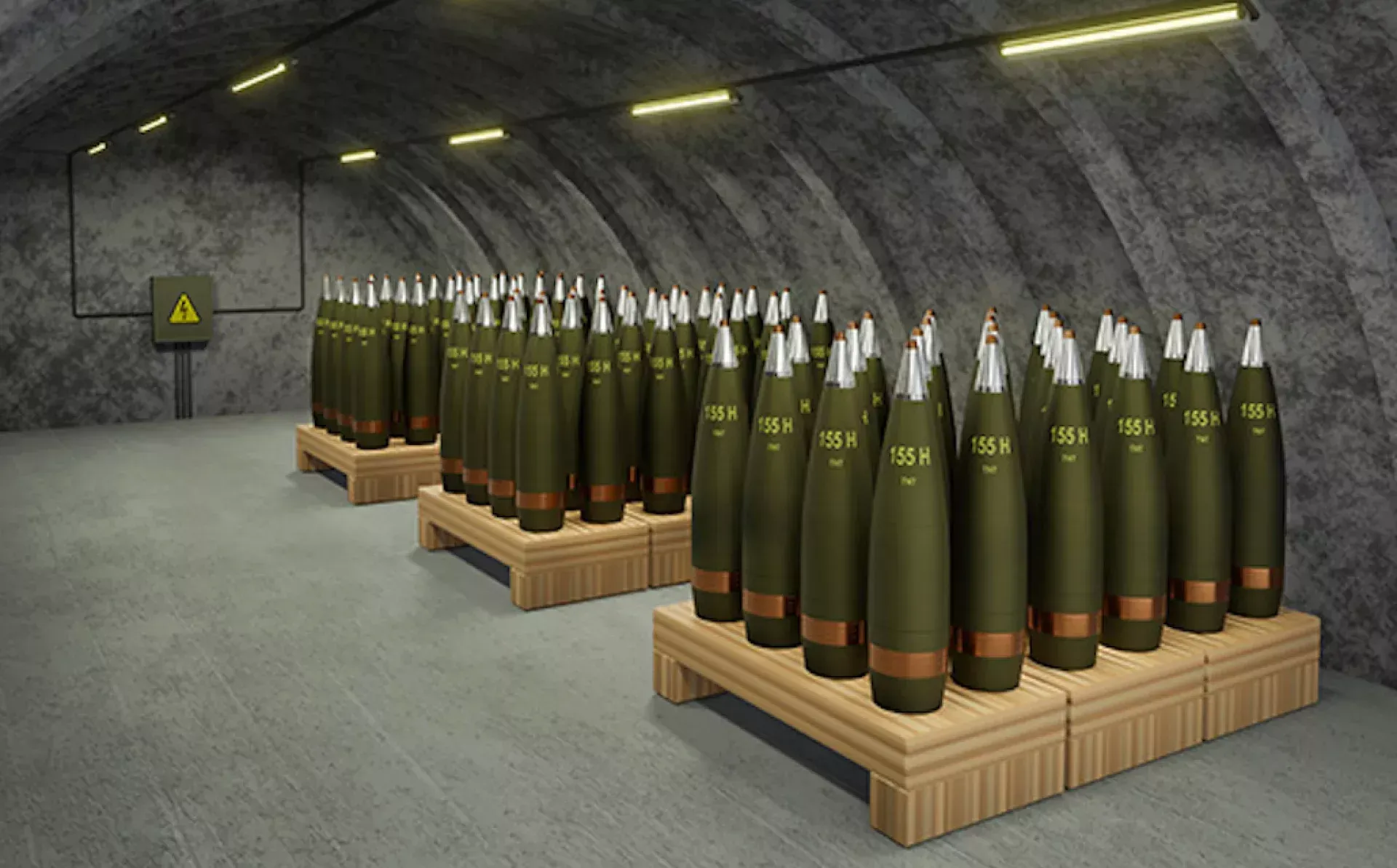
Why Niinistö’s report matters: the implications for Common European Defence
The year 2024 has been marked with an enhanced focus to drive fundamental transformation in European thinking, notably concerning European unity, preparedness, and EU strategic autonomy. For these purposes, the three long-awaited high-level reports were issued: ‘Much more than a market’ by former Italian Prime Minister Enrico Letta (April), ’The future of European competitiveness’ by former Italian Prime Minister and former ECB President Mario Draghi (September), and ‘Safer together – strengthening Europe’s civilian and military preparedness and readiness’ by former Finnish President Sauli Niinistö (October). While the first two have the market and economy as a focal point, Niinistö’s report, published on 30 October, 2024, heavily emphasises the importance of preparedness and security.
European Commission President Ursula von der Leyen, who charged Niinistö with writing the report, noted during its presentation that in past years many events “have been wake-up calls”, including the pandemic, the return of war to Europe, and extreme weather phenomena caused by climate change, necessitating to “work closer together and make a difference as Europeans”.
The analysis below explores to what extent Niinistö’s report contributes to setting the basis for building common European defence capabilities. For this purpose, several of the report’s key suggestions on the defence sector will be analysed against the challenging realities on the ground.
Current problems in the defence domain
The report is seen to be offering brave steps, “bringing Finnish resilience culture to the EU level” and aiming at strengthening the EU’s “role as a security actor”. In the 164-page report, defence has a separate chapter titled ‘Scaling up Europe’s defence efforts and unlocking its dual-use potential’. Here, Niinistö argues that Russia’s full-scale invasion of Ukraine has fundamentally altered the strategic context in Europe, but, in spite of that, “defence capability, industrial and technological gaps” remain wide. Interestingly, the author warns about the threat of “external armed aggression”, thus about the chance of a direct attack on EU Member State/s.
Referring to the international context, where the US leads the “innovation-heavy air domain”, Europe is behind Russia in the land domain, and Chinese defence companies are ranked “among the largest in the world”, the report calls for the EU to “strengthen its industrial capacity” to increase “capabilities more efficiently and much faster”. Noting the need for an increase of funds to reach these objectives, the report outlines that the EU is largely behind (see Figure 1) its target of investing 35% on common collaborative projects within the European Defence Agency.

Figure 1. Share of collaborative defence equipment spending and EDA’s 35% target.
Source: Niinistö’s Report (2024), p. 120
Citing recent statistics, the report highlights that 80% of EU citizens support an increase in defence cooperation within the EU, while two-thirds think the EU should have more defence expenditure. Niinistö also emphasises that the defence market is fragmented and therefore, a “Single Market for Defence Products and Services” outlined by the European Council and contained in the European Commission President’s Political Guidelines (2024-2029) could bring a positive change.
Like Mario Draghi, Niinistö speaks in favour of increasing the investment in defence innovation, arguing that the US spends 11-12 times more in this regard than all 27 Member States and the EU together. The report also calls for not just “public-private” but also “civil-military cooperation” to strengthen preparedness.
Key recommendations
Niinistö presents four major recommendations in this chapter:
- Developing “an EU defence capability package for the next decade” – including by using the upcoming “White Paper on the future of European Defence” for setting long-term policy; implementing European Defence Industrial Strategy; developing “Defence Projects of Common Interest”; and providing EU funding to “incentivise and strengthen joint capability investment”;
- Strengthening “Europe’s capacity to provide mid-to-long-term military assistance to Ukraine” – by remaining a reliable supporter “for as long as it takes”;
- Developing “the proposed Single Market for Defence with tangible measures to enhance cross-border cooperation and industrial competitiveness” – including by ensuring supply security, harmonising export control policies, and allowing small companies to participate in defence;
- Strengthening “dual-use and civil-military cooperation at the EU level, based on a whole-of-government approach” – by the harmonisation of dual-use definitions in EU funding instruments/policies and advancing civil-military alternatives, encouraging dual-use research and innovation in defence, linking defence industry with space, shipbuilding and other sectors, and ensuring the advancement of “structured civilian security capability”.
Defence projects of common interest, strategic autonomy and related challenges
One of the most interesting references above is the call to develop “Defence Projects of Common Interest”, including in air (e.g. ‘European air defence shield’ for the protection from “missiles, uncrewed aerial systems (UAS) and other threats in and from the air domain”) and cyber defence. According to the author, the criteria shall be the “urgency” (e.g. to keep supporting Ukraine), “long-term strategic significance”, and “industrial and innovative potential” for the EU.
Niinistö cites the “EU’s strategic autonomy” several times, arguing that “joint action at the EU level could” lead to progress on this path. Moreover, the report outlines an ambitious plan to devote “at least 20% of the overall EU budget” to “EU security and crisis preparedness”.
The report complements the EU’s Strategic Compass, but also frequently cites a new dimension – hybrid threats. Furthermore, it often refers to cooperation not only with NATO but with different stakeholders. As Ursula von der Leyen mentioned during the presentation of the report, Niinistö’s work has already found its way to the “Political Guidelines of the new Commission” as well as “the mission letters of the Commissioner for the next mandate”.
However, there are certain challenges concerning the realisation of the report. The main issue, also stemming from Mario Draghi’s and Enrico Letta’s reports, is that Member States think more of themselves and are not willing to experience a dramatic change, potentially making some of the above-mentioned ideas hard to implement. This concerns, among others, “the possibility of new joint loans”, which in Niinistö’s words, faced “many critical voices”. However, in his defence, Niinistö admitted he did not intend to express “financial opinions” but rather to start a discussion on common needs. During the presentation of the report, Ursula von der Leyen also pointed out that when it comes to the “Defence Projects of Common Interest” (such as the European air defence shield), first, there is a need to identify them and only afterward comes the part of finding “the political will to finance them”.
Another challenge is that for decades, NATO’s presence has made some European citizens, notably in Western Europe, rather relaxed, making it hard fully to perceive the risks associated with the current geopolitical context. This concern is especially relevant for bringing organisations, businesses, and people on board when they may not understand the need to engage and spend resources.
Conclusion
In conclusion, Niinistö’s report is an important contribution and has strong implications for the common European defence. On the background of vital risks stemming from Russia’s ongoing war in Ukraine, climate change, hybrid risks, and the fragmented defence market, Niinistö’s recommendations aim at ensuring better coordination and improvement of European defence capabilities. This, of course, necessitates additional funding which is a rather complex component. While the critics denote the fractures of interest within Member States and citizens, posing the difficulties in mobilising resources, the report solidifies the ongoing political discussions on security matters, thus having the potential to have a tangible impact on changing the preferences of and within the Member States, especially considering that many of its suggestions were preemptively envisaged during the formation of the new European Commission (2024-2029) whose Political Guidelines seem well-instrumentalised for advancing European-wide security.
Nika Kratsashvili has been a Young European Ambassador (YEA) since 2022. He is presently completing a Master’s Degree in Policies and Governance in Europe at Luiss University in Rome. He holds a BA in International Relations and an MA in European Studies from Tbilisi State University.
LATEST

From displacement to enterprise: rebuilding my community through entrepreneurship

A message from the YED Coordinators

My personal experience as a Young European Diplomat viewing the EU for the first time

A blueprint for enlargement: what we can learn from Moldova, Ukraine, and Montenegro
Young European Diplomats Club

The information on this site is subject to a Disclaimer and Protection of personal data. © European Union,
