

What the European Solidarity Corps taught me about belonging to the European community
Photo source: Alamy
Jacques Delors, Former President of the European Commission, once identified three common ambitions for the European project: to become an area of active peace, to maintain a framework for sustainable development, and to celebrate our cultural diversity. While we often discuss European integration through the lens of legislative chapters, my journey as a Ukrainian volunteer in Arnaia, Greece, taught me that the heartbeat of the Union is found in the invisible threads that connect us, long before any official treaty is signed.
A home away from home
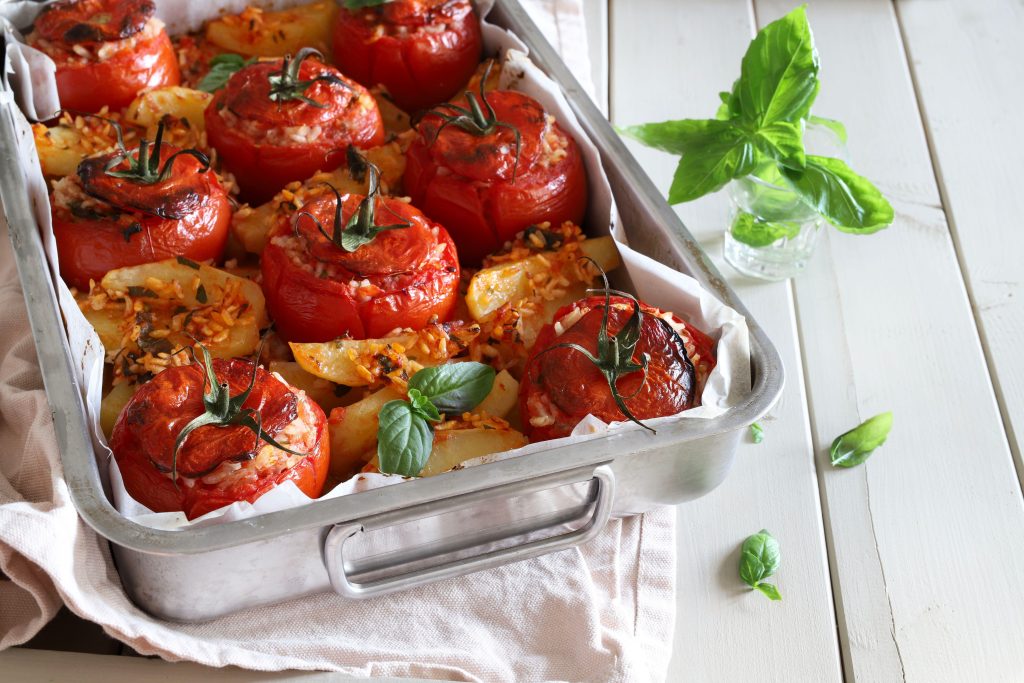
I spent my summer as a European Solidarity Corps volunteer in the mountain village of Arnaia, in northern Greece. Before arriving, I had no idea how much of myself I would find there. Living in the shadow of Mount Athos, a spiritual beacon for the Orthodox world, felt familiar. Looking at the Greek alphabet, I saw similarities to Cyrillic. I was struck by how much the hospitality of the people in Arnaia, their way of resting, and their joy in small things mirrored what I knew from back home. Even the food, bursting with local vegetables and familiar aromas of Gemista (stuffed peppers), tasted like in my childhood. This way I found a home away from home, thousands of kilometres away from my own.
Practical multiculturalism
Our group was a balanced mix of local Greeks and international volunteers from Poland, Ukraine, Italy, France and Turkey. This balance provided a kaleidoscope of perspectives on every issue. Living and working with seven international volunteers was like living in a miniature laboratory of the European Union. Our daily routine – managing language barriers, sharing chores, and organising intercultural dinners – mirrored the actual challenges of the EU. We learned that unity is the commitment to resolve friction through dialogue. It showed me that while education systems, traditions and stereotypes within national borders shape our initial views, real-life experiences allow us to see how much we truly have in common.
Celebrating diversity through volunteering
My work was centered around social media and podcasting, which turned out to be the perfect way to explore the local culture. I had the pleasure of being the English voice of our podcast in Arnaia. Through this, I discovered fascinating local stories and legends that I would never have found as an ordinary tourist. By broadcasting the stories to a global audience, we were showing that a traditional Greek village has a vital place in the modern European identity. Organising movie nights and sports tournaments for local children showed me that joy is the most effective tool for social integration. Laughter doesn’t require translation, and our lack of fluency never stood in the way of connecting with the local kids.
The after-hours programme focused on Greek traditions. We had workshops on Greek culture where we learned beautiful, and sometimes difficult words like philoxenia (hospitality), mastered the rhythms of traditional dances, and practiced the slow ritual of Greek coffee. The highlight, however, was our intercultural dinners. Each week, someone would take over the kitchen to represent their homeland. We shared our national soundtracks, and suddenly, in one small kitchen, the flavors of pierogi, pasta, and baklava blended perfectly. Seeing volunteers from Greece and Turkey – countries with such a complex shared history – laughing together while chopping vegetables was definitely powerful proof that the European project works. This way we celebrated our diversity.
Invisible walls in our minds
The support of my ‘volunteer family’ gave me something more than just friendship. It gave me the psychological courage to fulfill a long-held dream: an ambitious Balkan road trip. Planning to cross six borders in just seven days – Albania, Montenegro, Bosnia and Herzegovina, Serbia, Kosovo, and North Macedonia – initially felt like a daunting task. However, the encouragement of my fellow volunteers, who cheered on my adventurous spirit and shared their own travel tips, made the impossible feel possible.
As I travelled through those countries, I realised that the borders we see as solid lines on a map are often just invisible walls in our minds. In the buses and hostels of Budva or Pristina, I felt more “at home” than I ever expected. It taught me that the psychological distance between nations is sometimes shortened by the courage to show up and talk to one another.
Instead of a conclusion
In our final days, we found ourselves humming ABBA’s ‘Our Last Summer’. The lyrics, “I can still recall our last summer, I still see it all”, captured exactly how we felt. In two months, I had lived many different lives. I had been a podcast voice in a mountain village, a student of ancient dances, a traveller crossing Balkan borders, and a friend to people I once considered strangers. Every episode of our podcast in English ended with the same sign-off: “Keep your ears open to the whispers in the wind of Arnaia”. Looking back, I want to pass that message to everyone. To me, belonging to the European community means exactly that – keeping your ears and hearts open to ‘otherness’, and building community through engagement and mutual respect.
Sources:
Delors J. (January 2003) Une vision ambitieuse pour la Grande Europe, Futuribles. Analyse et prospective.
Arnaia, Central Macedonia Greece
AristoRadio, Podcast of the European Solidarity Corps Volunteers in Arnaia and Stratoni
LATEST
From displacement to enterprise: rebuilding my community through entrepreneurship
A message from the YED Coordinators
My personal experience as a Young European Diplomat viewing the EU for the first time
A blueprint for enlargement: what we can learn from Moldova, Ukraine, and Montenegro
Young European Diplomats Club


The information on this site is subject to a Disclaimer and Protection of personal data. © European Union,
