

The green transition and enlargement: is climate policy the EU’s strongest bridge?
On a cold winter’s evening in Southeast Europe, people still worry about keeping their lights on and heating running. It’s a matter of cost, not just comfort.
These everyday concerns are rarely visible in high-level political debates, yet they are increasingly shaped by them.
Can the European Union extend eastwards while racing towards climate neutrality? As Brussels prepares for the greatest EU enlargement in decades, it is demanding acceding countries to commit to the world’s most progressive climate infrastructure. The question is no longer whether Europe can go green, but if it can take others with it in that process.
To comprehend this tension, one should analyse how deeply climate policy is embedded within the European project itself.
Europe’s climate architecture
In 2019, the European Commission unveiled the European Green Deal, aiming to make Europe the first climate-neutral continent by 2050. This ambition was anchored in the European Climate Law, making emissions reduction targets – at least 55 per cent below 1990 levels – legally binding.
At the heart of this architecture stands the EU Emissions Trading System (ETS), established in 2005 as the world’s first major carbon market. By capping emissions and requiring companies to trade allowances, it puts a price on pollution, turning carbon into an economic cost rather than an externality.
The ETS now covers electricity and heat, heavy industry, aviation, and maritime transport, accounting for around 40 per cent of EU emissions and operating across Member States as well as Iceland, Liechtenstein, and Norway. It is also regularly adjusted to sustain effective carbon pricing.
However, the ETS alone cannot deliver climate neutrality. Reaching the EU’s 2050 target and the Paris Agreement’s 1.5°C objective requires a higher carbon price and broader structural change, as free allowance allocation weakens price signals and slows industrial decarbonisation.
Meanwhile, the transition carries significant economic consequences. Achieving climate neutrality will require around a trillion euros in investment over the coming decade, while coal- and heavy industry-dependent regions face profound disruption. To address this, the EU has established the Just Transition Mechanism to support the most affected regions.
Through the ETS and the Carbon Border Adjustment Mechanism (CBAM), partner countries make clear that access to the European market is contingent on carbon performance, blurring the boundary between climate and trade policy.
The European Green Deal thus extends beyond environmental regulation, reshaping global economic incentives by linking market access to decarbonisation.
Enlargement as climate conditionality
EU enlargement is no longer solely a question of political alignment. It has become a process of regulatory, and increasingly ecological, convergence. The Copenhagen criteria require candidate countries to build stable democratic institutions, develop functioning market economies, and adopt the full body of EU law. Within this framework, climate policy now plays a central role. Chapter 27 of the accession negotiations requires alignment with EU environmental and climate law, including rules on air quality, waste management, and emissions control. As a result, environmental compliance has become a core condition of membership.
This shift comes at a moment of heightened geopolitical significance. Russia’s invasion of Ukraine and instability along Europe’s borders have turned enlargement into a strategic priority. Increasingly, integration is seen not only as expansion, but as stabilisation.
The Western Balkans energy trap
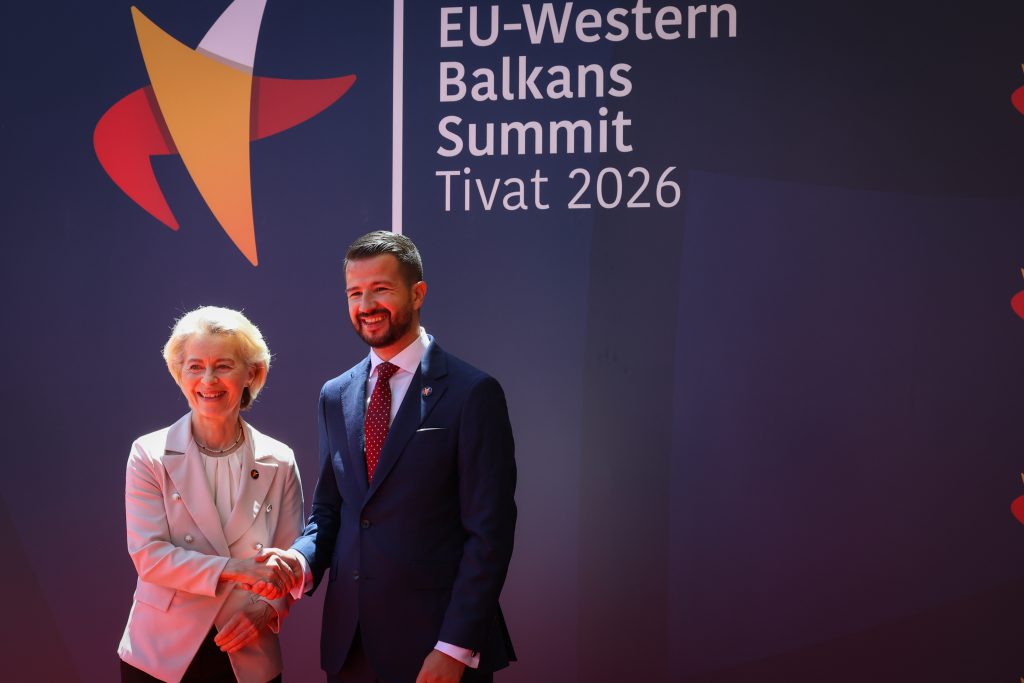
Within the Western Balkans, countries remain at different stages of the enlargement process, with Montenegro and Albania often considered frontrunners.
To support this trajectory, the EU has proposed a €6 billion Growth Plan for the Western Balkans, linking funding to reforms and gradual integration into the European Single Market.
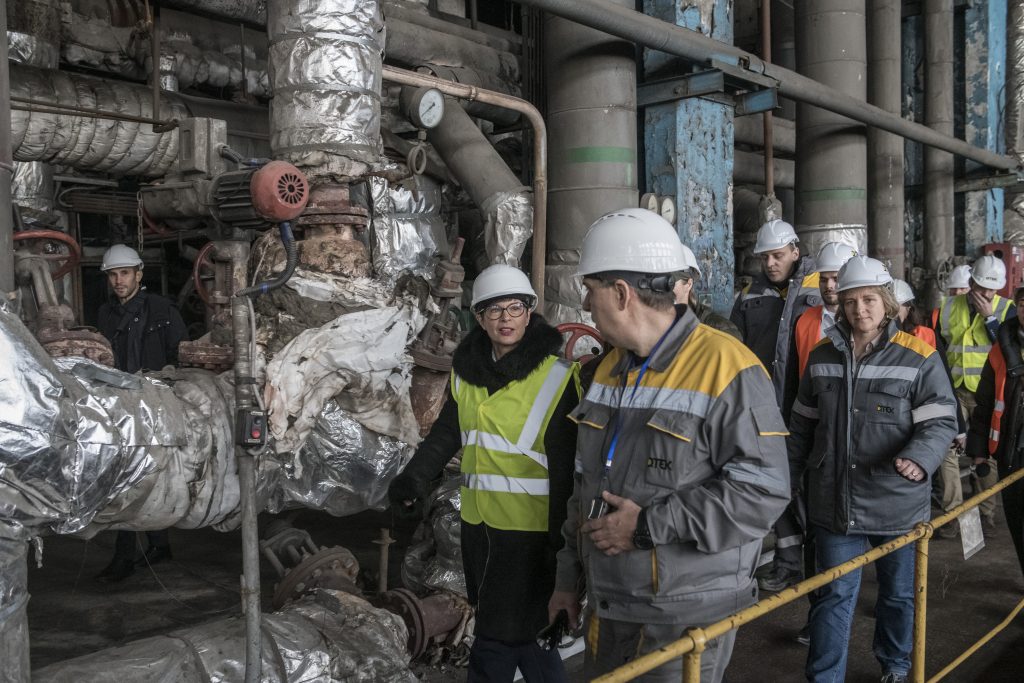
With 60-70 per cent of electricity produced from lignite and ageing infrastructure, the region faces a persistent tension between energy security and environmental sustainability.
External policies such as EU CBAM impose a carbon cost on exports like steel and cement. This creates short-term economic pressure, but strengthens incentives for industrial decarbonisation. Financial assistance through IPA III and the Green Agenda for the Western Balkans supports this transition, though it cannot resolve structural dependence on fossil fuels alone.
As a result, the transition is not only institutional but also social. Across the Western Balkans, energy poverty persists. Millions of households struggle to afford heating and electricity, making decarbonisation a question of everyday survival rather than abstract policy.
The result is a defining paradox of enlargement: the green transition becomes both a pathway to integration and a test of economic resilience.
Ukraine: reconstruction as climate strategy
Ukraine has emerged as the key example of how climate politics are now embedded into the EU’s enlargement policy. Under its 2024 Climate Framework Law, the country has committed to climate neutrality by 2050, making environmental reform central to reconstruction and integration. In practice, reconstruction becomes an opportunity to avoid locking in old fossil-based systems, and instead shape a lower-carbon future from the start.
War-related reconstruction has created an unusual opportunity: damaged infrastructure is not simply being restored, but redesigned. Since synchronising its electricity grid with the European system in 2022, Ukraine has accelerated alignment with EU standards and expanded renewable and decentralised power generation, shifting the energy system towards more flexible, low-carbon models.
Through the €50 billion Ukraine Facility, investment is directed towards this green reconstruction process.
Yet this external push for climate-aligned rebuilding contrasts with growing political and social resistance to the same transition within parts of the EU itself.
Europe’s internal backlash
Shifting focus back to the internal dynamics of the European Union, the Green Deal has increasingly faced political pressure. Farmers, industries, and segments of the population have raised concerns over costs, regulations, and pace of the transitions – debates that became more visible after the 2024 European Parliamentary elections.
Critics warn of economic strain on households and energy-intensive industries, and question whether emissions are genuinely reduced or simply relocated outside Europe. Defenders, by contrast, see these tensions as the inevitable cost of transformation.
The shift from fossil fuels to renewable energy is not only about policy targets, it is also about saving lives. The transition could save up to 3.6 million premature deaths annually worldwide by reducing exposure to toxic air pollution.
Conclusion
So what, then, is climate policy in the age of enlargement? Is it the European Union’s strongest bridge – or its most delicate Achilles’ heel? Can the Union expand without diluting its green ambition, or will geopolitical realities force adaptation?
These questions go beyond emissions targets. Climate policy has become an existential question for the very idea of Europe – determining not only how it grows, but what kind of Europe it becomes in the process.
In this sense, the Green Deal is no longer just an environmental agenda, but a central instrument of European enlargement – shaping not only how Europe decarbonises, but who is included in its climate-neutral future.
The question that remains is who will be ready to meet the standard – and at what cost.
Sources:
European Commission. (n.d.). Carbon markets: EU emissions trading system (EU ETS).
European Commission. (n.d.). EU climate action: 2050 long-term strategy.
European Commission. (n.d.). EU climate cooperation with neighbouring countries.
European Commission. (n.d.). International cooperation on environment and enlargement.
European Council. (2021). European climate law.
European Parliament. (2026). Press release: EU climate policy and enlargement developments.
Carbon Market Watch. (2024). EU ETS 101: A beginner’s guide to the EU emissions trading system.
Lexology. (n.d.). Carbon Border Adjustment Mechanism (CBAM).
European Bank for Reconstruction and Development. (n.d.). MLGP climate library document.
European Central Bank. (n.d.). Working paper on climate and transition impacts.
Joint Research Centre. (2024). Green transition in the Western Balkans requires stronger innovation focus.
Joint Research Centre. (2025). Western Balkans environmental and climate action progress.
OECD. (n.d.). Energy prices and subsidies in the Western Balkans.
European Parliament. (2026). Policy briefing on climate and enlargement.
LATEST

From displacement to enterprise: rebuilding my community through entrepreneurship

A message from the YED Coordinators

My personal experience as a Young European Diplomat viewing the EU for the first time
A blueprint for enlargement: what we can learn from Moldova, Ukraine, and Montenegro
Young European Diplomats Club


The information on this site is subject to a Disclaimer and Protection of personal data. © European Union,
