

Returning from oblivion: stories of prominent Ukrainian women of modern times
From the relative quietude of the 1950s, through the decades of underground dissent and the hard-won independence at the end of the 20th century, to the heroic defence of the nation today, the story of modern Ukraine is inseparable from the stories of its women.
For much of the 20th century, their voices were often relegated to the private sphere, their contributions to culture, science, and national identity made under the shadow of a system that demanded conformity. Yet, they persevered, keeping traditions alive and laying the groundwork for a sovereign future.
The following portraits trace this evolution. They shine a light on the women who, from the 1950s onward, broke through barriers not only of gender but of political oppression. This journey through the decades culminates in the present – an era defined by the resilience of figures like Iryna Galai and Oksana Rubaniak. They are the direct heirs to this legacy, embodying the strength that was forged in the latter half of the 20th century and demonstrating, with profound clarity, that Ukrainian women are not just mere participants in history, but its driving force.
Kvitka Cisyk: a voice across the world
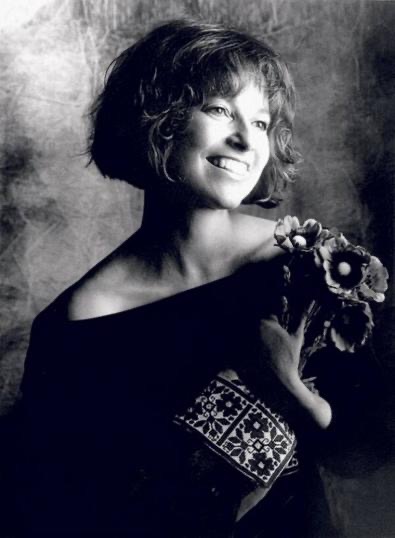
Ukrainian songs have always been heard around the world and will continue to be heard. Many Ukrainian singers contribute to this, but Kvitka Cisyk is one of the most famous of them.
She was born in 1953, shortly after her parents moved to the United States following World War II. Her father was a virtuoso violinist who taught his daughters, Kvitoslava and Maria, to play the violin. After graduating from the High School of Music and Art in New York in 1970, Kvitka Cisyk studied for one year at Harper College, which was part of the State University of New York at Binghamton. At that time, her older sister Maria was teaching piano there. By then, Kvitka had already recorded several of her own songs. Her whole family was devoted to music, and she was especially fond of Ukrainian songs.
Kvitka Cisyk had a coloratura soprano voice. Many listeners said that she sometimes sounded like a violin herself. She could sing easily in different styles, from jazz to classical music, and performed both pop songs and opera with great success. She also used a special singing technique called the “white voice”, which is traditional in Carpathian villages. Although she was born abroad and lived there her whole life, Kvitka preserved the traditions of her heritage and ensured they were not forgotten.
“I realised that I could easily change musical styles. Then I enrolled in a music conservatory in New York. I studied vocals and thought I would become an opera singer. But I became interested in another profession: ‘studio singing’. Singing in different studios for commercials or for composers,” said the singer. Her voice was used in commercials for Coca-Cola, American Airlines, and McDonald’s. For 16 years, until the end of her life, she was the official voice of Ford Motors. Many Americans still remember the famous jingle “Have you driven a Ford lately?” sung by Kvitka. The company estimated that her voice was heard more than 22 billion times – several times more than the current population of the entire planet.
Kvitka is one of the most celebrated Ukrainian singers. Her songs remain very popular in Ukraine. “Where are you now?”, “Dearest mother of mine”, “Autumn love” – even young people recognise these songs from the first note. Kvitka is not only a symbol of Ukrainian culture and music, but also an example of a strong, talented, and self-sufficient woman. She built a career in a highly competitive music industry, became a world-class professional, and at the same time remained true to her identity. Her story inspires women to believe in their talent, not to fear big stages, and to remember their roots. Kvitka proved that a woman’s voice can be heard all over the world – and can carry the culture of an entire nation with it.
Varvara Karinska: reshaping global art
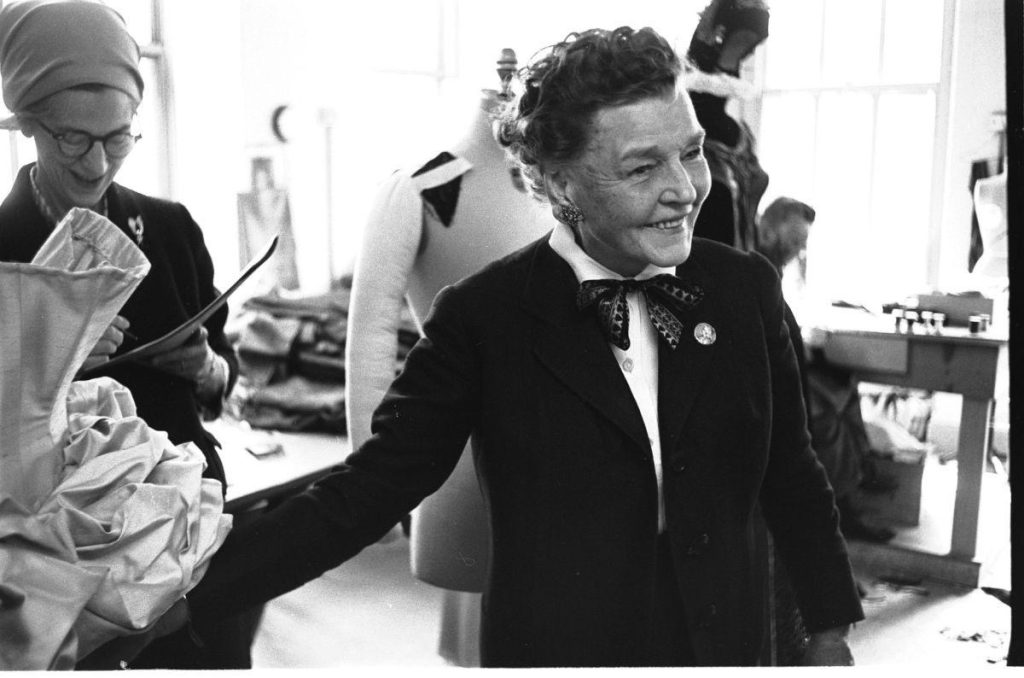
First Ukrainian Oscar-winning woman, talented artist, and revolutionary designer – all of these describe Varvara Karinska.
Born in Kharkiv in 1886, Varvara Karinska would go on to change the visual language of ballet forever. While many remember choreographers and dancers, Karinska proved that a costume is not mere decoration – it is movement and architecture stitched together.
Her path was anything but linear. Karinska survived revolution, emigration, financial ruin, and reinvention.
From Kyiv to Paris and finally New York, Varvara rebuilt her life through art. In the United States, her collaboration with George Balanchine transformed 20th-century ballet. When Balanchine, a co-founder of the New York Ballet, was asked about the formula behind the success of his performances, he responded uncompromisingly: “Fifty per cent of the success of my ballet is Barbara Karinska’s costumes.” He also famously declared that there is Shakespeare for literature – and Madame Karinska for costume.
Karinska’s most revolutionary contribution was her redesign of the classical tutu. Before her, tutus were stiff, heavy, and often restricted dancers’ movement. Karinska engineered what became known as the “powder puff” tutu: lighter, softer, and layered with delicate netting that responded to air and motion. Instead of looking like a rigid plate around the dancer’s waist, her tutu moved like breath. It framed the body without imprisoning it, caught light, created volume, and enhanced the illusion of weightlessness that defines ballet. This was not merely aesthetic; it was structural genius. She calculated the number of layers, their length, the stitching technique, and the fabric density. Every detail served the choreography. The costume became a partner in the dance.
In 1948, Karinska became the first Ukrainian woman to win an Academy Award, receiving an Oscar for Best Costume Design for the film Joan of Arc. At a time when Soviet narratives overshadowed Ukrainian identity, her achievement quietly but powerfully placed Ukrainian artistry on the global stage. Karinska believed costumes should not overpower the dancer, but reveal them. She understood anatomy, light, stage space, and movement.
Varvara Karinska’s story is that of a Ukrainian woman who, with resilience and brilliance, reshaped a global art form. Behind every grand jeté and pirouette floats her invisible signature.
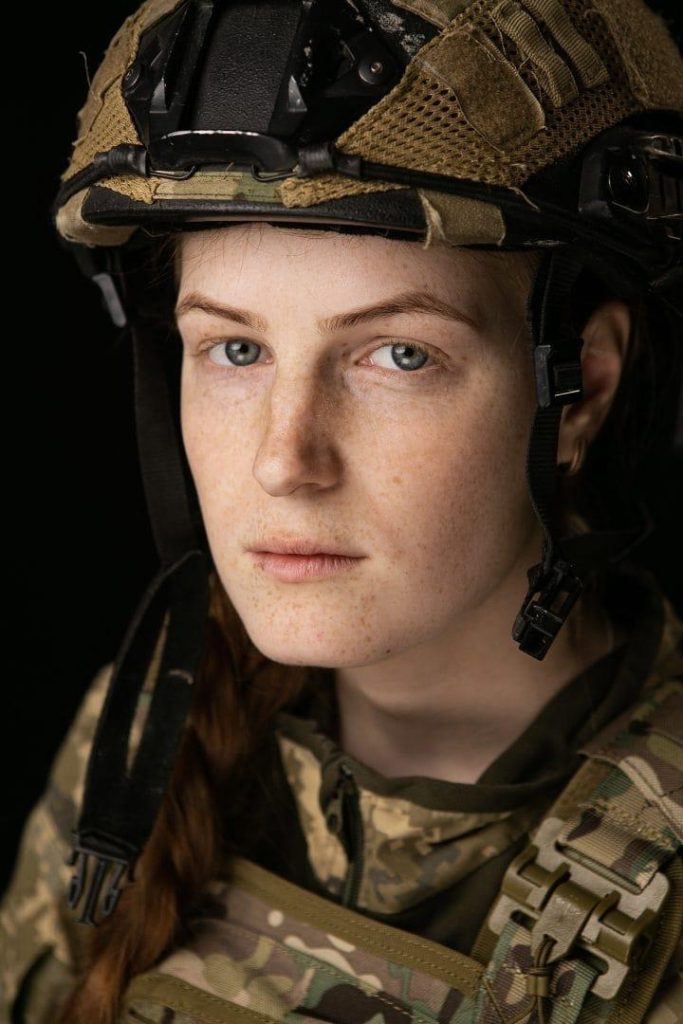
Stefaniia Shabatura: tapestry as a protest
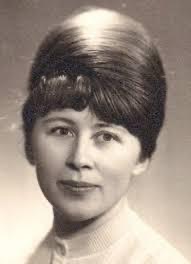
Stefaniia Shabatura was a unique Ukrainian artist and tapestry-maker, a member of the Ukrainian Helsinki Group, and a long-term political prisoner of the Soviet era.
On 12 January 1972, she was imprisoned during the wave of mass arrests of Ukrainian dissidents. The Committee for State Security arrested her on suspicion of “anti-Soviet activity” alongside Iryna Kalynets, Mykhailo Osadchy, and Viacheslav Chornovil. She was later tried in Lviv and sentenced to five years in a strict-regime labour camp and three years of exile for “anti-Soviet agitation and propaganda”. She served her sentence in a women’s penal colony.
Even before her arrest, Stefaniia Shabatura had created one of the most powerful tapestries in Ukraine at the time, Cassandra. After her arrest, the work was confiscated as a piece allegedly containing elements of “nationalism”. Even the signatures on her works were treated as material evidence of her so-called “criminal activity”: investigators claimed that the Cyrillic letter “Ш” resembled the tryzub (a Ukrainian trident).
In the camps, she did not abandon her beliefs, participated in protest actions by political prisoners, and later became a member of the Ukrainian Helsinki Group. She devoted the best years of her life and a significant part of her artistic legacy to the struggle for freedom: the KGB seized and destroyed 70 of her bookplates and more than 150 drawings.
After completing her term of exile and returning to Ukraine, she faced persistent persecution: she was denied a residence permit and obstructed from finding employment in an attempt to create grounds for another imprisonment for violating passport regulations.
During the period of national revival, Stefaniia Shabatura became a deputy of the first democratic convocation of the Lviv City Council. With her participation, the Ukrainian flag was ceremonially raised over Lviv City Hall.
For her civic stance and courage, she was awarded the Order of Princess Olga, 3rd Class, and later the Order of Courage, 1st Class.
Iryna Galay: the first Ukrainian woman to conquer Mount Everest
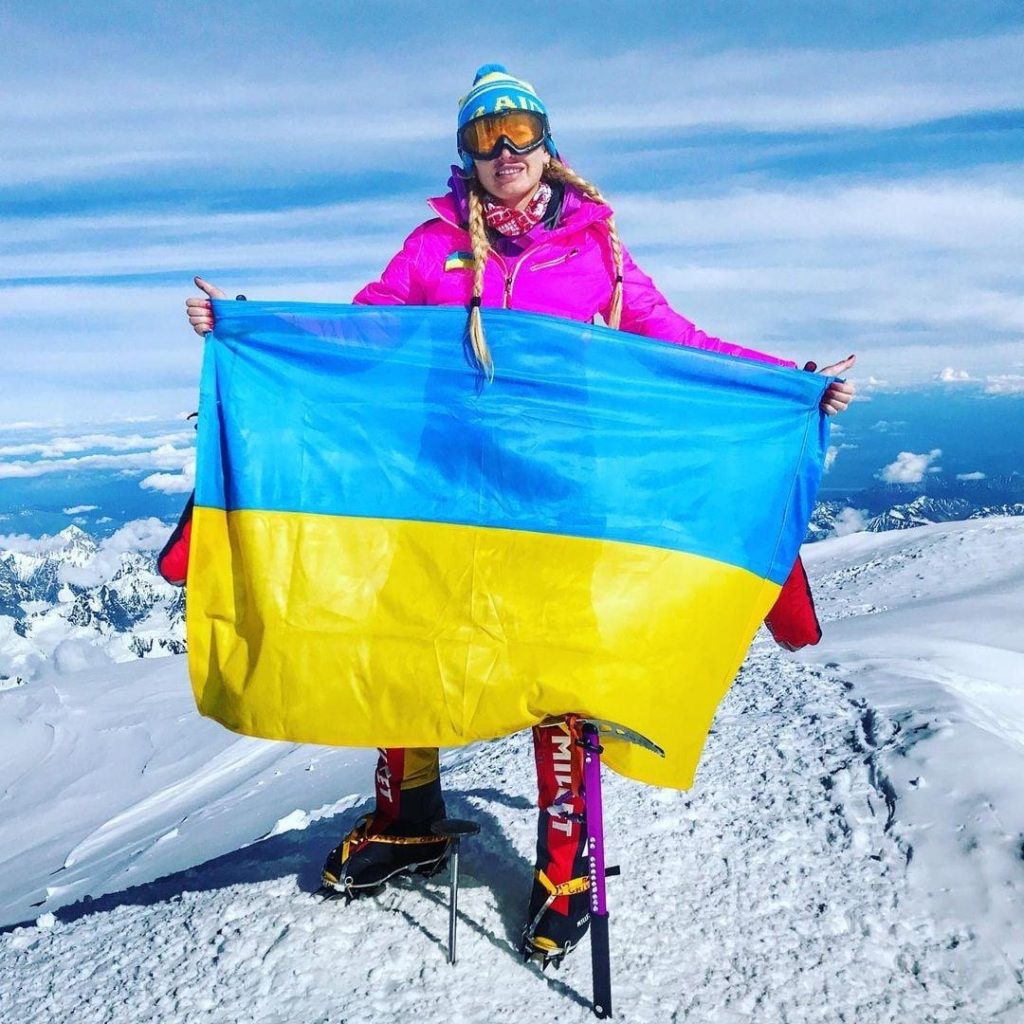
On 20 May, 2016, the Ukrainian flag fluttered at the peak of Everest, the highest mountain above sea level. Iryna Galay, born in 1988 in Mukachevo, became the first Ukrainian woman in history to climb Mount Everest. After summiting, Iryna wrote on her Instagram page:
“I want to dedicate this peak to all the women of Ukraine! To the strongest, the bravest, the most enduring in the world!”
She became passionate about mountaineering in 2013, and within a short period of time, thanks to her determination, she became a Ukrainian record holder.
On 27 July, 2021, she became the first Ukrainian woman to summit K2, the second-highest mountain in the world, known as the “Savage Mountain” for its extreme difficulty and danger. After this achievement, Iryna did not stop and, later in 2024, summited another eight-thousander – Annapurna – dedicating the climb to all the women defending Ukraine’s independence on the front line.
This famous alpinist not only conquers the world’s highest peaks but also supports social initiatives: Iryna runs a project called “Clean Carpathians”, within which she organises eco-friendly hikes to collect litter in the mountains. She also arranges camps in the Ukrainian Carpathians for children with autism, giving them the chance to feel the euphoria that comes after overcoming a difficult path. The mountaineer says that this feeling is exactly why people go to the mountains.
Having experienced the discomfort of women’s mountaineering gear herself, she dreams of launching her own brand focused on comfort and functionality for women. Currently, Iryna collaborates with the organisation “Arm Women Now”, helping to develop the women’s military uniform for the Armed Forces of Ukraine.
Apart from her social activism, Iryna Galay is also an entrepreneur and a lecturer in business and leadership, embodying the strength and resilience of Ukrainian women and proving that nothing is beyond their reach.
Oksana Rubaniak: women in the army
“I am ready to die for Ukraine, but I want to live for Ukraine.” These are the words of 23-year-old Oksana Rubaniak, a Commander of the Ukrainian Armed Forces’ strike unmanned aerial vehicle company. Known by her call sign “Ksena”, she has evolved from a 19-year-old student activist into a symbol of national resilience.
On 24 February, 2022, Oksana volunteered for the front lines. She became the only female machine gunner in a platoon of the legendary 72nd Separate Mechanised Brigade. Refusing office work, she mastered the machine gun, proving that competence and courage have no gender. Her service has taken her through the war’s most brutal sectors: Bakhmut, Vuhledar, Maryinka, and the Kharkiv region. Even after being wounded in 2023, she returned to lead her soldiers, earning the prestigious Order of Courage from the Commander-in-Chief.
Beyond her rifle, Oksana carries a pen. She is a renowned poet who writes from the trenches to preserve the “art of fact”. Her latest collection, “Those born in freedom do not fear death”, is dedicated to her life on the front line. Her texts express pain and despair over loss. But they also express faith in the victory of life over death, of light over darkness. For Oksana, literature is a weapon of memory, ensuring the world never forgets the human cost of freedom.
Despite everything Oksana remains grounded in her Hutsul roots and her duty. She leads a company of men, many twice her age, with a philosophy of humanity and accountability. “I want a family and children. But for that, Ukraine must exist,” she says. Oksana Rubaniak is more than a soldier; she is the unyielding heart of a generation fighting for the right to a future.
LATEST
From displacement to enterprise: rebuilding my community through entrepreneurship
A message from the YED Coordinators
My personal experience as a Young European Diplomat viewing the EU for the first time
A blueprint for enlargement: what we can learn from Moldova, Ukraine, and Montenegro
Young European Diplomats Club


The information on this site is subject to a Disclaimer and Protection of personal data. © European Union,
