

From emergency to unity: how crises are shaping Europe’s future
Wildfires, floods, earthquakes, chemical accidents and disasters of all sorts know no borders. When Greece was facing its longest heatwave in its recorded history in July 2023, firefighters and equipment from Poland, Slovakia, Romania, Bulgaria, and Serbia were on the ground within days. When floods devastated Slovenia the same summer, French and German rescue teams were already on their way (Council of the European Union). This is not just neighbourhood goodwill, but the expression of European solidarity that the European Union (EU) has built over two decades. In this article, we explain how it works, why it matters, and what it tells us about the future of Europe.
Behind the scenes of cross-border support there is a system that most Europeans may have never heard of: the EU Civil Protection Mechanism, considered the EU’s emergency coordination network. It was created around a simple but powerful idea: to make sure that no country has to face a disaster alone. When any country in the world is overwhelmed, it can call for help through this mechanism. The EU then coordinates the response and contributes to the costs of getting aid where it needs to go. But the system is not only reactive, it also works on prevention and preparedness, helping countries get ready before disaster strikes.
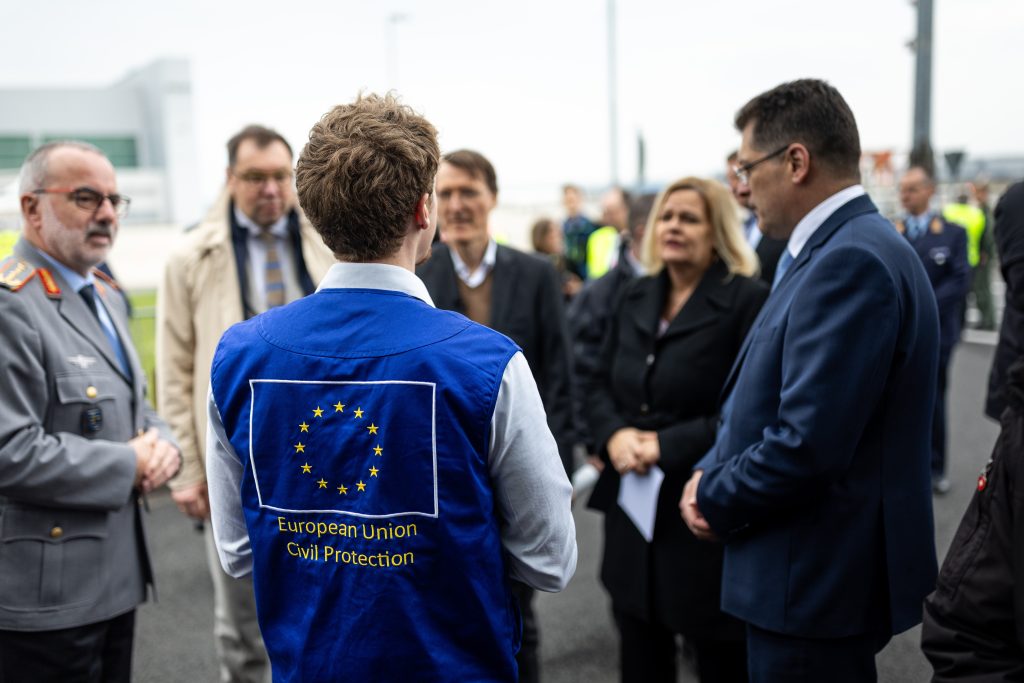
What is more interesting is who is part of it. The mechanism brings together not only all EU member states, but also 10 additional participating countries. These ten partners include both official candidate countries and close European allies: Albania, Bosnia and Herzegovina, Iceland, Moldova, Montenegro, North Macedonia, Norway, Serbia, Türkiye, and Ukraine. While treaties take years to negotiate and membership processes can stretch across decades, cooperation on civil protection allows candidate countries already to be within a European space of shared responsibility, not as observers, but as full participants, both contributing and receiving help. By the time Ukraine or Moldova will formally join the EU, if and when that day comes, they will have spent years already acting as European partners. Years spent saving lives together, sending firefighting planes to combat wildfires, delivering generators to keep energy infrastructure running in the dead of winter, and setting up emergency shelters for those who have lost everything. This is not a substitute for the hard work of enlargement, but it runs alongside it, turning abstract commitments into something immediate and tangible.
Over time, the EU realised that coordination alone was not always enough. If member states were all hit by the same type of crisis simultaneously, their ability to help each other would be severely limited. The answer was rescEU, a set of European disaster response capabilities and shared stockpiles, including a fleet of firefighting planes and helicopters, a medical evacuation plane, emergency medical teams, shelter, transport, and power generators, among others. Hosted across 22 member states and participating countries as well as being fully financed by the EU, it acts as an additional layer of protection for overwhelming cases, filling the gaps that national resources cannot cover.
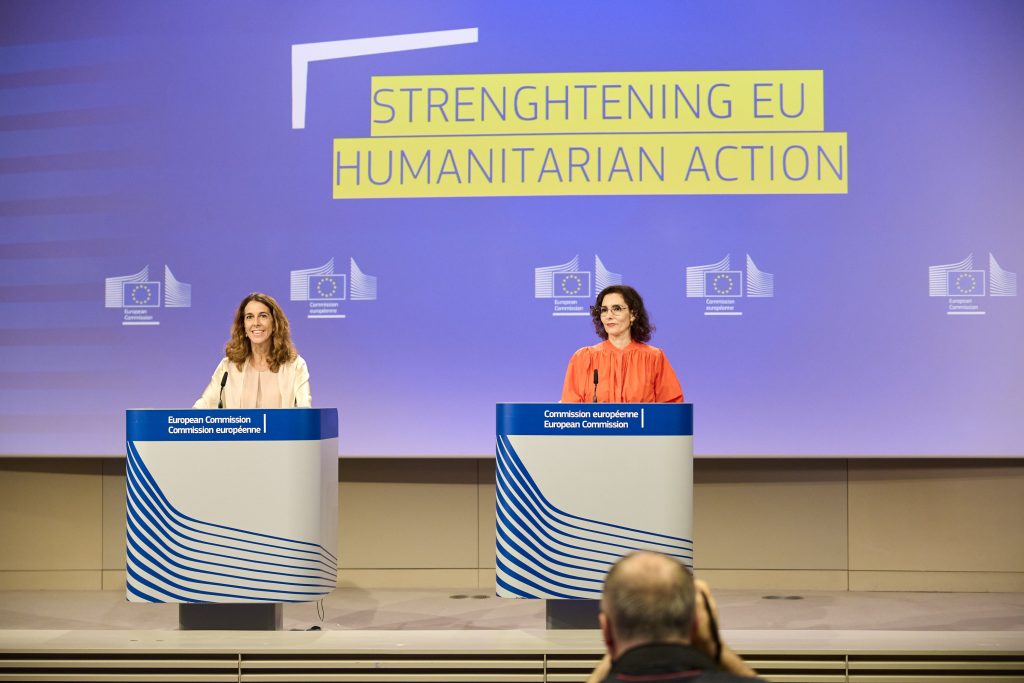
The Union Civil Protection Mechanism had been tested by different kinds of disasters, such as wildfires and floods. But nothing prepared it for February 2022, when Ukraine’s request for assistance triggered the largest civil protection response in the EU’s history. Almost 154,000 tonnes of in-kind assistance, including fire trucks, ambulances, power generators and medical supplies, was mobilised to help Ukrainians meet their most basic needs. Since 2022, 5,017 patients have been medically evacuated from Ukraine to hospitals in EU member states and Norway. It was not straightforward, but it worked, revealing that the EU had built something more resilient and flexible than even its architects had imagined.
In responding to emergencies together, Europe is putting into practice the core idea behind enlargement: a wider union is a stronger one, where acting together builds resilience for all. What began as a coordination network to ensure that no nation faces a disaster alone has grown into something much larger, a system that now reaches beyond the EU’s borders, binding candidate countries into a shared space of responsibility long before any accession treaty is signed. The future of Europe is not only written in summit conclusions or accession chapters, but in every tonne of aid delivered, every team deployed across a border. From emergency to unity, perhaps that has always been how Europe moves forward.
Sources:
Council of the European Union. (2025, August 1). Timeline – EU civil protection mechanism.
European Civil Protection and Humanitarian Aid Operations. (2025, February 25). War in Ukraine triggered largest UCPM operation ever. UCPM Knowledge Network.
European Commission, Emergency Response Coordination Centre. (2026, April 10). Medical evacuations from Ukraine [Map]. European Civil Protection and Humanitarian Aid Operations.
European Commission. (2026). EU Civil Protection Mechanism. European Civil Protection and Humanitarian Aid Operations.
European Commission. (2026). rescEU. European Civil Protection and Humanitarian Aid Operations.
European Union. (n.d.) EU enlargement.
LATEST

From displacement to enterprise: rebuilding my community through entrepreneurship

A message from the YED Coordinators

My personal experience as a Young European Diplomat viewing the EU for the first time
A blueprint for enlargement: what we can learn from Moldova, Ukraine, and Montenegro

Young European Diplomats Club


The information on this site is subject to a Disclaimer and Protection of personal data. © European Union,
