

Disaster Risk Reduction (DRR) in Eastern Partnership countries
“Europe is the fastest-warming continent,” wrote the Copernicus Institute in April of this year. Record-high temperatures and extreme droughts were reported in Eastern Europe in 2024, the warmest year ever recorded. Eastern Partnership (EaP) countries are particularly touched by the effects of climate change and global warming. Armenia is vulnerable to hydrometeorological events such as droughts, landslides, mudflows, and forest fires. Similarly, in Georgia, these risks, as well as earthquakes, have already caused over US$1.2 billion in damage in recent decades and continue to endanger lives and critical infrastructure. In Belarus, people face rising temperatures but also more intense rainfall and showers, while Moldova continues to face recurrent hazards, such as floods, storms, heatwaves, droughts, seismic risks, and both human-induced and technological threats.
On the EU side, in order to face these threats, the European Civil Protection and Humanitarian Aid Operations has put in place Disaster Risk Management policies to prevent and reduce the risks caused by both climate change and man-induced disasters. Other international organisations – the United Nations, the Council of Europe, the OSCE – have all adopted similar frameworks to the EU, with aligning goals of what they refer to as Disaster Risk Reduction (DRR).
Why DRR matters as a climate change challenge for the EU and Eastern Partnership countries
In the climate action discourse, the original focus was on climate mitigation, or trying to reduce/prevent the emissions of greenhouse gases (GHG). Research, such as the first European Climate Risk Assessment, published in 2024, recognised that climate impacts are already present. Therefore, climate adaptation becomes increasingly relevant, as it seeks to anticipate the adverse effects of climate change and to take appropriate action to prevent or minimise the damage they can cause, but also to take advantage of opportunities that may arise.
The EU’s approach to Disaster Risk Reduction, or Resilience, consists of five goals: anticipate – prepare – alert – respond – secure. These translate into concrete measures made to address specific risks: wildfires, flooding, rainfall, earthquakes. Beyond that, the EU’s approach to DRR also considers the economic impact of potential risks, with preparedness tactics put in place to prevent the impact of natural disasters on the EU economy. This vision relates to that of the Organisation for Security and Cooperation in Europe (OSCE), which puts comprehensive security at the centre of its approach, including economic security. Encompassing the six EaP countries, the OSCE has made efforts at managing wildfire risks in the South Caucasus and Eastern Europe, including in areas affected by the 1986 Chernobyl Nuclear Power Plant accident and shared by Belarus and Ukraine. Other achievements were made through policy development and improving the wildfire management capacities of Armenia, Azerbaijan and Georgia through regional fire management training, workshops and round tables.
Each EaP country, with its environment, climate and lived impact of climate change has taken different steps towards adopting disaster risk reduction mechanisms.
Successes and challenges in Georgia
Georgia is taking steps to strengthen its disaster risk reduction (DRR) framework in response to rising climate-related hazards because of its geographically prone exposure to hydro-meteorological hazards, with approximately 40% of the population (1.7 million people) living in zones exposed to floods, landslides, and avalanches which threaten critical infrastructure and economic stability.
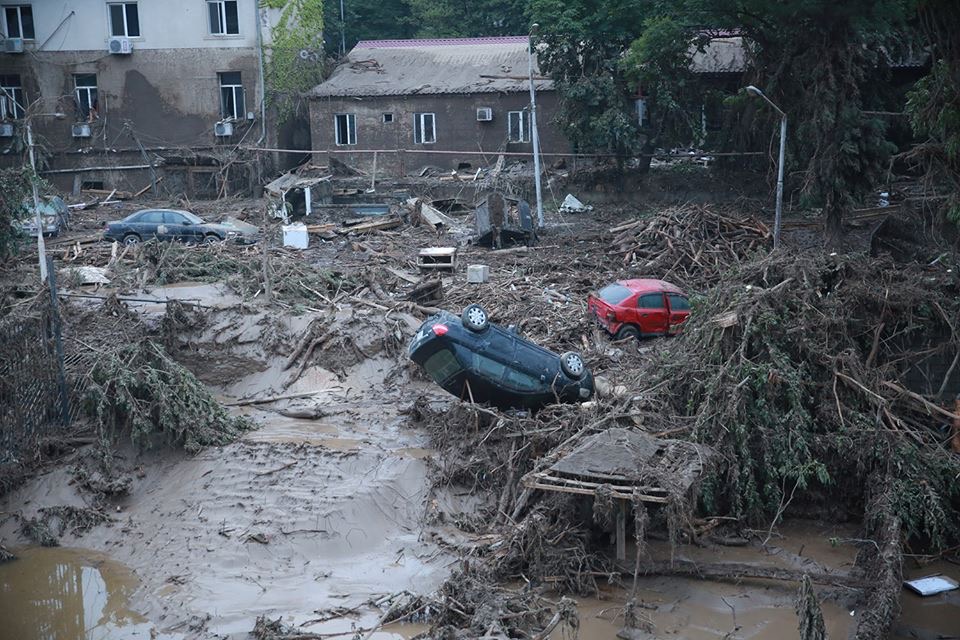
Georgia aligns its national strategies with key European Union mechanisms. For instance, considering the EU Civil Protection Mechanism (UCPM), the cooperation was formalised through an Administrative Arrangement signed in July 2018 between the European Commission and Georgia’s Emergency Management Service, which focuses on disaster prevention, preparedness, and response interoperability.
Moreover, the national emphasis on “Climate Adaptation” is connected to the EU’s own shift towards building climate-resilient economies, supported by the PPRD East programme (Prevention, Preparedness and Response to Natural and Man-made Disasters).
Through programmes like EU4Environment Water Resources and Environmental Data and EU4Climate (implemented by UNDP and the World Bank), Georgia receives technical assistance to:
- Integrate climate adaptation into national legislation.
- Implement the Sendai Framework for Disaster Risk Reduction (2015-2030).
- Fulfil commitments under the Paris Agreement by updating Nationally Determined Contributions (NDCs).
In this context, Georgia’s investment in the Early Warning System (EWS) is not just a domestic safety measure but a strategic alignment with the EU’s emphasis on evidence-based risk governance. Recently, nationwide floods risk maps have been developed in accordance with the EU Floods Directive. Also, flood risk management plans have been completed for four river basins (Khobistskali, Natanebi, Kintrishi, and Supsa), while the development of plans for the remaining basins was ongoing. According to recent European Commission reporting, Georgia has expanded its hydro-meteorological observation network by roughly 50 stations, bringing the total to about 255 monitoring points. (Georgia 2025 report). Moreover, some progress has been made on national monitoring and mapping, but assessments and UNDP projects expressed capacity gaps at municipal level, specifically that local governments still need technical assistance to mainstream hazard maps and observational data into zoning and permitting processes. The 2017-2020 National Strategy on DRR provided a foundation, but further work is needed to embed these systems into everyday governance. Since Georgia is committed to the Sendai Framework, as well as the Sustainable Development Goals and the Paris Agreement on Climate Change, the improvement of infrastructure and governance should be maintained on a promising trajectory.
Successes and challenges in Armenia
While Armenia’s recent legal reforms strengthen its DRR foundation, EU cooperation, technical assistance, and alignment with global and regional DRR frameworks will be essential to support long-term resilience and adaptation outcomes. In May 2024, severe flash floods in the Lori and Tavush regions caused widespread damage to homes, infrastructure and cropland, prompting urgent humanitarian needs. In response to these floods, the European Union provided €100,000 in humanitarian aid through the EU Civil Protection and Humanitarian Aid Operations to support relief efforts via the Armenian Red Cross, including cash assistance and essential supplies for affected families. In 2025, Armenia conducted a national self-assessment workshop under the Global Early Warnings for All (EW4All) initiative with UN agencies and multi-stakeholder participation to evaluate and strengthen its early warning systems for climate and hazard risks.
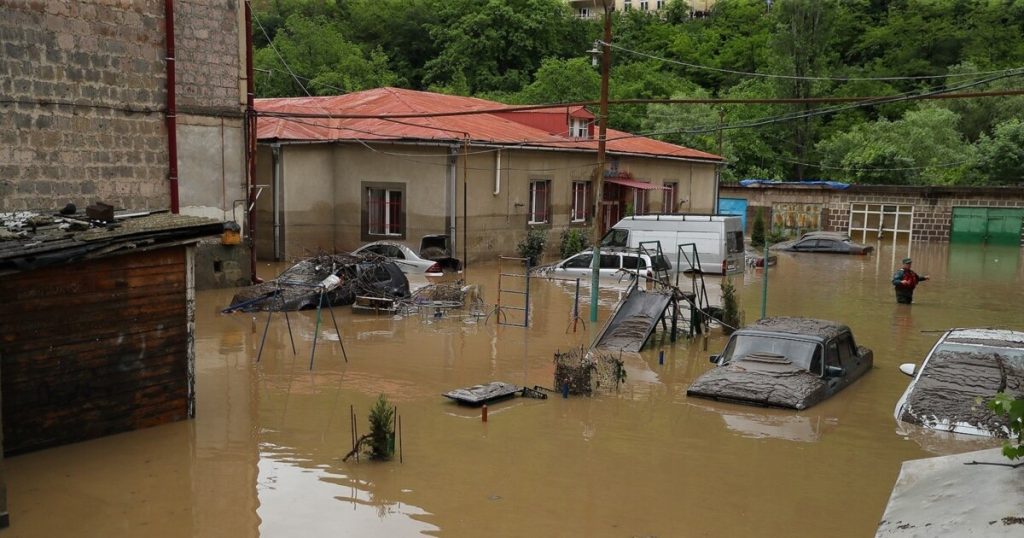
Also in 2025, Armenia adopted a new Law on Disaster Risk Management and Population Protection. So currently, disaster preparedness has been enhanced, with 41 local Early Warning Systems installed across hazard-prone regions, improving real-time alerts for floods, fires and other emergencies.
Despite this progress, significant challenges remain in mainstreaming DRR into planning and investment decisions, integrating hazard and climate risk data into spatial and infrastructure planning, and building sustained technical capacity across local authorities.
LATEST
From displacement to enterprise: rebuilding my community through entrepreneurship

A message from the YED Coordinators

My personal experience as a Young European Diplomat viewing the EU for the first time

A blueprint for enlargement: what we can learn from Moldova, Ukraine, and Montenegro

Young European Diplomats Club


The information on this site is subject to a Disclaimer and Protection of personal data. © European Union,
