

AI and EU law: can technology speed up Ukraine’s accession?
Can artificial intelligence accelerate a process that typically takes decades to complete? At a time when Ukraine continues to defend its sovereignty, it is also steadily advancing towards European integration, a path that requires profound legal and institutional transformation alongside political commitment. In this context, I recently had the opportunity, as a student member of the Leadership Club of the NGO UA Experts, to participate in a meeting with Gediminas Navickas, Deputy Head of the EU Delegation to Ukraine. That conversation once again highlighted that Ukraine’s path to the European Union is a complex legal process requiring deep alignment with European standards. At the same time, the discussion offered a valuable perspective on how Ukraine’s progress is viewed at the European level, and prompted me to reflect on whether technology, and especially AI, could help address some of the most demanding legal dimensions of accession.
The scale of the accession challenge
So, in order to become a Member State, Ukraine must adopt the acquis communautaire, which represents the entire accumulated body of European Union law. In this regard, the monumental legal corpus is organised into 35 negotiating chapters across six thematic clusters, and it encompasses over 100,000 legal acts, including treaties, directives, and decisions. Yet in practical terms, the scope of this undertaking is even greater, as Ukraine must analyse and translate this extensive body of legislation while ensuring full legal equivalence within its domestic system. Consequently, this harmonisation process will require tens of thousands of specific legislative adjustments, vividly underscoring the unprecedented scale of the transformation ahead.
Ukraine’s progress towards EU membership
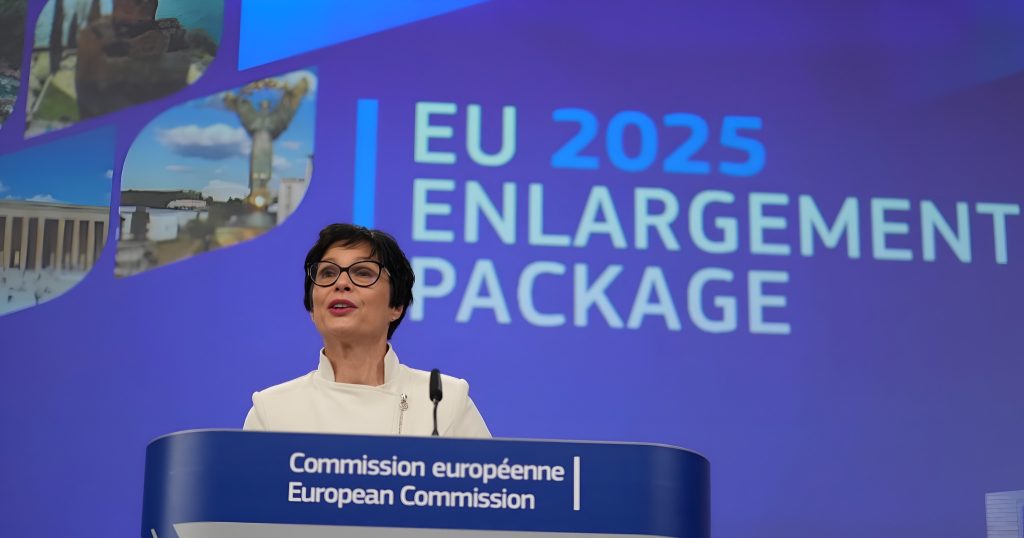
Against this background, Ukraine has been progressing at a notably rapid pace on its path towards European Union membership. Following the granting of candidate status in 2022 and the formal opening of accession negotiations in June 2024, the country, by September 30, 2025, had successfully completed the formal screening of its national legislation against the EU acquis, a detailed and systematic comparison of legal frameworks. Moreover, this progress was recognised in the European Commission’s 2025 Enlargement Package, which awarded Ukraine a ‘good progress’ rating across 12 key areas, while the next major objective for 2026 is the formal opening of negotiation clusters, beginning with the ‘Fundamentals’ cluster, which plays a central role in shaping the overall accession process.
The main challenge: translation and legal alignment
Despite this progress, the path ahead remains constrained by the complexity of translation and legal alignment. Transposing EU law requires more than simple translation, as it demands precise legal interpretation, often referred to as multilingual concordance. At the same time, differences between EU and Ukrainian legal systems mean that even minor wording changes can distort meaning or create inconsistencies; as a result, aligning thousands of legal provisions remains a complex and time-consuming task.
The role of AI in accession
At this stage, technological innovation begins to play a transformative role in addressing these challenges. In particular, AI agents are no longer theoretical constructs, but are actively being developed within legal technology environments, start-ups, and hackathons, many of which I have had the opportunity to engage with. To understand this shift, it is necessary to move beyond basic tools such as DeepL or standard Large Language Models such as ChatGPT, and instead consider systems specifically designed for complex legal tasks.
How legal AI systems work and what are real-world applications
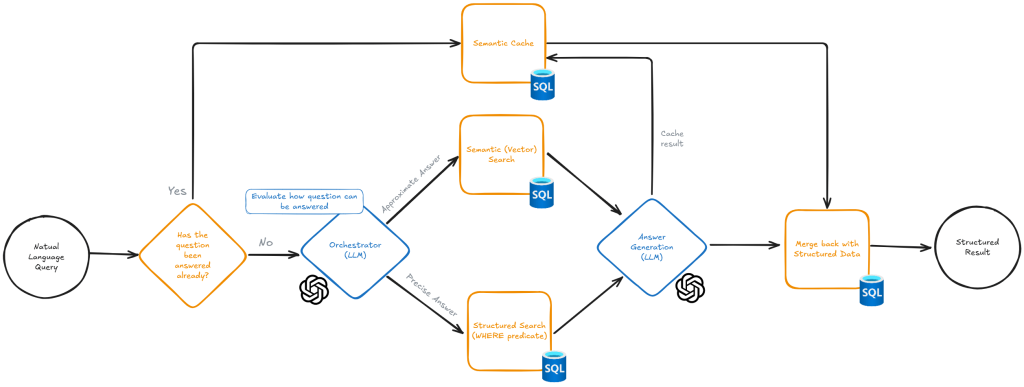
Specifically, modern legal AI often relies on RAG (Retrieval Augmented Generation), which allows a model to generate answers based on relevant legal sources rather than on its own assumptions. This is especially important because traditional databases usually retrieve information through exact words or fixed queries, whereas AI-based systems can also search by meaning. As a result, even if a user does not use the exact legal term, the system may still identify relevant provisions. For instance, when a Ukrainian lawmaker searches for ‘confidentiality obligations’, the AI can retrieve relevant clauses related to ‘non-disclosure agreements’, as their semantic representations are closely aligned.
Therefore, verified legal experts upload authoritative sources into structured databases, which serve as a reliable foundation. So, when an AI agent receives a query, it first retrieves the relevant EU legal norm and only then generates a translated or comparative analysis. Consequently, the system can compare, translate, and analyse legal documents in a manner that is automated, scaleable, and significantly more consistent than purely manual approaches.
Besides, the practical value of such systems is already being demonstrated on a global scale, for example, Harvey AI, a leading legal technology platform, is now used by industry giants such as Allen & Overy and PwC to accelerate complex legal workflows and regulatory analysis.
Ukraine is actively integrating these technological advancements within its public sector to support its accession efforts. A prime example is the Ministry of Digital Transformation’s partnership with the Latvian technology company Tilde to develop a national AI tool for translating and analysing EU legislation. This solution goes far beyond standard machine translation, with a sophisticated system utilising neural networks specifically tailored for EU legal terminology. Crucially, the model is trained on a massive corpus of parallel texts comprising the entire acquis communautaire across all official EU languages, which ensures the precise multilingual concordance necessary for harmonising Ukrainian laws with European standards. In addition, the introduction of Diia.AI, an advanced system designed for government services and capable of multi-step reasoning and secure data processing, reflects a broader commitment to digital-first governance.
To illustrate the practical implications, the EU AI Act, Regulation 2024/1689 provides a clear example: when aligning national legislation with this framework, Ukrainian experts must precisely define concepts such as ‘high-risk AI systems’ under Article 6. In this context, an AI agent can analyse extensive legal material, cross referencing Ukrainian draft laws with EU provisions, identifying inconsistencies, and suggesting appropriate terminology. As a consequence, tasks that would otherwise require weeks of manual review can be significantly accelerated.
Risks and limitations of legal AI
However, despite these advantages, the application of artificial intelligence in the legal domain raises important concerns, particularly regarding legal accuracy and data protection. AI hallucinations can lead to serious consequences, while the handling of sensitive governmental information requires strict compliance with frameworks such as GDPR (the General Data Protection Regulation). Furthermore, regulatory considerations cannot be overlooked, especially given that the European Union imposes strict requirements on such technologies. Under the AI Act, systems used in the administration of justice are classified as high risk, requiring human oversight and rigorous conformity assessments.

Conclusion
Drawing on insights gained during a discussion at the EU Delegation to Ukraine, including an exchange with Deputy Head Gediminas Navickas, one point became particularly clear: European alignment is a deeply technical and legal process alongside political undertaking. Thus, my participation in such dialogues, coupled with my growing involvement in developing technological solutions for the public sector, reinforces my conviction that unprecedented challenges demand innovative approaches.
At the same time, artificial intelligence cannot and should not replace legal expertise; rather, it serves as a powerful instrument that can enhance the efficiency and coherence of the accession process, provided it is implemented responsibly and grounded in public trust. In this context, Ukraine has a unique opportunity not only to follow the established path of European integration, but also to redefine it through innovation. Therefore, while AI may accelerate accession, this progress will only be sustainable if legal judgment and accountability remain firmly in human hands.
LATEST

From displacement to enterprise: rebuilding my community through entrepreneurship

A message from the YED Coordinators

My personal experience as a Young European Diplomat viewing the EU for the first time

A blueprint for enlargement: what we can learn from Moldova, Ukraine, and Montenegro

Young European Diplomats Club


The information on this site is subject to a Disclaimer and Protection of personal data. © European Union,
