

A woman ahead of her time: Olha Kobylianska’s intellectual revolution
The second half of the 19th century and the beginning of the 20th were extremely lively periods in European society. During this time, significant social, cultural, and political changes affected all layers of society. This was also the time when the feminist movement began to take shape, advocating for equal rights for women and men in every aspect of life. Women were fighting for the right to education, access to professional training, and the opportunity to participate fully in social and cultural life alongside men. Ideas of independence, self-realisation, and social responsibility for women were actively developing, and literature and the arts became powerful tools to spread these ideas.
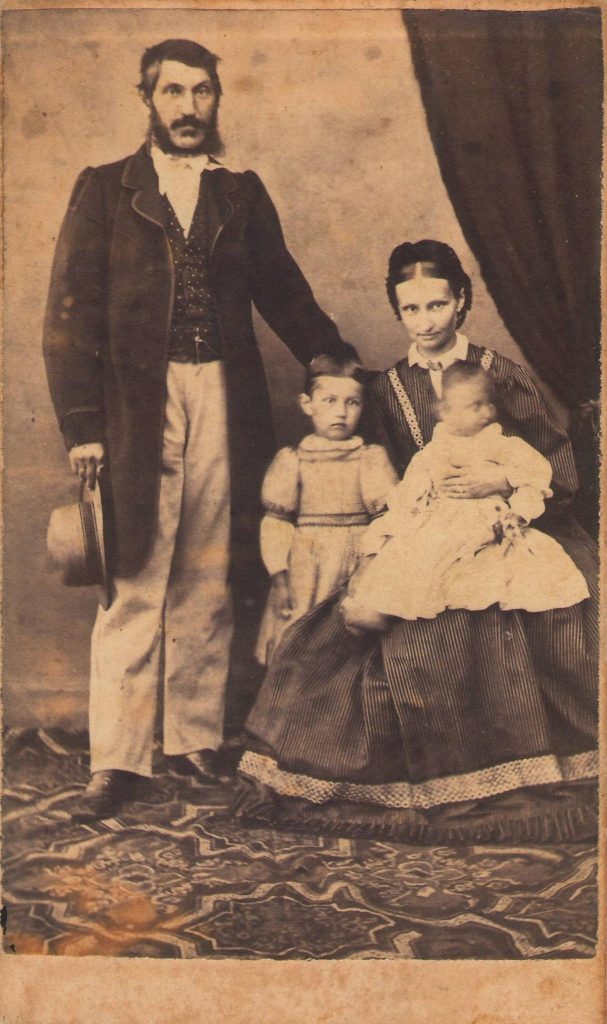
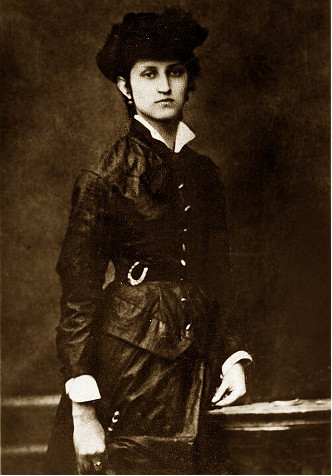
On 27 November 1863, in the region of Bukovyna, a remarkable personality was born. Olha Kobylianska was a Ukrainian woman from a noble family, who became a prominent writer, a representative of modernism, and a passionate advocate for women’s rights. She was born in the town of Gura Humorului, which today is located in Romania but at the time was part of the Austro-Hungarian Empire. Olha Kobylianska grew up in a multicultural and modest family that significantly shaped her worldview. Her mother was of mixed German and Polish origin and was related to a well-known German Romantic poet, Zacharias Werner. Out of love and respect for her husband, she learned the Ukrainian language and adopted the Greek Catholic faith, creating a strong cultural and emotional foundation within the family. Her father, Yulian Kobylianskyi, was a minor civil servant of noble descent from central Ukraine (Naddniprianshchyna). Despite her mother’s German-Polish background, Maria Werner taught Ukrainian to her children, raising them with respect and love for Ukrainian culture. At the same time, German and Polish were widely spoken in the family. This created a fascinating cultural mixture and can be seen as an example of a truly European family living in Ukraine. This raises an interesting question: how did Ukrainian identity become such an important part of Kobylianska’s creative work? Her path to Ukrainian literature was gradual. At first, she wrote in German and followed the style of European writers whom she admired. However, her growing interest in Ukrainian culture was strongly influenced by the intellectual environment around her.
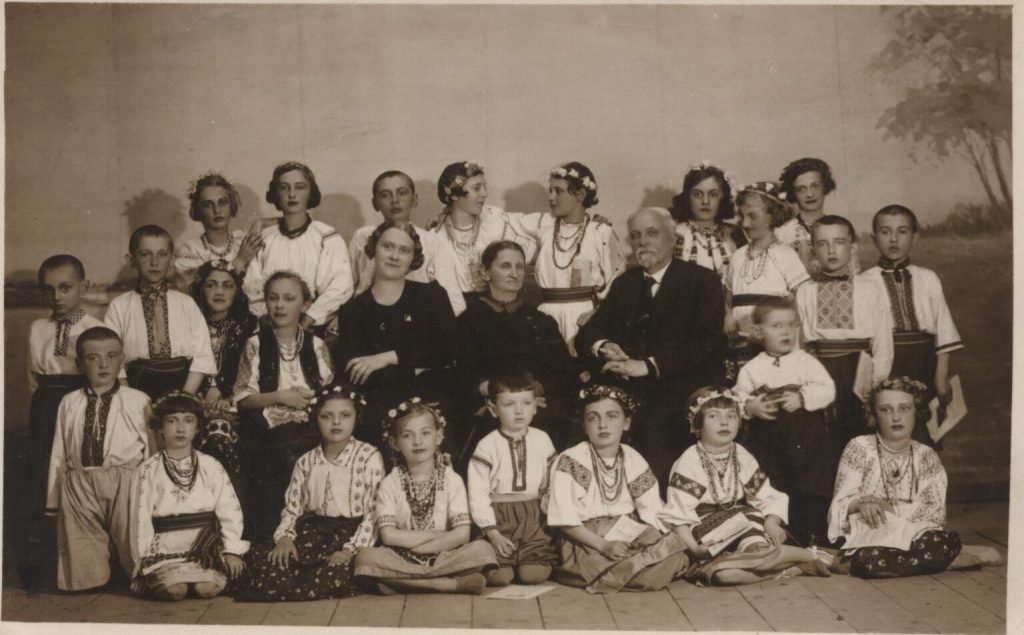
Olha Kobylianska was connected with leading pro-European Ukrainian intellectual families and closely engaged with the growing women’s emancipation movement. Influenced by figures such as Sofiia Okunevska, who encouraged her to write in Ukrainian, and Nataliia Kobrynska, a key feminist thinker, she became an important voice in Ukrainian women’s literature. Their collaboration was crucial in advancing the feminist movement in Ukraine, demonstrating that women’s emancipation was supported not only by female intellectuals but also by prominent male figures in literature, including Ivan Franko and Panas Myrny, who provided encouragement and recognition for women writers. In 1898, Kobylianska and Kobrynska participated in the celebrations of Ivan Franko’s literary anniversary in Lviv, an event that symbolised the close intellectual cooperation among writers of Halychyna and Bukovyna.
A model of the new woman
Olha Kobylianska considered herself an emancipated woman, that is, a woman free from the old social limitations and customs that restricted women’s choices and opportunities. During her lifetime, European countries, including the Austro-Hungarian Empire where she lived, were gradually reforming laws in favour of women’s rights. Women began to gain more autonomy in decisions regarding marriage, divorce, and property, as well as broader opportunities after reaching adulthood. Olha Kobylianska’s strong dedication to education, knowledge, and cultural development was partly shaped by the fact that her father prioritised formal education for his sons rather than his daughters, motivating her to pursue intellectual growth independently. Once she famously said that one must ‘sculpt oneself’, emphasising the importance of continuous learning, mastering new skills, and surrounding oneself with the right people who inspire and support development. For Kobylianska, self-cultivation was not only an individual pursuit but also a way to contribute meaningfully to society, to embrace independence, and to live a purposeful, empowered life. Her words reflect a philosophy of active engagement with the world, where growth, education, and deliberate effort are the keys to both personal and cultural advancement.
Promoting feminist ideas in public and literary spaces
Olha’s interest in the topic of women’s rights extended beyond literature into public activism. In 1892, she published the essay ‘Equal Rights for Women’, and the following year contributed to the almanac ‘Nasha Dolya’, writing about the women’s movement across Europe. In 1894, she co-founded the Society of Ruthenian (Ukrainian) Women in Bukovyna and explained the goals of the movement in the brochure ‘A Few Words on the Idea of the Women’s Movement’. In 1902, she organised another women’s association in Chernivtsi, the Circle of Ukrainian ladies. Her activism was complemented by collaboration with Olena Pchilka, a leading figure of Kyiv’s Stara Hromada. Pchilka was a publisher, political activist, and a remarkable cultural figure, a trendsetter, collector of folk songs, embroidery patterns, and examples of applied arts.
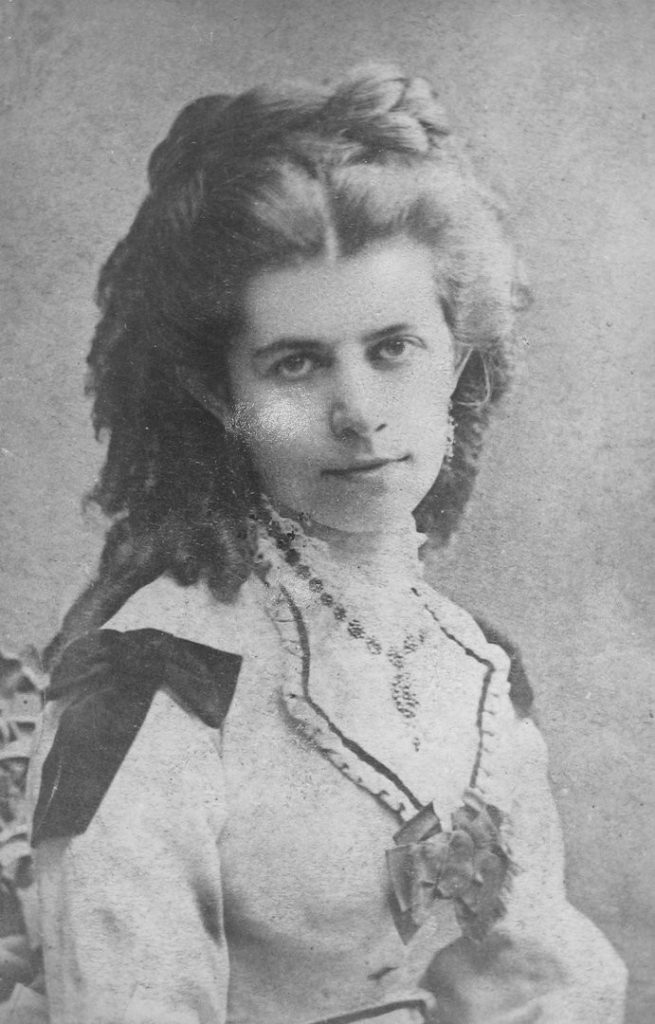
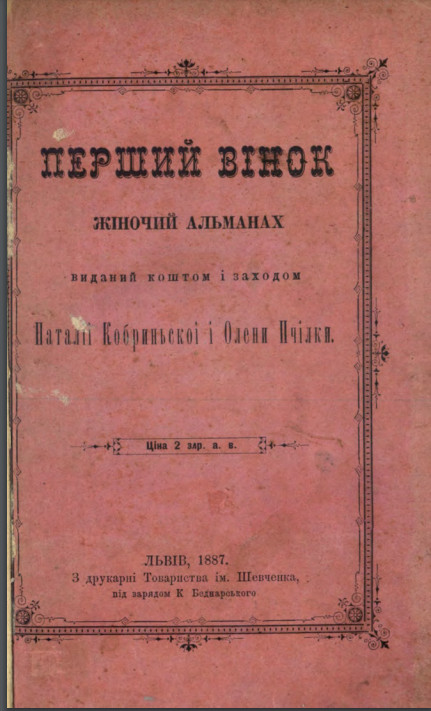
Olena played a crucial role in promoting Ukrainian culture and women’s voices. Among her publications, the women’s almanac ‘First Wreath’, stands out as a platform for women to speak in their own voices. The almanac was the first work in Galicia and Ukraine to raise the ‘women’s question’, the journal included a number of feminist articles, in particular on the position of women in Ukraine and the world.
Ambassador of European values
Olha Kobylianska was an ambassador of European intellectual and cultural values, connecting Ukrainian literature with broader European thought. This European-minded woman was fascinated by Western European philosophy, particularly the works of Friedrich Nietzsche. She was drawn to his focus on strong individuality, the struggle for personal freedom, and the bold, innovative style of his writing. However, Kobylianska did not accept Nietzsche’s views on women or his ideas about their position in society. In the 1890s, she began exploring Nietzschean philosophy more intensively. Some of his concepts found their way into her work: she quoted Thus Spoke Zarathustra in her humorous story ‘He and She’, and incorporated Nietzschean ideas into her novella ‘The Princess’. She actively promoted Ukrainian literature in Europe, collaborating with foreign journals such as Die neue Zeit, where her stories ‘Nature’, ‘The Battle’, and ‘An Uncivilised Woman’ were published in German. She also supported other Ukrainian writers, helping them to reach European audiences.
In her own writing, Kobylianska portrayed women as independent individuals with the right to education and self-realisation. Works like ‘Human’, ‘The Princess’, and ‘Valse mélancolique’ explore women’s inner lives, emotional depth, and intellectual freedom, especially through themes of friendship, art, and independence.
Contribution and innovations in Ukrainian literature
Olha Kobylianska launched a new direction in Ukrainian literature, creating a unique style that combined European literary influences with a distinctly Ukrainian voice. Ivan Franko described her work as ‘new belles-lettres’, noting her careful attention to form, the musicality of language, and the rhythm of dialogue, which made her writing feel lyrical and expressive while avoiding clichés or formulaic patterns. Even Lesya Ukrainka, Olena Philka’s daughter, Olha’s best friend and co-worker observed that Kobylianska’s aesthetic and intellectual development surpassed that of her contemporaries in Bukovyna and Halychyna, marking her as one of the most innovative and sophisticated Ukrainian writers of her time.
Olha Kobylianska remains a powerful symbol of intellectual freedom, cultural development, and women’s emancipation. Her idea of ‘being a goal for oneself’ reflects a philosophy of independence and self-worth that continues to inspire modern generations. In today’s world, where young people are still searching for identity, purpose, and equality, Kobylianska’s message feels especially relevant. She encourages us to invest in our own development, to think critically, and to shape our own paths rather than follow imposed expectations. Her legacy reminds us that true progress begins with the courage to define our own values and to become the authors of our own lives.
LATEST
From displacement to enterprise: rebuilding my community through entrepreneurship
A message from the YED Coordinators

My personal experience as a Young European Diplomat viewing the EU for the first time
A blueprint for enlargement: what we can learn from Moldova, Ukraine, and Montenegro
Young European Diplomats Club


The information on this site is subject to a Disclaimer and Protection of personal data. © European Union,
